
‘Remember the singing and dancing’ — Jackson therapist recounts her months on COVID wing
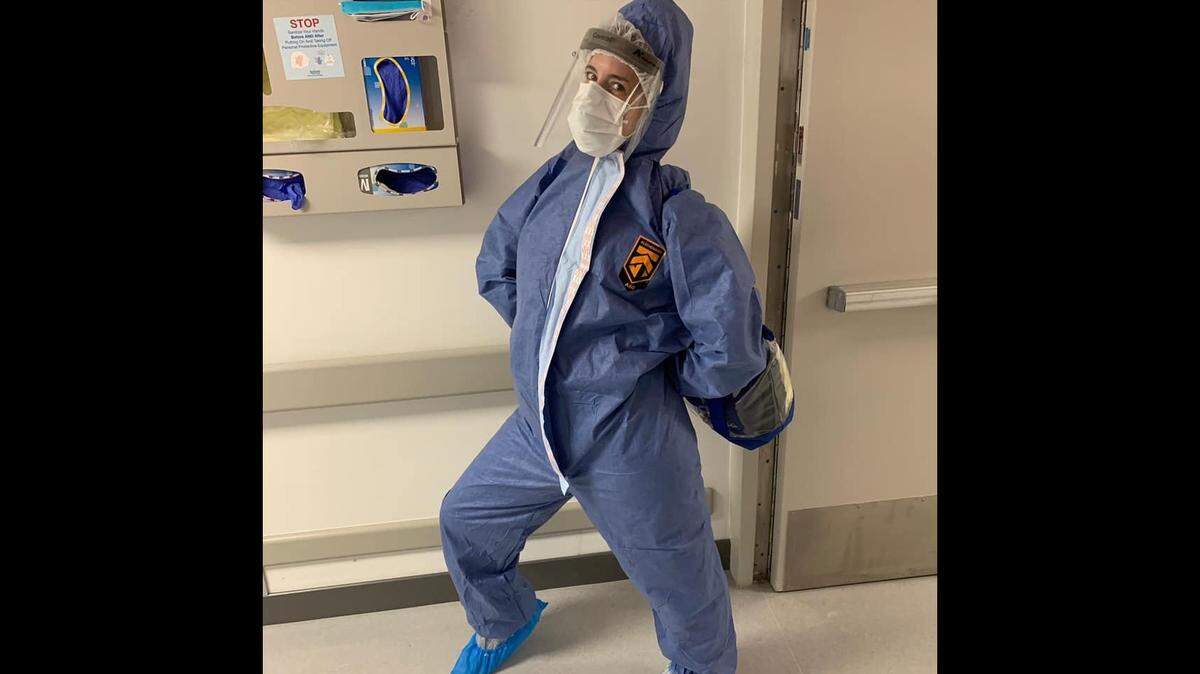
From late March to early September, I worked as a physical therapist in the COVID-19 units at Jackson Memorial Hospital. I was the first physical therapist in the unit and volunteered my time during our two surges.
I tend to leave writing to the writers and novelists of our world, but as I return to my regular work at Ryder Trauma Center at Jackson Hospital, I find solace in chronicling my experience.
It’s more bitter than sweet, this leaving. I always imagined the end of this, or rather the end of my direct involvement on the COVID floors, would be more . . . celebratory? Exciting? In my daydreams, I imagined we’d fight the battle, win, and then the battle would be done. A heroic cheer would go up across the nation and we would throw our surgical caps and face shields in the air and chant, “We did it! We won!”
Instead, the virus carries on. The trenches are still wrought with the tears of loss of life.
‘Humbling experience’
Volunteering to work the COVID floors has been a truly humbling experience. The decision to not tell my parents the extent of my involvement came easy. To continue with it for almost five months was hard. I had to hold back on telling others so the information wouldn’t accidentally be passed on to my anxiety-ridden, lovely parents.
To worry is to love — that’s my family. I wouldn’t change that.
But what also came with that was not being able to freely share my experience while it was happening. It was staying (mostly) silent as family members theorized the validity of masks and social distancing.
Some asked me, “I know you’re not in there because you’re a physical therapist, but do you know how bad it is?”
I bit my tongue instead of answering. There is a never-ending frustration that comes from how my career is constantly misunderstood. I am presumed to be uninvolved in many sub fields of medicine and that is a constant disappointment.
Nurses are key
Nurses are the true backbone of this pandemic. They do the exhaustive daily work for their patients and we need to never forget that after this is all over — if it ever will be. But rehab services are there, too, working in the shadows of nurses and physicians.
When we celebrate our healthcare heroes, we forget those helping in the dark. But there are many of us there saying, “Let me help you. We know these days are long. What can we do to help?”
Let’s not forget those in respiratory therapy, environmental work, care techs, diet and nutrition, maintenance, social work and case management, transport, and security, as well as physical, occupational, and speech therapy. They’re in those hallways and in those rooms, too.
As I go, I think about my contribution and the many moments when I asked myself if I was crazy for doing it. Did I actually help? Was it worth it?
I wonder if any of the patients will remember me or their experience of laughing, dancing and singing during their hospitalization. For some, it turned out to be their last dance, but for the many who made it to the exit doors of our negative pressure floors, I hope they can remember how much we all tried to make this as much of a healing experience as possible.
I know, as with all rotations, my memories will meld together into one kaleidoscopic view of the experience. E’s purple hair and nails will meld into C mourning the death of her mother. D’s jokes will mix with S’s stubbornness. My mind will mix them and store them away for another time.
I’m grateful to Rachel, Brady, Bill, Brandi and so many others. We went in and we did our best. Their compassion for patients is amazing and working beside them made me a better therapist. It was a dream and an honor to work with each of them.
And of course, I’m grateful to Sean, who supported this idea from the beginning and is there when I come home every night. He keeps me laughing and helps me stay sane.
I wonder what the history books will say of this horrible time. All have been affected in some way, be it through a loss of a job, a dream, or a loved one.
I wonder how we’ll teach our lessons from this to future generations. What will we keep to remember? I know that those I worked with will be able to reflect on the sweat, tears, PPE, frustrations, and loss.
But I also hope they remember the singing and the dancing.
Miami Stories
The Miami Stories initiative collects stories about Miami’s past, present, and future. Through this oral history project, HistoryMiami Museum documents life in the Magic City through written stories, video submissions, and audio recordings, which are preserved in the museum’s archive, and shared online and through local media outlets. For more information on the Miami Stories project or to share your story, please visit www.historymiami.org/miamistories