State report shows hundreds test positive for COVID-19 at Florida schools in August
The Florida Department of Health accidentally released a report on COVID-19 outbreaks at schools across the state — from daycare centers to colleges — and found that nearly 900 students and staffers had tested positive during a two-week period in August as schools had just begun or readied to reopen.
State officials published the six-page draft online on Monday, but then quickly wiped it away a day later. The Herald obtained a copy before it disappeared.
Florida International University infectious disease epidemiologist Dr. Mary Jo Trepka said the detailed data was one of the most valuable reports the DOH has produced because it assesses how the virus is affecting the state’s children as they return to the classroom.
“It’s very good that they are starting to report this now and then going forward as schools start to reopen ... to see what happens as they reopen in terms of the numbers going up or not going up, hopefully,” said Trepka. “This is going to be really important for each county to be closely monitoring these numbers to see the impact of schools’ reopening.”
But because someone tested positive, it doesn’t mean the school was the source of infection: “It just means that the sick person was in one of those institutions; it doesn’t mean that they acquired it there.”
Florida Department of Health Director of Communications Alberto Moscoso said in an email to the Herald last week that the report, called the “Schools and Daycares COVID-19 Surveillance Reports,” which Florida Surgeon General Scott Rivkees requested, was not supposed to be publicized yet.
“These draft reports were inadvertently made available on a Department archival site and not yet finalized. They remain under review as the Department verifies that data is accurately reflected,” Moscoso said in the email.
He said the reports will become available “in the coming days and weeks” at floridahealthcovid19.gov.
Gov. Ron DeSantis blasted the report’s release, saying it “misrepresented” what was going on now in schools.
“It was acting like this was something that was triggered by the school year, which is totally not true,” DeSantis said Thursday at a press conference in Tampa, according to News4Jax.com. “If you take some of those cases at face value, those would have been infections that would have happened long before that.”
Previous children’s information does not include schools

Up until now, the only information about children and COVID-19 cases in Florida is a “pediatric report” that shows a county-by-county breakdown of how many children under 18 have tested positive for the novel coronavirus since the pandemic began in the spring.
This report, which the Florida Department of Health updates a few times a week, also includes how many children have been diagnosed with multi-system inflammatory syndrome, or MIS-C, an inflammatory disorder that’s believed to be linked to children with COVID-19.
According to Wednesday’s pediatric report, the latest one available, 48,928 children statewide have tested positive for COVID-19, 600 have been hospitalized and eight have died since March. Fifty children under 18 and one 20-year-old have been diagnosed with MIS-C.
Of the positive COVID-19 cases, 21,236 were recorded in South Florida’s four counties — Miami-Dade, Broward, Palm Beach and Monroe. The four counties account for nearly half of the state’s cases, both pediatric and adult.
What did Florida’s DOH report about schools say?
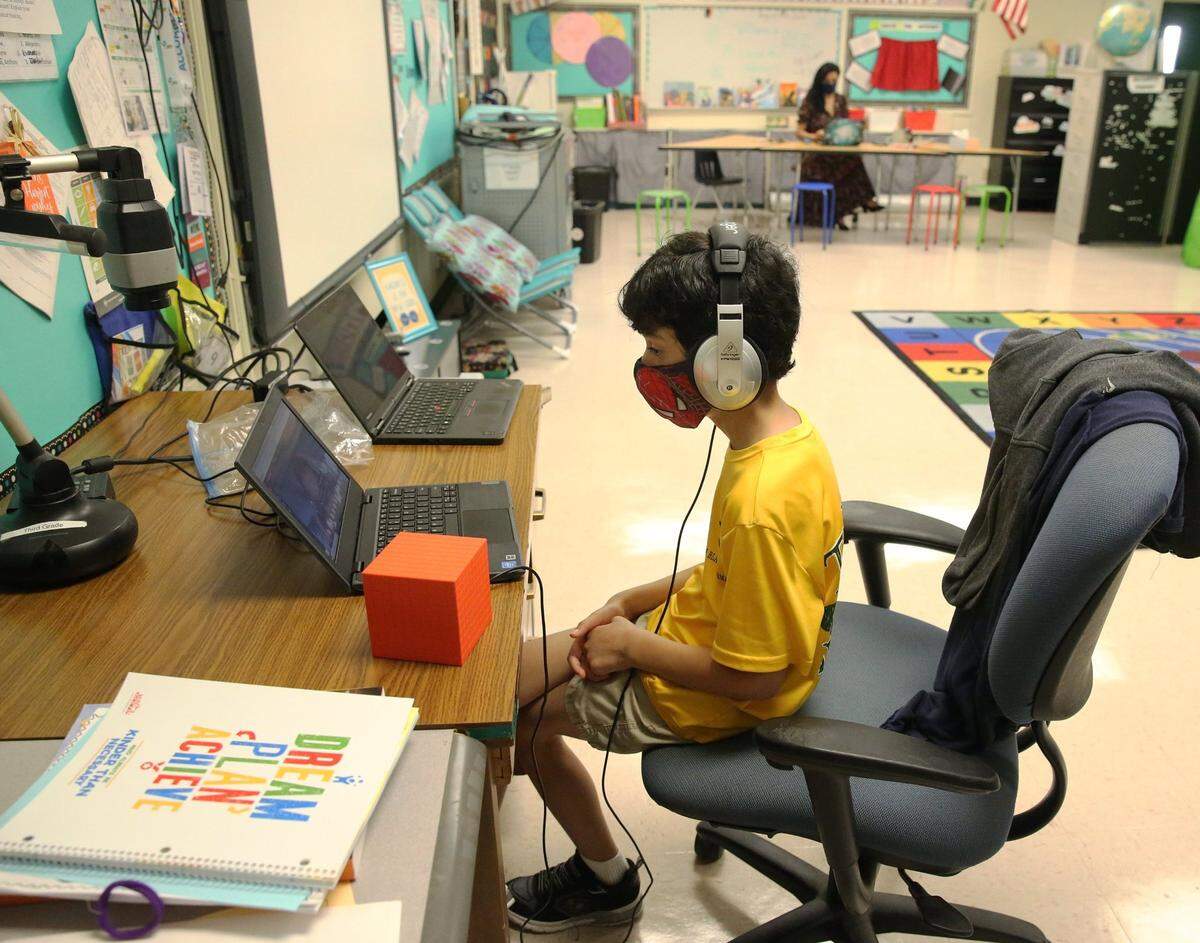
The report removed from the website broke down the data into three categories — daycare centers, primary and secondary schools, and post-secondary schools (colleges, universities and trade schools). The report did not specify whether the data included only public schools, or private and charter schools as well.
The data included how many of the positive cases stemmed from students, staff, attendees or people whose relations to the facility is “unknown.” The report showed how many of the people were hospitalized and how many died from COVID-19-related complications.
The state spliced the data to focus on more recent cases, from Aug. 10 to Aug. 23, broken down by age group, race and ethnicity. Many of the state’s schools had either opened or were about to open during this period.
The data may not be complete as it can take two to 14 days for COVID symptoms to appear, and COVID test results can take up to two weeks. The state has been trying to cut turnaround times.
Based on the draft’s preliminary data, 765 Florida residents associated with daycare centers, elementary, middle and high schools have tested positive for COVID-19 from Aug. 10 to Aug. 23:
- 205 students, 12 people considered “unknown” and 342 staff members from primary and secondary schools.
- 83 “attendees,” nine people considered “unknown” and 114 staff members associated with daycare centers.
Among the state’s colleges, universities and trade schools, 90 students, four people considered “unknown” and 61 staff members tested positive for COVID-19.
With the exception of post-secondary institutions, the data is based on where the person lives, not where the school is located. Thus, if a person lives in Miami-Dade County but works at or attends a school in Broward County, the case would be counted in Miami-Dade.
Miami-Dade County had the most confirmed cases in daycare centers, primary and secondary schools, although the report did not name the institutions. The county had 54 confirmed cases at daycare centers, 48 cases at primary and secondary schools (elementary, middle and high schools) and 24 cases at post-secondary schools, according to the preliminary data.
Leon County, home to Florida State University, had the highest number of post-secondary school cases at 48.
Report is ‘valuable’ with caveats
Trepka, the FIU epidemiologist, said that if the state’s finalized report provides the same type of data as the draft did, it could be “valuable” information for those trying to track how school reopenings affect county COVID-19 numbers.
For Trepka, one of the most interesting aspects of the report is that it tracks “outbreaks” at the schools, although the report did not explain how it defined an outbreak.
Even if the state doesn’t release the names of the schools, the school districts and the individual schools will know if someone has tested positive and parents will be notified if their child’s class has to quarantine.
The report could also give epidemiologists like Trepka an idea of the risk of COVID-19 among kids and school staff, although she said the data is likely “incomplete” since only people who exhibit symptoms may get tested.
The Centers for Disease Control and Prevention has said as many as 40 percent of people carrying COVID-19 are asymptomatic. Some people also might not answer contact tracing calls.
More COVID cases as students return to classrooms
With the exception of a few private and charter schools, most students in Miami-Dade and Broward are learning online at least until October, though superintendents are hoping students can return to the classroom sooner if the counties continue to see fewer COVID-19 cases.
In other parts of the state, some schools have returned to in-person, socially distanced learning, and they’re seeing cases rise.
In Manatee County, on the state’s west coast, at least 18 schools have reported COVID-19 cases since the start of school on Aug. 17, according to the Bradenton Herald.
The TC Palm reported 40 students and 17 staff from three district schools in St. Lucie County were ordered to quarantine, after three staff and a student tested positive for the virus. In the Martin County School District, nearly 400 students have had to quarantine since Aug. 11.
In Duval County, the school district initially announced it would build a dashboard to track its cases. But five days into the school year it backtracked, blaming the local Department of Health, which, according to the Florida Times-Union, ordered the district not to publish “school specific data related to COVID-19” without the state health department’s permission.
In late July, Miami-Dade County Public Schools announced it would start the 2020-2021 school year from a distance. Superintendent Alberto Carvalho pushed back the first day of school from Aug. 24 to Aug. 31 to train teachers, parents and students on My School Online, a new digital platform, which teachers and parents have complained about.
Meanwhile, students at colleges and universities are returning to their campuses for some in-person instruction.
The University of Miami began its fall semester Aug. 17 and confirmed more than 140 cases during its first week. UM launched an online dashboard Monday to keep track of how cases develop at its Coral Gables and medical campuses.
Similarly, FIU, which resumed courses Monday, launched a web page Wednesday to keep track of “largely self-reported” positive cases.
Miami Dade College started its fall term with most of its classes online, but could potentially bring back more face-to-face learning in late September.
This story was originally published August 29, 2020 at 3:13 PM.