
Fear and loneliness, 2,000 miles apart: a COVID-19 story
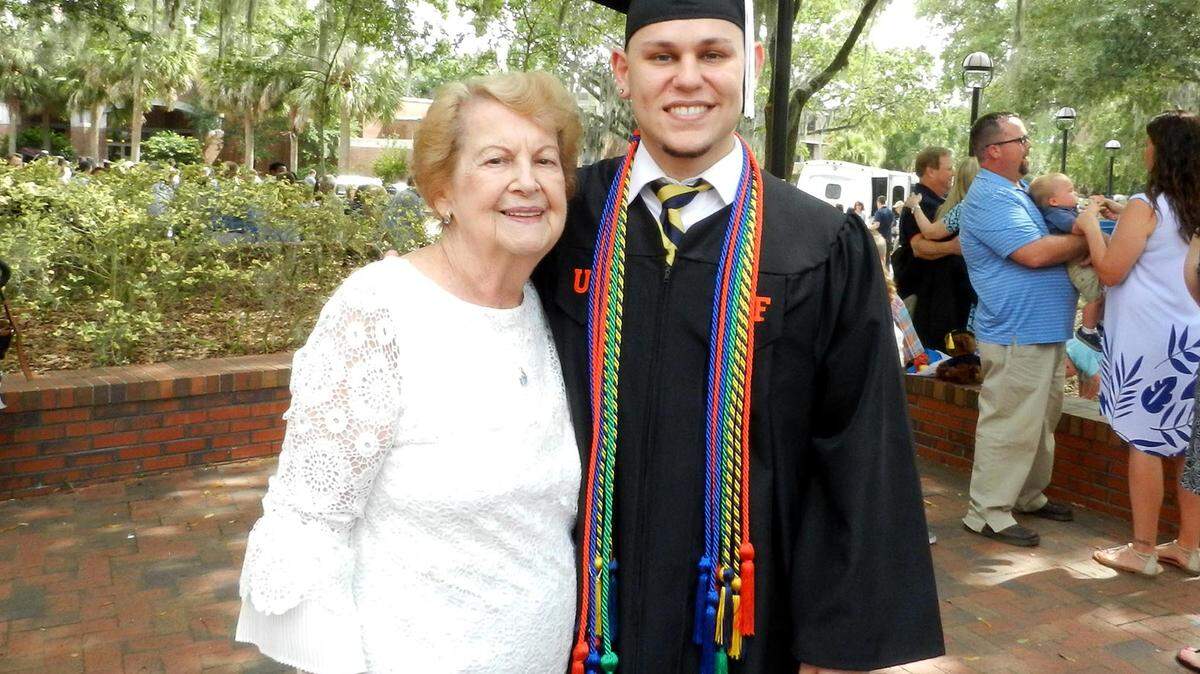
She didn’t have the symptoms.
No breathing problems. No fever. But she felt weak enough to worry.
My grandmother had seemed fine on Father’s Day. Even at 89, she had no problem getting around the cemetery with my parents, or placing flowers on her husband’s grave. But by the next Friday, she confessed that she’d been suffering in silence for two weeks. “No te quise preocupar,” she told my mom with a thick Cuban accent. “I didn’t want to worry you.”
The next morning, my mom took her to an urgent care center. Her lungs looked clear in an X-ray. She had low sodium levels and an irregular heart rate. But just to be sure, the doctors swabbed and tested her for COVID-19.
She’d have to wait a few days for the results and reluctantly agreed to spend that time in the hospital. It was the last place she wanted to be after three months staying home to avoid the virus, but she knew something was wrong. Around 11 p.m., they wheeled her into a room, alone.
My grandmother lives by herself in my hometown of Miami. She’s in good shape for her age, but she’s aided by a walker, has two artificial knees and regularly complains about her arthritis. Yet despite these ailments, Aya — a Spanish word for “nanny” that I’ve called her all my life — lives by one of her favorite sayings: “Se me cae el techo encima.” In English: “The roof is caving in on me.” It describes a feeling that’s something like itchy feet. She likes to venture out as often as possible. To have lunch with friends, or browse for bargains at the mall.
For months, her independence, combined with the threat of the virus, had spawned a two-act drama that unfolded in my head some 2,000 miles away. I’d read a Washington Post report about a Florida retirement community where some residents were taking the virus seriously and others weren’t. I worried that she would be among the latter.
Even if she followed the coronavirus guidelines, would she feel isolated? Depressed? Would she eventually give up and go back to her routine? As a 24-year-old, I wondered if giving up the life-affirming activities she loved would prove too difficult. I worried she’d do something rash to live her best life while she could.
I worried she didn’t have enough to lose.
I was wrong.
Pandemic-fueled ageism?
Aya’s episode took me back to a different kind of episode — from my favorite TV show, “SpongeBob SquarePants.” The first season finds SpongeBob and Patrick trying to nudge their favorite superheroes — Mermaid Man and Barnacle Boy — out of retirement. “It’s too bad they’re old,” Patrick remarks.
“What do ya mean, Patrick?” SpongeBob fires back. “Old people are the greatest! They’re full of wisdom and experience. The world needs Mermaid Man and Barnacle Boy.” And with my own elderly grandmother in the hospital, I couldn’t help but notice that amid the pandemic, many of us seemed to be forgetting that.
For example, a University of California, San Francisco professor of medicine, writing in The New York Times, took issue with a headline that read, “Not just old people: Younger adults are also getting the coronavirus.” That word choice, Dr. Louise Aronson wrote, “seemed to suggest that Covid-19 didn’t matter much if it was a scourge only among the old.” She was even more blunt writing in The Atlantic, in a story titled, “Ageism is making the pandemic worse.” The phenomenon has been discussed from the Los Angeles Times to medical journal editorials.
As the virus rages, the elderly are urged to “just stay home” if they’re scared — but that rhetoric leaves them two options: Stay home and stay safe while the rest of us make it borderline impossible to ever leave home again; or go out, enjoy life and risk your life. Aya lives this out daily. Before her trip to the hospital, she had no idea when she’d be able to leave home again as the pandemic spiraled out of control in America — and especially in Florida.
The suffering of older people in this position seemed distant at first. I’m a healthy young man who’s less likely to die from the virus and, therefore, less likely to worry for my own well-being. Aya made it personal for me.
She knows what’s at stake and how quickly it can turn. Her husband died in 2002, when I was 5, after checking into the hospital for routine tests and never getting out. She knows all about faith and fate, praying for the best but knowing prayers can go unanswered. And she wants to stick around to visit friends and talk to neighbors and fry up some bistec empanizado next time I’m in town. Yet from the onset of the pandemic, she gave me reason to worry that her zeal for life could overcome her better judgment.
Loneliness descends
The television screen went black. The threat of COVID-19 couldn’t match the gravitational pull of her telenovela, a nightly soap opera, so Aya, whose full name is Maria Elena Valladares, plodded out into a balmy Miami afternoon, toward her blue Hyundai sedan.
This was in March, five days after Utah Jazz center Rudy Gobert’s diagnosis alerted America to the pandemic, and cases were already spiking in Florida. She knew the government was telling people to stay inside and warning that the elderly were especially vulnerable.
“It was all over the news,” she told me then, in Spanish. “Down here, Spanish TV is nothing but the virus. All day, every day, nothing but the virus.” No matter. She still drove to the cable store convinced her remote was broken.
The Comcast workers replaced the batteries, and she went home. But she made a crucial error: telling my mom. Aya already wears hearing aids, but it’s borderline miraculous that my mother’s lashing didn’t leave an organless cave where her ear should have been.
I was angry too. I called Aya to try and reinforce the advice to stay home. I worried that she was underestimating the virus. But her trip to Comcast, she explained, was just a misunderstanding; she’d be more careful from now on.
And she was. The Comcast voyage seemed to be a one-time slip-up, and she learned from it. Yet only a few days into her quarantine, she was already sick of staying home.
She was lonely. And loneliness rivals obesity or smoking 15 cigarettes a day as a health risk. It tends to afflict the elderly, both across America and around the world, as they lose loved ones and lose touch with family.
“Loneliness is that emotional feeling that you’re alone, or separated,” said Melissa Batchelor, an associate professor of nursing and researcher of geriatric nursing at George Washington University. “You can be lonely and still be out and about.”
That was never a problem for Aya.
A dynamic geriatric
Before the shutdown, here’s what Aya’s typical day looked like:
She’d wake up around 8:30 and eat breakfast while watching the local news on TV. In Spanish, of course, since she never learned English after immigrating from Cuba in 1965. Then she’d shower and, some days, go to the mall to walk around or have a snack. Other days she’d take a drive, maybe stop at the grocery store or the pharmacy. She’d just started going to the gym, to a class for the elderly — and made it twice before the gym shut down. And once every couple of weeks, she’d visit friends to play bingo or have lunch or just talk.
At her age, even small activities entail a certain amount of risk. Last October, she tripped over a step at her friend’s house, sliced open her arm and smacked her head. Her face turned purple, and she got 14 stitches, prompting my uncle to joke that at least she didn’t need to worry about finding a Halloween costume. “Yo lo mandé para el demonio,” she told me, laughing. “To the devil with you,” she told him.
But most times, she’d come home, have dinner and watch her telenovela.
Every other Saturday, my parents would take her out to lunch. And on Sundays, she’d attend the 1 p.m. Mass at St. Brendan Catholic Church and treat herself to lunch at a Cuban restaurant, La Carreta or El Rinconcito Criollo.
And she’d rarely take a nap, she’s proud to say. Because even at 89, she stays ready for whatever’s next.
New routine, new risks
Death doesn’t care about our plans. We first learn about death as children, often by losing a goldfish or a hamster, but sometimes — as I did — by losing a relative. I remember where I was when my mom told me that my grandfather had died, and I remember how little I felt. I worried that I didn’t feel sad enough. But I was 5 and not yet capable of grappling with what death meant. Not until my teenage years, as I attended the funerals of my mom’s aunts and uncles, did the finality of death settle in. And only recently, as I worried about Aya 2,000 miles away, did I fear its premature arrival.
Unless something unpredictable happens, my age means I’m probably going to get through the pandemic, even if I catch the coronavirus. And while there’s a good chance Aya will too, it’s less certain. And I feared that uncertainty could lead her to behave irrationally — or that reason, in her circumstances, might lead her to take risks I wasn’t comfortable with.
Elizabeth Zelinski, a professor of gerontology and psychology at the University of Southern California, framed my concerns with a theory called “socioemotional selectivity.” People, she said, approach situations differently as they approach the end. Not just the end, but the end of anything. Like divorce or senior year in high school. But since death is a bit more unpredictable, most don’t see it coming until it’s obvious.
Aya isn’t frail. She’s still able to do many of the things she enjoys. That makes it unlikely, Zelinski said, that she’s thinking much about the end. “Chances are if your grandma is feeling OK, and her friends are pretty much around, it’s probably a less prominent thing for her.”
Which helps explain why Aya seemed to be sticking to the recommendations for avoiding COVID-19. But as the pandemic dragged on, it became harder for her to do so — even as Florida’s caseload continued to rise. Because Aya’s routine had turned into this:
She wakes up and watches the news, which is usually all about the virus. She walks around the house with her walker. She paces up and down her driveway for exercise. Then she reads, usually ¡Hola! Magazine or El Nuevo Herald, or calls up one of her friends. And after dinner, she still watches her soap opera and works on jigsaw puzzles.
The change is drastic. When I called her two weeks before she went to the hospital and asked what she was up to, she answered, “Aquí en la cárcel.”
“Here in jail.”
A diagnosis at last
Two days after Aya checked into the hospital, my mom called me. For two days I’d worried, wondered and waited, hoping the doctors could figure out what was wrong in time to treat it and save her from my grandfather’s fate. My mom knew I’d been working on this story. “Your story,” she told me, “just got a bit more complicated.”
Aya’s COVID-19 test came back positive.
My mom informed Aya of her diagnosis from outside her hospital room door, shouting through the crack. Then she called me. At first I was afraid Aya might be dead. The last time I’d talked to her, her voice sounded timid and scratchy, each sentence labored. My mind flashed back to hearing about the deaths of my other three grandparents — moments I remember clearly and painfully.
It didn’t seem possible that Aya had COVID-19. I wasn’t too worried about it, and neither were her doctors. My dad was so sure she didn’t have it, he waited on Aya’s couch while my mom took her to the hospital. She didn’t have the symptoms, and we couldn’t imagine how she could have been exposed to it.
Aya hadn’t left her house in three months. The only people she’d been in contact with were my parents, her niece and her caretaker. None had COVID-19 — though they each raced to testing centers after her diagnosis.
Could it have arrived in the mail, on a tainted letter? Did she chat with a neighbor and forget to mention it? Or was she secretly playing bingo with her friends? All possibilities, I thought, but it hardly mattered. The only question, I told myself, is what happens now.
I was afraid to call Aya. Would she sound worse? What would that mean?
She got home on Tuesday afternoon. I finally called her cellphone Wednesday morning. No answer. I called her house phone. Still no answer. No matter, I thought. She’d call me back whenever she was done eating or showering or whatever.
By evening, she still hadn’t called.
My mom said not to worry, that she probably wasn’t checking her phone, and to call the next day. I wanted to believe her, but part of me felt like something had to be wrong.
The next morning I called the house again. Still no answer. Would she be coughing? Wheezing? Would she need to stop talking and catch her breath?
Finally, on Thursday afternoon, Aya picked up.
I don’t remember what she said, but her voice was almost normal. No coughing. No wheezing. A few creaks and cracks, but mild enough that for at least a moment, I could relax. She was OK.
The 89-year-old COVID survivor
Doctors prescribed some new medication. They told her to rest, to avoid moving too much — basically, to do what she’d been doing but with new pills. A lucky outcome. No ventilator, no prolonged hospital stay. Just more boredom.
Back when boredom seemed like the worst possible outcome, Aya embraced it. She hated it, but she wanted to survive. No questioning whether it was worth it to stay home; no woe-is-me sentimentality. And she even implored me — over and over — to wash my hands, stop biting my nails and make sure I kept praying. “You should know how,” she reminded me, “after all those years in Catholic school.” She wanted me to pray for a cure and for healing. Which got me thinking about prune juice.
Aya made me drink prune juice when I was a kid. I still despise it to this day, but she did it because she cared. In authoritarian fashion, she made me drink it because she wanted me to be healthy. So I wouldn’t have to miss out on visiting my friends and playing whiffle ball and sucking down the strawberry candies she kept around for me. Sometimes, she taught me, you’ve got to do what’s hard, what you hate, even despise, to do the things you enjoy.
Good advice, but fate can be cruel. She spent three months living in a way she despised, but the virus found her. So I’m still worried. About a reawakening of symptoms, or some lasting impact we can’t yet see, or the impact of another lockdown on Aya’s mental health.
She’s also worried about what’s next — when her brush with COVID-19 is over, and when the lockdown lifts and lets her get back to her life. She’s already clamoring for a new test, eager to prove she kicked the virus in the teeth.
“La primera cosa que voy hacer es ir al mol,” she told me. “A lo mejor hay muchas ventas.”
The first thing she’s going to do, she said, is go to the mall. Because with any luck, there will be lots of sales.
Ethan Bauer is an alumnus of Belen Jesuit Preparatory School (‘14) and the University of Florida (‘18) and a former Miami Herald sports intern (summer 2017). Originally from Pembroke Pines, he’s now a reporter for the Deseret News in-depth team in Salt Lake City, Utah.