
Miami-Dade ready to let summer camps open June 8 after DeSantis drops Fla. restrictions
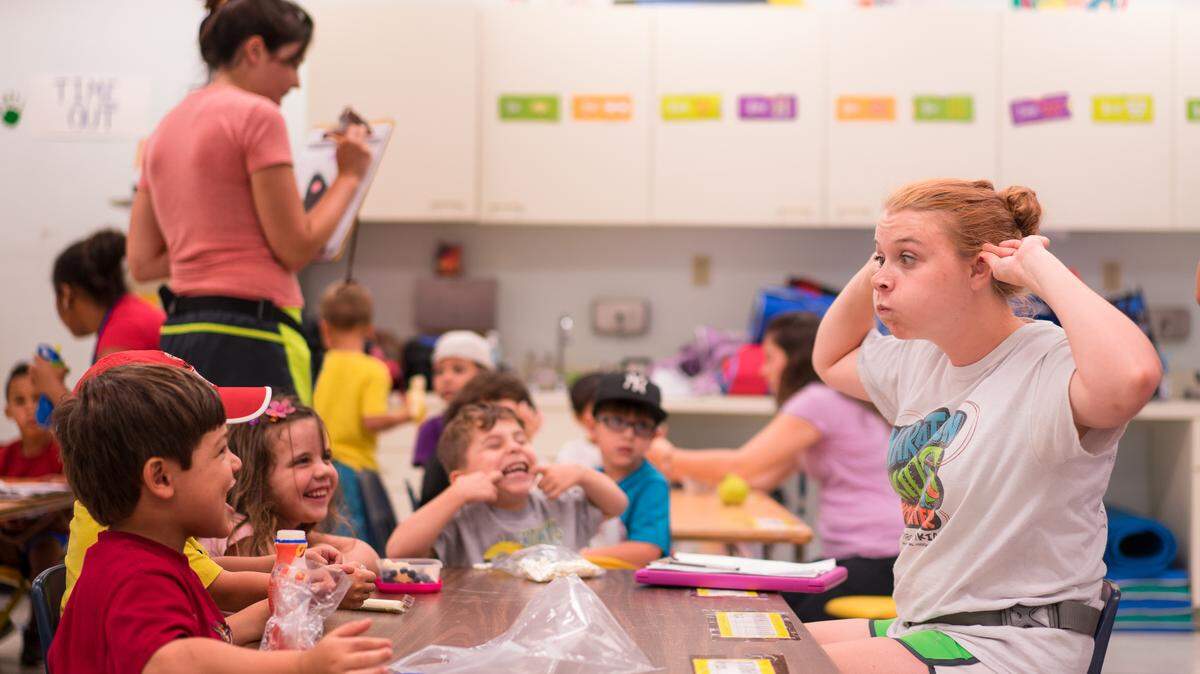
Summer camps across Miami-Dade likely will be allowed to start operations on June 8, Mayor Carlos Gimenez said Friday.
The evening announcement came hours after Gov. Ron DeSantis said he was ending all restrictions on youth activities across the state, including camps and youth sports but also added that local governments were free to keep their own restrictions in place.
The Gimenez statement, issued Friday evening, suggested the governor’s message might be misinterpreted as an immediate green light for summer camps and other youth programs in Miami-Dade.
“I want to clarify that the governor’s order does not apply to Miami-Dade County at this time,” Gimenez said in a statement. “I spoke with Gov. DeSantis Friday, and we agree that the County’s current restrictions on youth activities and camps should remain in place while the County’s Youth Activities/Summer Camps Working Group continues to work.”
The reference was to a committee Gimenez’s office assembled to meet privately to write temporary rules governing how camps and other youth programs may operate during the coronavirus pandemic. With camps typically revolving around group meals, sports and other activity with large numbers of children interacting, Gimenez has described a daunting task to make the programs safe. At the same time, he’s called camps a vital part of the county’s child-care network during the summer.
“Summer camp is going to be a real challenge,” Gimenez said in a recent interview with the Joe Rose radio show on 560 WQAM.
On Friday night, the Gimenez statement said June 8 was his “goal” for lifting closure orders for camps and other youth activities.
The DeSantis declaration was the governor’s latest move to wake Florida from its coronavirus-induced economic slumber.
However, the Republican governor said he would not prevent municipalities from imposing more restrictive rules.
“We believe that this makes sense based on the data and observed experience. We are not going to be instituting a lot of rules, or really any rules,” DeSantis said Friday in Jacksonville, noting the Florida Department of Health would likely post a list of best practices to its website. “At the end of the day, we trust parents to be able to make decisions in conjunction with physicians.”
In Miami Beach, Mayor Dan Gelber said the city administration will consult with its health advisory panel, formed amid the pandemic, before recommending action.
June 8 is the scheduled date to begin city-sponsored summer camps. In-person “specialty” camp programs, which last year included coding, fishing and music training, have already been canceled. The city is developing a virtual summer camp program, which will be announced next week.
A Miami Gardens spokeswoman said, “Miami Gardens is home to the largest city youth football and cheer program in the state of Florida. With that comes large crowds in parks. Understanding that the governor has lifted the restrictions for youth sports and summer camps, we still need to take the time to examine the logistics of how bringing youth sports back on our parks will look based on public health data and safety for all.”
Broward County was doing a phased reopening of beaches, gyms and hotels on May 26 but had not yet decided when to open summer camps and youth spots, according to a statement from Mayor Dale Holness.
DeSantis contended that youth activities — schools, most notably — were closed in the first place because, in the early days of the pandemic, it was believed children would spread the disease to other, more vulnerable populations.
But children haven’t turned out to be very effective spreaders of the illness, the governor argued.
“The data is pretty clear that, for whatever reason, kids don’t seem to get infected at the same rates that some other adults get infected,” DeSantis said.
DeSantis also noted that children are much less likely to face serious consequences from COVID-19, the disease caused by the novel coronavirus. In Florida, five in six deaths have come from people 65 and over. Zero people under 25 have died from the disease, he said.
The federal Centers for Disease Control and Prevention has stated that “relatively few” children have suffered severe health consequences such as hospitalizations due to COVID-19.
However, experts say the issue about how the coronavirus affects children is far from settled.
Dr. Steven L. Zeichner, the head of the division of pediatric infectious diseases at the University of Virginia, said it’s true that children older than infants and younger than adolescents seem to be less severely affected by the coronavirus than adults. However, it’s difficult to know how likely a child is to become infected because governments still have not tested enough of the population.
“We do not really know whether children are more or less likely to acquire COVID-19,” Zeichner said, according to an issue brief by SciLine, an independent nonprofit that compiles expert opinions on scientific issues. “If we don’t test everyone, then we won’t detect much asymptomatic disease.”
Florida has ramped up its testing program in recent weeks. About 837,000 tests had been reported in Florida as of Friday. In a state of about 21.5 million people, that figure means that, at most, about 4 percent of the population has been tested.
Doctors around the country have also seen several dozen cases of “multisystem inflammatory syndrome in children,” or MIS-C, a childhood illness associated with the coronavirus. That disease is as mysterious as it is frightening for parents: The Centers for Disease Control and Prevention recently advised there is much we don’t know about the disease.
Dr. Bonnie White, the DeSantis family’s pediatrician, sat beside the governor as he made his announcement. She said that MIS-C is “extremely rare.”
White backed the governor’s assessment of the current scientific understanding of the coronavirus. She said that many of her patients have shown symptoms of anxiety and depression because of the months of isolation brought about by statewide shutdowns.
“It’s time for our kids to get back to the new normal, and it’s time to safely allow kids to be kids,” White said.
Miami Herald staff writers Douglas Hanks and Martin Vassolo contributed to this report.
This story was originally published May 22, 2020 at 12:56 PM.