Back to the beach: Lifeguards prepare for reopening after coronavirus closures
Shooing people off the beach is incongruous duty for lifeguards who consider their watch over the ocean a vocation.
But that’s what they’ve been doing since beaches were closed in mid-March because of the coronavirus pandemic: Guarding the beach instead of those using the beach.
Now they are preparing for the June 1 reopening of Miami Beach and Miami-Dade County beaches, and the reopening of Broward beaches on Tuesday.
“It’s been surreal,” said Miami-Dade Ocean Rescue Capt. Matt Sparling, who works at Haulover Park.
Fort Lauderdale’s iconic beach has been empty since spring break and throughout its peak season.
“We’re used to being ambassadors of the beach and we’ve been kicking people off,” said Fort Lauderdale Ocean Rescue Chief Alex O’Connor.
Lifeguards’ essential duties won’t change, but they will expand to include enforcement of social distancing rules. In their interaction with the public, they’ll be wearing N95 masks. While handling medical emergencies on the beach or adjacent roadways, they’ll don extra personal protection equipment. Water rescue protocol will stay the same — they can’t wear masks while swimming — but they’ll be more cautious about contact with a victim.
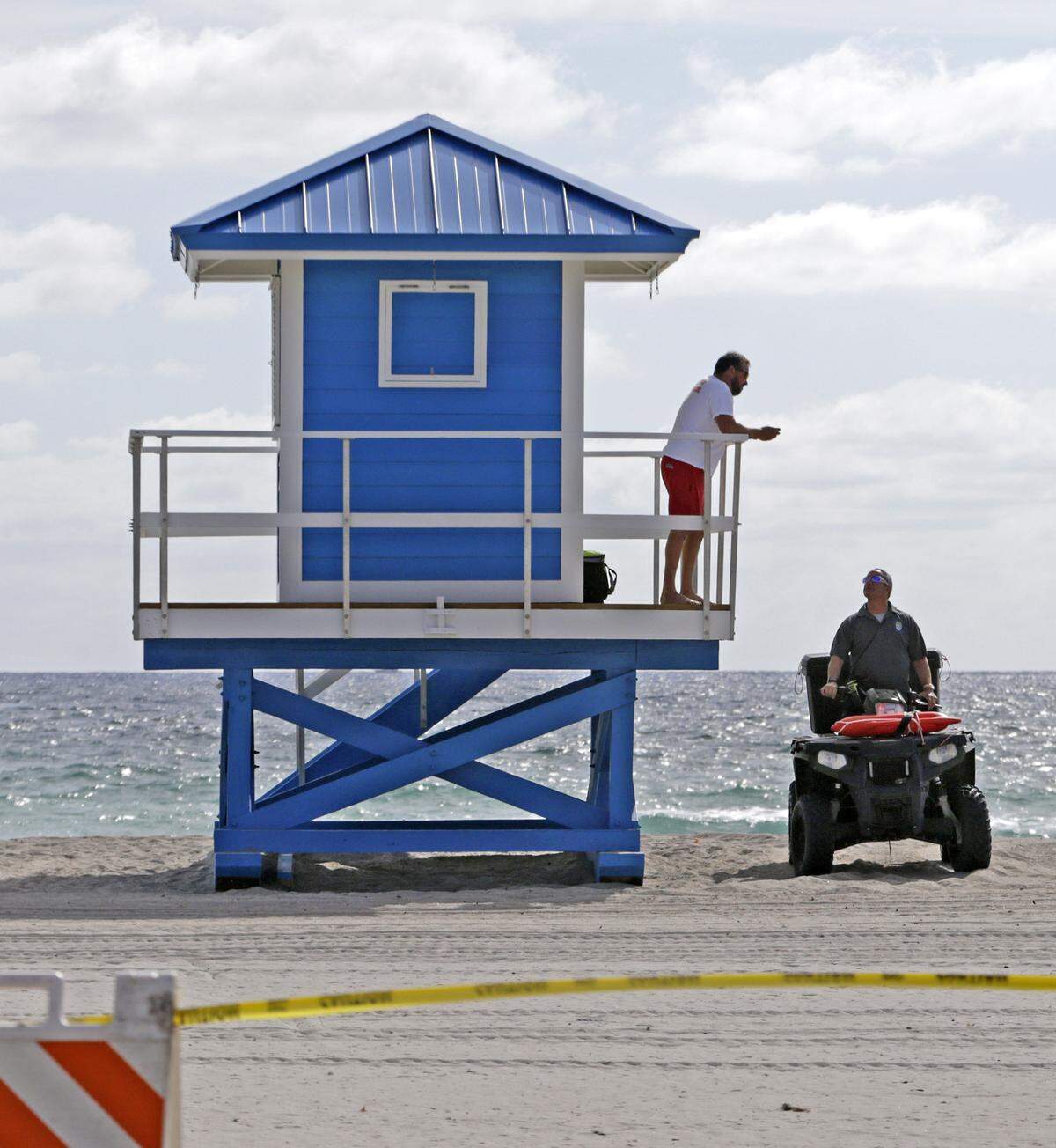
“Sometimes you have to grab the swimmer, get up close and personal and bring them to shore. If someone is drowning, a rescue is always a risk. But that’s what we live for. That’s why we love our jobs. That’s why lifeguards never leave,” Sparling said. “We use surfboards, buoys with a rope and Jet Skis with sleds, and we’ll utilize those to help distance ourselves from the victim.”
Even before the coronavirus pandemic, lifeguards tried to manage rescues without physical contact, Sparling said. As explanation, he recounted an incident from early in his 23-year career when a woman who did not know how to swim stepped off a sand bar into a deep water hole.
“I swam out and handed her my buoy, attached with a rope to my shoulder harness,” he said. “I turned and started to swim in and she panicked. She used the rope to pull me back toward her and put me in a headlock. She slammed me underwater so she could use me to stay above water. She was a bigger lady and she was so strong. I had issues getting her off me. I would push off the bottom, come up for air and she’d shove me back down. Fortunately another lifeguard on a Jet Ski came over and got her onto the Jet Ski.
“I never should have turned my back on her. It’s our trained lifeguard response to keep buoys and boards between ourselves and the victim, so that will be even more important with the potential of COVID-19 infection. Each beach is struggling with how we’ll handle certain situations. We are all talking to each other about the best methods.”
Prevention, always lifeguards’ No. 1 priority, will receive even more emphasis, O’Connor said.
“We are responding to emergencies in bathing suits and bare feet; we understand and accept risk,” she said. “We’re going to work really hard to prevent emergencies. We’ll be educating the public about safety and warning people about rip currents. We’ll be very proactive.”
The primary means of coronavirus transmission is via respiratory droplets, but mouth-to-mouth contact is no longer part of standard resuscitation protocol. Lifeguards use automated cardiopulmonary machines to administer compressions. They typically wear goggles and gloves, and now they’ll wear masks, too. They use barrier devices, plastic one-way valves and bag valve masks when a victim needs air pumped into the lungs.
“We’ve all performed rescues on our days off, so we’ve been trained to do mouth-to-mouth if necessary, but in recent years we have moved away from that procedure,” Sparling said.
Beach lifeguards who are employees of fire-rescue departments are trained emergency medical technicians and paramedics.
“Heart attacks, heat stroke, diabetic shock, sinking boats, snorkelers too far from their boats, car accidents on the boulevard, fights on the beach, lewd and lascivious conduct on the nude beach — we do it all,” Sparling said. “Lifeguarding is like firefighting. You never know what you’ll get so you are prepared to deal with any emergency.”
A surge of visitors is expected when beaches reopen, and that will ease as the summer season sets in. Miami-Dade Mayor Carlos Gimenez has assigned 400 people to assist with social distancing at parks, and 10 will help out at Haulover, Sparling said.
“Haulover and Crandon don’t see as many tourists as Miami Beach and Fort Lauderdale,” he said. “We have a lot of locals and regulars we see every single day. I have hope they won’t mess it up. I expect most people to be responsible and conscientious.”
Said O’Connor: “I think we’ll see a big crowd at first, depending on the restrictions. Beaches are free. People have been stuck at home and kids are going to be done with school.”
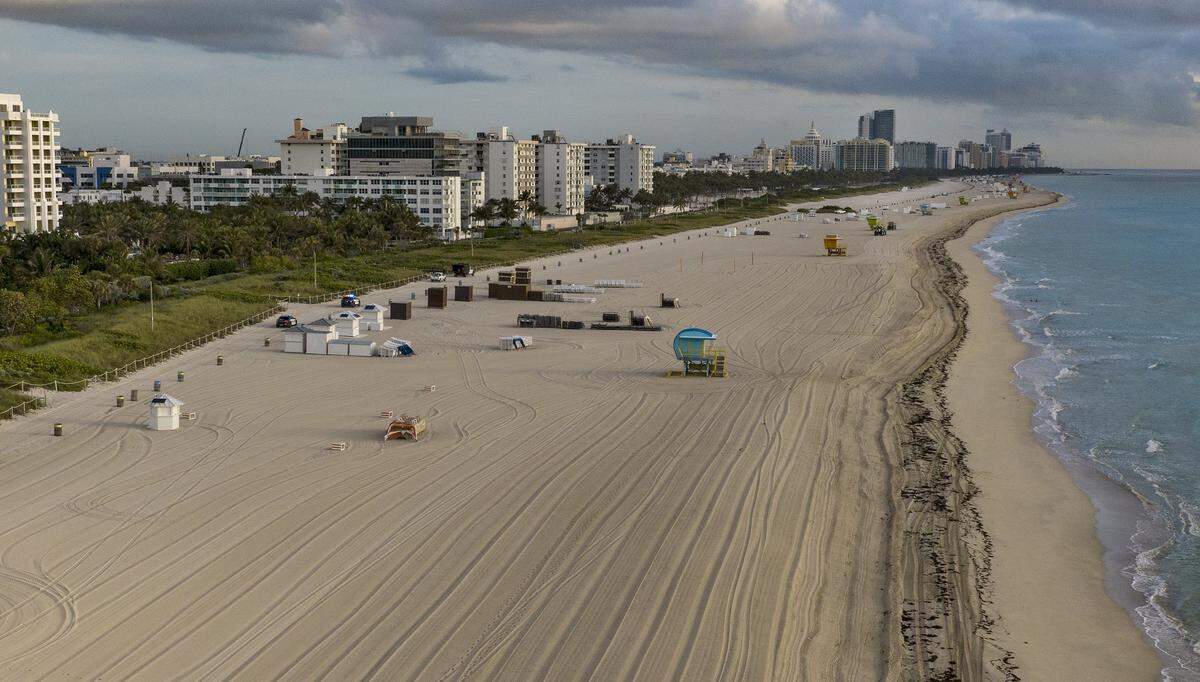
While the beaches have been closed, lifeguards have been busy.
Fort Lauderdale kept its 20 towers manned. Lifeguards were often first responders to car, cycling and pedestrian accidents along A1A. They saved a diver who strayed too far from his boat and a Jet Ski driver in distress. They’ve been keeping boat traffic out of the vessel exclusion zone and the odd beachgoer off the sand.
“With the marinas open, the boat traffic has been crazy, it’s been like a holiday weekend every weekend,” O’Connor said. “We’ve had a few stragglers on the beach. One guy jumped a barrier and sprinted into the water and we had to bring him to shore. For the most part, people have been orderly.”
Miami-Dade kept a skeletal crew patrolling Haulover, where there are 17 towers, and Crandon, where there are 13 towers.
Most of the county’s 27 full-time lifeguards were deployed to administer drive-through blood tests at libraries and in-home swab tests for special-needs residents. They’ve been performing temperature tests and asking screening questions for employees at police and fire headquarters, the South Dade Government Center and PortMiami. They’ve done maintenance on their equipment.
In Miami Beach, 47 part-time Ocean Rescue employees were furloughed and 93 full-time employees were assigned to guard barricaded beach entrances and keep cyclists and skaters off the South Beach beachwalk before 9 a.m. and after 5 p.m. when pedestrian traffic is heaviest. They helped the U.S. Coast Guard in its search for a missing diver in Government Cut; he was later spotted offshore by a Coast Guard helicopter.
“Once the beaches open, we will staff enough employees to ensure the safety of the public,” a spokeswoman said of the city’s seven miles of beach. “Enforcement of the distancing guidelines on the beach has yet to be determined, but I’m sure Ocean Rescue will play a part.”
Training to stay fit is a part of a lifeguard’s job. Twice a year they have to pass a physical agility test, which includes completing a 500-meter swim in 10 minutes or less and a run-swim-run test in 11:30 or less.
“We usually train as a group on the beach but we’ve had to do it on our own with all the public pools closed,” said Sparling, a former Miami Columbus High and University of Miami swimmer. “Most of us are ex-athletes, so working out is a habit.”
Said O’Connor, a former high school swimmer and collegiate rower: “We’ve used the time to increase our medical, physical and Jet Ski training.”
Fort Lauderdale Vice Mayor Steve Glassman said in a newsletter to residents that he hopes they will cooperate with lifeguards when the beach reopens with restrictions: No sitting or sunbathing, no picnics, no groups larger than 10.
“That doesn’t mean party time, but I think we can smartly look at it as an extension of the congested A1A sidewalks and other roadways, where folks can swim, walk, run and recreate on the sand and elsewhere,” he said. “The worst thing that could happen is if we reopen all at once and too quickly and then relapse because we were not smart.”
Said Sparling: “We all miss the beach. When we go back, we’ve got to do it right.”
Miami Herald Staff Writer Martin Vassolo contributed to this report.
This story was originally published May 23, 2020 at 6:45 AM.