Contact tracing calls can help stop coronavirus spread. Here’s the problem
Contract tracing is considered a critical part of stopping a possible second wave of COVID-19. But in Florida, no stranger to scams, getting people to pick up the phone and trust the health representative on the other line with personal information can be difficult.
The tracers are virus detectives, tracking down newly infected people and those with whom they may have had close contact with in an effort to isolate them and stop the disease from spreading.
Its not a new concept. State health departments have used the practice for generations to alert others to possible exposure to sexually transmitted diseases and other infections.
But “it’s usually not a fun call” when a stranger from the health department calls to ask you personal questions or to say you may have been exposed to a disease. “Most would be dreading that call,” a Florida Department of Health contact tracer told the Miami Herald.
The COVID-19 pandemic has made it even more difficult.
Tracers will call from a number you don’t recognize and ask questions about your current health, your medical history and recent travels. They also want to know what businesses you’ve recently visited and who you physically spent time with.
The calls can make people wary, especially with the number of scammers out there trying to get hold of your personal information — like bank accounts and Social Security numbers — to commit identity theft and deplete your bank accounts.
“Even when we communicate who we are there are roadblocks,” said the contact tracer, who asked for anonymity. “Some people are happy to help and to talk about everything they went through. Or, they don’t believe you are from the health department and, unfortunately, there are savvy scammers. People are scared of scams and giving out info even though we are not asking for any Social Security or payment information.”
The contract tracer said they will ask for you to confirm date of birth and address to ensure they are speaking with the right person but some people “would rather not answer or hang up.”
“And that’s a disservice because then we can’t contact people,” the contact tracer said.
The people who don’t answer or avoid the phone calls can also make the jobs of state epidemiologists and other public health officials more difficult. The information collected through the contact tracing calls can help officials determine the spread of COVID-19 in the community and flag possible cases that were previously missed, like at the Braden River Rehabilitation Center.
Patricia “Pat” Schafer died at the Bradenton nursing home. Her cause of death was listed as old age and pneumonia but her roommate had died from COVID-19 complications.
A contact tracer assigned to the roommate’s case found Schafer’s death odd and flagged it to the health department. Schafer’s remains were then tested and three weeks later, her cause of death was changed to be COVID-19 related.
The information collected by contact tracers can also help officials create a timeline of the disease-spread and gives health departments the ability to quickly identify and contain an outbreak.
A case study conducted in Chicago and released last month by the Centers for Disease Control and Prevention showed how a funeral and a birthday party held three days apart in February, before major social distancing policies were started, set off a chain reaction of infections and “may have facilitated transmission of COVID-19 to the broader Chicago community,” according to the Washington Post.
And in Florida, we now know that the novel coronavirus silently began spreading through Central Florida and North Florida during January, a time when COVID-19 testing didn’t exist in the U.S. and many healthcare practitioners might have mistaken it for the flu.
In order to learn more about COVID-19 and help limit and eventually stop the spread of COVID-19 in the state, contact tracers say they need you to pick up the phone. The call can take up to 20 minutes, depending on how much information the person provides.
But if you’re worried about falling for a scam, there are ways to identify if the COVID-19 call is legitimate or not. Here’s what you need to know:
Why would a contact tracer call me?
Contact tracers are provided with cases culled from the health department’s Merlin system, the state’s repository of reportable disease case reports, and assigned about 40 to 50 cases a week.
There are only two reasons why you would receive a call from a contact tracer:
▪ You received a positive result for COVID-19 from a testing site.
▪ Someone who tested positive for the disease told a contact tracer they had recently been in contact with you.
What type of questions do contact tracers ask?
If you tested positive for COVID-19:
▪ You will be asked to confirm your birth date and address for identification purposes. You will also be asked about your medical history, the symptoms you’ve had, your travel history and the contacts you have had with others.
According to the contact tracer, the call may resemble something along these lines: “Good afternoon, my name is [contact tracer’s name] from the Florida Department of Health. May I speak with [name of person that tested positive?] I’m calling to confirm a recent test result you got and to confirm your date of birth and address.”
The contact tracer who spoke to the Miami Herald said, “I try to avoid saying ‘COVID’ off the bat in case it’s not the person I’m trying to reach.’ But individual callers may vary.
▪ The calls can vary from a few minutes to about 20 minutes, depending on how much information you share with the contact tracer.
“I’ve had some grandmas who will talk for 30 to 40 minutes and they want to tell you their whole life story,” the contact tracer said. “It varies. Every case is unique.”
If you were in contact with someone who recently tested positive for COVID-19:
▪ The contact tracer would let you know and may suggest you self-quarantine and get tested.
▪ The tracer will not tell you, or an employer, the identity of the infected person because that violates the Health Insurance Portability and Accountability Act of 1996. HIPAA is a federal law that prohibits the release of sensitive patient health information from being disclosed without the patient’s consent or knowledge.
The contact tracer will also call the grocery store, restaurant, pharmacy or any other business that was visited by someone who recently tested positive for the disease to notify them. Again, they will not disclose the person’s identity.
“The primary goal is to reach out ... and to try to guide you as best we can, using CDC guidelines, to try to limit the spread as much as possible,” the tracer said.
▪ The Florida Department of Health has also posted a sample of its screening forms online. The form is an example of the type of information contact tracers may ask you about.
You can look at the form ahead of time to get an idea of what you may be asked. If you did a COVID-19 test and are awaiting results, you could print a copy of the form and start to fill it out. This way, if your test result comes back positive, you will have the information fresh in your mind for when the contact tracing call arrives.
Some questions on the form include a list of symptoms you can check off and when they started, and whether you live in a group setting such as an assisted living facility. There are also questions on race and ethnicity, what diagnoses you received, questions on whether you have traveled to a region with sustained community transmission, if you had travel companions on this trip and who they were.
To see the form, visit http://www.floridahealth.gov/diseases-and-conditions/disease-reporting-and-management/disease-reporting-and-surveillance/_documents/covid-19-screening-form.pdf
How can I tell the difference between a real contact tracer and a scammer?
▪ Legitimate contact tracers will tell you their names.
▪ A contact tracer with the Florida Department of Health would already have information on the day and date that you got tested, what the result said, and the location where you got the test.
If they don’t have the information or they ask: Where did you get tested? When did you get tested? What were your test results? It’s a scammer.
▪ The contact tracer would already have your birth date and, 99% of the time, your address, unless the testing site marked it incorrectly when filling out the forms during your test, the tracer said. This means the caller can tell you the birth date they have on file from the Merlin report and you can confirm whether that is indeed you.
▪ A legit contact tracer will never ask for your Social Security number to verify your identity or any other financial information, such as your bank or credit card account number. If they do, it smells like a scam.
▪ A real contact tracer will never reveal the identity of the person who tested positive to anyone they reach out to who may have been in contact with the person who tested positive. So, if they say your friend Lucy tested positive, then you know it’s a scam.
▪ A real contact tracer should be able to immediately provide you with up-to-date testing locations — with addresses, phone numbers and whether or not you need to make an appointment at a particular location and what you will need to bring.
However, this should not be the only indicator you rely on to determine if the contact tracer is legitimate. This is because testing site information is readily available online through the counties and media reports.
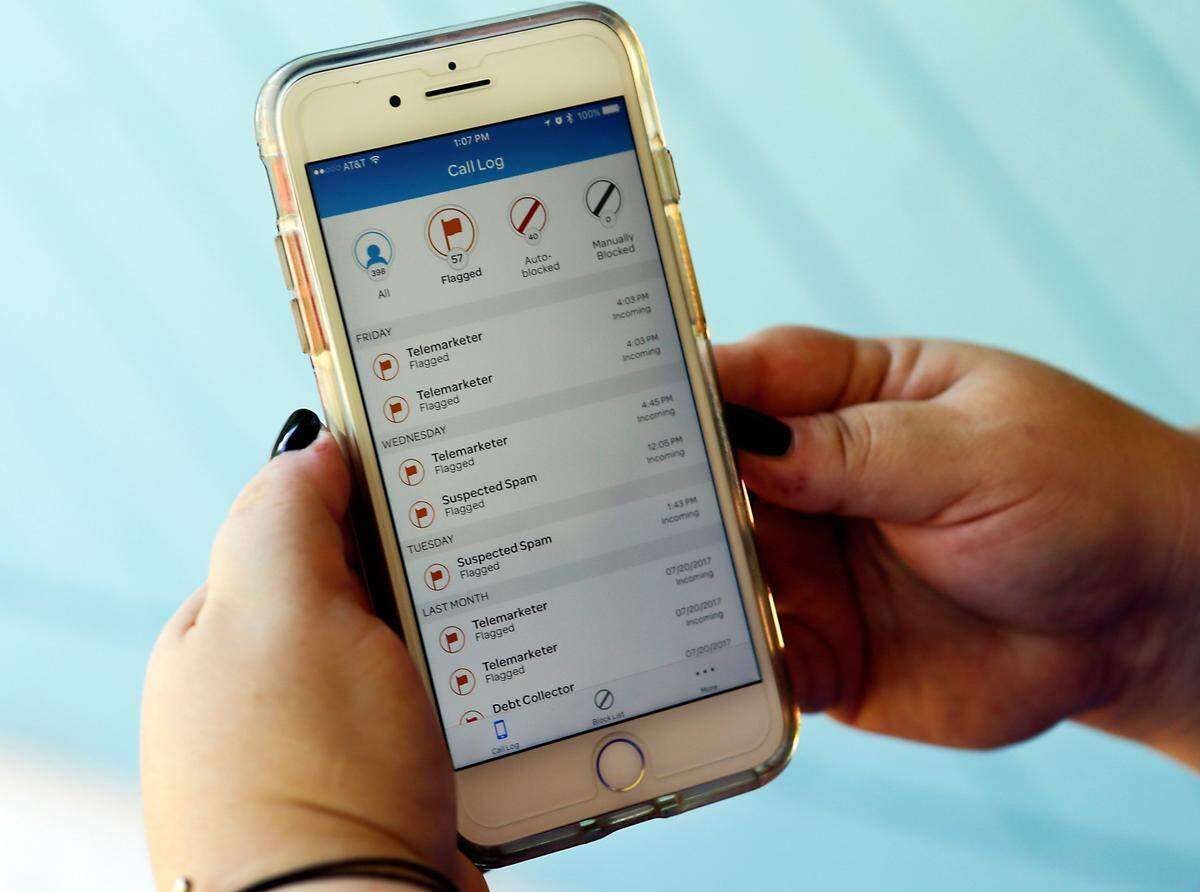
▪ Some caller IDs will reflect the call is coming from the Florida Department of Health (FDOH) but this won’t always be the case since many tracers are calling from remote locations — a problem in instilling trust.
▪ Most contact tracers with the Florida Department of Health will call between 9 a.m. and 8 p.m., the contact tracer said. The calls may come just before 9 a.m. but not too much earlier and most will not call after 7:30 p.m. If you don’t answer, they will call multiple times and leave a voicemail with a callback number.
If you get a call at a strange hour, like late in the evening or very early in the morning, do not accept the call or answer any questions. You should also avoid using the word “yes” if the person on the other end asks you by name if you are the person with whom they are speaking.
What can I do if I am still not sure I am speaking to a legit contact tracer?
▪ The Florida Department of Health has established a phone number you can call to confirm if you were contacted by a legitimate contact tracer. The phone number is 305-470-5660.
A real tracer will not be put out if you ask to end the call so that you can contact the department to verify their identity.
Legitimate contact tracers will provide you with their phone number so that you can call them back once you are comfortable that you have confirmed their legitimacy. If you have a voicemail with a callback number from someone who claims they are a contact tracer, you should call the health department’s phone number first to verify the tracer before calling back.