Miami woman arrested for refusing to leave beach in protest of Miami-Dade order
Miami Beach police arrested a woman protesting Sunday who walked onto the sand in South Beach and refused to leave in violation of countywide orders aimed at preventing the spread of COVID-19.
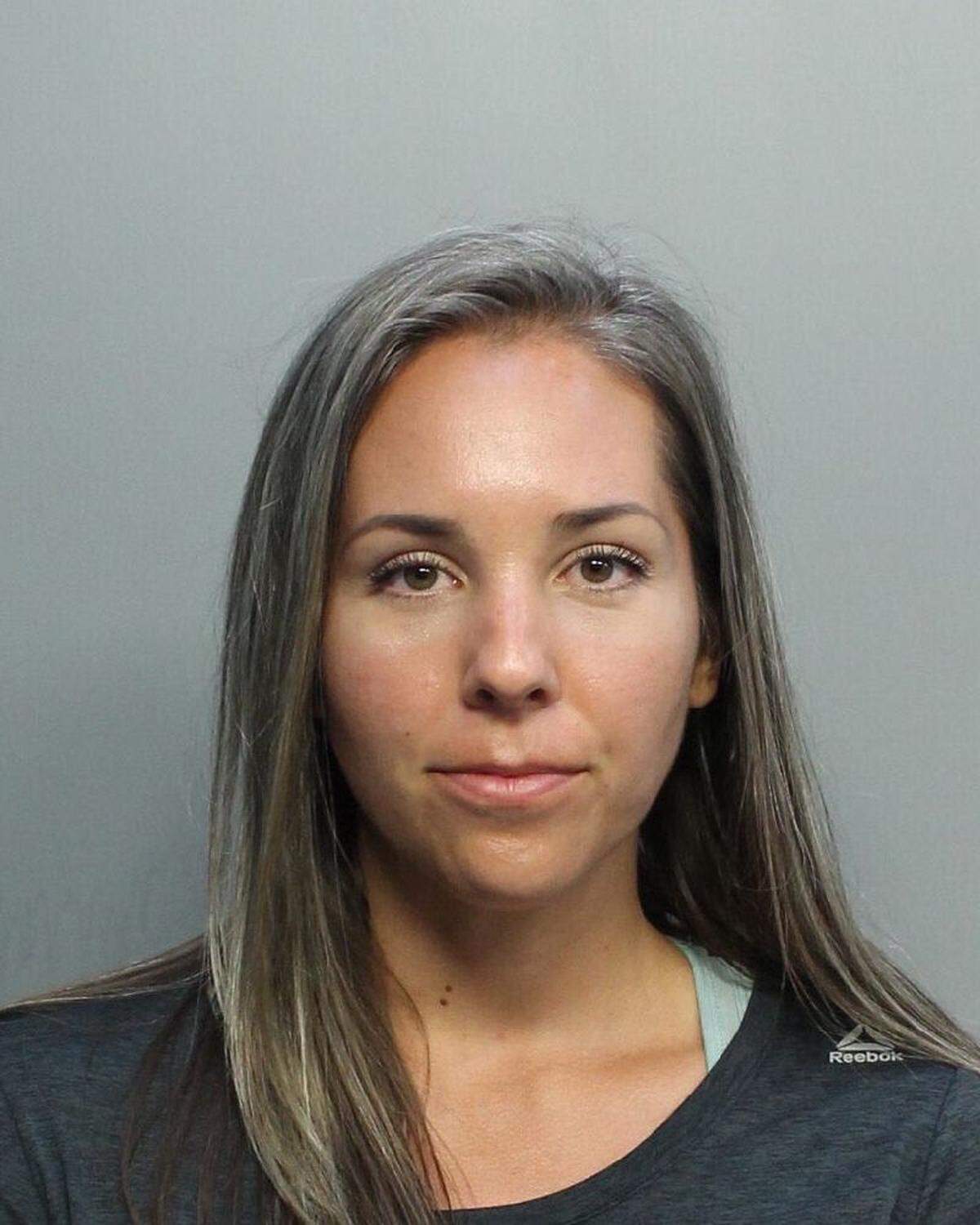
Kimberlee Falkenstine, a 33-year-old Miami resident, was charged with resisting an officer without violence, trespassing after receiving a warning, and violating an emergency order.
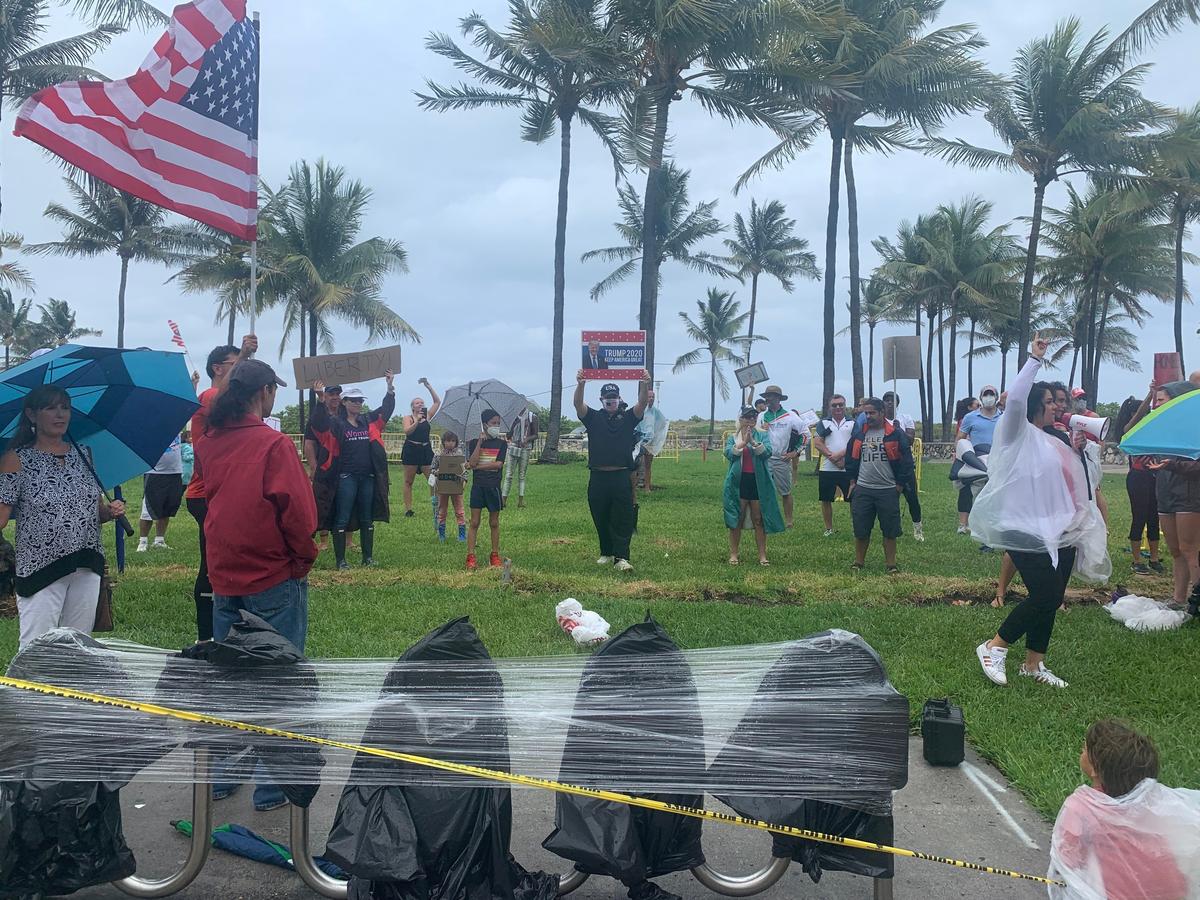
Falkenstine left a designated protest area in Lummus Park where about 50 others had gathered, walking past signs and orange plastic barriers indicating the beach was closed before she sat down with a sign that said, “we are free,” according to an arrest report.
“The defendant stated she left the designated protest area and wanted to sit on the beach to make a statement,” the report said.
Falkenstine “mentioned that the beach was for the public and that it was her right to be there,” police said.
Footage of the arrest posted to Facebook shows officers approaching Falkenstine multiple times before at least three officers picked her up and carried her to a police car that was parked on the beach nearby. Officers warned the woman “numerous times” to leave, according to Miami Beach police spokesman Ernesto Rodriguez.
After Falkenstine was handcuffed around 4 p.m., she “dropped her dead weight and [refused] to move,” so officers carried her to the police car, the arrest report says.
She was transported to the Miami Beach police station and then to Turner Guilford Knight Correctional Center in West Miami-Dade, where she was held on $2,500 bond, according to Miami-Dade corrections online records.
Falkenstine was one of the protesters who had gathered inside a designated, fenced-off area around 7th Street and Ocean Drive to rail against the continued closure of beaches and businesses deemed non-essential in Miami-Dade County due to the ongoing novel coronavirus pandemic.
A few dozen people held signs and chanted, “all jobs are essential,” and “freedom over fear.”
Chris Nelson, one of the protest organizers who filmed the arrest, said Falkenstine made the decision on her own to walk onto the beach.
All beaches in Miami-Dade County have been closed since March 19 under an emergency order to prevent the spread of COVID-19, which has hit South Florida harder than other parts of the state. Out of 1,721 recorded deaths in Florida from the novel coronavirus as of Sunday, 487 (28%) have been Miami-Dade residents, according to the Florida Department of Health.
Under the county’s executive order, all beaches were closed except those under state or federal jurisdiction. The county has since reopened parks and some recreational facilities with restrictions in place, but beaches remain closed.
Miami Beach Mayor Dan Gelber has said he plans to keep his city’s beaches closed until at least early June, even if the county allows them to open sooner. Gelber has acknowledged that people likely died as a result of spring break parties and tourists who visited Miami Beach in March even as the novel coronavirus was spreading across the region.
“We know that people died because of those gatherings,” Gelber said last month. “It makes no sense to gamble that we’ll be fine. This isn’t the time to hope you’re lucky.”
Gov. Ron DeSantis allowed some Florida beaches to reopen in mid-April after shutting them down earlier in the month. On May 4, he also gave non-essential businesses in most of the state the green light to reopen under certain conditions.
But Miami-Dade and Broward County have been excluded from those measures. Miami-Dade County Mayor Carlos Gimenez said Friday that some businesses would be allowed to reopen May 18. Beaches throughout the county will remain closed.
The incident on the beach Sunday was the only arrest made at the protest, which remained peaceful. Miami Beach officials knew earlier in the day that the protest was planned — a city memo said 200 people were expected, though far fewer showed up on a rainy afternoon.
Most were not wearing masks and stood a few feet from one another while chanting and holding signs. Miami Beach and Miami-Dade County officials have offered conflicting messages on whether masks are required to be worn in parks at all times.
Police did not ask the protesters to disperse, despite a countywide ban on public gatherings of 10 or more people. City Attorney Raul Aguila said the protesters didn’t have a permit or need one to hold the event, but that officials decided to let them gather “under agreed upon conditions and limitations.”
“I think this is certainly a better plan, in light of other similar demonstrations taking place around the country which have ended in violence and loss to property,” Aguila told the Herald.
Myriam Marquez, a spokeswoman for the county mayor, said generally that protesters could be in violation of county orders “if they are not practicing social distancing.” She didn’t immediately comment on Sunday’s protest in Miami Beach and whether it should have been allowed.
Herald staff writer Martin Vassolo contributed to this report.
This story was originally published May 10, 2020 at 6:57 PM.