Cities try to plot the reopening of their economies. It won’t be the life you knew
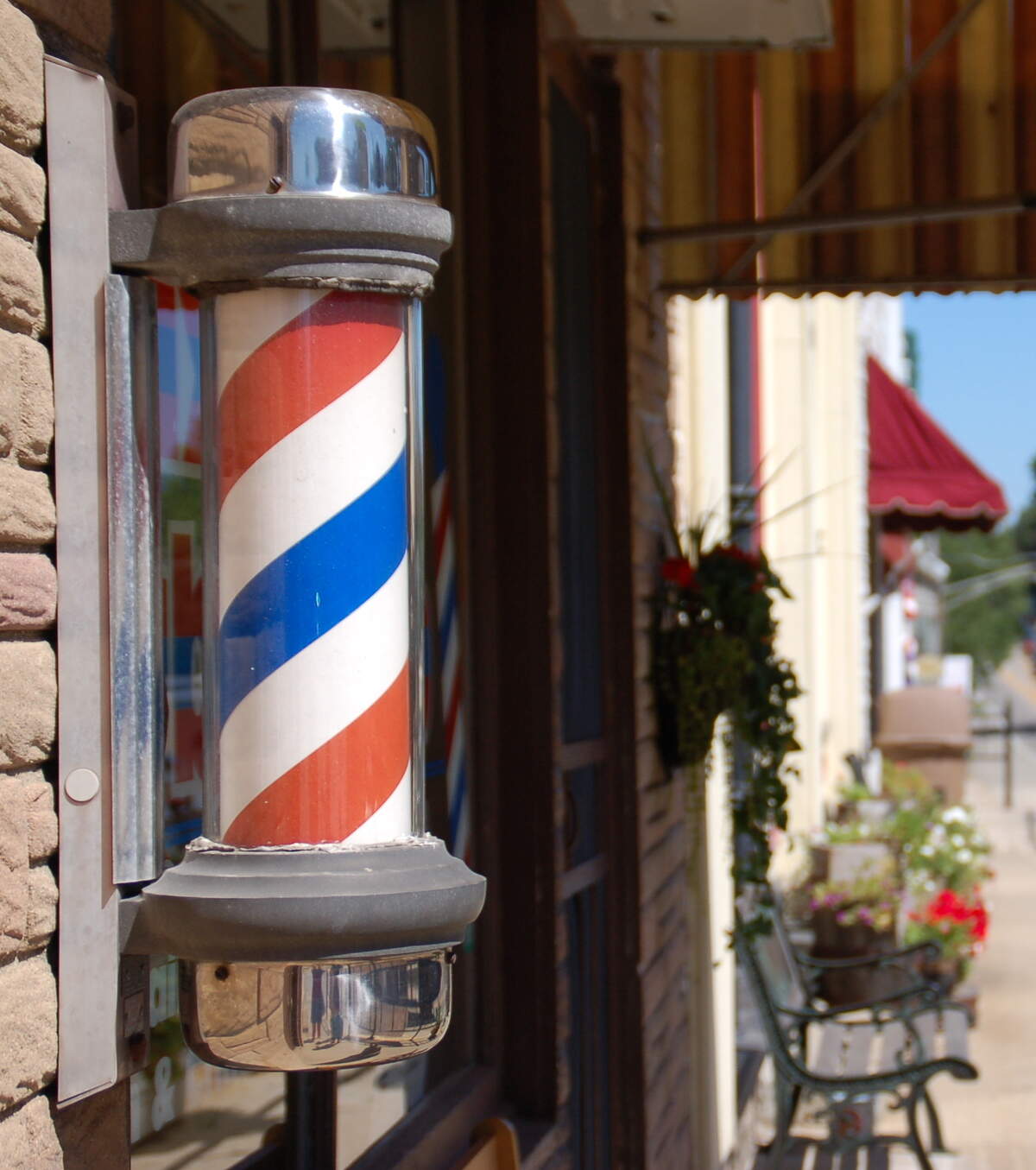
Richard Ruiz’s family has owned the Miami Lakes Barber Shop for more than 50 years. Barbers there have groomed the heads of former U.S. Sen. Bob Graham, comedy great Jackie Gleason and Miami Dolphins legend Don Shula. A haircut there might come with a thimble of cafecito, or a guitar serenade from a few of the old-timers who’ve wielded shears for years.
That was before the coronavirus pandemic dismantled everyday life for much of the world, grinding economies to a halt and spurring government orders for people to stay at home as much as possible.
Like so many small businesses struggling to stay alive while shuttered, Ruiz is making plans for how to operate under a “new normal,” whenever that is allowed. He’s hoping that he can open his doors again within the next two months. The shop might not last more than that without income.
“I’m going to fight as hard as I can to keep paying the bills,” Ruiz said. “The community has been here for us for so many years.”
On Wednesday, Miami-Dade County will initiate phase one of its plan to return community life to a semblance of normalcy, opening parks, golf courses and marinas with strict social distancing rules in place. Business owners hope that means reopening businesses will follow soon after.
But there’s no timeline yet, and many thorny questions are still unanswered. How can a family go out to dinner safely in a world with COVID-19? How can a gym, where equipment is shared and space is often limited, prevent an outbreak? How can friends toast at the bar during happy hour under social distancing?
Ruiz is one of a group of proprietors on a large Miami-Dade task force developing recommendations for how to eventually reopen businesses. It’s unclear when that might be, or when COVID-19’s threat to public health will be contained enough to begin restarting the local economy. When it happens, Ruiz has ideas for how to run a business that will likely be in high demand.
He envisions selling haircuts by appointment only, and allowing only a few patrons inside at a time. People would wait their turn in their cars. The barbers would don gloves, masks and face shields, their chairs spaced at least six feet apart. A sign-in sheet would be kept on a table outside. The door could even be locked to prevent people from walking inside.
“It’s not only for their safety. It’s for our safety,” Ruiz said.
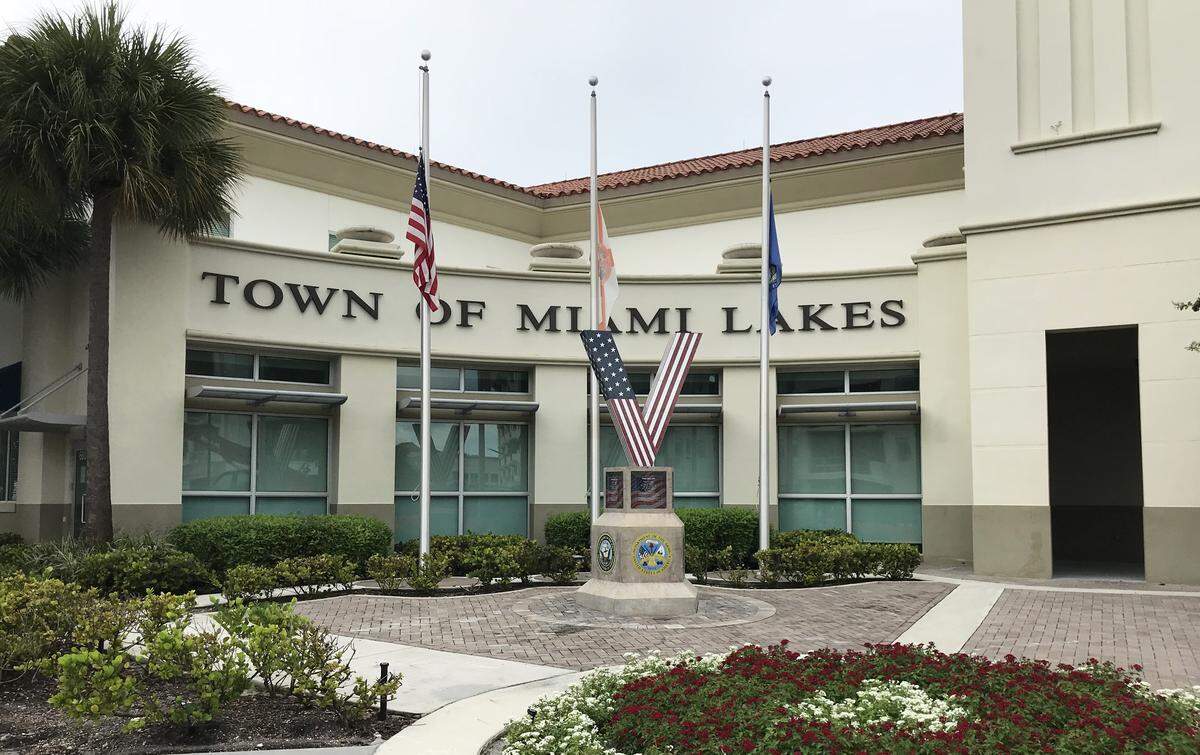
He’s made his case to Miami Lakes’ Town Council, which will consider rules for reopening some small businesses this week. Restrictions could include hard limits on occupancy, and only certain small businesses opening at first. Other local governments are pondering when to lift restrictions and, once rules are loosened, how to get back to work.
South Florida has born the brunt of the pandemic in the state. As Gov. Ron DeSantis considers when to reopen Florida, a clear picture of Miami-Dade’s readiness to handle a wide-scale reopening has yet to develop.
The numbers of reported COVID-19 infections and deaths are not consistently increasing statewide, though epidemiologists say that Florida will need to test thousands more daily to better understand the extent of the pandemic and safely open businesses. Enforcement will provide new challenges in multiple jurisdictions, where people will likely be expected to wear masks and practice social distancing for the foreseeable future.
In describing a bevy of new rules for public parks that will reopen Wednesday, Miami-Dade Mayor Carlos Gimenez called it a “new normal.” The phrase is echoing through government halls, where authorities are grappling with how to keep citizens safe while restarting the economy.
Miami’s plan
In Miami, Mayor Francis Suarez on Monday announced a broad outline of a three-phase plan to reignite commerce and allow people to get back to some semblance of normal life.
There’s no date for when Miami-Dade’s largest city will take its first step, which would include reopening public parks and lifting a 10 p.m. to 5 a.m. curfew. The mayor said that date will be determined after he consults with the Florida Department of Health on three data points: confirmed COVID-19 infections, the number of people reporting flu-like symptoms, and hospitalizations. If the numbers show a downward trend over a 14-day period, the reopening process will start.
Though Miami will not reopen parks, marinas and Virginia Key beach when most of Miami-Dade County’s parks open their gates Wednesday, Suarez said city administrators have a general idea of the pecking order once reopenings begin.
During phase one, some nonessential businesses could reopen with a quarter of the usual occupancy, and no more than 125 people would be allowed in any establishment.
The next two steps include looser regulations on businesses. In the second phase, restaurants may be allowed to reopen with restrictions. Business could run at 50% occupancy, with a 250-person limit. Movie theaters, bars and casinos would stay closed.
In phase three, bars that do not serve food could reopen with limited capacity, gyms could operate with strict distancing requirements and cleaning protocols, and movie theaters and live performance venues could open with distancing rules.
City Manager Art Noriega said more specific regulations would be released later.
“I want to emphasize this is a strategic plan. It is not a detailed plan,” Noriega said Monday. The city manager added that specific policies on how certain businesses can operate will be outlined in emergency orders as the city moves from one phase to the next.
One constant in Miami’s plan: For the foreseeable future, administrators expect people to wear face coverings in public and practice social distancing — a measure Suarez said will be difficult to enforce whenever the city does reopen parks and other public spaces.
It’s unclear how far away Miami is from enacting the first phase. Commissioners said they support the administration’s intention to let state health officials make the call, particularly because Miami is South Florida’s densest population center.
“If we get things wrong and move too quickly, the results of those mistakes could be exponential in our dense areas compared to other more rural areas,” said Commissioner Ken Russell.
Thermometers and Plexiglass in restaurants?
In a memo Monday, Coral Gables’ economic development department outlined its own recommendations for a three-phase reopening of businesses. Among the requirements being considered for restaurants: checking people’s temperature before they enter a restaurant, and installing “transparent plexiglass shields” to separate patrons from each other.
The city is also creating a task force, made up of about 11 businesspeople to hash out the details of the plan. It will include representatives from the University of Miami, the Coral Gables Chamber of Commerce, and Coral Gables Hospital, among others.
“I want to understand what the business community needs to make sure the transition is as painless and as expedited as possible,” said Vice Mayor Vince Lago, who proposed the task force.
Other strategies Miami-Dade cities are considering to help proprietors include temporarily eliminating fees for permits and business licenses and accelerating the process for administrative approvals at city halls.
Cities are also taking direct steps to put money in business owners’ hands. In North Miami, the city’s community redevelopment agency is providing 50 local businesses with grants of up to $1,000 each to cover expenses for limited operations while the pandemic is ongoing.
Another 120 North Miami small businesses will be able to receive up to $5,000 each, for a total of $600,000, in grants once the city’s state of emergency is lifted. Those grants will be available to businesses that demonstrate they already applied for a disaster loan from the U.S. Small Business Association.
This story was originally published April 29, 2020 at 6:30 AM.