
‘What are we waiting for?’ Miami-Dade mayor ready to reopen parks, marinas, golf courses
Miami-Dade Mayor Carlos Gimenez said he’s ready to implement detailed rules of conduct to allow parks, marinas and golf courses to reopen countywide, casting off concerns that the spread of coronavirus is still too risky to loosen restrictions.
The plan released Monday would require park goers to walk with masks, but allow them to remove face coverings if they start jogging. Basketball courts would be restricted to three players per half court, while boats longer than 37 feet could have eight adults aboard and an unspecified number of children. Caddies will be banned on golf courses, dog parks and tot lots closed, and picnic areas declared off limits.
“We would like for people to get some fresh air and sunshine,” Gimenez said during a Facebook question-and-answer session. “But do it in a responsible way.”
Gimenez hasn’t said when he plans to lift the March 19 order closing parks and golf courses or the March 21 order closing marinas and impose the new set of rules allowing them to reopen. But he said to expect the announcement soon, and that the new rules would leave those outdoor activities in the low-risk category for COVID-19 spread.
“If it’s inherently safe, then what are we waiting for?” he said.
As Gimenez prepares for his first significant easing of emergency restrictions he imposed on the county over the last five weeks, the Republican congressional candidate is facing questions about timing and whether the new recreational rules can be enforced.
Gimenez versus Mucarsel-Powell on opening parks
Rep. Debbie Mucarsel-Powell, the freshman Democrat whom Gimenez hopes to challenge in the fall, held a press conference ahead of Gimenez’s event and said it’s too early to loosen rules in Miami-Dade.
“The moment you open any public space, you’re going to see huge numbers of people. And we’re going to have to have law enforcement all over the place,” she said. “I say we need to wait, we need to see when we reach that peak. We need to make sure we have enough testing in place. That we don’t overwhelm our health infrastructure.”
At a committee meeting earlier in the day, Miami-Dade Commissioner Barbara Jordan questioned a plan that relies on people following rules that may allow people to shoot baskets, but not play a basketball game.
“We have young people out there who are very restless,” she said. “You can say as much as you want that we are not going to be doing any contact sports. But kids are desperate to get out there.”
Gimenez countered that the measures imposed in Miami and across the county closing businesses and limiting access to public spaces can’t endure without some plan to end them. “There are lot of people out there suffering, Commissioner,” he said. “We have to give them a ray of hope.”
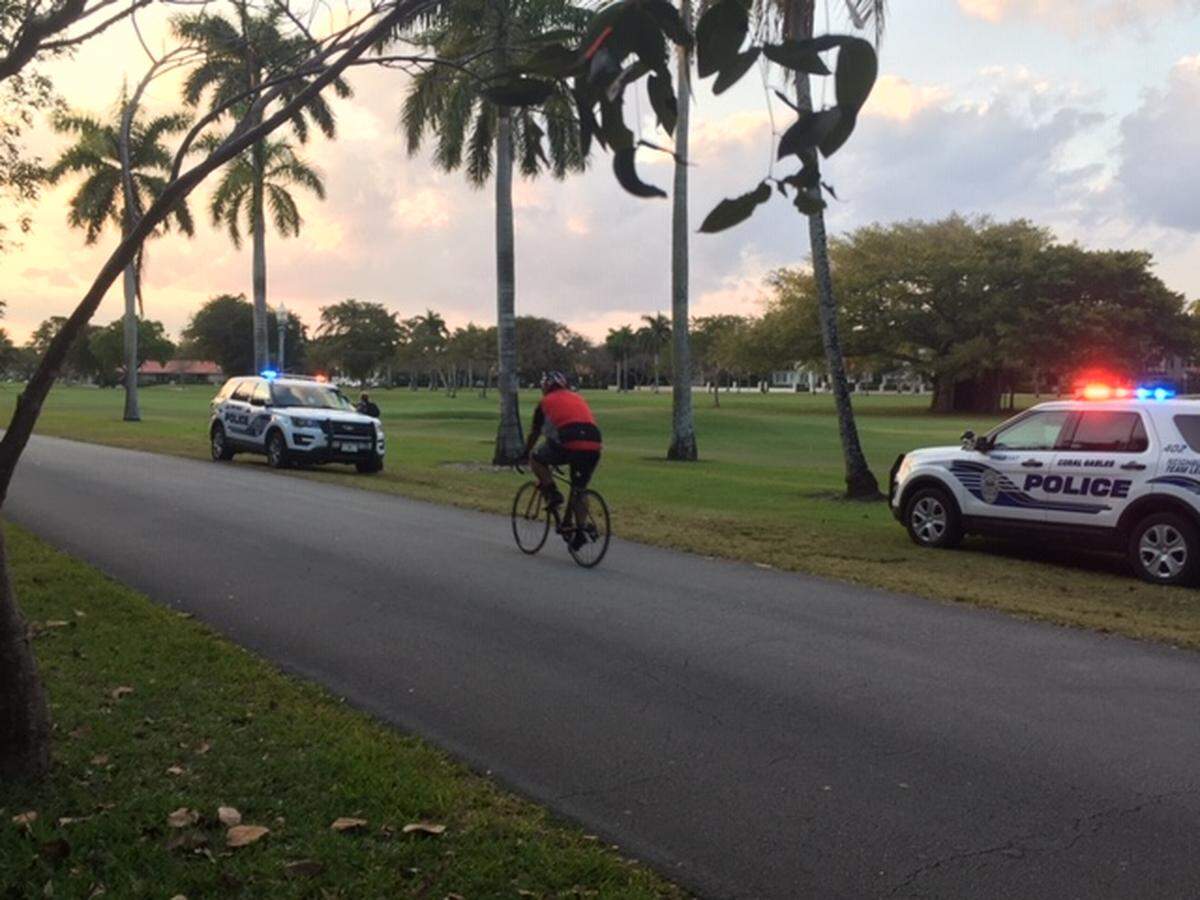
The effort to ease some restrictions comes as Florida Gov. Ron DeSantis convened a group, which includes South Florida mayors, to make recommendations on how to reopen the economy during a coronavirus epidemic that continues to dominate daily life.
Publix on Monday required employees across its chain to wear face coverings, a rule already in place countywide in Miami-Dade. Broward Health reopened a second mobile testing site at Festival Marketplace in Pompano Beach. The site, at 2900 W. Sample Road, was opened for a brief period last month, but closed because of supply issues.
Florida’s Department of Health on Monday evening confirmed 398 additional cases of COVID-19 since the morning, bringing the state total of known cases to 27,058, as the state announced 34 new deaths, spiking the overall death toll to 823.
In Miami-Dade, the state added eight people who’ve died of the disease, raising the county’s death toll to 223, the highest in the state. In Broward, two more deaths have raised the county’s death count to 122, now on par with the number of reported deaths in Palm Beach County.
Miami-Dade beaches not reopening soon
While Miami-Dade’s parks, marinas and golf courses would reopen under the draft plan released by Gimenez’s office Monday night, beaches would remain closed. Gimenez said Miami-Dade isn’t yet ready for the crowds sure to arrive once beaches reopen.
At the Facebook Live event, Gimenez answered questions selected by his press secretary from members of the public and media who submitted them through social media and emails. One person, identified as a first responder, wrote that Miami-Dade residents have already shown they can’t follow social-distancing rules so why ask more of them with more complicated rules at parks and on the water?
Gimenez, who closed marinas after the Miami Herald published photos of a boat party at the Haulover sand bar, said marine law enforcement is more prepared now to enforce his existing no-rafting orders. He said the policy shouldn’t be driven by scattered problems if the majority of people are able to follow the rules.
“Because there are some who can’t follow the rules doesn’t mean you should hamper everybody else from enjoying themselves,” he said.
The enforcement issue has prompted one of Gimenez’s top public-health advisers to question whether Miami-Dade is ready for looser rules. Dr. Aileen Marty, the Florida International University researcher who was part of Gimenez’s “Moving to a New Normal” task force, said she was discouraged by recent encounters with people clustered together without masks.
“Too many members of the population continue to disregard the risk from this virus,” said Marty, who joined Gimenez and Mucarsel-Powell for their Monday events. She said the Gimenez plan will work if people follow the rules. Otherwise, she said, parks would have to stay closed until the spread of COVID-19 slows considerably.
Dr. Lilian Abbo, an infectious disease researcher at the University of Miami, was also a member of the group and said the Gimenez plan will work if people follow the rules. “We have all agreed that as long as these recommendations are enforced and monitored, it’s safe to proceed,” she said.
Even with Gimenez lifting his countywide order to close parks, closure orders from cities could remain if municipal leaders choose not to follow the county mayor’s lead. Cities also could impose new rules restricting marinas, boat ramps and parks within their jurisdictions.
Gimenez said there was some debate over whether park bathrooms should remain closed to prevent contact with doors and flat surfaces. He said health authorities convinced skeptics that restrooms needed to be available, leading to another concern: Would some visitors steal still-precious toilet paper?
“We have to have toilet paper guards,” he said in an apparent joke referring to increased staffing at parks to enforce the new rules.
Miami Herald staff writers Aaron Leibowitz, David Neal, Bianca Padró Ocasio, and Carli Teproff contributed to this report.
This story was originally published April 20, 2020 at 9:16 PM.