
Will you still get parking or red-light camera tickets during coronavirus? It depends
When Josue Alvarez returned to his car after a workout by the boardwalk at South Pointe Pier on March 19, he was surprised to find a $36 ticket on his windshield for an overdue street parking meter.
“There’s a global pandemic going on, people are dying, losing their jobs and urged to remain inside, and [Miami Beach] parking is going around trying to ticket people for expired meters and towing?” Alvarez said in a text message.
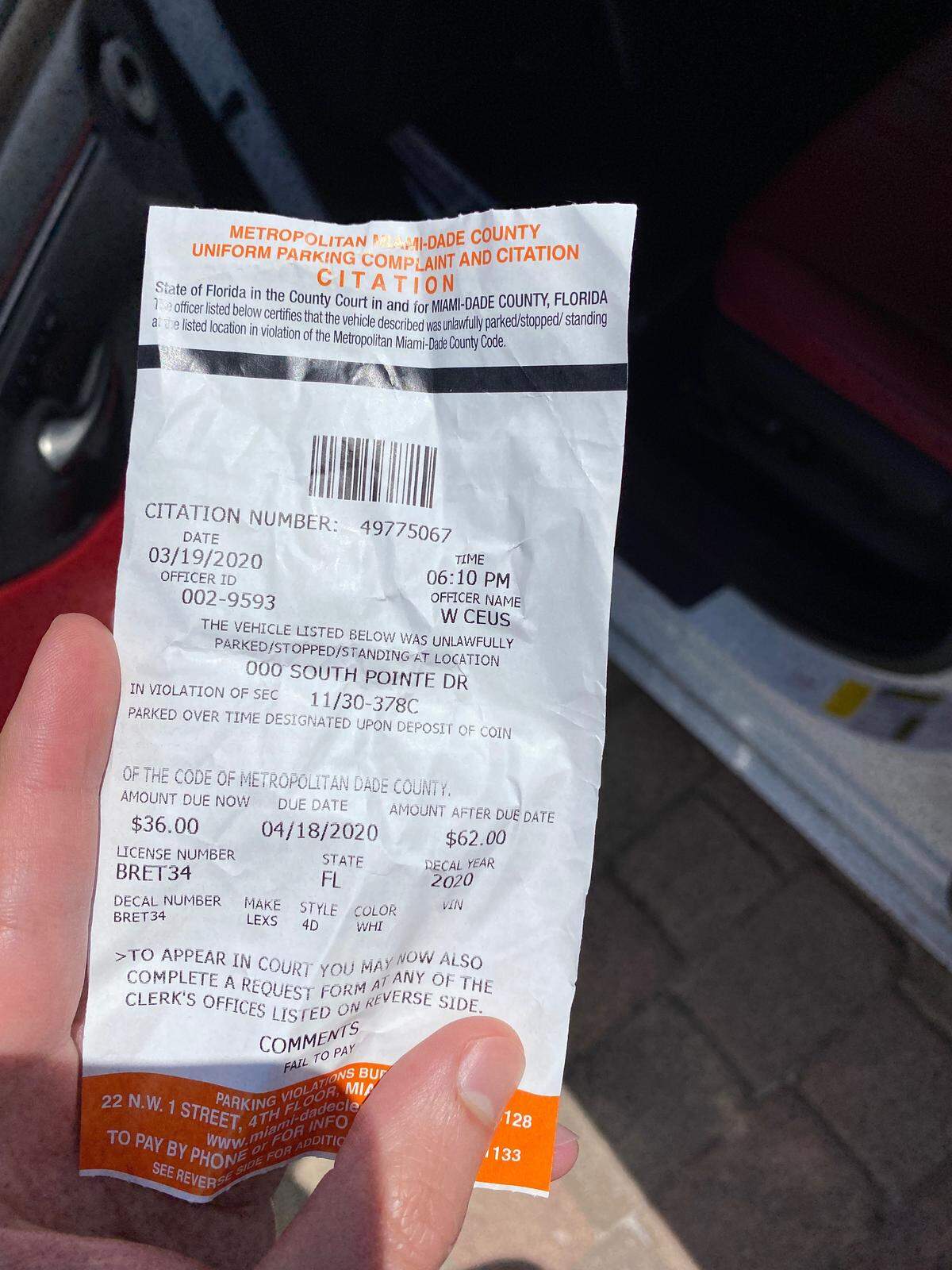
With local, countywide and statewide stay-at-home orders in place as the number of COVID-19 cases continues to skyrocket across Florida, some local governments say they’re writing much fewer parking tickets, recognizing that residents are using their cars sparingly for essential activities.
In the city of Miami, for example, the Miami Parking Authority stopped issuing tickets at meters entirely on March 19. Alejandra Argudin, the parking authority’s CEO, said the decision became necessary as regular business in Miami slowed dramatically.
“We felt it wasn’t prudent for us to be giving tickets at a time like this, when people were scrambling to see if they could keep their jobs,” Argudin said.
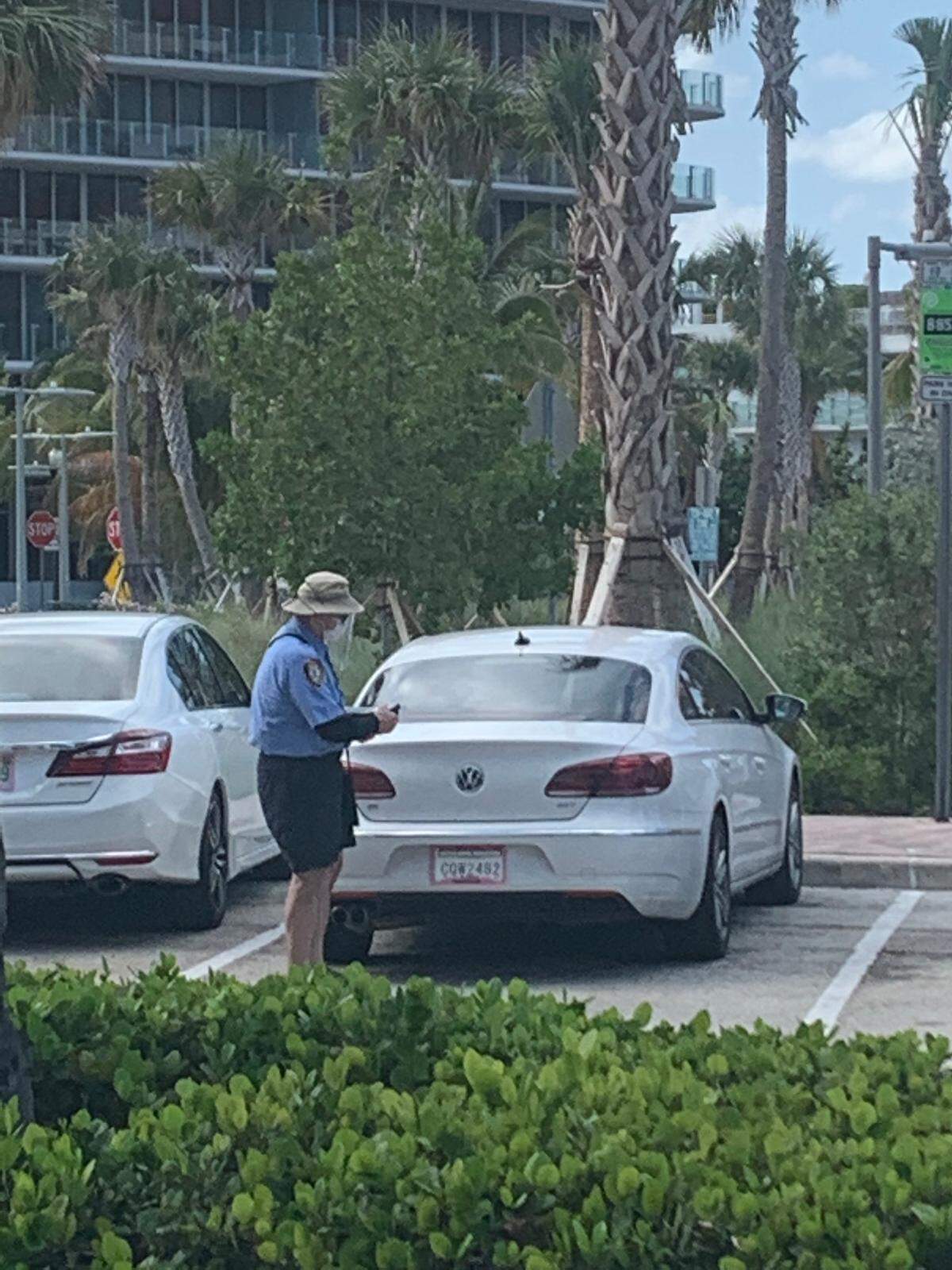
That’s why Alvarez was taken aback last week when he again saw a parking enforcement officer roaming his neighborhood in Miami Beach, including on March 31 and April 2. The officer was writing tickets while wearing a mask to protect against the novel coronavirus.
The city of Miami Beach has not stopped issuing parking citations, city spokeswoman Melissa Berthier said, but the economic slowdown caused by COVID-19 has led to significant cuts within the department and a more lenient enforcement approach.
“We are being very lenient and having a lot of flexibility when enforcing parking violations,” Berthier said in an email, though she noted that some enforcement has continued in order to “maintain parking availability in support of essential businesses.”
She added that “public safety violations” like vehicles blocking fire hydrants, driveways or sidewalks are still enforced. “We do, however, make our best effort to find the driver and have the vehicle moved before issuing a citation,” Berthier said.
The revenue hit to the city has been substantial. Miami Beach has removed all curbside and off-street pay stations, allowing mobile payments as the only option. Those meter payments are down 89% compared to average weekly revenue, according to city data.
Enforcement citations are also down 90%, the data shows. The city collected $6,312 between March 22 and 28, a decrease of $56,060 from the average weekly revenues. Towing is down 86% citywide, Berthier said, with the city collecting $1,440 between March 22 and 28. An average week nets the city $10,236.
Complaints about Miami Beach parking tickets have circulated on social media in recent weeks, with some people calling for a freeze on the tickets unless there’s a clear hazard.
One photograph taken at 81st Street and Abbott Ave. shows a citation taped to a pole, along with a message for the ticket officer: “Where should I park my car? There is no parking at night. You are unjustly leaving the community here tickets.”
A spokesman for Beach Towing, one of two tow companies that operate in the city, said the company remains open to provide services to police and fire departments, but operations have virtually been suspended.
Some cities say they’ve made accommodations so residents can park safely while picking up food or buying essential items. In Coral Gables, as of March 19, residents get 10 minutes of free parking time — usually with some leeway — to park on Miracle Mile.
And the Miami Parking Authority has repurposed curbside spots used by valets into delivery pickup zones.
Miami-Dade police spokesman Christopher Sowerby-Thomas said it’s business as usual in unincorporated parts of the county, but county police don’t have their own parking enforcers.
County police are still responding to, for example, complaints about cars parked in loading zones at condominiums.
“We’re still doing things the same way, not changing anything,” Sowerby-Thomas said.
Red-light camera tickets
The tickets that several cities in South Florida issue based on camera footage at traffic lights have long been controversial. In late 2018, a judge ruled that the lack of uniform rules from city to city violates state law.
But the fines — which amount to $158 per violation, or $258 if unsuccessfully challenged at a hearing — are still being collected in Aventura despite the ongoing COVID-19 crisis, according to multiple residents.
Jose Smith, a former city attorney for Miami Beach and North Miami Beach, said he represented his wife on March 11 at her red-light ticket hearing. Around 30 people were there for similar hearings, Smith said, and all of them were found in violation and ordered to pay.
“What’s appalling is that, while every city is halting their code enforcement and violations and giving residents a break, [Aventura is] just barging ahead,” Smith said.
The city has canceled subsequent red-light ticket hearings, according to the city website, but Smith’s wife still received a March 31 mail notice to pay a $258 fine by April 18.
Failure to make that payment, the notice said, could result in the Florida Department of Highway Safety and Motor Vehicles placing “a hold on the issuance of a license plate or revalidation sticker.”
Aventura Mayor Enid Weisman did not immediately respond to a request for comment.
In Miami Gardens, red-light camera fines and penalties were suspended March 11, when the city declared a state of emergency.
“As of March 11, 2020, there have been no obligations to residents for red light camera fines and penalties,” city spokeswoman Tamara Wadley said in an email.
On March 16, 2020, Wadley added, residents were advised that existing violation notices “will not escalate and fines will not be accrued during this period.”
Erhabor Ighodaro, a Miami Gardens councilman who is running for state senate, also called on the county and the state of Florida to suspend red-light camera tickets in a March 25 video posted on Facebook.
“Our people should not be worried [about] whether their driver’s license is going to be suspended when the fate of their livelihood is under suspense,” he said.