Virtual seders and kosher prep tutorials. How coronavirus crisis is changing Passover
The Passover Seder table at the Lurie house is usually festooned with kosher wine, matzoh and bitter herbs.
The most important part of their holiday dinner: about 30 family and friends.
But the Luries — along with Jewish families in South Florida and around the world — are rethinking how to celebrate the springtime holiday that commemorates the Jews’ exodus from Egypt. It’s because of the COVID-19 pandemic.
“It’s a sacrifice to make, Passover by ourselves,” Noti Lurie said of the holiday, which begins Wednesday night and spans eight days. “But seeing what’s happening in New York and so many other places — it’s a small sacrifice.”
Last week, Florida Gov. Ron DeSantis announced that all non-essential businesses and services would be suspended until the end of April. While the order does not apply to religious gatherings, a group of Orthodox rabbis urged people not to travel to South Florida for the holiday, an annual tradition involving many from the Northeast, an area decimated by the coronavirus.
South Florida synagogues have suspended services and canceled community celebrations, or moved them to online platforms. Miami Beach has recently banned minyans, or Jewish prayer gatherings in private homes.
Seder, which translates to order, is usually held on the first two nights of the holiday. The tradition involves retelling the sacred story so that its message of freedom passes from generation to generation, and reading from the Haggadah, or prayer book.
Many of the items used in the Seder are symbolic. Wine represents redemption; saltwater represents tears. Another tradition: leaving an empty place setting for the prophet Elijah and opening the door to let him in.
“There is no question that this is going to be a challenge,” said Jacob Solomon, president of the Greater Miami Jewish Federation. “There is no getting around it being a tremendous loss.”
But Solomon said adaptation is key. Instead of mass gatherings at synagogues and private homes, Jews are learning how to hold their own holiday meal when geography has separated the family.
For the Luries, having to celebrate without their adult children being part of the actual Seder — both live in New York — will be difficult.
“In whatever situation we’re in, you’re supposed to try and see the good in it and accept everything with joy,” Lurie said.
Virtual Seders during Passover
On the first night of Passover, families usually gather around the table for the ritual-infused Seder. While some communities are encouraging Zoom get-togethers, livestreams or phone conversations, some Jews refrain from using electricity on the Sabbath and holidays.
Rabbi Yossi Harlig, leader of the Chabad of Kendall and Pinecrest, said he plans on having a pre-Seder Wednesday, via Zoom and Facebook, with his congregation before the sun goes down, marking the start of the holiday. In past years, he has held a Seder at the synagogue with up to 100 people.
“We can still share parts of the holiday together even though we are physically apart,” Harlig said.
Other rabbis are offering tutorials on how much food to get, what prayers to say and how to properly tell the Passover story.
Rabbi Frederick Klein, executive vice president of the Rabbinical Association of Greater Miami, said this year many are being forced “to go back to the basics,” because they have never had to prepare their own Seder. The Greater Miami Jewish Federation is offering a guide to the holiday on its website.
Klein, who said his own children wouldn’t be able to join him because they are in other states, said Passover is about unity and connection. And while people may not physically be together, they can be together spiritually.
“We want this to be a time to connect to Jewish tradition,” he said. “You can’t neglect yourself spiritually.”
Some synagogues are turning to technology to keep the traditions going.
Temple Beth Sholom in Miami Beach is holding a Virtual Community Second Seder led by Rabbi Gayle Pomerantz, Rabbi Ethan Bair and Cantor Lisa Segal.
Temple Judea Rabbi Judith Siegal, who leads the Reform synagogue in Coral Gables, said the temple has already been using technology to increase access to services, but they are still trying to adapt to a virtual Passover celebration. There will be a Zoom community Seder on the second night.
“We are essentially having to rethink how we engage with the tradition and how we pass on these stories,” Siegal said. “It presents some real challenges.”
Of foremost importance, keeping people safe: “One of the things we are trying to emphasize is the value of preserving life over everything. Right now the best thing we can do is what we have to do to protect each other.”
Rabbi Alvin Berkun, who lives at the senior living community Vi at Aventura, will livestream a Seder from his apartment that will be broadcast on the complex’s in-house TV channel.
Berkun is the former Rabbi Emeritus of Tree of Life Synagogue in Pittsburgh, where a 2018 mass shooting left 11 people dead.
For many in the community, it will be the first time they have to celebrate the holiday alone.
Celebrating at home
It’s not easy readying one’s home for Passover.
Between the dietary restrictions and scrubbing the kitchen to ensure it’s Kosher, the process can be grueling. That’s why Passover vacations have become immensely popular in the Orthodox community, says TotallyJewishTravel.com co-owner Raphi Bloom.
“It’s a way of not having to go through the stress and work of preparing your home,” explained Bloom, whose website has grown into the definitive guide for Jewish and Kosher travel since its launch in 1999.
Places like Miami Beach and Orlando are attractive destinations for these holiday packages, especially for New Yorkers. But a letter signed by numerous South Florida Jewish leaders warned against traveling to the Sunshine State for Passover due to the COVID-19 outbreak.
“To all those from out of state considering spending Pesach here in Florida: It’s Halachically prohibited and medically irresponsible to come for Pesach,” the letter begins.
In fact, Jewish leaders said traveling would be a breach of Jewish religious law.
This mandate left many scrambling for refunds and searching for options. In one case, students, parents and staff of New York City’s Magen David Yeshivah planned a trip to the Eden Roc hotel in Miami Beach and made a $2.3 million down payment. The group sued after the hotel refused to refund the money.
Chabad of South Broward Rabbi Raphael Tennenhaus believes some Jews are concerned about celebrating the holiday at home.
“For some people, they’ve never made a Seder,” Tennenhaus said.
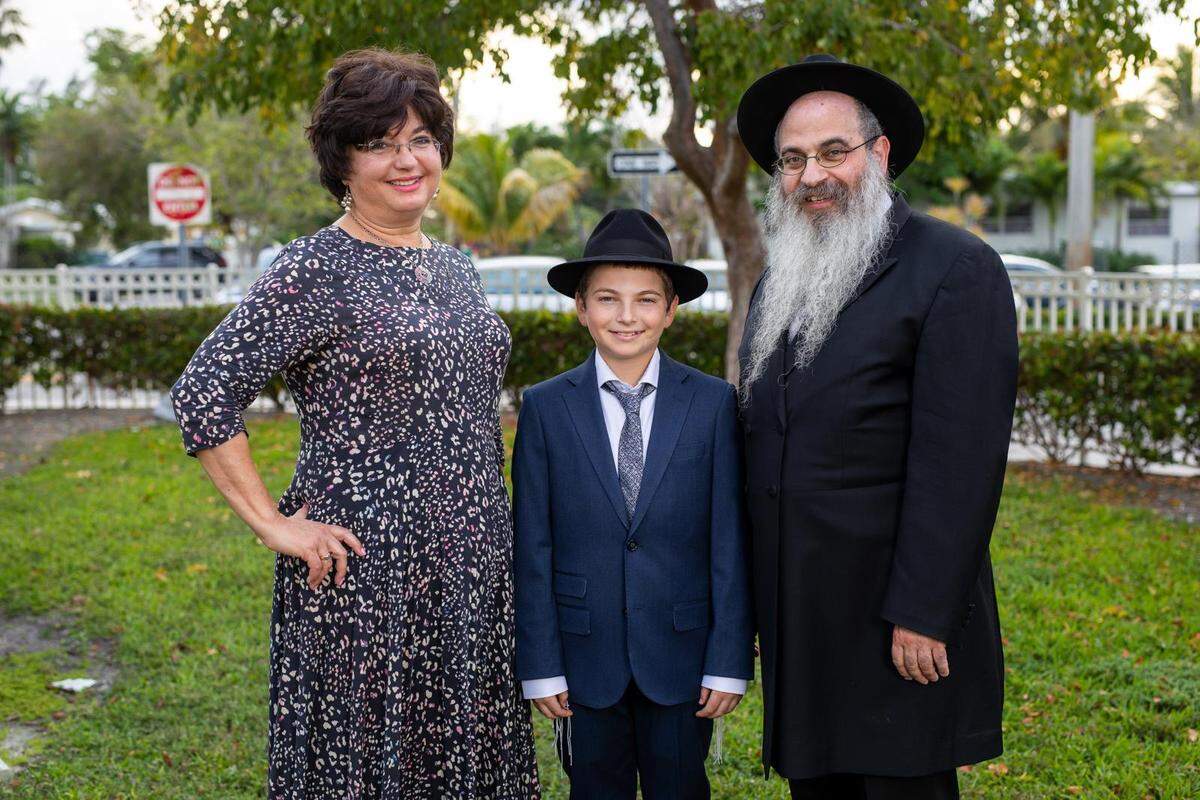
Tennenhaus, however, sees this as a learning opportunity. Pointing to the Passover guide on his chabad’s website, he explained how these adverse circumstances could be a blessing.
“For so many people, this will be a great opportunity to absorb and educate themselves like never before about the holiday. And not just the historic part of the holiday, but how the holiday influences our general life.”
What about the food?
Food is central to Passover.
In years past, caterers often provided enough food for large communal gatherings, not individual Seders.
Food for Passover is different. Those who observe will not eat leavened breads, as well as other foods made with wheat, barley, rye, spelt and oats. The tradition commemorates how the Israelites did not have time to bake their breads during the exodus.
Jews will instead eat the unleavened, cracker-like flatbread known as matzoh.
Although getting food stamped with “Kosher for Passover” can be a challenge, the COVID-19 pandemic has made it more difficult. With the governor’s stay-at-home order, people are being advised to limit their trips to supermarkets and grocery stores and store shelves are not as full.
Organizations like the Chabad of South Broward are helping seniors and others expecting to be alone for the holiday. Called “Soups and Seders,” they will deliver more than $40,000 in food and money to those with limited resources this Passover.
“Our role as leaders and social services in the community for 40 years [has been] to help as many people as we can,” Tennenhaus said.
Goodman Jewish Family Services of Broward County, through its Doris & Ben J. Genet Cupboard, has distributed hundreds of Seder meals to those in need.
Bess Serbin, who lives in Cocount Creek, left with eggs, juice and vegetables.
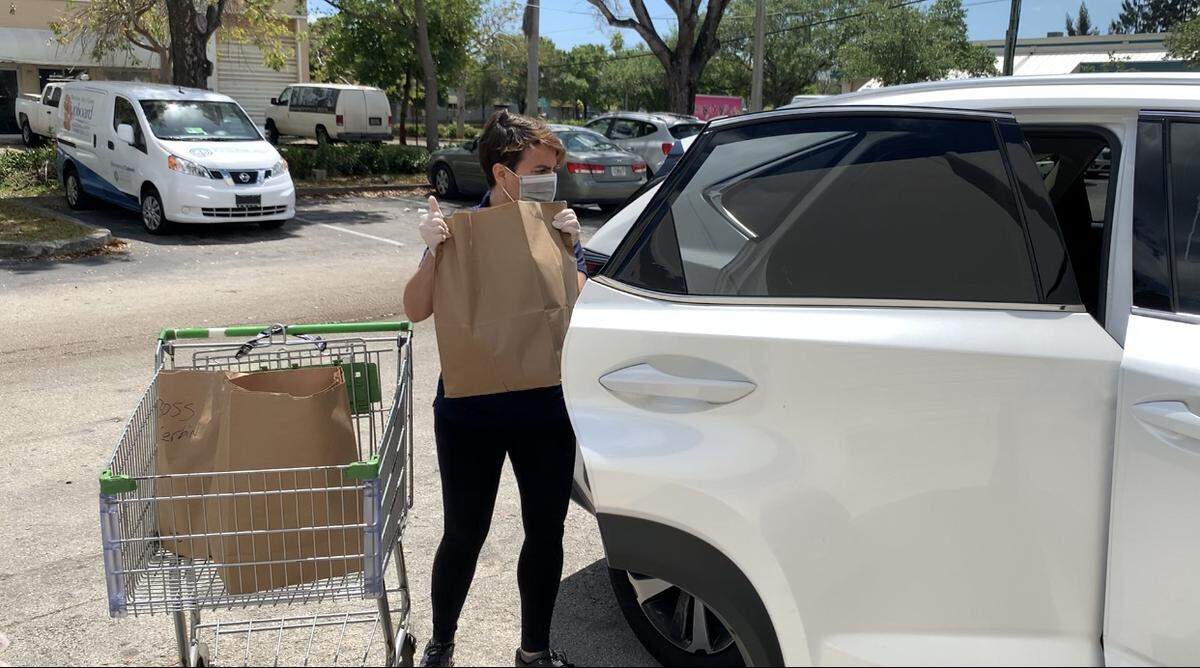
“I really appreciate everything that is done here,” she said in a video.
The Greater Miami Jewish Federation is providing boxed meals on the first night. The Kosher Food Bank, through Jewish Community Services, is also helping people get kosher-for-Passover food.
Rabbi Harlig and his children have been delivering unopened boxes of matzoh to families in Kendall and Pinecrest. Harlig said they are wearing masks and gloves and leaving the wrapped boxes at doorsteps.
Some people who have never hosted their own Seder are turning to takeout from restaurants, groceries and caterers.
Vi Aventura launched a virtual Cooking with Bubbe’ Series to share holiday recipes for those who live in the community. A resident is filmed sharing their favorite traditional recipes straight from their own kitchen. The first one features Susan Shovers demonstrating how to make Apple Matzoh Kugel.
Temple Judea is referring people to the caterers the synagogue would typically use for its community Seder. Fare to Remember, a Palmetto Bay caterer, is selling a Seder in the Box, served family style.
Chef Dewey LoSasso of Bill Hansen Catering in Coconut Grove said they have been flooded with calls from people ordering Passover meals. In addition to traditional menu items like matzoh ball soup and potato kugel, he is trying to incorporate vegetables from farmers in Homestead, who have been hit hard by the pandemic.
LoSasso said normally they would be catering large Seders, but quickly decided to switch gears to help home cooks.
“We are all trying to make the best of this situation,” he said. “We are banding together in isolation.”
This story was originally published April 6, 2020 at 6:00 AM.