‘Parks don’t kill people’: Stuck at home, residents plead for green spaces to reopen
Nothing has kept Robert “The Raven” Kraft from running eight miles every single day for 45 years. Not hurricanes, not lightning, not food poisoning, not pneumonia, and now, despite the official closure of his beloved beach trail, not even coronavirus.
Kraft has been forced to suspend his diehard group runs from the Fifth Street lifeguard station. The public is barred from the beach indefinitely to prevent the spread of coronavirus. But “The Raven” is not your average beachgoer. He is a Miami Beach institution. After hearing a plea from his loyal followers, city leaders allowed him to keep his streak going, on the sand for the sake of his aching back, as long as he runs alone.
“I’m going solo, and the lifeguards and police know I have permission to be out there where I belong,” said Kraft, 69. “I want to give people hope by showing them here is one steadfast thing that hasn’t changed in our upside-down world.”
While the great outdoors is greater than ever as an escape from a disease that thrives on human contact, the complications of social distancing have made going outside as fraught as being stuck inside a crowded place.
Green sanctuaries and trusted routes still provide a mental and physical release, and neighborhoods have come alive with walkers, cyclists, yard games, DIY beaches, scavenger hunts, coronavirus “victory gardens” and lawn-chair happy hours.
But as parks are closed in an effort to suppress the ultra-contagious virus, people are being shunted into narrower spaces and trying to unwind while avoiding the panting jogger crossing their path.
There is growing resistance to blanket shutdowns of parks and open spaces. Many people argue that such deprivation is counterproductive. Not only could heavy-handed enforcement backfire over a long period of stay-at-home orders, but exercise and sunlight, the building blocks of immunity and resilience, are powerful weapons against COVID-19.
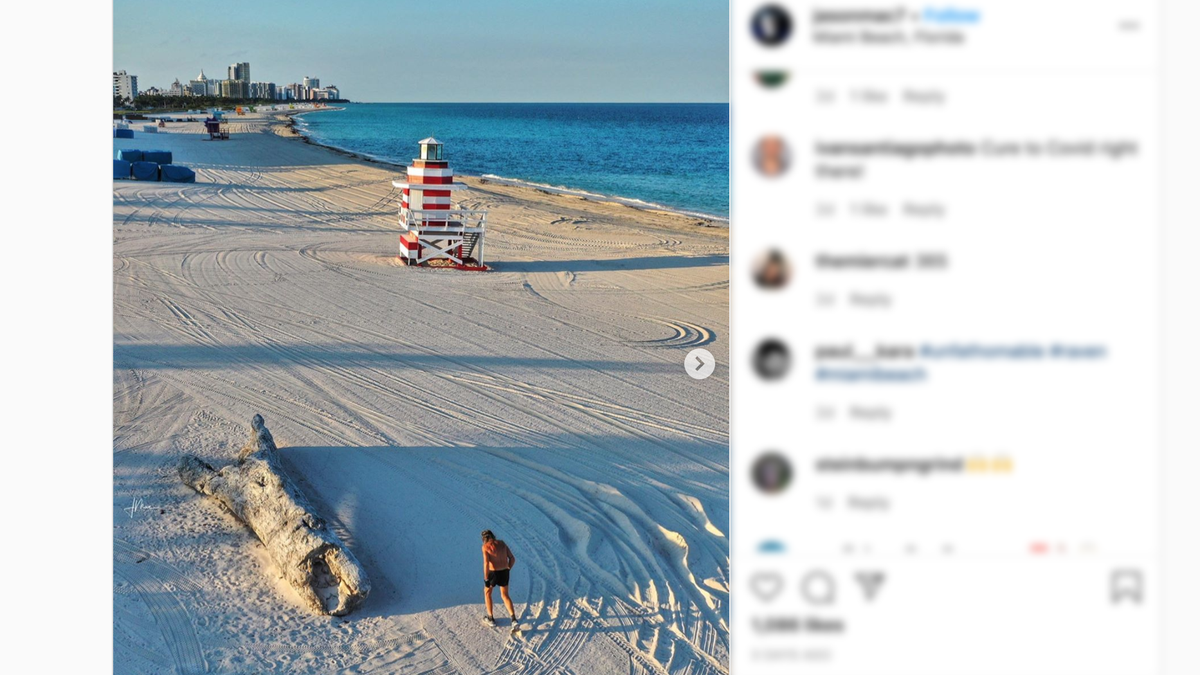
Kraft, a songwriter, is used to running, telling stories and discussing lyrics with a group during his two-hour treks, but when Miami Beach began blocking off its beaches March 16 to keep out crowds of partying students on Spring Break, he shifted to the concrete walkway that parallels the beach. So did everybody else.
It was a gauntlet.
“We had some close calls dodging walkers, runners, skateboarders, roller bladers, scooters, people on bikes who don’t know how to ride them, tourists on rental bikes,” Kraft said. “I was taking a wide berth and turning my head when I went by somebody. You’ve got to assume anybody could be infected. It was ridiculous to have us all huddled together on this 20-foot-wide strip. I felt much safer on the sand where we can spread out.”
Kraft was doing the coronavirus dance, which requires quick feet and flexible body control to execute weaving and braking maneuvers, lateral slides and occasional leaps over curbs or puddles. Evening rush hour has shifted to sidewalks, where countless games of chicken are taking place between people strolling with a friend, a dog or their kids.
Even previously sedentary folks who commuted home from work and sank in front of the TV until bedtime are getting out. They’re discovering their neighborhoods, prompting neighbors to ask, “Who are you and where have you been?”
Coronavirus could spark a fitness boom or at least refresh the skills of those who haven’t ridden their dusty bikes in decades.
But new personal space parameters advising six feet of separation cause awkward, stressful encounters. Dr. Anthony Fauci, director of the National Institute of Allergy and Infectious Diseases, has warned about the dangers of aerosol transmission — coming into contact with infectious droplets briefly suspended in the air. Breathing generates aerosol. Sneezing, coughing and heavy breathing generate more aerosol. Some public health experts recommend 10 feet for social distancing, or 25. So when you find yourself in the current of someone’s perfume, you wonder if you’re inhaling toxic germs.
“The more people understand the science of coronavirus, the more seriously they are taking it,” said Key Biscayne Mayor Mike Davey. “We’ve had spectacular weather in South Florida and everybody wants to be outside before summer hits, especially when you’re trapped inside. We don’t want to start a mental health crisis, either. Get sun, get air, get exercise, but if we want to get out of this we have to be compliant, stay away from each other and flatten the curve.”
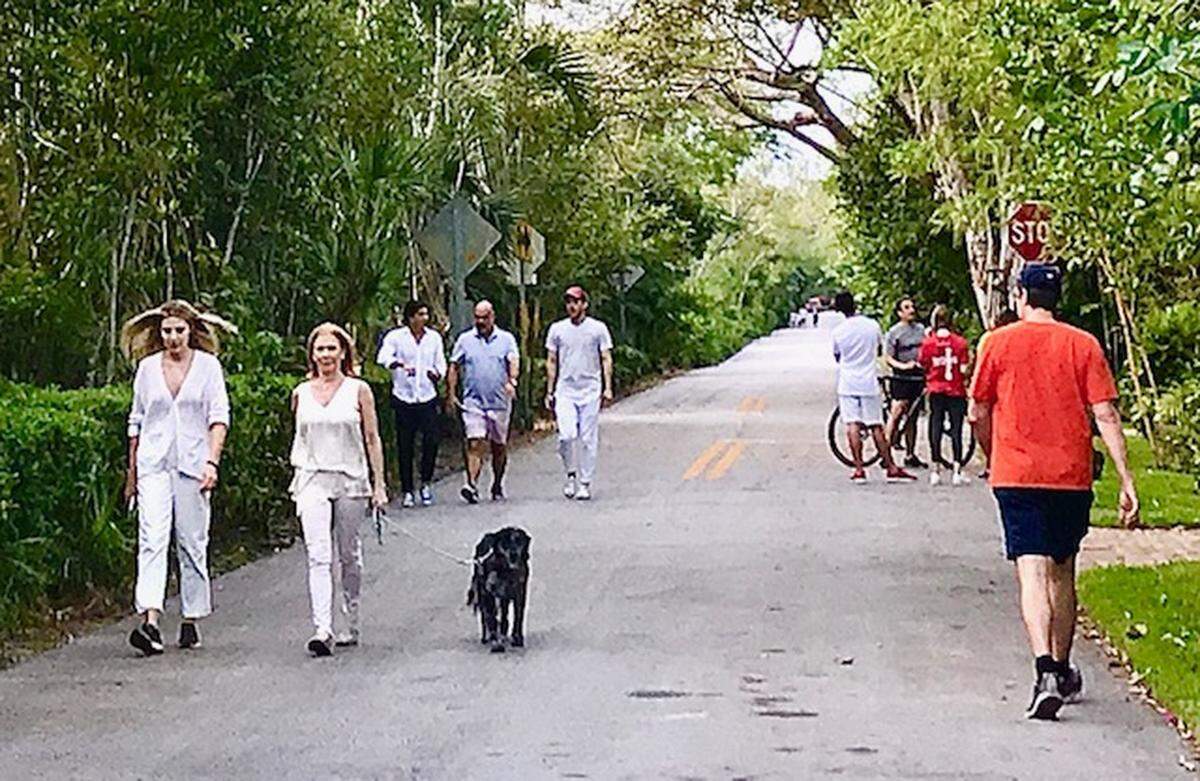
Davey has implemented isolationist measures for the village of 13,182 that is also one of South Florida’s recreation hubs, with its tennis center, golf course, beaches, boating areas and popular running and biking trails. Key Biscayne police are turning away grumbling groups of cyclists at the village line before they make a pit stop at the Oasis snack bar.
“We can’t have congregating,” he said, citing belated lockdowns in Italy and Spain much more restrictive than anything in the U.S. “All it takes is one asymptomatic case.”
Restless residents are pushing back, Davey said. They want certain places reopened. They say police patrols and public shaming will keep social distancing scofflaws in check. Instead of barricading golf courses, ballfields and high school tracks, repurpose them as spaces where distancing is feasible and congestion can be controlled, they argue
Public park closures are also disproportionately unfair and unhealthy for poor people or people living in apartment buildings who do not have their own yards and swimming pools.
“It’s time for the state, counties and cities to take inventory of the parks and spaces that are manageable for reopening,” said Frankie Ruiz, the man behind the annual Miami Marathon and Half Marathon and eight run clubs from Weston to West Kendall. “We know not everybody follows the rules in Miami but this really hurts the overwhelming majority of people who are following the rules.
“Is it sustainable to keep people locked up and locked out of parks for another few months? Are we going to arrest cyclists for drafting? We need a practical, sustainable plan.”
“Let’s take a closer look. The spring breakers and tourists are gone. Maybe not open the whole of Tropical Park but open the track. It makes no sense to have Steele Mini Park near my house completely roped off. Social distancing is impossible in a nightclub but not in a park.”
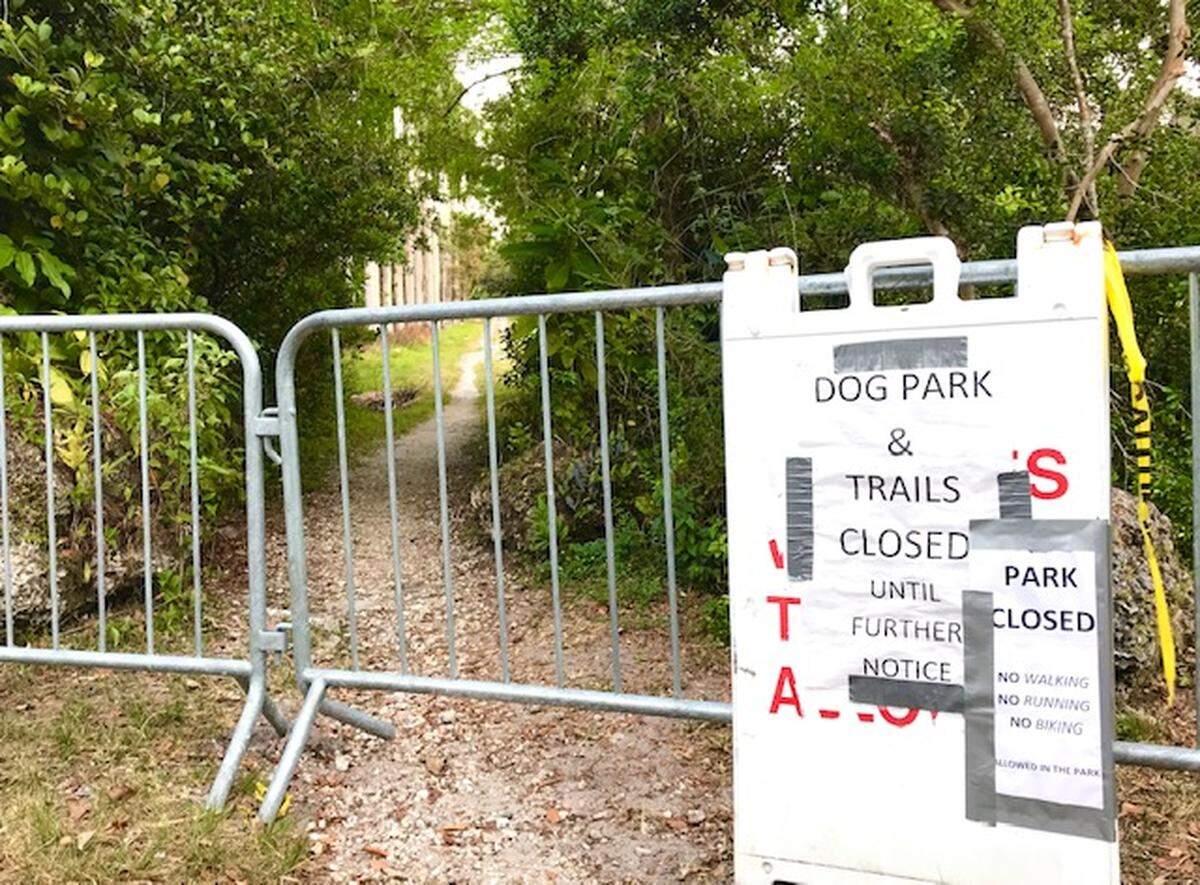
Ruiz is hearing a chorus of complaints, from the casual tennis player to the competitive triathlete.
Across the country and the world, people are questioning the efficacy of extreme confinement and prohibitions on outdoor activity. After a warm weekend that brought out sunbathers, Paris banned all outdoor recreation from 10 a.m. to 7 p.m. and London’s Lambeth Council closed Brockwell Park, scolding what it estimated to be 3,000 visitors and threatening a police crackdown. But scathing protests and numerous photos on social media showing people spacing themselves on expansive green fields contradicted the council’s claim.
“The madness of bureaucrats who are afraid of making the wrong decision so they cannot make the right one. Parks don’t kill people,” tweeted one peeved resident, decrying an intervention that only diverted people to cramped venues, increasing the risk of transmission.
Davey — who told his own father to stop sneaking in rounds of golf — worries about the irresponsible bad apples, like the boaters who kept rafting up and rubbing sunburned shoulders at Bear Cut and the Haulover sandbar, defying orders not to socialize in large clusters.
“I understand the counterargument. I’m watching a family out my window right now walking in the street and a car is flying right by them,” he said. “But once we open fields, parks or beaches, we open the floodgates. It’s a magnet, then it’s overrun, and we’ve got a problem.”
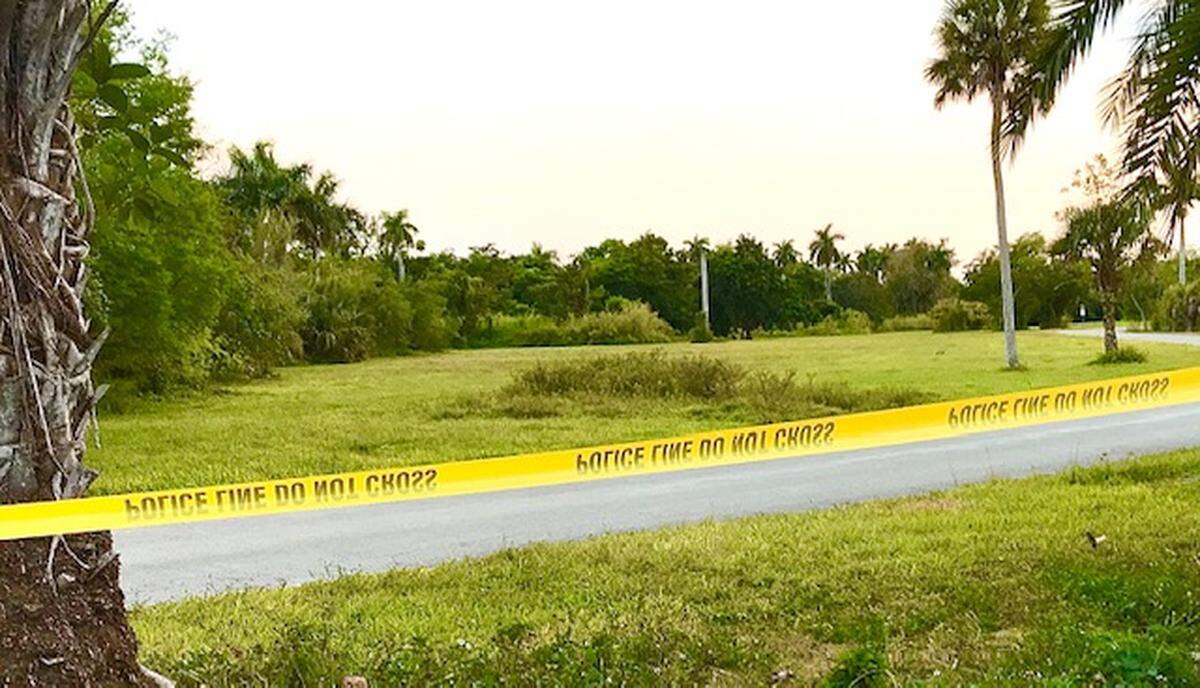
Herding people onto sidewalks and streets has created safety hazards, including on the cordoned-off paths through Kenneth Myers and Kennedy parks in Coconut Grove where pedestrians were pinched onto crowded walkways or busy South Bayshore Drive. Ruiz told Miami City Commissioner Ken Russell, who asked the parks department to move the yellow police tape back several feet to make the pathway accessible.
“By eliminating all jogging paths, we forced everyone onto the sidewalk,” Russell said. The parks remain closed; workout and playground equipment is covered in caution tape. “People need to think really hard about their exercise habits.”
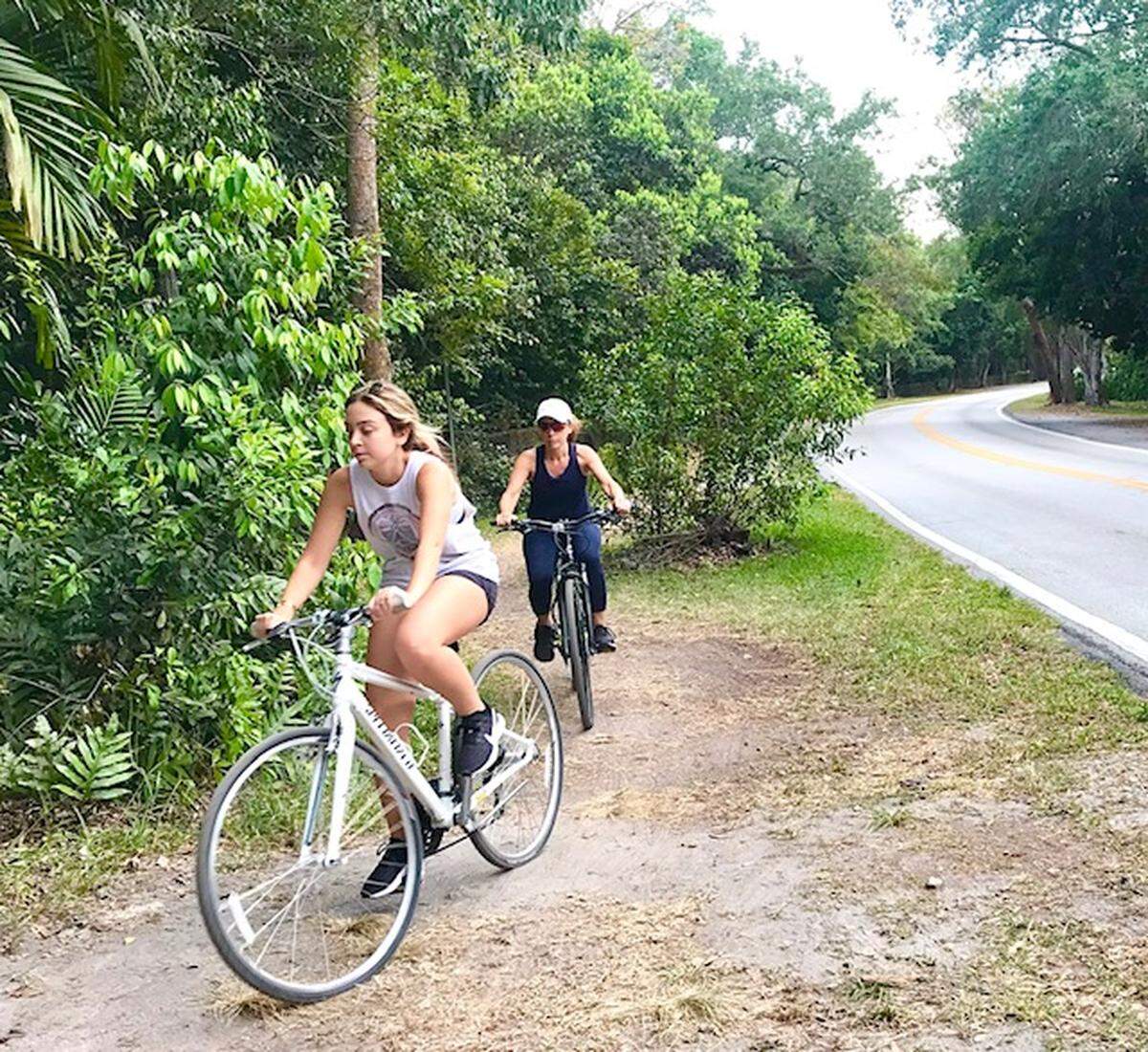
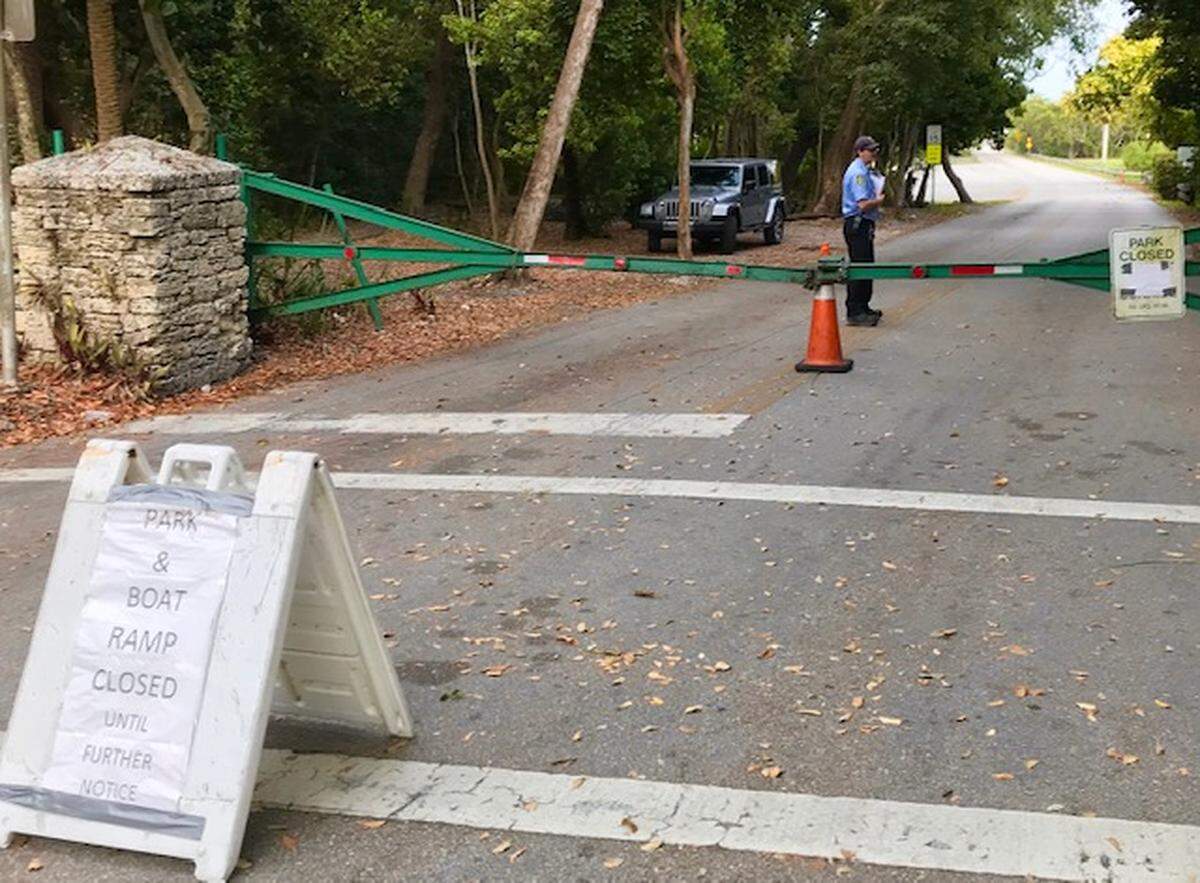
Because Matheson Hammock park and marina are closed, so is a section of the bike trail that passes through it. Cyclists have blazed an improvised path through the grass alongside Old Cutler Road, pedaling uncomfortably close to traffic. Matheson’s boundless dog park and wooded nature trails are also closed off, wedging people and their pets onto neighboring streets.
Kraft has advocated for Miami Beach to reopen a strip of the beach for runners and walkers, either east or just west of the sand dunes, to ease gridlock on the walkway. Residents of the dense high rises that overlook bayfront Margaret Pace Park north of downtown Miami are pleading with police to let them in and promise they’ll be obedient. Otherwise they’re bunched on their balconies or Biscayne Boulevard.
The Granada golf course in Coral Gables became a flash point in the public spaces conflict last week after Miami-Dade Mayor Carlos Gimenez ordered the closure of all private swimming pools and gyms and reiterated that previously closed golf courses were not to be used as parks.
At Granada, where the greens had been roped off, people were walking, lounging and tossing balls on the fairways, but not in large clumps. Nevertheless, Coral Gables reacted by sending out police and golf cart patrols to shoo people away, erected “Stay Safe, Stay Home” signs, planted police cruisers on the grass and activated the sprinklers every evening. Those measures relegated everyone to the now-bustling perimeter sidewalk and surrounding street.
“I saw people making a sincere effort to distance on the golf course. Hardly any violators,” said Haydee Polo, a Coral Gables resident and former member of the city’s Parks and Recreation Advisory Board. She and her family had planned a picnic on the course prior to Gimenez’s announcement. They were not surprised when Police Chief Ed Hudak waved to their group and others and told them to leave.
“I think a better solution would be to close the parking areas to limit the number of visitors and have police on foot or on bikes monitoring the fairways,” she said.
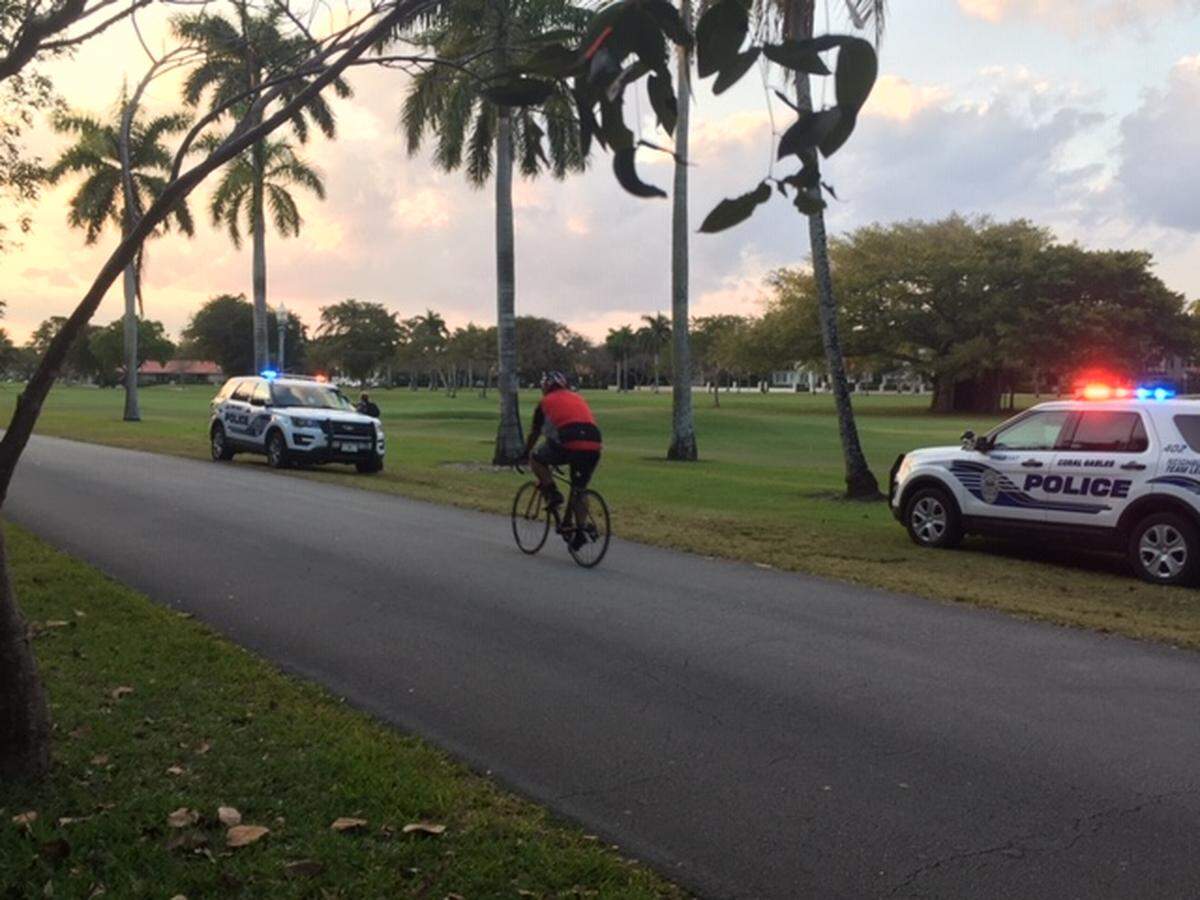
Coral Gables Commissioner Vince Lago said there are no discussions about reopening the course to pedestrians but they are welcome to use the 15 to 20 feet of rough between the fairways and the street.
“We’re not going to arrest anybody for sneaking onto the fairways but we made a significant investment in refurbishing the course and we need to protect that historic asset from damage,” he said. As coronavirus restrictions linger, he said the city might consider closing certain streets to vehicles at certain times, as has been done in New York and other cities, but he fears such pedestrian promenades would be mobbed.
Ruiz, citing necessity as the mother of invention, encourages runners and walkers to devise new routes off the beaten path. Try the quiet levees or new paved bike path along Krome Avenue in South Dade. Markham Park in Broward is closed but it’s adjacent to a beautiful canal path. He’s doing more circuits in his neighborhood and has even measured the loop around his house: 22.5 laps equals one mile.
For those yearning to compete, there are virtual road races: Register, pay online, submit proof of your time and organizers tell you where you finished and mail your medal and T-shirt.
The truly stir crazy ran and ran in the Quarantine Backyard Ultra Marathon over the weekend, a global virtual race on Zoom. The winner was the last man standing among 2,500 entrants. Mike Wardian, Miami Marathon veteran, ran around his Arlington, Virginia, neighborhood for 2 1/2 days without sleep, covered 262.5 miles, beat a runner in the Czech Republic on a treadmill and collected the golden toilet paper trophy.
Don’t remind Kraft, “The Raven,” about the loneliness of the long distance runner. He misses his comrades along the well-trod South Beach route on which he knows every grain of sand. But he’s making a show of self-isolation solidarity.
“The only footprints I see are the birds’ and my own,” Kraft said. “I’ll keep going, every day, God willing, if the ocean doesn’t rise and the coronavirus doesn’t get me.”
Herald Staff Writer Joey Flechas contributed to this report.
This story was originally published April 10, 2020 at 7:45 AM.