
‘Beyond devastating’: Ban on visiting loved ones in ALFs, group homes is a crushing blow
.jpeg "Mary Mostecki worked for the New York telephone company, and as a homemaker. She liked to cook and garden. She is now 103 and lives in an assisted living facility in Pembroke Park.")
About 10 days ago, Marilyn Ashbridge’s mother had surgery at her Pembroke Park assisted living facility. The doctor ordered that a bandage on the wound remain in place for a month.
But three days later, Ashbridge said, the dressing was gone.
Ashbridge was planning to return to the ALF to ensure the bandage was replaced, and to oversee her mother’s wound care. But then she got a call: The ALF, like every other long-term care facility in Florida, would be closed indefinitely to visitors. Now, Ashbridge has no way of checking on her mom’s welfare — or seeing her at all.
“I’m devastated,” Ashbridge said.
“I can’t talk to my mother on the phone,” she said. “If I call her room, she just doesn’t answer the telephone anymore. The phone just rings and rings and rings.”
“I have no contact with her.”
Amid fears that the novel coronavirus could spread at warp speed through long-term care facilities where elders are particularly vulnerable, Gov. Ron DeSantis a week ago suspended all visits to nursing homes and ALFs from family members and friends. The move was praised by public health advocates desperate to contain the pandemic’s spread.
But it also carries a cost: Relatives and guardians fear their loved ones will experience profound loneliness. And some worry their parents or grandparents may be less safe without their vigilance.
The suspension of visits to nursing homes and ALFs came shortly after the Centers for Medicare and Medicaid Services, or CMS, halted most inspections of nursing homes, hospitals and other medical facilities. CMS, the federal agency that regulates nursing homes and healthcare facilities, said the measure would allow inspectors to devote most of their time to containing the spread of COVID-19.
Curtailing both visits and inspections, said advocate Brian Lee, will significantly increase the stress on long-term care residents, and leave some in greater jeopardy.
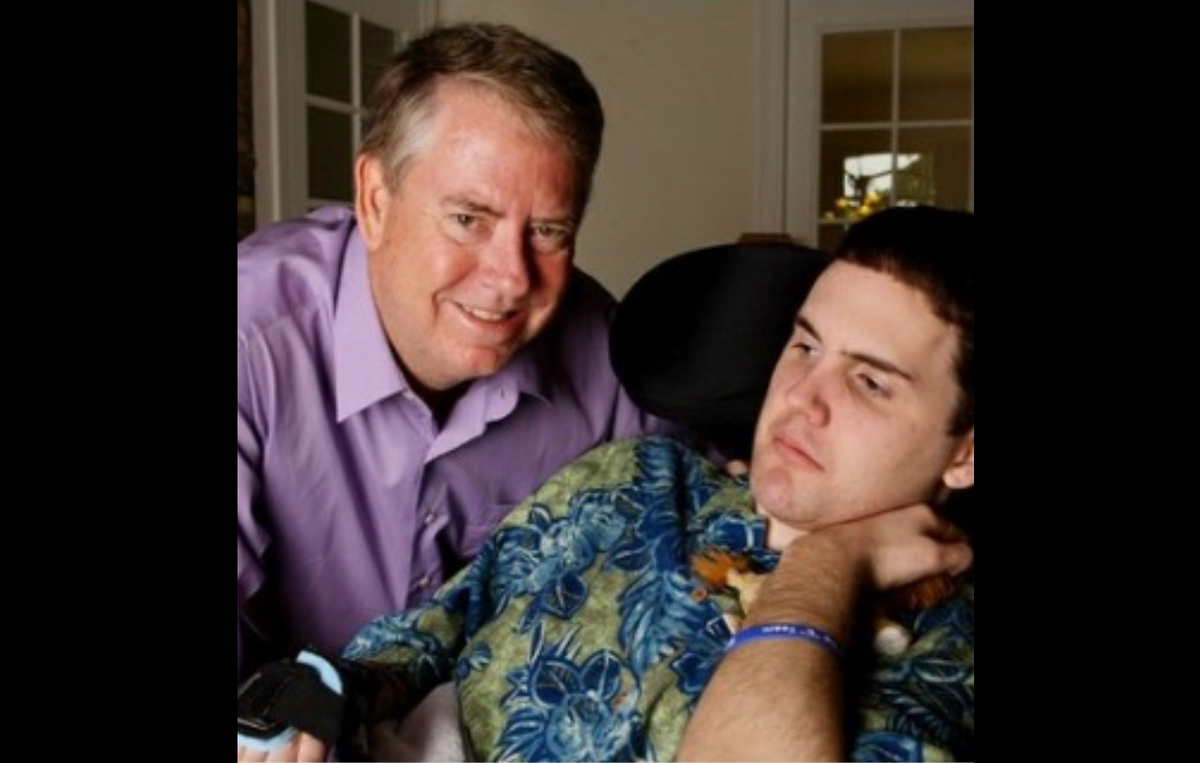
Father and son
“Without the family’s involvement, care can go off the rails quickly,” said Lee, a former Florida Long-term Care Ombudsman who now heads Families for Better Care, an advocacy group. “Over the years, we have learned that those families that are the most involved get the best care. They are there at the bedside, and they can speak out when things go wrong, so that things don’t snowball and get worse.”
The restrictions also apply to other congregate care homes where residents are vulnerable to the coronavirus — including group homes and institutions for people with developmental disabilities or medical complexities.
State health administrators said last week that that residents or staff of 19 long-term care facilities in Florida had tested positive for the coronavirus. Barbara Palmer, who heads the Agency for Persons with Disabilities, said that no clients of her agency have been diagnosed with the coronavirus.
Craig Dolch generally seldom goes more than a day without visiting his son, Eric, who lives in a group home for people with disabilities in West Palm Beach.
In the summer of 2005, Eric was preparing to begin high school at Cardinal Newman in West Palm Beach when he fell ill. He was 14. He woke up one morning confused. He had trouble seeing. Later, he began to have seizures.
Eric was diagnosed with severe encephalitis, an inflammation of the brain, and spent 115 days in a medically induced coma battling to stay alive. In all, Eric was in intensive care for about 15 months, Dolch said.
Eric recovered from the illness. But he was left a shell of himself, now dependent on a wheelchair and unable to speak. The illness destroyed the Dolch family.
“It blows your world apart,” Dolch said. “There’s so much collateral damage. You go to bed one night, and a bomb goes off. And everyone goes in a different direction.”
Dolch, a sportswriter who once covered the Miami Dolphins, took on Eric’s care as if it were the most important story of his life. And when Eric moved into a West Palm Beach group home, Dolch spent much of each day visiting and caring for him. He took Eric to physical therapy. He took him swimming.
Until now.
Dolch got a call from Eric’s group home: “We just want to let you know the governor has issued a new mandate today through [the Agency for Persons with Disabilities]. For all group homes, there will be no guests whatsoever,” Dolch said. “Including family.”
“Now, I don’t know exactly when I’ll see him again,” Dolch said.
The home’s administrators offered to help Dolch FaceTime with his son, but Eric has never used the smart phone app before, and Dolch fears he will not understand it. Dolch despairs over the fear that Eric will think his family has abandoned him.
“Not seeing my 28-year-old son for a month is certainly beyond heartbreaking,” Dolch said.
For elders and people with disabilities, loneliness and isolation may become a serious concern as the lockdown on contact continues.
Families are often the support system for elders, said Kristen Knapp, spokeswoman for the Florida Healthcare Association. So 30 days, or more, without friends or family will be hard on those whose health is already compromised.
The governor’s ban on group activities within long-term care homes adds even more emotional strain on elders, Knapp said. Residents are used to eating together in their dining rooms, walking outside for some sun and spending time together playing bingo.
“It does help to get up and move around,” Knapp said.” They need to be moving around; that’s not good for their health or well-being.”
Knapp said her group is working on developing modifications to daily activities while the virus continues to lock down facilities. Communal dining might be possible on a smaller scale, for example, with 10 or fewer people spread widely in the dining area.
Right now, some facilities are hosting bingo over the intercom system and encouraging area schools to send handwritten letters. Human connection still remains essential, even if it’s harder to find.
“This is uncharted territory,” Knapp said.
Other than hurricanes, this is the first time a lot of nursing homes have ever had to close their campuses to visitors.
Miami Jewish Health, which has 412 residents, says it is “still conducting activities with residents, being very mindful and taking extra precautions to keep both our patients and employees safe and healthy.”
Specifically, the home on Northeast Second Avenue in Miami says residents continue to participate in music therapy, bingo, and arts and crafts, but are required to sit six feet apart.
Although the home is devoid of in-person visitors, the staff is connecting residents with the outside world through “virtual visits.”
“Our residents have had to quickly adapt to the technology, but are ecstatic when they see their loved one on the screen in front of them,” said a spokesperson for the home.
.Jackie Llamas runs Golden Girls Home Inc., an assisted living facility for those with declining health, tucked inside a house near Palmetto Bay. There’s nothing to distinguish the house from the rest of the sleepy neighborhood: There are cacti outside and an ornate bench to rest your feet or watch the couple next door play with their dogs.
Inside, it also looks and feels like a home. The staff members cook Latin food in the kitchen, and residents sleep in ordinary bedrooms that look out into an average suburban backyard.
As the virus has taken over global life, Llamas said, caregivers have been tending to residents’ emotional needs, as well as the physical ones.
“We don’t have the news running over and over all day because we don’t want to inspire panic,” she said.” It’s our job to play it down to them and give them the assurance that it will be fine.”
FaceTime and Netflix
“The news can be overwhelming, especially for a senior. We need to keep them away from the constant drilling.”
Instead, Llamas said, residents are watching Netflix and video chatting with family members.
“Thank God now we have FaceTime and other ways to keep in touch,” she said.
Knapp, who heads the long-term care industry group, said many of her group’s members have found creative ways to keep residents connected to familiar faces and routines.
A lot of homes are setting up video chatting services like FaceTime, Skype and Zoom.
“They’re setting up appointment times for families based on the number of devices they have in the building.”
Families that are local are stopping by and peering in building windows so that their family can catch a glimpse of them. And some facilities have been sending photos to the residents’ families with signs that say ‘I’m okay” that they then share on social media.
The quarantine of vulnerable elders is necessary, Brian Lee said, to protect them from visitors who may not even know they’re contagious. But the state and federal governments, he added, should be doing more to encourage, if not require, operators to set up opportunities for virtual visitation.
Lee, who heads Families for Better Care, began a campaign to raise $50,000 to buy smart display devices, such as Amazon’s Echo Show, to donate to nursing home and ALF residents cut off from family and friends. The devices, he said, can be positioned on a resident’s bedside table, and tilted in such a way as to protect the privacy of roommates.
Coronavirus is “not only difficult for healthcare workers, whom we applaud, but very difficult for these families. Folks who were seeing each other every day for decades are now in the dark.”
Marilyn Ashbridge’s mother, Mary Mostecki, is 103. Earlier in life, she worked for the New York telephone company — though she viewed herself more as a homemaker. She enjoyed cooking, and gardening, her daughter said.
She requires a wheelchair to move around, and has “very bad” arthritis, Ashbridge said. She is in the earlier stages of dementia.
While Ashbridge, a retired executive assistant, could not see her mother every day, she went to the home often. And there were frequent visits from Ashbridge’s daughter, as well as a paid “companion.” Between the three of them, the family was able to stave off Mostecki’s loneliness, and to oversee some of the details of her care.
“We always looked around,” Ashbridge said. “Anything we saw that we didn’t like, we let them know.”
When a bathroom door broke and hung from its hinges, Ashbridge pestered administrators until they fixed it. When her mother’s bathroom became filthy and smelled of urine, Ashbridge insisted on a new janitor. And when her mom began to lose weight and look more frail, Ashbridge bought nutritional supplements, called Boost, and gave them to her mom regularly.
“Now,” she said, “who is going to give them to her?”
Ashbridge asked the home’s managers to feed the supplements to her mom in her absence, she said. They told her they could only do that with a doctor’s orders. “You mean to tell me I have to call a doctor and get him to order Boost?”
“I know this is a bad time. I know everyone is stressed,” Ashbridge said. “But you have to have a little sympathy for the family members.”
More than anything, though, Ashbridge worries whether the home’s operators are doing everything they can to protect Mostecki: Are caregivers wearing masks and gloves? Are they taking her mom’s temperature often enough? Are they ensuring caregivers aren’t carriers of a virus that can be deadly to older people.
She’s also worried that her mother will be lonely. Wondering why she was abandoned by her only daughter.
Ashbridge has been able to call the home’s lobby a couple of times, and ask an employee to bring a phone over to her mom, who likes to sit there at dusk. “Just to hear her voice. And to explain this to her. I told her I couldn’t see her. But she doesn’t understand why I’m not coming to see her.”
“I don’t want my mother to die of this disease all by herself.”
This article has been corrected to include the official statement from Miami Jewish Health.
This story was originally published March 20, 2020 at 4:38 PM.