
Three deaths at one Fort Lauderdale ALF stoke coronavirus fears
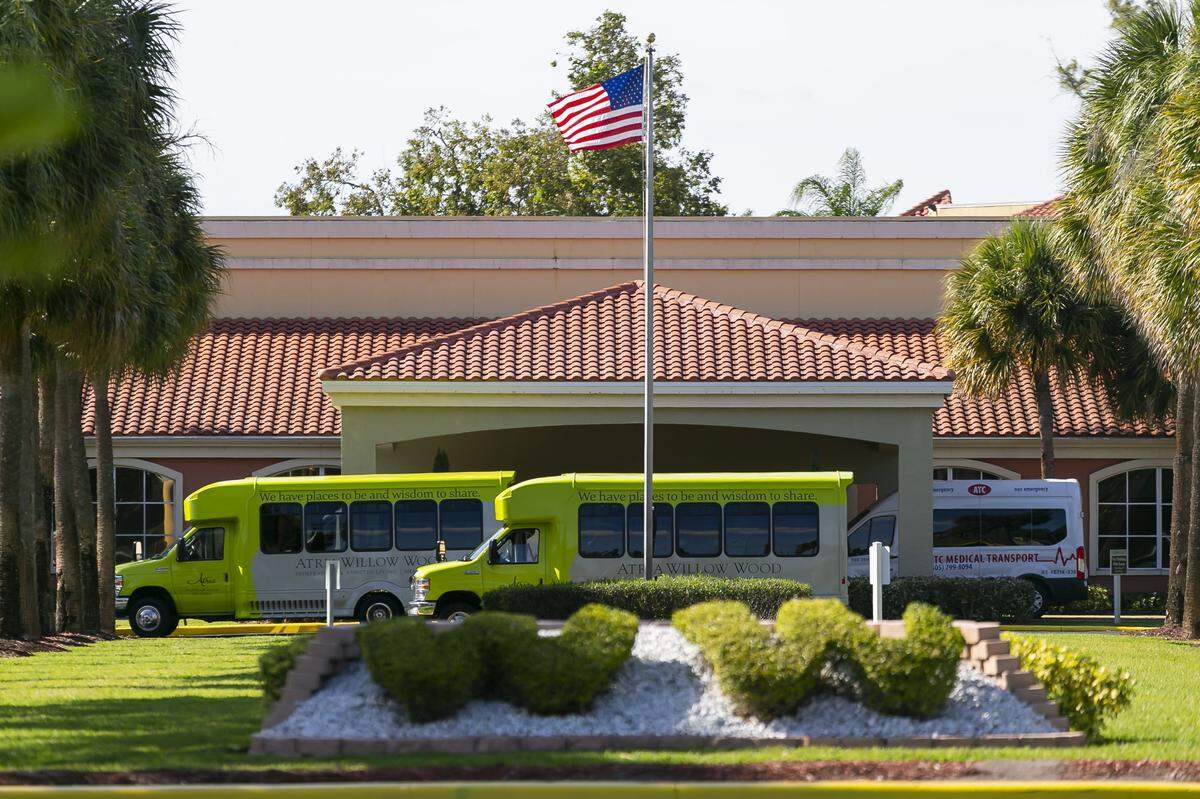
Three residents of a large Fort Lauderdale assisted living facility have died in recent days, and leaders fear their deaths may be linked to the spread of the coronavirus, a pandemic that is proving to be particularly lethal among elders.
On Tuesday morning, the Florida Department of Health announced one death at an unidentified ALF in Broward County at the agency’s daily briefing with reporters. But by mid-afternoon, Fort Lauderdale city leaders confirmed a second death at the ALF, by then identified as Atria Willow Wood, at 2855 West Commercial Blvd.
Later Tuesday, health administrators and the city revised the count yet again: three people had died, all of them residents of Atria Willow Wood.
As of 6 p.m., Florida health administrators had identified a total of 216 cases of coronavirus infection in the state, including seven fatalities.
Though the cluster of fatalities remains relatively small at present, it raises a very troubling specter: At the Life Care Center nursing home in Kirkland, Wash., a suburb of Seattle, 26 residents died in recent weeks — 13 of whom tested positive for COVID-19, the illness caused by the novel coronavirus. Nursing home residents already are among the most frail and disabled, so some of the deaths may not have been unexpected.
At a news conference at the state emergency operations center Tuesday night, Gov. Ron DeSantis said only one of the reported deaths at the ALF had thus far been linked to the virus. Tests were pending on the others.
“If they do test positive, then that will be reported,” he said. “This was an individual who had been hospitalized with some serious issues anyways, so we’ll await that.”
Florida Surgeon General Scott Rivkees said other recently deceased individuals with symptoms who lived at Atria Willow Wood are being evaluated.
“We’re talking about one facility where one individual [who] passed away was known to have COVID-19,” he said. “We are looking at other individuals who were at that facility who may have passed away of COVID-19.”
Both Fort Lauderdale Mayor Dean Trantalis and City Commissioner Ben Sorensen said the Atria ALF has been quarantined. City leaders are awaiting the results of medical testing.
Sorensen said city leaders do not yet know what is behind the small cluster of deaths. “We don’t know what caused it, or how it is transmitted,” Sorensen said of the coronavirus.
As well, possibly several firefighters or paramedics who were summoned to the ALF may have been exposed to the virus, Trantalis and Sorensen said. Those first-responders have since “self-quarantined,” Trantalis said at the news conference.
Sorensen said city leaders are working with state and federal health administrators to contain the spread of the coronavirus, particularly among elders. “That is obviously our top concern,” Sorensen said, “to ensure that all our residents are protected.”
“Our concern goes further to all residents and staff of those facilities,” Trantalis said.
At the 4 p.m. news briefing, Trantalis also announced the imposition of several new measures intended to curtail the coronavirus in Fort Lauderdale, including the immediate closure of all restaurants, except for take-out and delivery, as well as “other major gathering spots,” such as gyms, movie theaters, bowling alleys and dance halls. The closures are to remain in effect for the next 30 days, Trantalis said.
DeSantis had previously ordered the closure of bars and nightclubs.
“We are all at risk,” Trantalis said, encouraging residents to work from home as much as possible, and to exercise “social distancing” principles that reduce the spread of contagion.
The Atria Willow Wood ALF’s state regulatory history appears unremarkable.
It holds 180 beds — all of them private, according to the state Agency for Health Care Administration, which licenses and oversees Florida long-term care facilities, such as ALFs and nursing homes. It includes a memory care unit, which specializes in the care of residents with Alzheimer’s disease, or other forms of dementia.
Last May, the home was faulted for some lapses in resident care, for allowing unlicensed staff to administer medication and for failing to display phone numbers that residents might use to lodge complaints. The deficiency arose when a resident complained that she could not eat “regular food,” and caregivers had not offered her pureed food suitable to her needs.
The resident was described as “thin and frail, ambulating with a rolling walker.” The woman “indicated that she was very distressed,” a report said. The explanation for the woman’s distress was redacted from the report by the ACHA, though her name was unavailable, so her privacy was not at risk.
“She stated that the concerns of the families of the residents in Memory Care go unaddressed,” the report said.
Miami Herald staff writer Samantha Gross contributed to this report.
This story was originally published March 17, 2020 at 5:30 PM.