
Royal Caribbean’s ‘biggest, baddest’ resort divides locals in Mexican port town
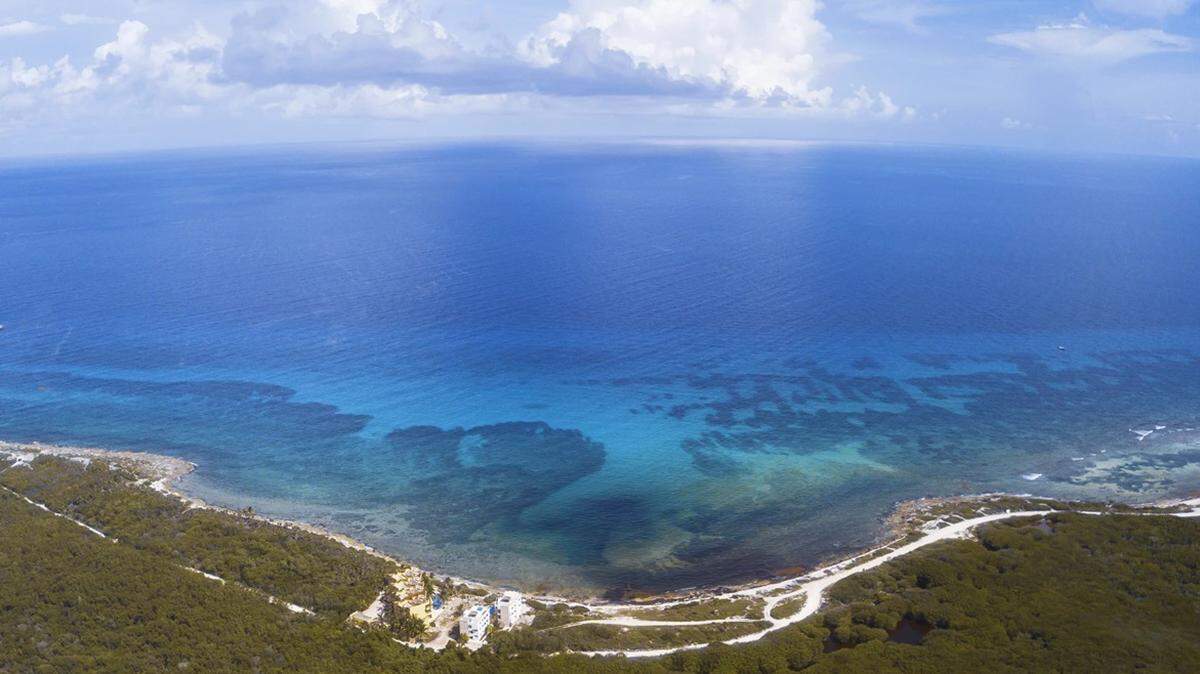
Miami-based global cruise company Royal Caribbean has acquired the port of Mahahual, a small Caribbean town on the southern coast of Mexico’s Yucatán Peninsula, with plans to invest hundreds of millions of dollars in a massive water park and private destination for its passengers: Perfect Day Mexico.
The ambitious initiative, however, has stirred deep divisions among the roughly 2,800 residents of this coastal town.
The project, set to debut in the fall of 2027 and already offering a waiting list on the company’s website, is advertised as the “biggest, baddest, boldest destination,” promising numerous beach clubs, pools, bars, and DJs, along with over 30 waterslides, including one as tall as 170 feet. It will feature a vibrant, oversized sombrero and the world’s longest lazy river. The bright neon, theme-park saturated colors will stand in contrast with the green backdrop of the surrounding mangroves and forest.
One local business owner, a California native who has lived in Mahahual for 17 years, told WLRN that when he heard the news he went into “a kind of panic.” He initially fell in love with the area during a stop on a cruise trip with his family, later returning to open their family business following a devastating hurricane.
“[Royal Caribbean] announced it’s going to be another one of their private destinations. And private destinations are just that — private. So the kind of work that we do, I felt concerned for our future,” he said. He requested anonymity for fear of repercussions to his business.
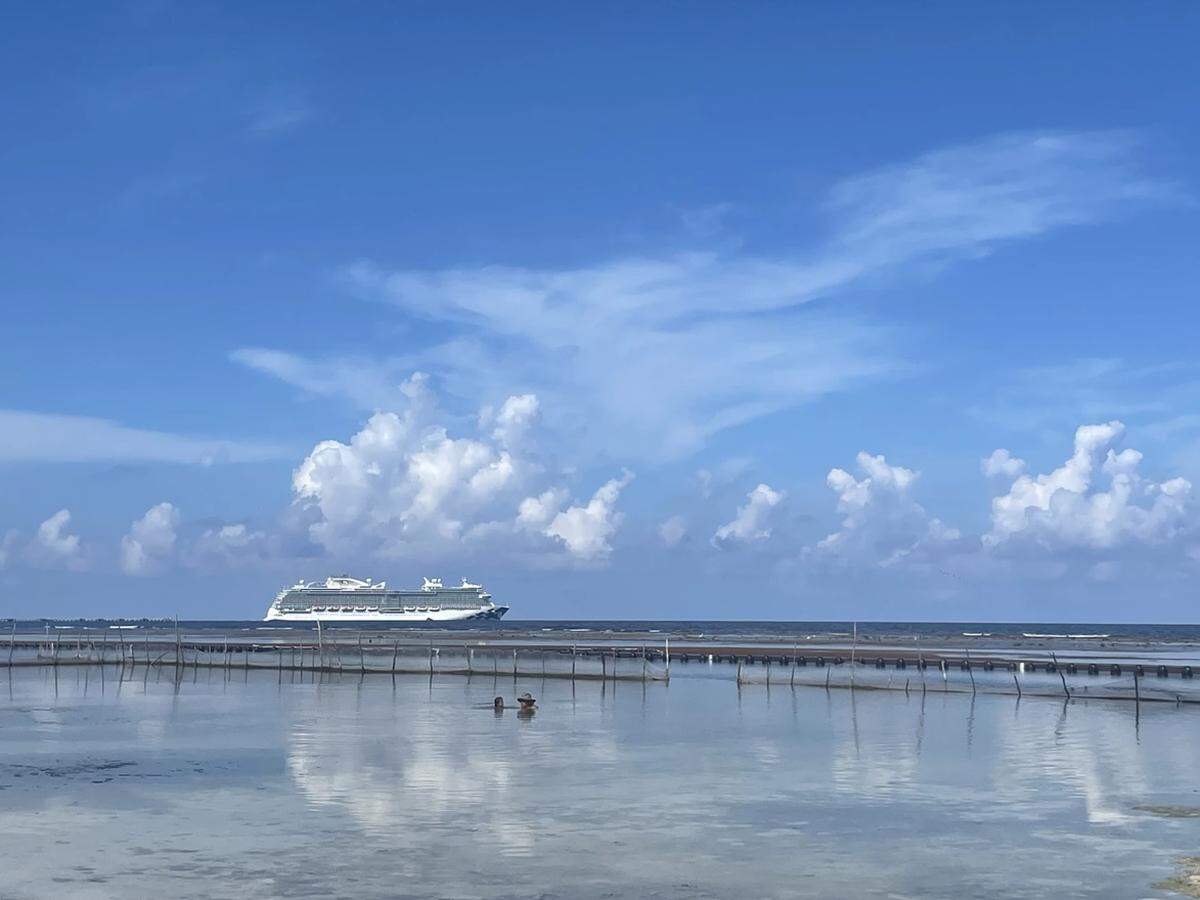
The town’s port, Costa Maya, opened in 2001 and welcomed more than 2 million visitors last year, setting a record for annual cruise-ship arrivals and passenger numbers, according to Mexico’s tourism department.
Jay Schneider, chief product innovation officer for Royal Caribbean International, said the company hopes to nearly triple that number to about 7 million visitors by 2030.
“In five years, we hope that Mexico will be the number one destination for Royal Caribbean,” Schneider said in Mahahual last July. “To do that, we are relying on Mahahual for growth,” he added.
But Mahahual is more than a port town, and growth of a scale and speed of this size — never before experienced — could have serious implications.
The town sits within one of the most ecologically diverse and fragile regions in the western Caribbean. It is surrounded by turtle-nesting beaches, protected mangrove forests, sand dunes and forest corridors that serve as habitat for jaguars and ocelots. This region also supports rich wildlife, including Central American tapirs and several bird species.
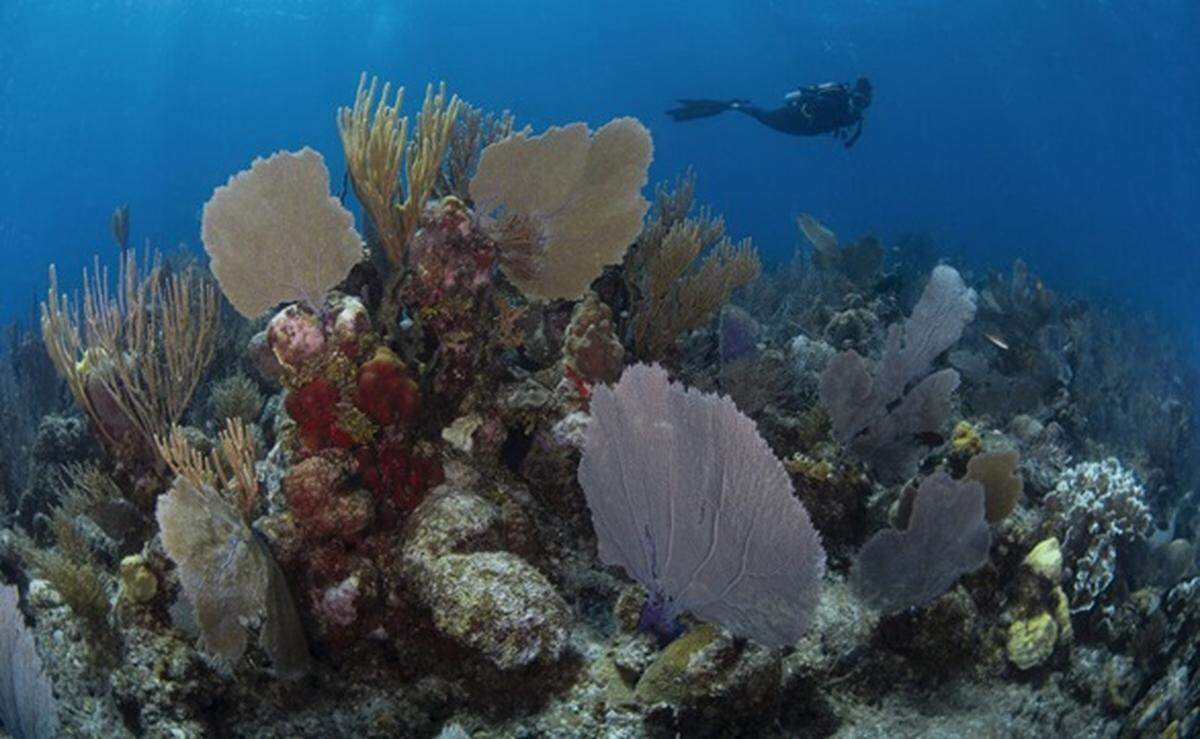
Just offshore lies the Mesoamerican Reef, the largest barrier reef system in the Western Hemisphere and the second-largest in the world, an extremely vulnerable ecosystem. Mahahual is also home to a manatee that often frequents the waters that are near the lighthouse and where marine pastures provide food.
That fragility was underscored last October when a jaguar, an endangered species protected under Mexican law, was captured on a hidden camera in the area where Royal Caribbean plans to build its mega water park.
Nadia Sandoval Laurrabaquio Alvarado, 38, a Mexican biologist and researcher who worked for five years leading a coral-restoration program and monitoring the reef in Mahahual, said her main concerns are the scale of the proposed development, mass tourism and “the damages, both direct and indirect, to the coastal ecosystems.”
“The data we have so far tells us we’re dealing with an already deteriorated ecosystem,” Sandoval said. With no clear solutions in place to mitigate the impacts, she warned that mass tourism could worsen existing damage.
She also points to less visible problems, including chemical (sun block) and noise pollution. “To begin with, there is no legislation that actually prohibits the entry of this chemical pollution. However, there is already scientific data showing that this type of pollution has significantly affected corals.”
Royal Caribbean hopes to bring 21,000 cruise passengers per day and an additional 2,500 port employees, according to its Regional Environmental Impact Statement, which is under review by Mexican environmental authorities. The expected number of employees working at the port alone is roughly the population size of Mahahual.
“This noise pollution is something many of us don’t even notice because we’re always above the water. But when we’re underwater, we first need data to understand how it’s affecting marine life, such as the pollution from the large ships that are being brought in. If I’m going to bring more ships and more people, then this pollution could drive marine life away even more,” Sandoval added.
However, lacking baseline data from before the cruise ships began arriving 25 years ago, it’s difficult to confidently determine the full impact or assign responsibility. Asked if she believes the problems that she raises could be resolved before the project’s debut, Sandoval said flatly, “definitely not.”
Victor Rosales, 44, an eco-tourism activist and founder of a conservation association, AAK Mahahual, stressed that Mahahual isn’t ready for tourism of this scale. He said the town’s direction changed completely. “Many years ago, we held events and promoted Mahahual as an eco-tourism town,” Rosales said.
“A project this massive isn’t sustainable,” he added. “I think tourism should grow gradually, because going from one year to the next and suddenly having 7 million tourists in a single year is just too aggressive. … We have turtles, manatees, fish, corals. … I can’t guarantee they’ll really work with the community the way they say,” he said of Royal Caribbean, “so all we can do is hope they do.”
The concerns about rapid growth and scale raised by Sandoval and Rosales are echoed in the memories of longtime residents like Ángel Fernández Ferreyra.
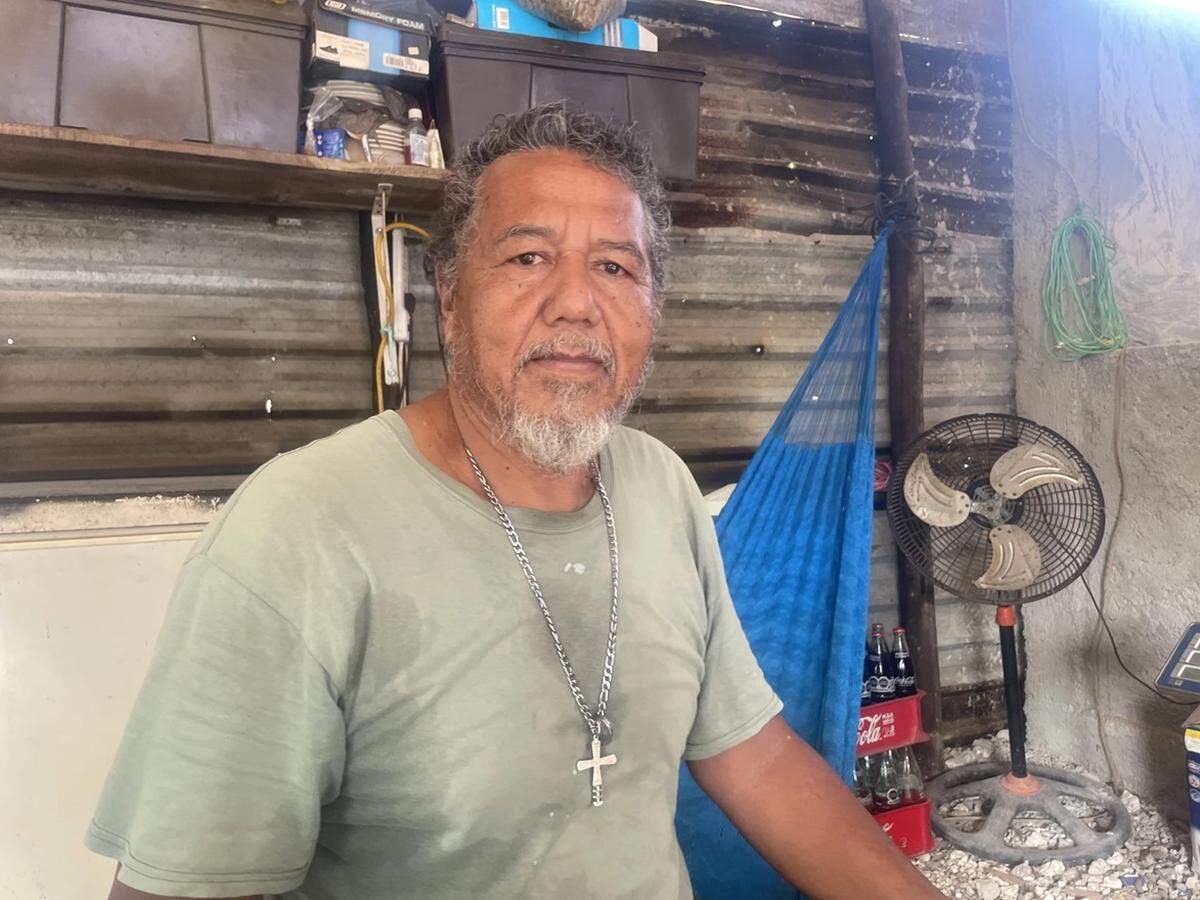
A fisherman better known in town as El Hijo del Capi (The Son of the Captain), Fernández has lived in Mahahual for 30 years. When he first fell in love with the place, it was a small fishing village of about five families, most of them lobster fishermen. Life was quiet, though complicated by the lack of electricity and other basic services; still he decided to settle down and call Mahahual home. That began to change when government officials approved the construction of the port.
“When the pier project was coming, I felt a little out of place because I thought, ‘This is good, but it also brings consequences.’ ’’
For Fernández, the town grew too quickly decades ago, which changed the way of life for the original families, leaving many of the community’s problems unresolved. “This town grew too fast, too fast, without laws, without agreements, without anything. Good people arrived, and bad people arrived, too. It just happened too fast,” he said.
“We were expected to be on top of things, and we weren’t — and I include myself in that — because we didn’t have the capacity to face what was coming.”
Today, the town’s future growth is about more than environmental protection. It is also about economic survival for a community that has long struggled with very limited opportunities, unreliable infrastructure and very basic services that often fail to function properly, conditions that many residents say reflect years of neglect. In that context, the promise of steady work, more tourism and growth carries real weight even as questions about environmental and social costs remain unresolved.
Miguel Ángel Sánchez Mijangos, representative of Tequilera Doña Engracia, sees economic potential from the planned development.
“If Royal Caribbean fulfills their promises, and the government, business groups and the community all do our part, we can position Mahahual among the top destinations in the world,” he said.
“One of the biggest concerns is that the economic benefits reach everyone in the town, and the project doesn’t become privatized,” he added.
Sánchez’s cautious optimism mirrors early concerns from locals such as the California native, who feared that Royal Caribbean’s “private destination” would limit opportunities for the town and his beach club. For those whose livelihoods depend on tourism, the potential influx of visitors brings hope. Thirty-nine-year-old Juan Manuel Lanz, secretary general of Mahahual’s taxi syndicate, represents about 500 people.
“I am in charge of representing the partner taxi owners who operate the taxis, and my role is to seek improvements in benefits and support so that they — and we — have a better livelihood from our concessions, and, at the same time, a better quality of life for the drivers.”
The news of this project was welcomed by the syndicate, reinforcing the drivers’ belief that economic growth could trickle down to the community. “Honestly, ever since the news arrived, we’ve felt happy, because now we feel like the world is looking at us. It’s very good for the destination, for the town that wasn’t known before,” Lanz said.
“Our hope is that cruise passengers keep coming, that they keep choosing this destination, that they continue to bring economic benefits to the town. As transport workers, we don’t only earn from the passengers we drive. We also benefit from the waiters, cooks and artisans, because after their workday they also take taxis.”
Even as Lanz speaks optimistically about growth and opportunity, the picture on the ground is more complicated. Some residents point out that most of the drivers live outside Mahahual, a detail that has quietly fueled frustration about community ties and raised questions about who will benefit from the growth.
The stakes are high for Mahahual. Water is already scarce in the region, and some fear the demands of a mega-water park destination for more than 23,000 people per day could strain Mahahual’s already fragile natural resources.
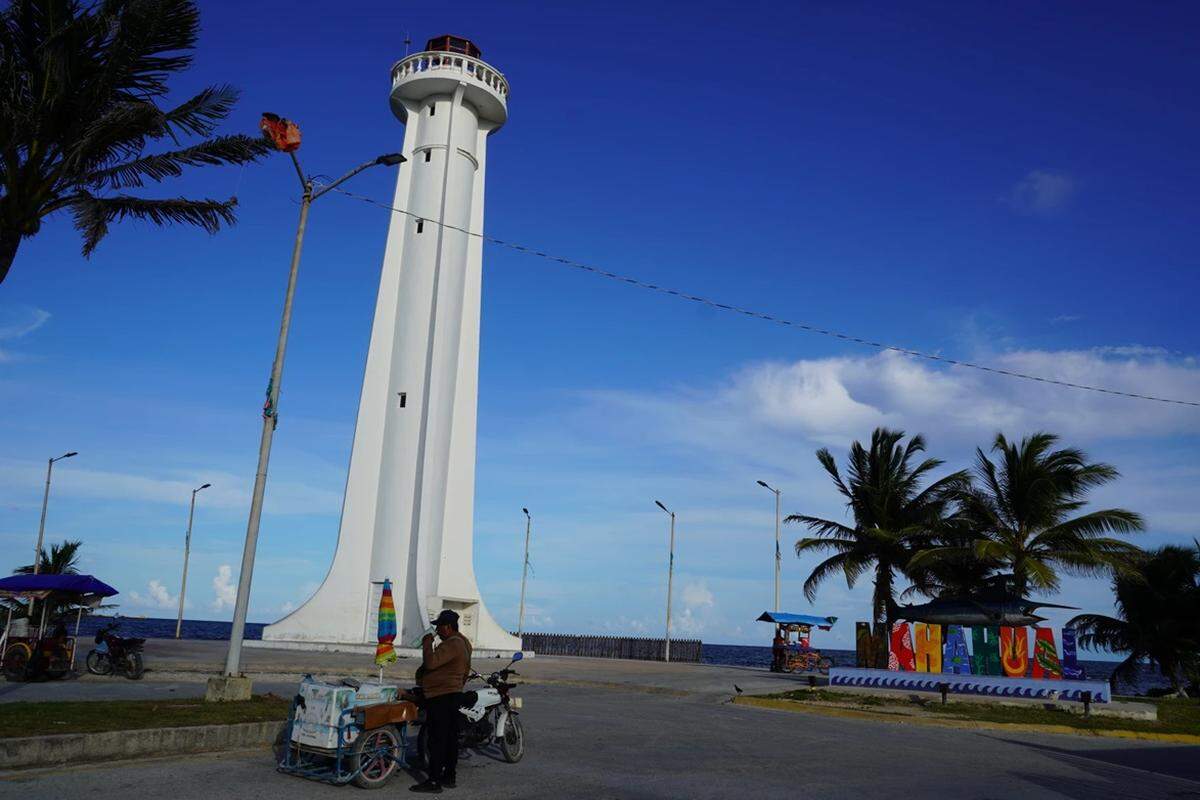
Beyond environmental and economic concerns, doubts about governance and transparency have also emerged.
Questions over Royal Caribbean’s Mahahual mega-project emerged in July, when residents were notified of a private, invitation-only meeting. Hundreds attended, turning it into a public Q&A. During the meeting, Royal Caribbean promised monthly meetings and transparency, insisting the people of Mahahual were their top priority. Only one additional meeting has taken place, held inside the port rather than a truly public space, and the promised WhatsApp channel for communication has largely functioned as a PR outlet.
Adding to the issues is a potential conflict of interest. Ari Adler Brotman, who in that meeting emphasized that government priorities were the people, was director general of Quintana Roo’s Institute for Development and State Financing at the time (Quintana Roo is the Mexican state where Mahahual is located). One month later in August, he was named president of Royal Caribbean Group Mexico, according to a press release by the cruise company.
Other concerns have now been reinforced in court. A Mexican NGO, Defending the Right to a Healthy Environment (DMAS in Spanish), is challenging Royal Caribbean’s Mahahual project and on Monday, Feb. 2, a federal judge granted a permanent injunction, halting land-use changes and freezing the project while the lawsuit proceeds. DMAS said the measure was necessary “to prevent damage that would be difficult or impossible to repair,” noting indications of “possible illegality.” The ruling represents a major setback for Royal Caribbean.
Royal Caribbean promotes its Perfect Day Mexico project as sustainable, citing a set of five environmental pillars that include reducing single-use plastics, the use of a biodigester and a reverse-osmosis water-treatment plant that the company says “will not overexploit the region’s water resources,” according to its website. However, specific details about how those measures will be implemented remain limited.
One pillar, Habitat Protection and Restoration, states “sustainable solutions will be created for the removal of sargassum and waste littering the coast,” but the regional environmental impact report notes that “no activities related to the containment of sargassum are currently planned in the project area. However, if the need to carry out such activities arises in the future, the provisions of this rule will be taken into account.”
Requests for comments and more information sent to a Royal Caribbean PR representative, who promised to forward them to a spokesperson, went unanswered.
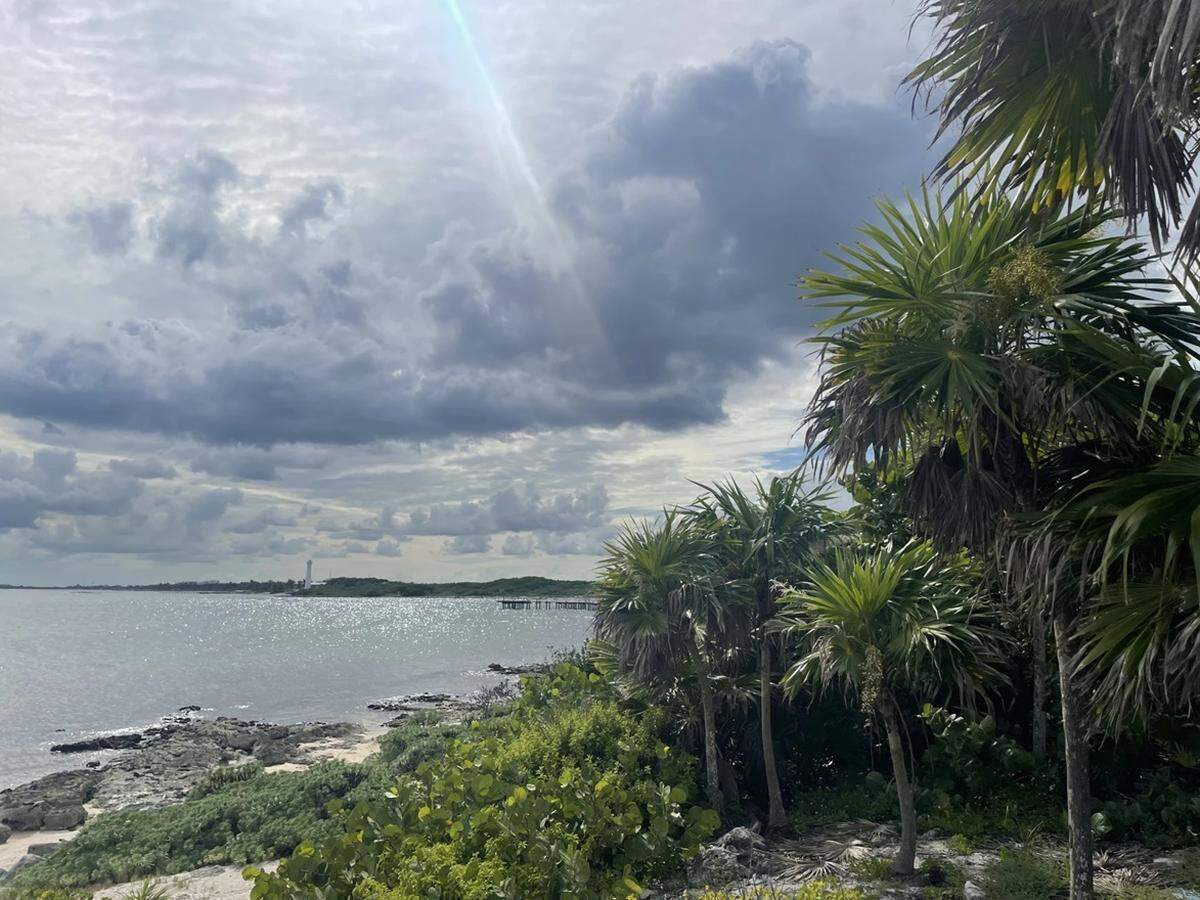
For 20 years, Rosales, the eco-tourism activist, has witnessed the decline of the coral reef and says any development is going to have an impact. “The very fact that we exist already impacts the planet,” he said.
“Sadly, now with this large development, it won’t even be a town anymore. It will be part of a massive project with thousands of tourists per day, which will severely impact the ecosystems. And we’re talking about changes in land use, electricity consumption, water and solid waste.”
Sandoval, the biologist and researcher, said a project of this magnitude shouldn’t be in Mahahual. “If I think about what would be ideal, how I would like to see the ecosystems, I’d like to see green, I’d like to see blue, I’d like to see eco-tourism trails that are more respectful of the environment. I like seeing nature as it is. A mountain of plastic in the middle of the jungle, even in an area that’s already impacted, I don’t like it.”
Wherever they stand on the project, everyone interviewed acknowledged a break in Mahahual’s social fabric. A project of this scale and visibility can only deepen it.
At 63, Fernández, The Son of the Captain, said he’s learning to let go of worrying. “I keep going. I’ve never lost faith that humans can understand that we have to make things right, but it has to be together because it can’t be just one or two people.”
For now, Mahahual waits. A small town facing a big, uncertain future shaped as much by forces beyond its control as by the choices it is still struggling to make.
This report was produced by Miami Herald news partner WLRN Public Media.
This story was originally published February 6, 2026 at 12:48 PM.