
Miami has one of highest U.S. COVID-19 infection rates. Will the virus hurt summer tourism?
Paola Ospina, a 32-year-old Colombian who lives in Australia, hadn’t seen her family in four years. With travel restrictions relaxed, she recently took her first trip since the pandemic started in 2020 — first to her native Colombia and then to Miami with her entire family for vacation.
“I’m worried about COVID, but restrictions have gone down and I hadn’t seen my family in so long,” she said on Thursday, while strolling through Bayside Marketplace, a popular tourist destination near PortMiami. “I wanted to come now while I can, because who knows what will happen in the future.”
Sydney Hall, 20, visiting from Nashville also decided to come to Miami on her first trip in the pandemic to celebrate a friend’s birthday.
“It’s been over two years, I was ready to finally travel and do something,” Hall said.
But the virus has reemerged in a big way in the area, and could throw a wrench into summer tourism here. Miami-Dade County is experiencing its largest surge of COVID-19 infections, since the omicron variant ripped through the region in January. Yet tourists interviewed last week were undeterred from traveling to South Florida due to greater risk of contracting the pandemic disease.
As of June 13, Miami-Dade’s coronavirus test positivity rate jumped to 21%, up from 5% in early April, causing alarm for local public health officials and making the area a coronavirus hot spot among top U.S. tourist destinations. Last time Miami-Dade experienced positivity levels this high was during the omicron surge when the county hit a positivity rate of 35% of all COVID-19 tests administered.
Tourism operators in the Miami-area have rebounded sharply over the winter and are riding strong momentum into the summer season. The industry remains a cash cow for Miami-Dade, and so another pandemic-induced travel standstill would be devastating for airlines, hotels, cruise lines, local restaurants and bars.
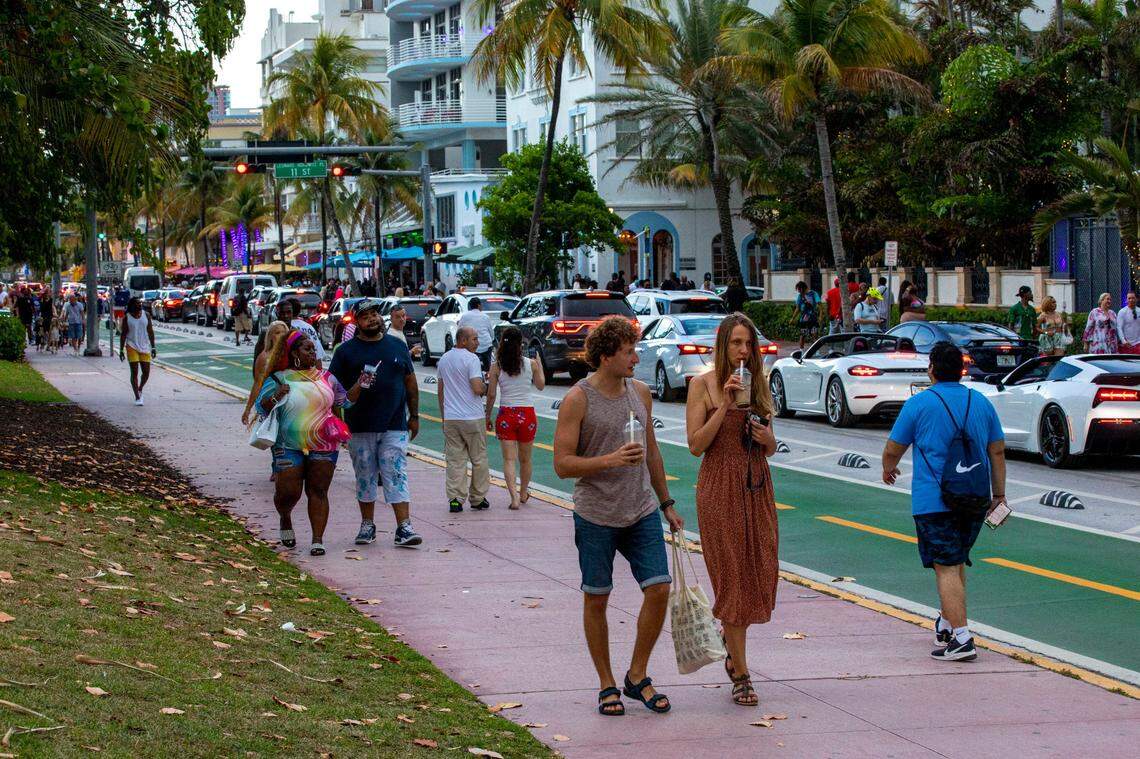
Although COVID-19 again menaces the area and much of the United States, more and more tourists say they are not scrapping summer travel plans since much of the adult population has been vaccinated and boosted. Unlike the winter deluge of the omicron variant in late December and early January, which forced a dip in tourism in Miami during the busy winter months, the new surge doesn’t appear to have instilled that level of travel fear in consumers.
“Most people are already in a mind-set that this is an endemic and not a pandemic,” said Michael Cheng, the dean of Florida International University’s Chaplin School of Hospitality and Tourism Management. “The majority of people who get it today seem to be dealing with it like a minor inconvenience. People are past the mentality of fear of COVID and its consequences.”
Cheng predicted, “if there’s going to be a blip” in summer tourism in Miami, “it’s gonna be very short, not a long one.”
As COVID-19 cases crept up the week of June 6, Miami-Dade hotels had an average occupancy of 67% and an average daily overnight room rate of $205, compared to 74% average occupancy at $155 a night during the same week in 2019, before the pandemic, according to data from STR, a hospitality analytics company.
Glenn Sampert, general manager of the Intercontinental Hotel in downtown Miami, said there have been a few recent cancellations related to the virus, but not many.
“We have recently experienced some last-minute cancellations as a result of people becoming ill, or a close family member,” he said. “However, there are no signs of significant cancellations. Our booking trends remain strong.”
J.C. Celestino owns a lemonade stand at the Bayside Marketplace and has served plenty of tourists over a decade. He said business is booming, despite the pesky virus.
“Tourists are definitely unconcerned,” he said. “It feels like they’re done with the pandemic and don’t care anymore — like if they get it, then they get it.”
Despite sustaining virus outbreaks during the worst of the pandemic, cruise ships now are experiencing a boom. Leading global cruise lines like Royal Caribbean and Carnival, both based in Miami, said they’ve had record passenger bookings for summer and fall voyages. Similar to land-based vacations, travelers seem to think cruising is worth the risk, although the virus still is alive on ships. As of Thursday, 83 out of 92 ships sailing in U.S. waters were under investigation by the Centers for Disease Control and Prevention for COVID-19 cases at sea.
“Since our restart of cruising in June 2021, we’ve seen strong demand for cruise vacations, welcoming more than two million guests on board,” said Jonathon Fishman, director of corporate and incident communications at Royal Caribbean Group. Royal Caribbean’s entire 63-ship fleet will be back in operation and sailing by the end of the month.
“Heading into the summer season, we’re seeing more and more multigenerational families looking to make up for lost time together during the pandemic, as well as a promising demand environment from our guests,” Fishman said, adding that Royal Caribbean’s ships continue to enforce stringent COVID-19 safety protocols and high vaccination levels among passengers and crew. All of the company’s ships now sailing in U.S. waters have at least 90% of the shipboard population vaccinated.
Cruise Critic, an online forum owned by TripAdvisor, said in a survey of 3,800 readers conducted between May 24 and June 14, 67% of them have at least one cruise booked. And of those who have cruises scheduled already, about half of them will be cruising this summer. Of those cruising this summer, just 20% of survey respondents say COVID-19 fear would cause them to reconsider taking the voyage.
Cheng, the dean of the hospitality school at FIU, said for tourism businesses luring travelers has fallen off the list of stiffest challenges. The big hurdles are: dealing with the residual effects from supply chain disruptions and astronomical shipping costs for goods from Asia; the labor shortage and related pressure to boost wages; and stiff inflation increasing costs for everyday supplies.
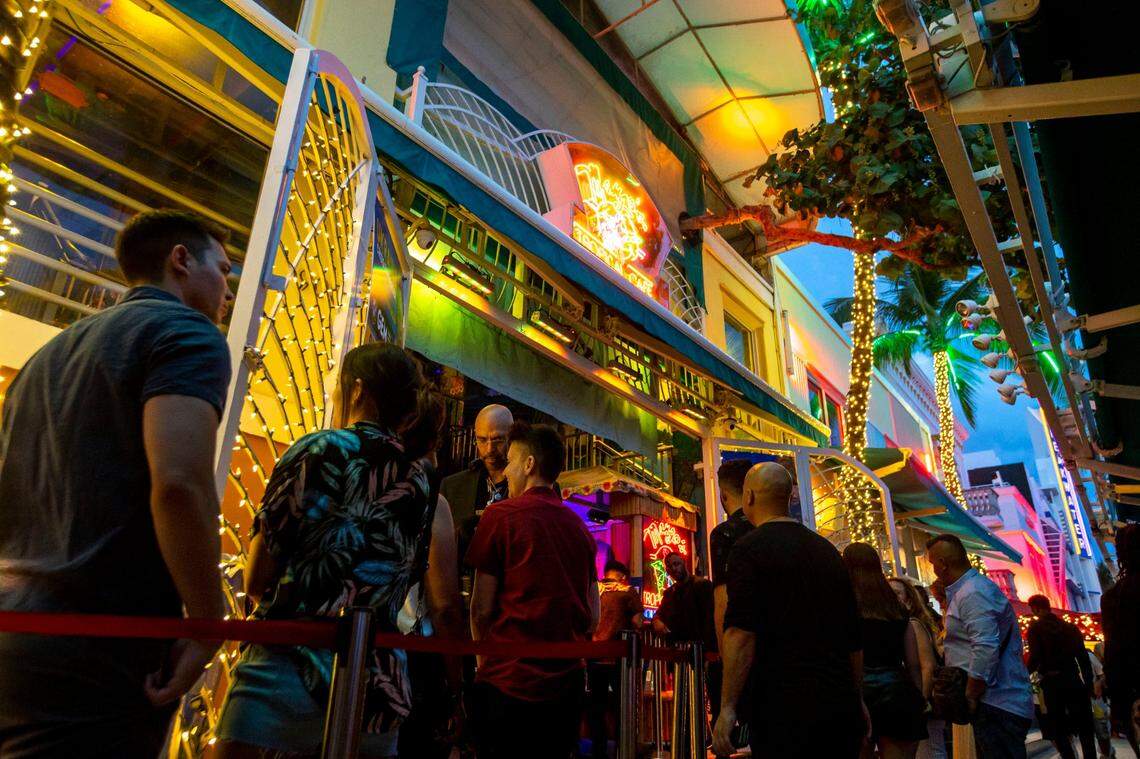
“That burden is getting passed down to consumers. The owners are not making more money; their expenses have gone up significantly,” he said of persistent inflationary pressures.
Aloisa Yudkin, a salesperson for Biscayne Bay cruises, the Miami operator of sailing and boat excursions leaving from downtown Miami, said the coronavirus isn’t what people are worried about these days.
“People are tired of being at home and they want to travel while they can,” Yudkin said. “But it’s gas prices, inflation, rents going up, those are the bigger issues consumers are dealing with. The reality is the economy is the only thing that’s gonna stop people, not COVID.”
This story was originally published June 19, 2022 at 6:30 AM.
