
After ‘perfect storm’ for 2 years, cruise industry titans gather again in Miami Beach
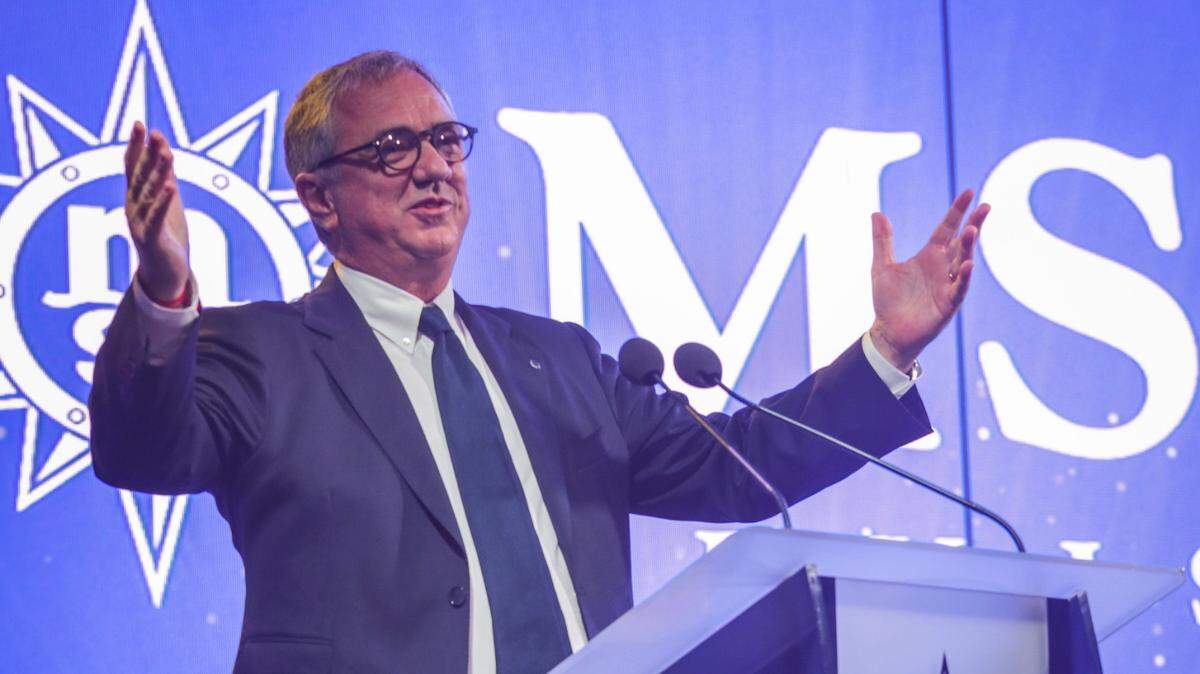
Seatrade, the cruise industry’s largest global conference, kicked off Monday for the first time since 2019 with the customary large crowd at the Miami Beach Convention Center.
Leaders of the embattled industry are optimistic. Despite repeated coronavirus outbreaks on ships, being shut down for over a year in U.S. waters and taking on massive debts to remain afloat, they insist cruising is back and growing near the same pace it was pre-pandemic, with new cruising brands emerging and many longstanding companies continuing to sink billions into new ships and cruise terminals.
The Miami Herald sat down with Pierfrancesco Vago, the global chairman of Cruise Line International Association, commonly referred to as CLIA, cruising’s largest trade group and lobbying arm based in Washington, D.C. Vago will deliver SeaTrade’s keynote remarks Tuesday alongside other top industry executives. The conference runs through Thursday.
Vago is also the executive chairman of MSC Cruises, a Geneva-based cruise line that recently started building a new cruise terminal at PortMiami, which will be the largest cruise terminal in North America.
The interview has been edited for brevity and clarity.
▪ Question: Please evaluate the current state of the industry. What are trends you’ve seen and challenges going forward for cruising?
▪ Answer: It’s almost been the perfect storm in the last two years with the pandemic and the war in Ukraine. But the capability of the industry to adapt and react in short notice has meant we are very efficient. Ships are movable assets, so we have that going for us. We’ve had to take St. Petersburg off Baltic Sea itineraries, but we have added more stops in North Europe around the Fjords. We have had to adjust to itineraries changing at the last minute because of border closures. Since cruising restarted in Europe in August 2020, the cruise industry has had 7.5 million passengers globally.
We also live in a very peculiar moment when passenger bookings are much closer to the departure date, because things can change so planning trips has been difficult. Obviously, some of the companies have struggled through this last 24 months with their cash flows, so there has been a slowdown on getting passengers reimbursements. But I think now with the business picking up again, everybody understands that we have to look out for our clients.
▪ Q: As cruising’s lobbying body, how has your relationship been with Washington and the CDC, especially since the nation’s health protection agency issued an unexpected travel warning at the end of 2021 against cruising regardless of vaccination status?
▪ A: We want to ensure we have the right legal framework to operate in a fair manner and in a way that is comparable to our land-based competitors. We are still working very well with CDC to tackle an emergency.
The CDC travel warning obviously was unexpected. We felt that our protocols had proven itself in the last months, and to give a Level 4 warning, it was a little bit unfair. Now the warning is gone, so it means that the data we shared with the CDC had been OK. We’re working with them and being transparent in sharing data so we can all make decisions.
▪ Q: Why has the cruise industry not made public the number of COVID-19 cases among passengers and crew members?
▪ A: Numbers must be understood and explained. Sometimes showing people a number without proper context could be misused and create confusion in this very complex environment we are living in. We did not share the numbers not because we don’t want to be transparent, but because whatever comes out of that data should be analyzed by the CDC for professional analysis.
▪ Q: Cruising has always been a relatively affordable vacation, will passengers see prices rise?
▪ A: We’re looking at two huge issues in this particular moment in time. One is inflation and the other one is the problem with supplies and logistics, which has a big impact with the raw materials of the finished goods. The cruise industry has the advantage of economies of scales, meaning we buy a lot so have better buying power. At MSC, we serve 100 million meals a year, so if you can save $1 for each meal, it’s a lot of money, and we pass those savings to customers. There is a spike in prices because of inflation. But I think it will always be more value for money than any other type of holiday.
This story was originally published April 25, 2022 at 8:19 PM.