
Miami prepares for Presidents Day Weekend tourists. But will they come?
For Jessica Goldman Srebnick, Wynwood Walls maven and South Beach hotelier, the coronavirus pandemic was a double whammy, forcing the closure of both the landmark street-art attraction and her company’s The Hotel, an Art Deco classic on Collins Avenue.
The comeback has been a roller coaster. She thought it wasn’t safe to reopen Wynwood Walls until the end of 2020, while The Hotel stayed closed 10 months longer.
By July 2021, as domestic travel surged with the wide availability of COVID-19 vaccines, crowds returned in force to the outdoor venue in Wynwood, and December of last year was a banner month on South Beach. Then everything dropped precipitously once more when the highly contagious omicron variant emerged at the end of 2021.
And now?
Guests and visitors at both places are surging again. Private and corporate events that were canceled at Wynwood Walls in early 2022 are back on, and, after an absence of nearly two years, international travelers are turning up once again in big numbers at both the open-air museum and at The Hotel, where bookings are recovering rapidly.
Everyone, it seems, suddenly wants to check out Miami. And as the big Presidents Day weekend approaches, marking the traditional thick of Greater Miami’s tourism season, things appear to be ebullient.
“I feel like omicron is in the rearview mirror. We’re now one of the coolest, most interesting cities in the world,” Goldman Srebnick, co-chair of developer Goldman Properties, said. “We’ve had a big spotlight put on Miami lately with all the new people moving here. People have been singing the praises of Miami, and everyone wants to see what it’s all about.”
For the first time since the pandemic struck in March 2020, two of Miami’s flagship Presidents Day weekend events will be back in full swing. A reorganized Miami International Boat Show is returning to the Miami Beach Convention Center, with companion events, including the Miami Yacht Show, at other venues spread throughout the city at One Herald Plaza, Pride Park, Sea Isle Marina and Museum Park Marina, all accessible by water taxi.
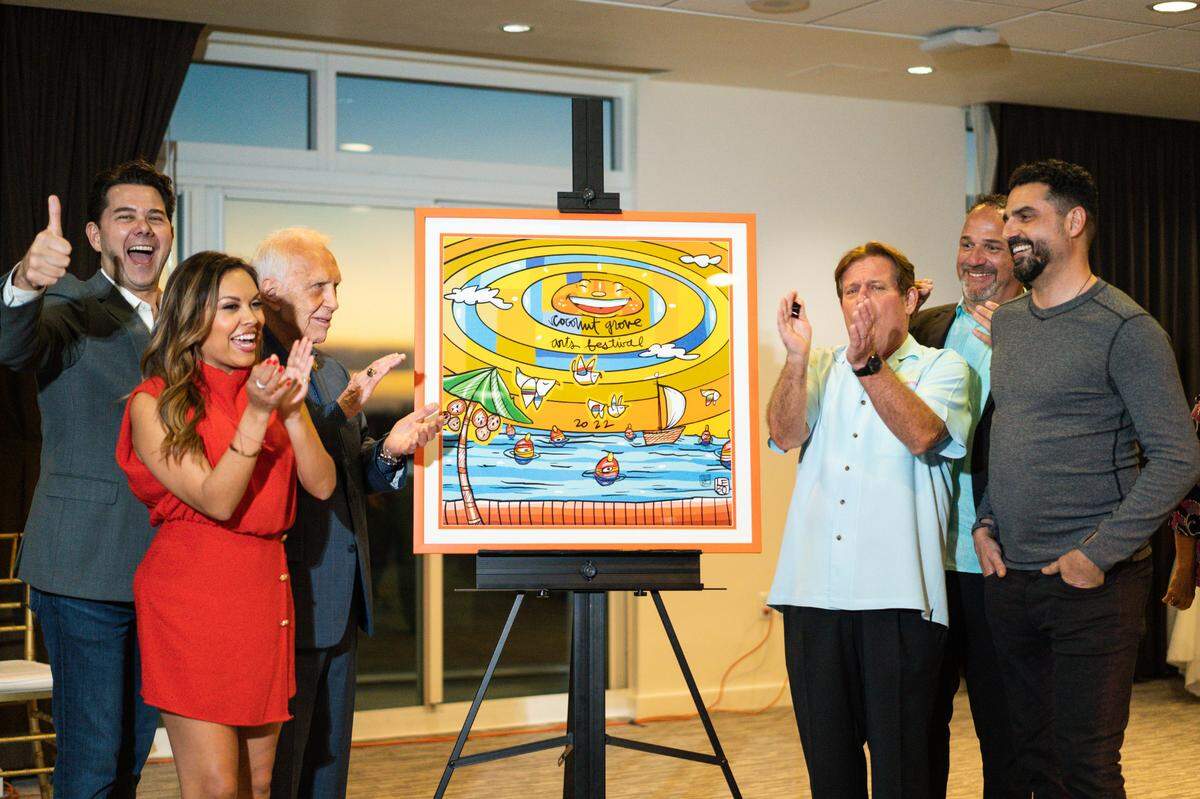
The granddaddy of them all, the Coconut Grove Arts Festival, will take over the historic urban village for three days as it has every year — except 2020 — since 1963.
However, the Art Wynwood fair in downtown Miami, is staying dark this coming week, with a promise to return in 2023. Director Nick Korniloff declined a request to be interviewed for this story to explain why.
The South Beach Wine and Food Festival returns in full force the following weekend, February 24 to 27.
Heavy tourist traffic expected through spring
After the myriad cancellations and the dip in numbers due to omicron, event organizers, hotel operators and restaurateurs in Miami and Miami Beach have lofty expectations for the holiday weekend and the balance of the winter and spring tourist season. Projections for the weekend suggest attendance numbers approaching or in some cases exceeding pre-pandemic levels.
The boat show expects 100,000 visitors, compared to 82,000 in 2020. The Grove arts festival, which typically saw around 100,000 people jam South Bayshore Drive over three days before the infectious disease emerged, is hoping to match that this year. The wine and food festival is expecting 48,000 to 55,000 visitors, compared to just 30,000 in 2021 and 60,000 pre-pandemic.
“I think we’re looking for a big crowd this weekend,” said Grove arts festival president Monty Trainer. “One hundred thousand is our benchmark, and I think this year we will certainly approach that.”
On the Beach and mainland Miami, hotels say they’re near to selling out. The Grove’s handful of hotels say they are fully booked for the weekend, said Trainer, who added that neighborhood parking garages are sold out in advance as well. And Miami International Airport is forecasting half a million passengers from Feb. 18 to 21, compared to 564,000 during the same period last year.
Two fundamental reasons for the expected surge of visitors: a near absence of pandemic restrictions, even amid a still-spreading virus that continues to infect tens of thousands every day nationwide. And that perennial draw, winter sunshine.
“I would say with 80 to 90 percent confidence that it’s going to be a banner weekend,” said Peter Ricci, director of the hospitality program at Florida Atlantic University in Boca Raton. “February and March I think are going to be very strong months. We’re still perceived as the state that’s open with very few pandemic restrictions, we have lots of outdoor activities, and the weather is great while most of the country is covered in snow.”
Hospitality staffing crunch persists
There is, however, one major wrinkle. The tourists may be coming back in full strength, but the workers are not.
Tourism businesses across the board are suffering with persistent staffing problems. Local businesses say the staffing issues hurt every aspect of their operations. They’re dealing with high turnover, lower profit margins, and having to do more with less, all of which can lead to poor customer service and unhappy customers.
“For hotel managers, their biggest challenge right now is staffing, staffing and staffing,” said Chip Rogers, president and CEO of the American Hotel and Lodging Association. “It’s the only thing on their mind right now. Travel is rebounding, but what good is it, if they can’t service the guests. It’s a hotel’s worst nightmare to not be able to sell out their rooms because they don’t have enough staff to service.”
Jamila West, the owner of Rosie’s, a soul food restaurant in Overtown, is feeling the worker shortages. She and her husband, Akino West, are having to take shifts themselves, on top of managing and running logistics. Being a small, independently owned restaurant means that they aren’t always able to keep up with the wages offered by larger establishments.
“The inventory is low of people who fit our brand, have professional experience and are really passionate about the industry,” West said. “Wages are so competitive and we’re a small business, so there’s only so much you can do.”
Christian Glauser Benz, senior vice president of development for Dream Hotel Group, the owners of Dream South Beach, who recently announced a new development downtown on the Miami River, said bookings and rates have bounced back to pre-pandemic levels, but the workforce is still lacking in numbers.
“The shutdown was so sudden, but reopening a hotel is not like flipping on a switch,” Glauser Benz said, explaining that they had to hire and train staff as well as restock food, toiletries, linens and more. Everything is more expensive due to inflation, and in short supply due to persistent global supply chain issues.
“Many workers just left the industry,” he said. “It’s gotten a little better. Everyone on the staff is having to improvise and wear different hats.”
Glauser Benz said that the Dream South Beach experienced some slowdown in January, but he expects to sell out on Saturday night and reach “high” occupancy rates for the rest of the holiday weekend.
Domestic travelers come in droves
The mix of the hotel’s clientele has changed, however. While international travel was banned for visitors from Europe and Brazil, some of Miami’s most important tourist markets, domestic travelers came to Miami more than before.
“We have a heavy presence from Europe and Latin America, then there was a total flip,” he said. “Tons of people from the northeast, New York, Philadelphia, Boston, many people who drove from Mid-Atlantic states, people from California, which was different for us.”
Goldman Srebnick also saw the trend.
“I do think because the limitation on international travel, people rediscovered the United States, their own country. And in the spirit of YOLO — you only live once — people decided they didn’t want to wait on travel,” she said.
And so did another leading Miami attraction, the Frost Museum of Science.
After reopening in summer of 2020 after three months of total closure, the museum saw attendance gradually rebound to pre-pandemic levels by March 2021, first from locals, and then from local and national visitors, in particular those within driving distance in Florida, museum CEO Frank Steslow said.
And, save for the omicron dip, Steslow said, “for the last nine months it’s been really great, exceeding our expectations.”
“A lot of it was pent-up demand, people wanting to get out and do something, and a lot more intra-Florida travel and daytrippers,” he said.
The trend is likely to persist.
According to a recent survey from travel group skidriven.com, 79% of Americans prefer to travel domestically this winter, with Florida in the top five most popular destinations.
Peter Saliamonas, manager of Rosinella, the oldest restaurant on Lincoln Road Mall, said the spot had a similar experience. Before COVID-19, he said, the Italian restaurant relied heavily on international tourists from Europe and South America.
“During the pandemic, we really only had domestic tourism,” he said, adding that about a year ago when the vaccines against the deadly virus were becoming widely available, Rosinella started going back to normal. “The domestic tourism was great, without it we would have been very slow.”
In the past, he said, domestic tourists to Miami usually hailed from New York and Chicago, but in the past year he’s been seeing customers from places like Texas, New Mexico, Tennessee and Indiana.
Saliamonas, who has been the manager of Rosinella for 25 years, said the restaurant is expecting to be slammed during Presidents Day weekend, as they were over the Christmas holidays. Omicron only worsened what’s usually a post-Christmas dip before the tourist season peaks, he said.
Height of Miami tourism season arrives
“Presidents Day is the height of the season,” he said. “People think that as soon as December hits, it’s the season. But in reality, the season starts at Christmas, you’re super busy Christmas through the first week of January, then there’s a lull, it’s still busy, but not as busy. Then in February, you get consistently busier.”
The venerable Grove arts fest, now in its 58th year, has long depended on domestic tourists, especially collectors who follow artists displaying their work at the show and Floridians within easy driving distance, to boost heavy attendance from loyal locals.
“A lot of people plan vacations around around this show,” said Camille Marchese, the festival’s art coordinator. “We’re looking forward to even more this year.”
It’s unclear why Art Wynwood is skipping the weekend. A spokeswoman for the event emailed a statement from the fair’s website. Art Miami, which is owned and run by the same organization as Art Wynwood and the upcoming Palm Beach Modern + Contemporary fair, took place as scheduled during Miami Art week in December. They reported strong sales of tickets and art.
“... After consulting with our community, vendors and clients, we have taken the difficult decision to cancel this year’s edition of Art Wynwood which was scheduled February 17-21, 2022,” according to the statement. “With three events in quick succession, we felt it was in the best interest of our community to focus our efforts on the upcoming Palm Beach show, and we look forward to the Art Wynwood fair’s return in 2023.”
But other event organizers have plenty of reason to be confident.
According to bed and restaurant tax collection data from Miami-Dade County, hotels in Miami’s busiest tourist areas are outperforming their pre-pandemic revenue levels. In ZIP Code 33131, which includes the eastern parts of Brickell and downtown, tax revenues were up 27% in December 2021 from their pre-pandemic revenues in December 2019. In South Beach, tax revenues were up 24% in December 2021, compared to December 2019. Mid-Beach hotels in December 2021 saw tax revenues at 9% higher than in 2019.
Average hotel occupancy is nearing pre-pandemic level and overnight rates have exceeded their pre-pandemic average. Miami-Dade County hotels saw 75% of hotel rooms occupied in December 2021, at an average of $314 a night, compared to 78% occupancy at $251 a night average in December 2019, according to data from STR, a data company that tracks the U.S. hotel industry.
Beyond Presidents Day weekend, tourism isn’t expected to slack off, either. Still to come: the return of the Ultra electronic music festival in March after two years of silence. Once again in its original home of Bayfront Park in downtown Miami, the festival is bigger than ever. Ultra has absorbed the Winter Music Conference and expanded its roster of events to what, in an echo of Art Basel and Miami Art Week, it’s calling Miami Music Week.
Still, some industry experts warn that Miami tourism operators should not expect the booming numbers to last forever. With mask mandates being lifted across the country, other states, including California and Nevada, have started to market their states as tourist destinations again.
“Miami is currently the number one destination in the country, by far. Miami and Florida being mostly open throughout the pandemic definitely made a difference,” said Rogers, the hotel and lodging association president. “But that can’t continue. The competition is back on.”
This story was originally published February 13, 2022 at 6:00 AM.