Omicron threat forces stricter COVID-19 testing rule. Will it hurt international tourism to South Florida?
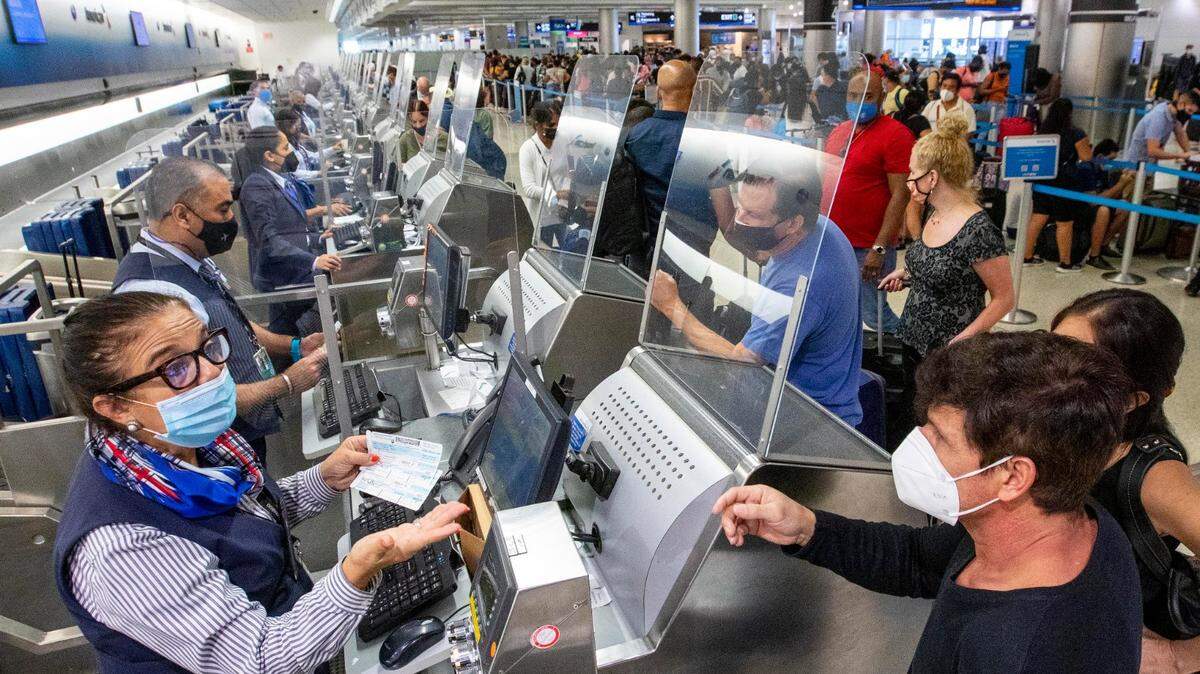
Starting Monday, all international travelers including U.S. citizens coming into the United States on an airplane had to submit a negative COVID-19 test result from the day before flying, a temporary move to help stop the spread of the omicron variant.
The tighter rule only applies to air travelers, not people who arrive in this country by boat or drive over a border crossing. It also doesn’t apply to passengers flying to a state from a U.S. territory, such as Puerto Rico and the U.S. Virgin Islands, according to the Centers for Disease Control and Prevention.
The hurdle could thwart international travel to South Florida during the busy holiday season. The more stringent public health protocol that shortened the pre-flight testing window from three days to one day adds another burden for foreign travelers, some of whom already contend with limited testing options.
The Biden administration and the CDC have not said whether they eventually plan to assist airline passengers with testing sites, leaving the responsibility of acquiring a quick-turnaround test to travelers. So far, airlines also are leaving it up to travelers to comply with the testing rule, too.
While the omicron variant of the coronavirus first reported in South Africa Nov. 24 has spread to about 40 countries and 12 states in the U.S. causing alarm, the temporary testing requirement is largely a preventive measure while scientists push to understand the severity of the variant, U.S. officials said. The variant so far has not been detected in Florida.
Dr. Anthony Fauci, President Joe Biden’s chief medical adviser, said Sunday that early research indicates the omicron strain might not be particularly severe.
“It does not look like there’s a great degree of severity to it,” Dr. Fauci said of the omicron variant on CNN’s State of the Union. “But we really got to be careful before we make any determinations that it is less severe.”
Meanwhile, pandemic travel continues to be challenging because every country has its own rules for entering, including testing and quarantine procedures. For example, some will accept vaccine passports as an alternative to a fresh test or to avoid quarantine.
It can get confusing for travelers, as veteran travel agent Francisco Bruna knows. The owner and president of Bru Med Travel, a travel agency in west Miami that has helped people book trips for more than 30 years, has had to keep track over the evolving travel rules and restrictions throughout the pandemic.
“It’s very crazy because every day is a different story,” Bruna said.
He already has begun to receive calls from concerned customers about their upcoming travel plans abroad given the tougher COVID-19 test protocol. The big question: How will this affect my return flight home?
At the same time, Bruna is helping his customers already overseas, such as a group in Turkey and a woman visiting Spain, find virus test sites to produce results quickly.
Under the new U.S. testing order, anyone age 2 and older flying to the U.S. from another country, including American citizens and permanent legal residents, must one day prior to their flight take a COVID-19 test and show proof of a negative result before boarding, regardless of vaccination status. A COVID test is not required if you can show proof that you tested tested positive for COVID-19 in the past 90 days and since then have recovered.
One day, for the purpose of the order, does not always mean literally 24 hours before a flight. It means the COVID-19 test needs to be taken the day before your flight to the United States, regardless of what time your flight is or at what time you took the test, according to the CDC.
“For example, if your flight is at 1 p.m. on a Friday, you could board with a negative test that was taken any time on the prior Thursday,” the CDC said.
The CDC requires viral tests. The U.S. will accept at-home tests, as long as the passenger makes a telehealth appointment with a provider affiliated with the test manufacturer. The telehealth professional watches you administer the test, confirms your identity, and provides consumers with a document certifying the test results.
American Airlines said that the company doesn’t have plans to test travelers at airports, but the airline’s website has a “ready to fly” section where it has all the vaccine and testing requirements in each destination it serves and collected information about nearby testing sites.
American said its travelers also have access to an app called VeriFLY, which shows nearby COVID-19 testing locations that give results within a few hours and connect passengers with approved at-home testing providers.
A spokesperson for Azul Airlines, Brazil’s largest airline, said it’s notifying all customers with flights to the U.S. scheduled for Dec. 6 and later about the more stringent testing protocol.
Bruna, the travel agent, said when he’s booking trips, he explains to customers requirements both for entering the country they’re visiting and returning to the United States. His agency offers domestic and international trips, though its specialty is Europe, particularly Spain. His trips to Latin American nations are temporarily paused due to the pandemic situation there.
This story was originally published December 6, 2021 at 12:00 AM.