Cruise lines want to restart. The CDC has just issued details on how they can do it.
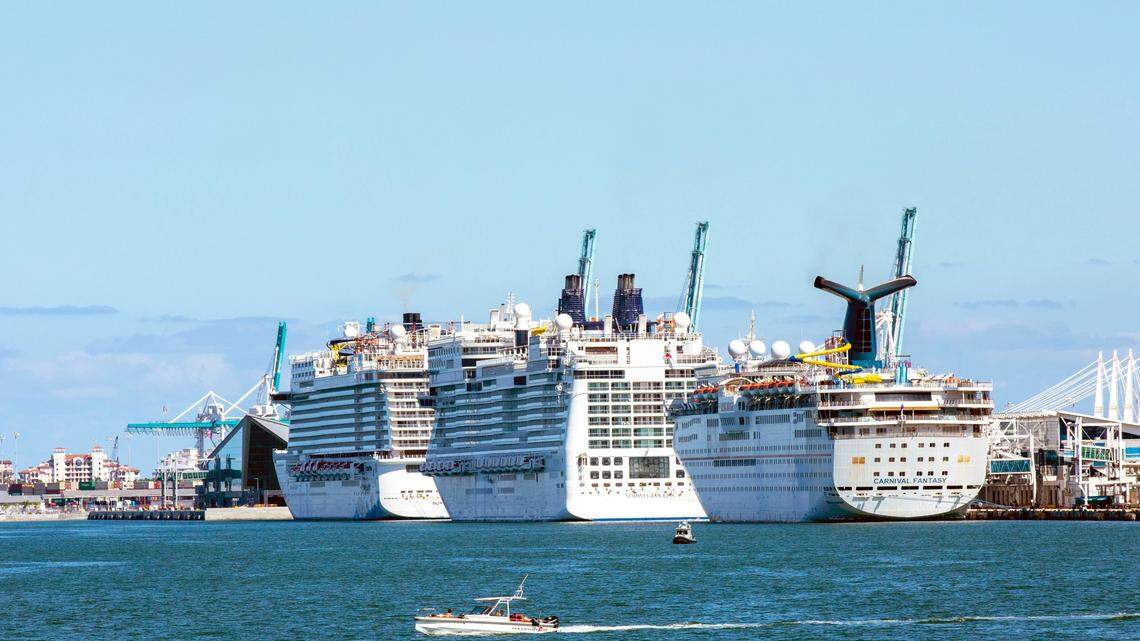
The U.S. Centers for Disease Control and Prevention has issued long-awaited rules for restarting cruises.
Friday, the CDC published detailed requirements for the COVID-19 agreements between cruise lines and U.S. ports they visit, including “worst case scenario” response plans. The agency previously said such agreements would be part of the second phase of its “conditional sail order” but had not released specifics. The agreements will have to be approved by the agency to prevent cruise companies from overwhelming public health infrastructure and ports turning away ships with onboard outbreaks — as they did last year.
“Cruising safely and responsibly during a global pandemic is difficult,” the agency said in a statement. “While cruising will always pose some risk of COVID-19 transmission, following the phases of the [conditional sail order] will ensure cruise ship passenger operations are conducted in a way that protects crew members, passengers, and port personnel, particularly with emerging COVID-19 variants of concern.”
Once the agreements are in place, companies must operate test cruises with crew only before resuming passenger cruises — meaning it could still be months before cruise ships can welcome passengers in the U.S. Cruising from U.S. ports was halted in March 2020 following outbreaks on multiple ships.
CDC-approved port agreements must be signed by cruise company executives and the highest ranking officials of the port and local health authority. The agreements must outline how the cruise terminal and gangway areas will be cleaned routinely and in the case of an outbreak. Agreements must also specify how the lines will enforce social distancing and plans for using commercial operators for any required evacuations at sea. Lines must have signed contracts with shore-side medical facilities to treat patients and shore-side housing facilities to isolate and quarantine sick passengers.
Masking is already required on all forms of public transportation, including by sea.
The guidelines published Friday also instruct companies to develop a plan and timeline for vaccinating crew members and port personnel.
Cruise companies have already traversed the first phase of the conditional sail order, published in October 2020, which required them to obtain the ship-board lab capability to be able to test crew members weekly and report results to the agency. Based on those results, cruise ships are classified as red, yellow or green; each color-coded level comes with stricter rules for preventing COVID-19 spread at sea.
When it was first published last fall, the conditional sail order was largely seen as a win for the cruise industry, which had for months lobbied the CDC to lift its cruising ban, called a “no-sail order.” The conditional sail order quickly became a bureaucratic blow, involving lengthy, multi-agency reviews. At stake is the $7 billion cruise economy linked to PortMiami and thousands of people left unemployed because of the ban.
Fed up with waiting, in recent weeks the cruise industry lobbying group Cruise Lines International Association and industry supporters in government have urged the CDC to ditch its conditional sail order and allow cruises to resume by July, arguing that the order is outdated given the availability of COVID-19 vaccines. Governor Ron DeSantis last week threatened to sue the federal government if the CDC did not lift the conditional sail order; representatives from Carnival Corporation, Disney Cruise Line, Royal Caribbean Group and Norwegian Cruise Line Holdings stood at his side at Port Canaveral as he made the announcement.
After a call with CDC Director Rochelle Walensky Thursday, Miami-Dade Mayor Daniella Levine Cava said she was reassured that the agency will work closely with local ports and the cruise industry to get cruises started as soon as it’s safe.
“There is a path forward,” Levine Cava said in an interview Thursday. “Miami-Dade County and PortMiami want to be positive partners with the CDC. We’re here to make sure that Miami stays the cruise capital of the world. We want to be the place that shows it can be safe. We want the industry to be reborn right here.”
Despite industry pressure, the CDC said it is sticking to the order, which will continue to be tweaked along the way. During the second phase, cruise companies will have to report COVID-19 test results to the agency daily.
Cruise companies tired of waiting for the CDC go-ahead have decided to restart cruises this summer just outside of U.S. waters in the Caribbean. Royal Caribbean Group plans to begin seven-night cruises from The Bahamas and St. Maarten to Mexico, Tortola, St. Lucia, Aruba, Curaçao and Barbados in June; Crystal Cruises has announced it will start seven-night all-Bahamas cruises in July.
Royal Caribbean will require crew members and passengers over 18 years old to be vaccinated against COVID-19, and Crystal Cruises will require all passengers to be vaccinated. Other companies have pledged to require vaccinations for all on board once cruises restart including Virgin Voyages and Windstar Cruises.
However, both Royal and Crystal’s plans for restarting cruises in the Caribbean do not include many of the rules outlined in the CDC’s order, including PCR testing for all passengers and crew on embarkation and disembarkation days, publicizing CDC cruise travel warnings in all marketing materials, and ending cruises immediately in the case of an outbreak.
Also on Friday the CDC gave the green light to fully vaccinated people to resume traveling. Its Level 4 warning against cruise travel — the agency’s highest — remains in place and “recommends that all people avoid travel on cruise ships, including river cruises, worldwide, because the risk of COVID-19 on cruise ships is very high.”
Cruises have long resumed in other parts of the world including Singapore, China and Italy, hosting nearly 400,000 passengers since the pandemic began with minimal COVID-19 cases, according to CLIA. At least thirty-three cruise ships have reported COVID-19 cases or COVID-19 illness (clinically compatible without laboratory confirmation) among crew members to the CDC since the start of the year, according to agency documents obtained by the Herald.
This is a developing story and will be updated.
This story was originally published April 2, 2021 at 5:19 PM.