How should cruise companies protect passengers and crew from COVID-19? We asked doctors
The world’s four largest cruise companies plan to hit the high seas later this summer. For Carnival Corporation, Royal Caribbean Cruises Ltd. and Norwegian Cruise Line Holdings, that means August 1. MSC Cruises has canceled cruises through July 10 and said it is monitoring the situation.
But none of the companies has announced how it will protect passengers and crew from COVID-19 before a vaccine becomes available, at least a year from now. To date, the infectious disease has been confirmed in more than 3,000 passengers and crew and at least 82 deaths across 63 cruise ships, according to a Miami Herald investigation.
Carnival Corp., the world’s largest cruise company with nine brands and 104 ships, is still working on its procedures, said spokesperson Roger Frizzell.
“It is still early in the process and our brands have not yet finalized our future protocol for when the ships will return to cruising following our pause,” he said via email. “We will be working closely with the [U.S. Centers for Disease Control and Prevention and the World Health Organization] as well as other health and medical experts from around the world as part of the process.”
Royal Caribbean Ltd. Chairman Richard Fain told the Miami Herald last week that a panel of experts is working on new procedures for its four brands, which own 54 ships. A spokesperson for the company declined to name those experts.
A spokesperson for Geneva-based MSC Cruises said it had previously instituted temperature checks and screenings for other symptoms and will mandate additional safety measures when cruising resumes.
When Virgin Voyages launches from Miami in October, the company will likely reduce ship capacity, check temperatures and institute contactless room service, a spokesperson said.
Norwegian Cruise Line Holdings did not respond to requests for comment about health procedures.
While the CDC will likely play a pivotal role, it’s not technically the final arbiter on onboard healthcare outside U.S. waters. Each ship’s “flag” state — the country where it is registered — is in charge of setting and enforcing protocols. For the majority of the U.S.-based fleet, that means The Bahamas. It requires each cruise ship to have a doctor on board or face a fine of $100 per day for every day it operates without one.
Even before the COVID-19 pandemic, cruise companies and the American College of Emergency Physicians held higher standards. They recommended each ship have at least one Intensive Care bed in its medical center, carry medicines commonly used in emergencies, and specified that ships doctors should have specific education and experience in emergency medicine, internal medicine or family practice, among other qualifications.
But in the wake of the COVID-19 crisis, should cruise companies do more?
The Miami Herald asked five doctors — including three who treated COVID-19 patients on cruise ships — about onboard changes they would recommend in a pre-vaccine age. All said it would be impossible to eliminate the risk of a COVID-19 outbreak, but enhanced protocols could limit the chances. According to Miami Herald data, 24% of the world’s cruise ships were affected by COVID-19.
“It’s already been demonstrated that cruise ships can be an incubator for this virus and its spread,” said Dr. William Schaffner, Professor of Medicine in the Division of Infectious Diseases at the Vanderbilt University School of Medicine. “You do the best you can. Everything you do is imperfect.”
The outbreak problem
In mid-February, Carnival Corp.’s Diamond Princess cruise ship in Japan became the largest source of COVID-19 cases outside of the epicenter in China. Dr. Michael Callahan, director of the Clinical Translation, Vaccine and Immunotherapy Center at Massachusetts General Hospital, was not surprised. The co-founder of Rescue Medicine, an international disaster medical organization that provides emergency medical help to cruise ships, Callahan is highly familiar with onboard conditions.
“There was no way this wasn’t going to show up on a cruise ship first,” he said. “Cruise ships are the canary for disease outbreak that reveals these diseases on a grand scale and on an earlier time frame than we get from the countries” where the disease originated.
He was quickly called to the scene and worked with Japanese and U.S. health authorities to test and care for passengers and crew and repatriate U.S. citizens. Nearly 20% — 712 — of the 3,711 passengers and crew on the Diamond Princess tested positive for COVID-19; of those, more than half — 331 — showed no symptoms. Twelve people died.
Days later Callahan was dispatched to the Grand Princess cruise ship, with 3,533 people on board; it became the source of another outbreak off California. Since then he and Rescue Medicine have assisted six other cruise ships with outbreaks, he said, including two smaller ships that did not have proper personal protective equipment.
Amid the outbreaks, cruise companies announced enhanced health protocols, including increased disinfecting in common areas, pre-boarding temperature checks and passenger health screening questionnaires. Travelers who had recently visited countries with heavy COVID-19 counts were not allowed to board.
It was insufficient. More people got infected and spread the virus around the world as ships cruised on.
The cruise industry shut down its U.S. operations March 13, initially for 30 days. Citing ongoing infections among remaining crew members, in mid-April the CDC banned cruising in the U.S. until at least July 24. But that hasn’t stopped outbreaks. At least four ships — Royal Caribbean’s Adventure of the Seas, Vision of the Seas, MSC Cruises’ Preziosa, and Disney Cruise Line’s Disney Wonder — have had crew members test positive in May even after months of isolation.
While cruise company executives have compared cruise ships to restaurants and arenas, doctors say cruise ships are more similar to nursing homes and prisons in terms of their density and risk for COVID-19 spread.
“It’s kind of like a prison, kind of like a nursing home,” said Vanderbilt’s Schaffner. “Lots of people close together for prolonged periods of time in interior spaces.”
Complicating matters, say doctors, is cruising’s international nature, drawing passengers and crew from dozens of different countries. Also, many passengers are in a high-risk category: over 60, with underlying health issues.
Recommendations
So what should be done? The CDC is expected to weigh in before cruising starts up again but hasn’t publicly done so yet. Most cruise lines have declined to give details of their plans, saying they are still under review.
A spokesperson for the CDC said the agency has not consulted with any cruise lines yet about resuming operations.
“We don’t have enough information at this time to say when it will be safe for passenger travel to resume,” said spokesperson Scott Pauley in an email Wednesday. “Our current focus is helping crew members safely return home to their families and ensuring cruise lines are providing a safe environment for crew members to work and to disembark. We will continue to evaluate and update our recommendations as the situation evolves.”
Still, three cruise companies with smaller fleets have already announced their new protocols.
Genting Cruise Line, which owns U.S.-based Crystal Cruises, announced in mid-April that it is preparing for a host of changes when cruises resume. Those include requiring a doctor’s note from passengers over 70, thermal scanners on gangways, face masks for all passenger-facing crew members and common-area disinfecting as frequently as every two hours.
Bahamas Paradise Cruise Line announced that it will start cruises on its Grand Celebration ship on July 25, the day after the CDC’s no-sail order expires, at 60% passenger capacity. Passengers will have their temperatures checked before boarding. Theaters will be sanitized after each show, elevators every two hours, and public areas as much as 10 times per day. All crew members will have individual cabins and twice-daily temperature checks.
“Bahamas Paradise Cruise Line is closely monitoring the situation and is currently aligned with the CDC’s guidelines,” said spokesperson Ines Lei in an email. “Currently, the No Sail Order expires on July 24, making it permissible for all cruise lines to commence sailings. Should any changes be issued by the CDC, the cruise line will make all necessary adjustments.”
American Cruise Lines plans to resume cruises on June 20 at 75% passenger capacity. The company’s 190-passenger river cruise ships are not governed by the CDC’s no-sail order, which applies to ships with a total capacity of 250 people or more. The company said it will close public bathrooms and direct passengers to instead use their cabin bathrooms; disinfect railings, doorknobs, elevator buttons and gangways hourly; deny boarding to anyone who says they have tested positive for COVID-19 in the previous 30 days; and train all crew members in COVID-19 identification.
Both Bahamas Paradise Cruise Line and American Cruise Lines will allow passengers to reschedule their cruises up to 24 hours before.
The five doctors interviewed by the Miami Herald — Vanderbilt’s Schaffner; Massachusetts General’s Callahan; Dr. Jennifer Jackson, assistant professor of emergency medicine at University of Miami Miller School of Medicine; Dr. Mauricio Usme, who treated COVID-19 victims on Aurora Expedition’s Greg Mortimer ship; and a fifth cruise ship doctor who requested anonymity for fear of retaliation from his company — said these policies and procedures should be standard operating procedure for cruising before a vaccine becomes available.
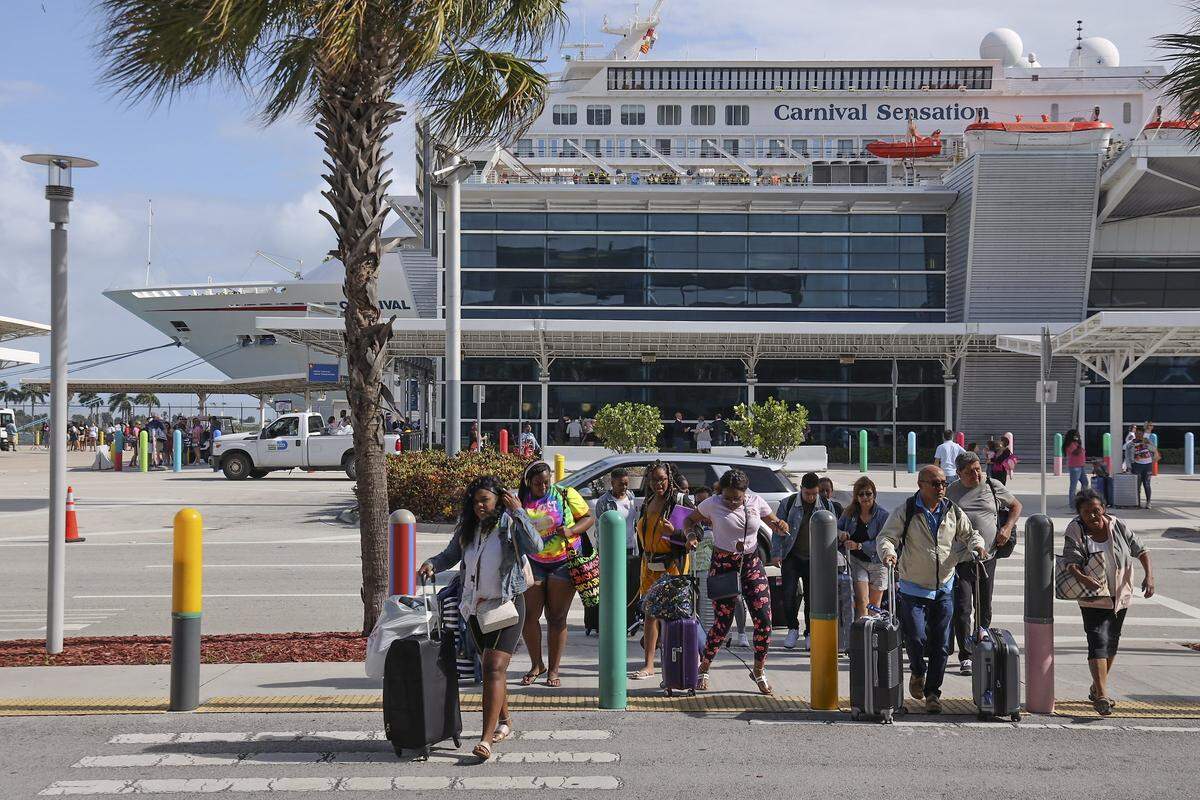
Flexible cancellation policies: Nervous cruise passengers in March say they boarded cruise ships despite their concerns about COVID-19 because cruise companies were not offering cancellation. That needs to change, said Schaffner.
“If they don’t offer a refund, a lot of people aren’t going to fess up,” he said. “Passengers ought to ask themselves, is this something I ought to do right now? If you’re of a certain age, have chronic illnesses like diabetes, high blood pressure, any kind of heart or lung disease... no matter how well you feel at the moment, those are serious considerations and you have to decide what your risk tolerance is.”
Pack extra medicine: During COVID-19 outbreaks on ships in February, March and April, stranded cruise passengers who brought only enough medication for the length of their cruise were sometimes forced to forego it. Passengers who take medications should pack double the amount they would normally take on the cruise, doctors said.
COVID-19 test: Doctors agree getting a COVID-19 test as close to the embarkation date as possible, ideally within 48 hours, will help lower the risk of someone who has the virus getting on board. The most effective test — the PCR (polymerase chain reaction) test— can take a few days to get results, depending on backlogs; that may limit its effectiveness for figuring out who is virus-free on embarkation day. But it is still worth doing, doctors said.
“All those strategies are reasonable, and they reduce the risk somewhat, but they have imperfections,” said Schaffner. “They are a snapshot in time. If I get a negative test today, it means I am negative right now, not tomorrow or the day after.”
Temperature checks: Taking temperatures pre-boarding will not catch those who are positive but asymptomatic, as nearly half of infected passengers and crew were on the Diamond Princess. Still, it’s worth doing, doctors said.
“They will have screening at the port with temperature, where you don’t have to touch anyone,” said UM’s Jackson, who has worked on cruise ships. “They’ll probably do that every time a passenger comes on and off the ship, or every time they go to breakfast.”
Capacity limits: Cruise ships should not be filled to their full capacity, no matter their size, doctors said — an idea echoed by Royal Caribbean Cruises Ltd. Chairman Richard Fain in a recent interview. Cruise companies should consider starting at 50% of passengers and crew. This will allow each person to have more space, especially crew who often share a room or a bathroom with multiple colleagues.
“They have to be willing to sacrifice the maximum capacity,” said Usme, who treated cruise passengers with COVID-19, and contracted the disease himself aboard the Greg Mortimer.
Companies also need to limit capacity at venues on the ship, like pools, casinos, theaters, spas and gyms.
“You can’t wear a mask in the swimming pool, getting a facial,” Jackson said. “Some of that is going to have to be looked at....[lines will need to] either close the pools or have lower capacity.”
Stay close to land: Cruise ships should aim to stay within 500 nautical miles of land, said Mass General’s Callahan, so that they can always be within 24 hours of helicopter range. Freeport, Bahamas is about 100 nautical miles from Miami; Havana, Cuba, is about 250; and Grand Turk, Turks and Caicos is about 800. That would put remote destinations like Antarctica — popular with expedition cruisers — out for now.
“Cruise ship medicine is wilderness medicine after 500 miles off the coast,” said Callahan, noting that if one person calls the medical center with symptoms, it’s likely there are more people already infected.
Thermal scanners: Thermal scanners should be set up throughout the ship, doctors said, for regular temperature checks. These devices read a person’s temperature using a camera instead of a body thermometer, allowing for a less invasive temperature check.
COVID-19 testing, masks for everyone: Cruise ships should have COVID-19 tests and lab capabilities on board so that passengers and crew can be tested regularly and don’t have to wait for tests to be flown to a lab on land to get a result. Masks should be used by all passengers and crew, doctors said.
Crew members should be trained to spot symptoms of COVID-19 so that they can immediately offer symptomatic passengers masks, sanitizer, and a test if necessary.
No more buffets: Buffets and shared condiment containers should not be used, doctors said. Instead, masked and gloved crew members could serve passengers food and condiments individually.
More medical staff, equipment: Cruise ships typically carry just one ventilator. In the COVID age, cruise ship medical centers should be equipped with four, Callahan said. Medical staff should have personal protective equipment, including powered air-purifying respirators, and medical centers should be stocked with what Callahan calls “covid secrets”: emergency medical communication with doctors running COVID-19 clinical trials and medicines in current clinical trials.
The American College of Emergency Physicians does not recommend medical staffing levels for cruise ships. Usme and another cruise ship doctor interviewed for this story who requested anonymity for fear of retaliation from his company said that there are usually two doctors and two or three nurses on board a ship with 3,000 passengers. All doctors interviewed said that more medical staff is needed.
Usme said he would like to see three physicians and five nurses on a 3,000-passenger ship. Callahan said he would like to see two physicians, four nurses, and two paramedics. Both said medical staff should be cruise company employees, not independent contractors as is sometimes the case.
“You have to think that at least one doctor is going to get sick,” said Usme. “Or that people are going to burn out.”
Jackson said cruise companies should consider expanding telemedicine capabilities. “Telemedicine, that’s something that is really untapped especially for certain scenarios like critical patients — heart attack, stroke, certainly intubated patients,” she said.
No more financial goals for medical staff: A cruise ship doctor who spoke with the Herald on the condition of anonymity for fear of retaliation said his company has financial goals for medical staff during each cruise. If the staff meets the goal for several weeks, they get a bonus. He calls the reward system “unethical.’’
“That is not ethical, everything is very expensive on the ship,” he said. “I can do X-ray, everything to increase the bill. If they call me to the cabin, that’s $200; IV fluids, more money. I can manipulate. Sometimes we feel bad...It’s about having $600 one night, not how is the patient? If they take away the goal, you work better.”
Evacuation agreements with ports: Caribbean countries began turning away cruise ships with suspected COVID-19 infections in late February, and many did not allow ships to evacuate sick passengers after the industry shut down operations in mid-March, cutting off a lifeline the industry has grown accustomed to.
“Usually the default of the medical care on board is evacuate the patient to a higher level of care in a port city or to an airport that has an air ambulance that can transfer them to a facility,” said Jackson.
Ports will have to ensure this kind of access before cruising starts again, doctors said.
“You have to guarantee that every day you have access to a port,” said Usme. “The route of the cruise has to be reprogrammed to think about an emergency situation, and you have to avoid routes where there are no ports. You can’t do a cruise where you are two and a half days at sea.”
Jackson said ports with high cruise traffic like Miami and Fort Lauderdale should consider bringing on medical directors to better prepare ports for emergencies so that local officials aren’t scrambling to figure out how to handle a ship with an outbreak.
“The community wants confidence, people who are taking ownership and being thoughtful and strategic in what we’re doing,” she said.
This story has been updated to clarify that MSC Cruises has canceled cruises through July 10.
This story was originally published May 31, 2020 at 6:00 AM.