
This is why stranded U.S. citizens have to pay so much for repatriation flights
As U.S. travelers around the world find themselves stranded overseas by COVID-19-related border closures, they have turned to embassies and the State Department to find them repatriation flights.
One problem: The special relief missions are not cheap, and passengers have to pay their own way.
The tab runs $1,000 to $2,400 for a one-way economy ticket from most countries. That’s often more than double the price for a commercial ticket during normal times.
Eric Blair, a 34-year-old self-described hitchhiker and writer, is desperate to get back to his home in Pikeville, Ky., from Cusco, Peru. He contacted the U.S. Embassy and was outraged to find out that it costs $2,049.05 for a seat on an Eastern Airlines Lima-to-Miami flight Saturday that was contracted by the State Department.
Why so expensive?
“It’s a fair question,” said Steve Harfst, President and CEO of Eastern Airlines, which has arranged 60 flights to repatriate nearly 10,000 U.S. citizens from South and Central America during the crisis. The company has arranged another four flights aboard 767s to and from Lima in the coming days, plus one from Guayaquil, Ecuador, on Friday, and one from Buenos Aires, Argentina, on Saturday.
The Guayaquil-to-Miami flight costs $1,021 and Buenos Aires-to-Miami is $1,497.18.
But these aren’t normal commercial flights with passengers flying both ways, Harfst explained.
Paying for a round-trip ticket
Instead, the planes fly empty one way and then carry passengers on the return, so passengers are essentially paying for a round-trip ticket even though they are flying just one way. Also, the airlines operating these flights don’t typically fly those routes, and have little time to secure airport services, so they have to contract everything at the last minute and are at the mercy of those vendors.
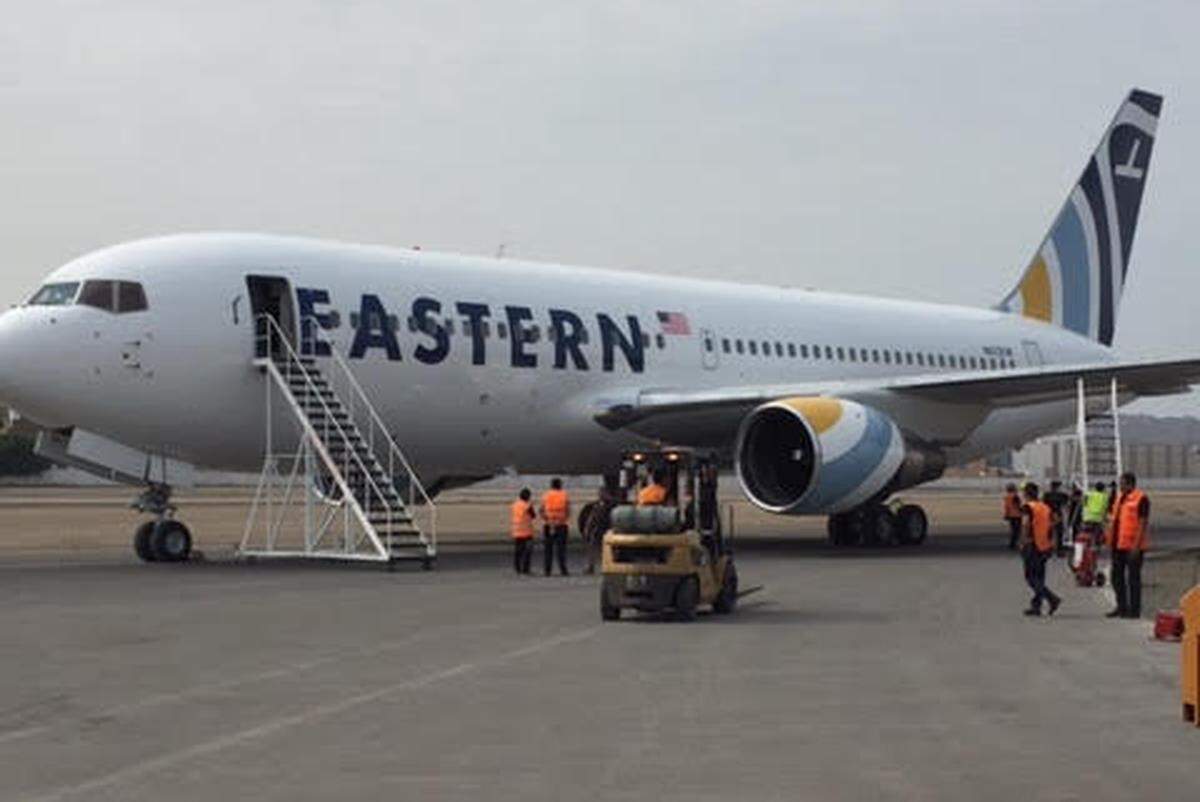
“We’ve flown to 14 different countries in Central and South America and have no infrastructure in any of those locations,” Harfst said. “The U.S. Embassy in any of these countries called Eastern and said, `Hey, we’ve got a couple hundred or a couple thousand American citizens and others that can legally enter the United States who need to get back, so can you set up a flight?’ We then go to that host country and get permits to operate one or more flights.
“The minute we get approval, we call that local airport and have to hire handling agents, check-in people, ground people, baggage people, caterers, aircraft cleaning, ground power unit, fueling company and try to contract with them to provide all the services that need to be done. All that is contracted at last-minute pricing by these vendors. We have no control over that.”
Eastern isn’t the only airline in that position. A United Airlines repatriation flight Sunday from San Salvador, El Salvador, to Houston is priced at $1,303. And a travel writer who recently flew from India to the U.S. paid more than $2,000 for her ticket.
The U.S. Embassy in El Salvador website states: “Humanitarian Flights are operated by private airlines who set their own prices, which we have seen are higher than the pre-COVID market pricing. However, these types of flights offer a travel schedule to a set location. You may get one to two luggage allowances, and you can work with the airline on pet travel options. If you have an urgent need to return to the USA, we strongly urge you to consider this option.”
‘Help as many people get home as possible’
Miramar-based Spirit Airlines has arranged 14 repatriation flights this month to bring back 1,300 travelers from Colombia, Panama, Haiti, Aruba, Dominican Republic and Honduras — all destinations they served prior to the border closures and one reason their prices are lower. They have a flight Saturday from Fort Lauderdale to San Pedro Sula, Honduras, and back to Fort Lauderdale ($292) and April 21 from Medellin, Colombia, to Fort Lauderdale ($398.56).
“Spirit made a decision when this all began to help as many people get home as possible,” said Spirit spokesperson Field Sutton. “That means for any given flight, we are calculating our actual cost of flying the aircraft and simply dividing it among the number of seats we have available. We have flown all our humanitarian flights at cost, and continue to do so as we expand our repatriation efforts into the Dominican Republic, Aruba and Honduras.”
South African Airways on Tuesday night flew a private charter from Miami to Johannesburg, Cape Town and Durban to repatriate 310 South African workers who had spent the past six months working at Florida country clubs through the Workaway International work abroad program. Total cost for the flight: $480,000 – about $1,500 per passenger.
Bill Mayville, president of Workaway, said other quotes for the flight were as high as $800,000.
Even in good times, charter flights are more expensive than commercial flights. Expenses for charters include aircraft rental by the hour, fuel, crew, maintenance and taxes and fees charged by airport authorities and local governments.
For instance, a round-trip flight from Los Angeles to Aspen on a mid-size private jet (6-9 passengers) goes for $20,317 on Evo Jets. The hourly rate is $3,400, which comes to $17,000 for five hours of flying. Fuel is $550, crew costs $600, landing fees $750, taxes $1,417.
Should U.S. cover the cost?
Blair said he understands the additional costs of operating these rescue missions but doesn’t think the stranded citizens should have to pay such high fares. He feels the U.S. government should step in and cover the cost.
Blair purchased a one-way ticket to Guayaquil in October 2019. He could have flown back to the United States on a commercial flight in March, but he thought the coronavirus restrictions would ease off in early April, so he didn’t feel the urgency to go home until last week.
“I’m not naïve to the extreme costs that go along with this, but the United States government is letting them charge this and expecting us to assume a major financial burden to get home,” Blair said. “For me, this is akin to a natural disaster. When FEMA goes into a place like Hurricane Katrina and has to put people up, do they charge people for that housing? It’s emergency relief. I feel like this is just as serious. This could be life or death. Haven’t Americans been paying taxes for exactly these reasons?”
Since late January, over 60,000 Americans have been repatriated from over 100 countries. The U.S. State Department helped organize the flights, and in most cases, has run ticket sales through the airline operating the missions. Even the flights chartered through the State Department require travelers to sign a promissory note to repay the U.S. government for the ticket. Passengers who can’t afford the ticket are offered a loan.
“Emergency relief for citizens stranded abroad should be covered,” said Blair, who has been traveling and working on a book in South America since the end of October 2019. “I don’t trust Peruvian healthcare in case I get sick. I would feel more comfortable back home in the United States.”
Some travel insurance policies with emergency evacuation provisions would have covered the cost. Blair did not buy one prior to his trip.
Blair isn’t alone in his outrage.
Passengers claim price gouging
Other passengers have also accused U.S. airlines of price gouging and are asking the State Department to waive airfare fees.
According to the State Department: “U.S. law requires that departure assistance to private U.S. citizens or third country nationals be provided on a reimbursable basis to the maximum extent practicable. By taking a U.S. government coordinated transport, evacuees are obligated to repay the cost of their transportation. The amount billed to evacuees is based on the cost of a full fare economy flight, or comparable alternate transportation, to the designated destination(s) that would have been charged immediately prior to the events giving rise to the evacuation. Because different evacuation transports may go to different destinations, the cost of one transport may be different than another. We encourage people to leave on the first transport they are able and eligible to board.”
A bipartisan bill was introduced in Congress last month by Reps. Chris Smith (R-N.J.) and Nydia Velázquez (D-N.Y.) that asks the State Department to cover the costs for repatriation flights. But Congress has postponed legislative sessions until next month at the earliest.
Harfst said he understands the travelers’ frustration, but stands by Eastern Airlines’ ticket pricing.
“When we put that price out, it’s a flat rate for a seat. We don’t yield manage, we don’t raise the fares so the last person’s paying more and the first person who bought pays less. No advertising or promotions. This is not an example of a $2 bottle of hand sanitizer being sold for $200. There’s a clear difference. You can’t even get close to accusing airlines of price gouging.
“I get the emotional argument from folks that the prices appear to be high; but to be honest, they really aren’t,” he said. “We’re charging a round-trip fare on a one-way flight, and when you look at the prices, they are pretty darn close to normal commercial prices. We are not a charity, but this is not a commercial endeavor for Eastern Airlines. Our whole objective is to get people home and cover our costs and our crews are putting their lives at risk to do it.”
This story was originally published April 17, 2020 at 8:29 AM.