A Delray couple took the Ruby Princess cruise with friends. Now 6 of them have COVID-19
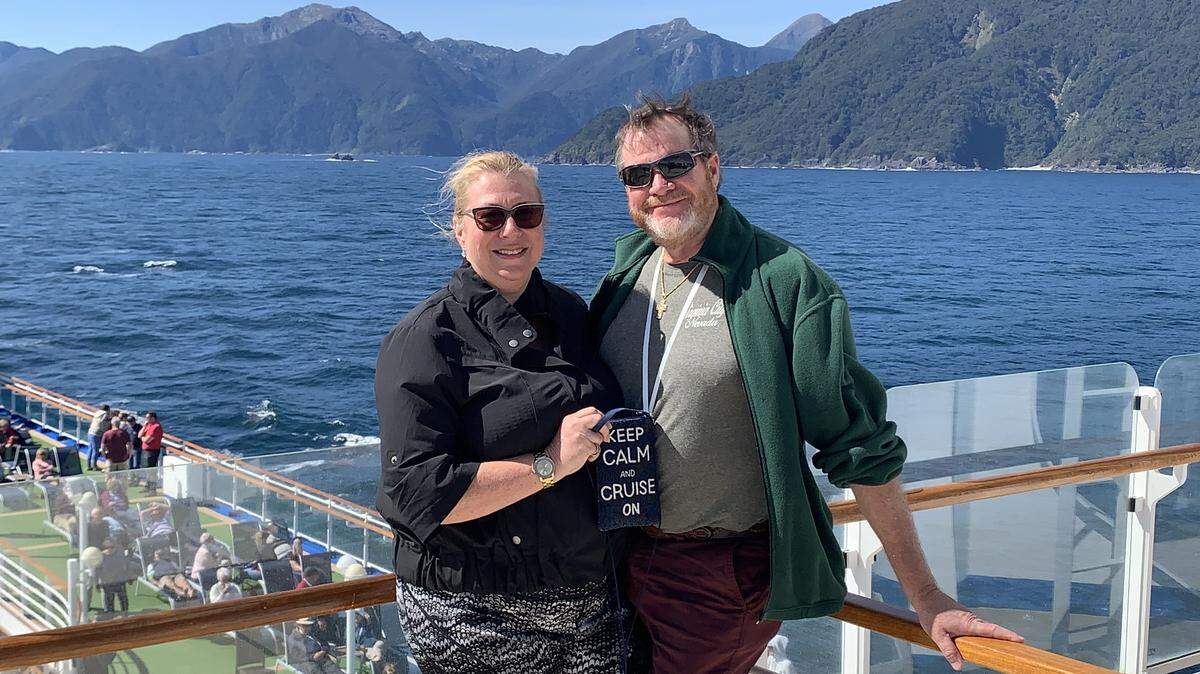
All Diane Fish, 58, of Delray Beach, wanted to do was sleep. Her exhaustion was a symptom of a mix of allergies and stress juggling the needs of the group she had brought aboard the Ruby Princess, she thought.
The 13-night cruise she had spent two years planning for herself and nine others was returning to Sydney, Australia, two days earlier than expected. And she was the travel agent, responsible for canceling shore excursions, changing flights and getting rides to the airport for her whole gang.
Her last day onboard was spent on the ship’s public computers, rearranging bookings while fighting off her fatigue.
It wasn’t until later that she would learn she was battling COVID-19. At the time, neither she nor the other guests knew it was quickly spreading among the passengers and crew. In the three weeks since, more than 600 Ruby Princess passengers and 21 crew members have tested positive for COVID-19 in Australia, and at least 13 passengers have died.
While still on the ship, the vacationers were rarely tuning into the news, trying to make the best of their cruise. They thought themselves lucky to be on a ship during the pandemic, far away from the increasingly grim and isolated reality that awaited them at home.
“We all felt so safe on that ship, we thought, ‘Oh, we don’t want to go home and have to deal with this,’ ” she said. “That was my mistake, working on the ship computers without gloves.”
About 2,700 Ruby Princess passengers disembarked in Sydney on March 19. None of them was screened. Not even a temperature check. Gloveless passengers high-fived a long row of staff lined up on their way out of the ship.
On the bus on the way to the airport, Fish remembers hearing those around her coughing over and over again. At the airport, she wondered aloud to her husband, Michael, how it could be possible all the sick cruisers were allowed to take a series of commercial flights home.
“I was fatigued, probably a fever, and a little bit of a cough,” she said. “Everybody was feeling the same way.”
By the time Fish and her husband landed in Florida — still March 19, thanks to crossing the International Date Line — Australian authorities had announced that three Ruby Princess passengers and one crew member had tested positive for COVID-19. Fish and her husband took a long nap and then drove to a clinic in Coral Springs to get tested.
A few days later, they got the call confirming what by that point was obvious: They had COVID-19. And so did four other people from their travel group.
Realizing the imminent catastrophe, the Australian government scrambled to contact all of the passengers to tell them they may have been exposed. But it was too late.
On April 5, Australian police launched a criminal investigation into the ship’s docking. Central to the probe, said New South Wales police commissioner Mick Fuller, is whether Carnival Corporation, Princess Cruises’ parent company, was forthright about the health situation on the ship before it docked.
“Was Carnival or crew transparent in contextualizing the true patient/crew health conditions relevant to COVID-19?” he said at a press conference announcing the investigation. “They [Australian authorities] made contact with operations manager from Carnival and on each case they were informed that COVID-19 wasn’t an issue on the ship.”
On Thursday, police boarded the ship, seized evidence, and interviewed crew members.
Fish wants answers to the same questions the Australians are asking.
“What did they know that they didn’t tell us?” she said. “They had other Princess ships ... taking temperatures. Why didn’t they do that? If someone had knocked on my door and said we need to take your temperature, I would have had one.”
Fish and her husband are just regaining their sense of taste. They have divided their Delray Beach home so that they can avoid infecting their two adult children who are home from college. The kitchen is the only shared space, with plenty of bleach and latex gloves.
She worries most about the low-wage workers on the ship and at the port in Sydney whom she may have unknowingly infected. Her luggage passed through several workers’ hands, she said, and she wishes they had had gloves and masks.
As a travel agent, Fish is feeling a pinch financially, too. She is making about 20% of the income she was earning a month ago. Her business: booking cruises.
She will cruise again in the future, Fish said, but hopes lines make a significant change in how they sterilize ships to prevent infectious disease outbreaks.
“It will take us years to recover from this,” she said.
This story was originally published April 10, 2020 at 6:00 AM.