How the coronavirus crisis is putting the pain on Miami’s hospitality workers
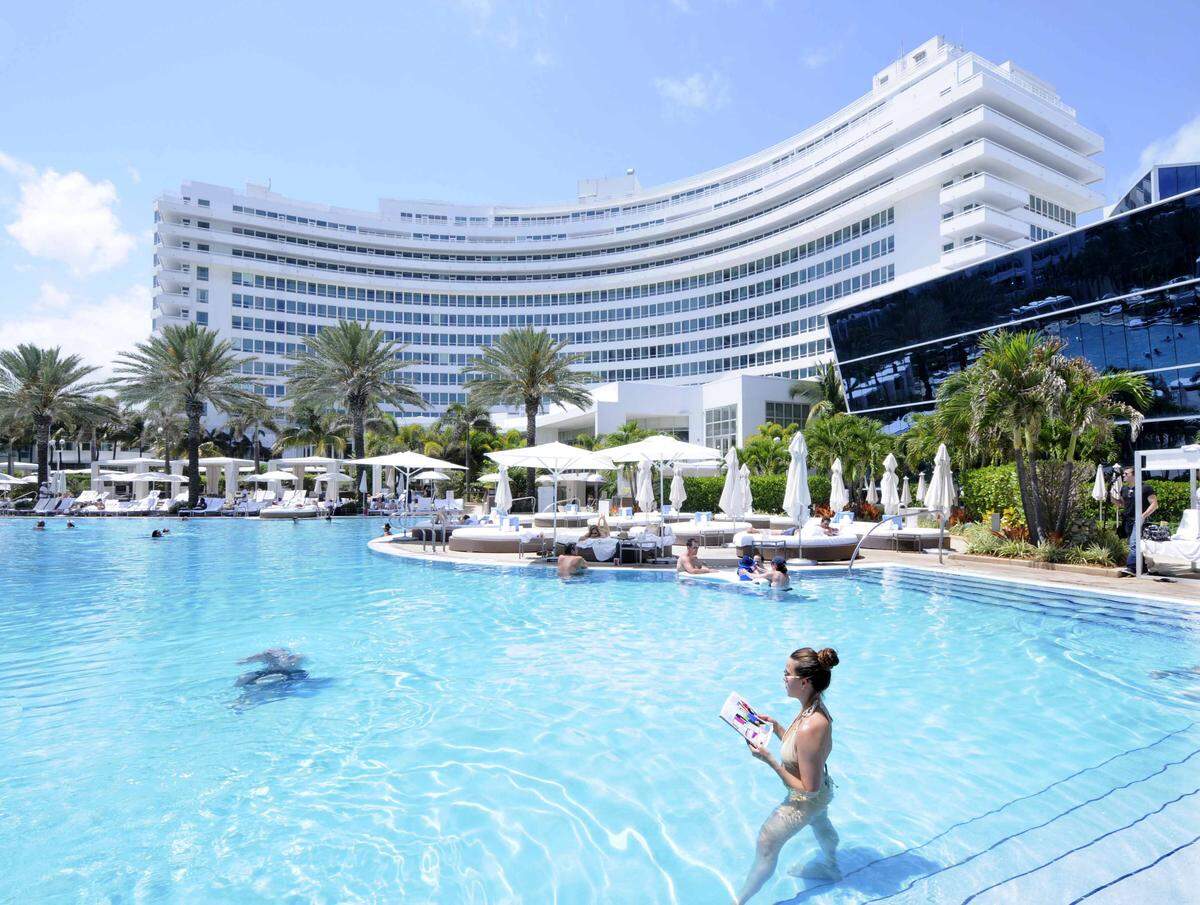
Rick Sanchez, a 56-year-old bellman at the Fontainebleau hotel, suddenly finds himself with a lot of unwanted free time.
“I’m over here having this interview with you today, but where I really should be is at work,” he said.
With the new coronavirus spooking travelers and hobbling the local hospitality industry — the pace of Miami-area hotel and airline bookings is down double digits compared to a year ago — Sanchez has started feeling the consequences.
As of last weekend, when cancellations began giving his Miami Beach hotel the feel of a “ghost town,” Sanchez went from being able to work overtime to having three days off.
Fewer shifts means less opportunities to earn his $8-an-hour wage. And fewer guests at the hotel means fewer tips, which Sanchez relies on to help pad his income.
“I just can’t make it, I cannot make it with what’s going on now,” he said. “I’m worried about how I’m going to take care of my family.”
Sanchez says that, to “try to be a little proactive,” he’s scheduled an appointment to refinance his auto loan.
“But it’s not just the car loan,” he said. “How are we going to pay our mortgage? My wife was in tears the other day.”
A more limited work schedule could also disrupt Sanchez’s healthcare access because one of his plan’s qualification criteria is meeting a minimum number of hours worked per week.
“If I don’t work at least 30 hours per week, I stop qualifying for health insurance,” he said. “And I hate to be pessimistic but I only see my hours getting cut more and more.”
Because Sanchez can’t afford to miss a paycheck, he took a paid vacation day on the day he spoke with the Miami Herald. He only has a couple of vacation days left, and very limited sick leave.
“I really just don’t know how much longer I’m going to be able to sustain this.”
CONCERNS GROW AT LABOR UNION
Maria-Jose (MJ) Leira is a spokeswoman for Unite Here Local 355, the county’s only hospitality union. It represents nearly 6,000 workers, including Sanchez.
Leira recognizes that, by function of their public-facing jobs — and at a time when health experts are recommending social distancing — hospitality workers come in contact with hundreds of people every day. That puts them “on the frontline of exposure for coronavirus.”
But although union members are concerned about their health, the perception that jobs are in jeopardy is what’s most causing alarm.
“The overwhelming number of phone calls that we are getting now are about hours getting cut,” said Wendi Walsh, secretary-treasurer of Unite Here Local 355. “Hours are plummeting … and there’s no particular end in sight.”
“There are obviously many industries that could be impacted by this, but hospitality is taking the biggest hit,” she added. “The cancellation of bookings, conferences, conventions, sporting events, all of that is having a tremendous impact on hospitality workers.”
Losing work, even if just a shift or two, can take a big toll on workers’ livelihoods.
“For an hourly employee, the impact is devastating,” Walsh said. “These are people who are living at the edge, from paycheck to paycheck under the best of circumstances. And living in Miami is expensive. Losing work hours can put a worker at risk of not being able to make their rent that month.”
To help soften the impact, the union plans on helping qualifying members through the process of applying for social programs, including unemployment benefits and food stamps.
Union representatives are also speaking with employers about making sure any relief the industry receives from the government — whether in the form of tax breaks for hotels or rent relief for airport merchants — trickles down to workers.
“We’ve seen this before. We saw it after 9/11, we’ve seen it with Zika. We know that these employers are quick to get relief from the government … but we need to make sure that the money is actually being shared with the workers who are either going to be laid off or who are going to be down to a couple of days per week,” Walsh said.
The union is also asking employers to maintain employees’ health benefits even if they can’t meet the required minimum of hours worked to technically qualify for health plans.
“The last thing we need is a bunch of hospitality workers being dropped from their health insurance and continue to work in these very public facilities where they are exposed to hundreds of people per day,” Walsh said.
Representatives of the Greater Miami Convention & Visitors Bureau and the Greater Miami and the Beaches Hotel Association did not immediately respond to requests for comment.
NEED FOR SICK LEAVE
According to Silvia, a serving assistant at Miami International Airport, she and several of her colleagues who work 40-hour weeks at the airport will get eight hours taken off their schedules, effective next week.
“Paychecks will just stop being enough to cover rent,” she said. Silvia, who doesn’t want her last name published, says she has no sick leave to rely on should she catch something from the hundreds of passengers she comes in contact with each day. Her options are to stay home and take a vacation day, or just show up to work.
“Even if we feel a bit sick, we will still come to work. There’s no other option for us,” she said. “If we started missing shifts, we would be living on the street by the time this situation with coronavirus is over.”
Walsh echoed that statement.
“For workers who are already losing hours, they are certainly not going to give up a paycheck unless they know they are going to be paid to be home.”
For Sanchez, the Fontainebleau bellman, the situation is less dire.
He gets four days of sick leave each year, a benefit that most South Florida hospitality workers do not have. But he’s still likely to go to work if all he is feeling is slight discomfort.
“People just can’t afford to take the day off,” he said. “Some workers, even before the coronavirus, they have a little flu, or they have a little cold, they still come to work. That’s just the way of life that we have for working-class people, especially here in Miami.”