Federal judge frustrated over Carnival’s continued pollution while on probation
More than halfway through Carnival Corporation’s five year probation, company executives were in federal court Wednesday trying to assure U.S. District Judge Patricia Seitz that they were making progress on the cruise company’s widespread pollution problem.
The judge confronted Carnival Corp. chairman Micky Arison about what he is personally doing to clean up the company’s performance. The court-appointed monitor found repeated environmental violations from July 19, 2019 to Oct. 18, 2019 across the company’s 105-ship fleet, indicating that little progress had being made toward compliance despite the company investing in and hiring more people for its ethics and compliance office. The violations included burning unfiltered heavy fuel oil in protected areas and dumping sewage, chemicals, food waste, gray water, oil, and garbage into the ocean.
“I want to give you the necessary impetus to personally take charge and be committed,” Seitz said to Arison. “I want you to become an environmentalist, I guess.”
“We are totally supportive,” Arison said, noting that the company has raised money to rebuild in the Bahamas post-Hurricane Dorian and in Australia as it suffers devastating bush fires. “Everyone in this room knows they have carte blanche to do whatever they need to do. I don’t know what more I can do.”
Carnival Corp. faces scrutiny unprecedented in the history of the cruise industry. The company has been on probation since 2017 after pleading guilty to felonies for dumping oily waste into the ocean and covering it up for a period of eight years on its Princess Cruises ships. In June, CEO Arnold Donald pleaded guilty on behalf of the company to violating its probation and agreed to more federal oversight and a $20 million fine.
Carnival Corp., the world’s largest cruise company, is parent of nine brands, including Princess, Carnival, Holland America, Cunard, Seabourn, P&O Cruises UK, P&O Cruises Australia, Costa Cruises and AIDA.
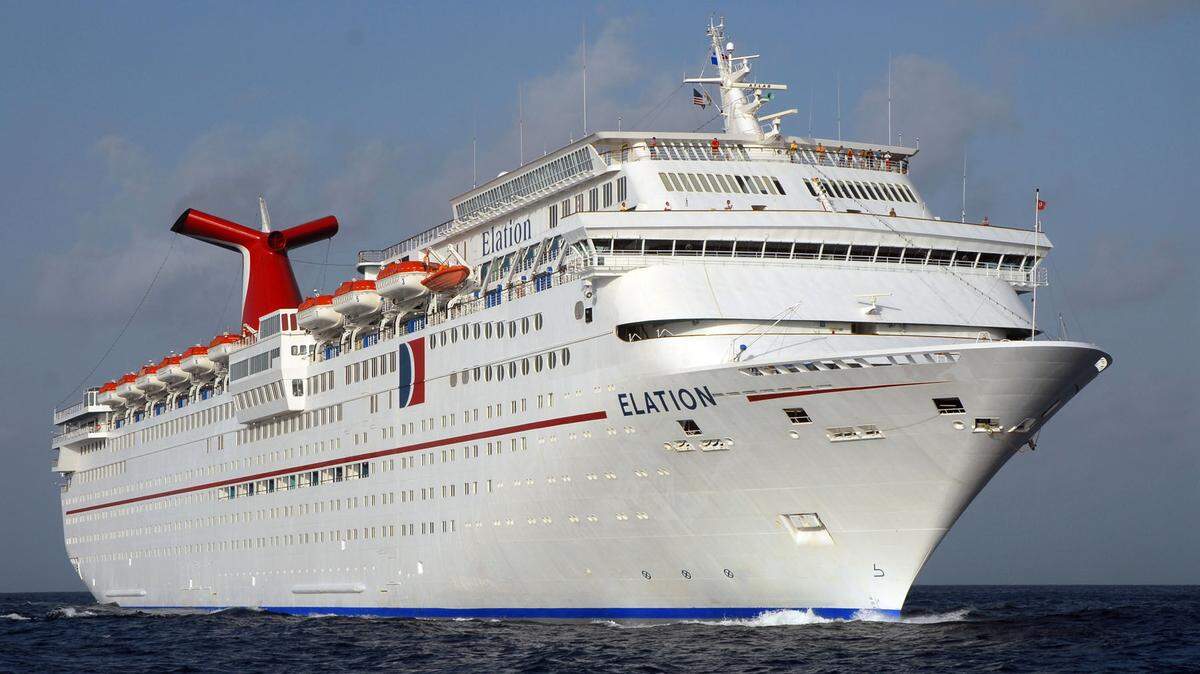
Wednesday’s hearing happened less than a week after the Carnival Elation cruise ship illegally dumped 5,900 gallons of untreated gray water — liquid leftover from showers, sinks and laundry — into the ocean while docked at Port Canaveral. Florida’s Department of Environmental Protection said it will not penalize Carnival for that violation.
Seitz said she is frustrated that the company has not presented goals to measure improvements in the number of violations per quarter, adding that each of the violations cited by the court-appointed monitor could be grounds for the court to revoke the company’s probation and even re-sentence the company. She asked the executives to stop qualifying the data about environmental violations by saying that the amount of pollution is a fraction of its overall operation.
The company’s lawyer said Wednesday he would send Seitz goals in the next two weeks. Executives will return to court on April 24 for another status conference.
“The ship keeps on moving, and the environment and the people around are affected,” she said. “How do we live up to the company’s motto that we leave places better than when we arrive if that’s happening?”
The key to reducing environmental violations, said Seitz, is to change the company’s culture. A survey conducted by an outside expert hired by the court and delivered to the company in August found a pervasive lack of trust between workers, supervisors and managers, resulting in a perception that the company blames employees who make mistakes instead of determining the root cause of a violation.
In an effort to change its culture, Carnival Corp.’s recently hired a chief ethics and compliance officer, Pete Anderson, who created an the action plan to address the issues outlined in the culture survey referenced by the court monitor. Implementing that plan will take 18 to 24 months, he said.
In December, Anderson’s team presented to the court all of the things it has done so far to address pollution, including expanding the team charged with investigating violations from four to eight, the budget for the company’s compliance office from $27 million to $47 million, and the compliance staff in Miami from 29 employees to 55.
Donald, who has been CEO since 2013, talked about one way he is trying to show employees that the company’s leadership is prioritizing environmental compliance. He has rolled out a bi-weekly podcast to be broadcast to all employees in which he discusses the topic.
“It’s my personal highest priority. It’s our board’s highest priority,” he said.
Donald also talked about a conversation with a chief engineer on one of the company’s ships while cruising with his family for the holidays. Donald said he asked the engineer what he could do to make the engineer’s job easier. The engineer told him that the orders for spare parts are often delayed because of what the engineer interpreted as a tight budget. Donald said he gave the engineer his cell phone number and told him he’d look into it.