Affordable housing in Miami gets a boost with incentives for small developers
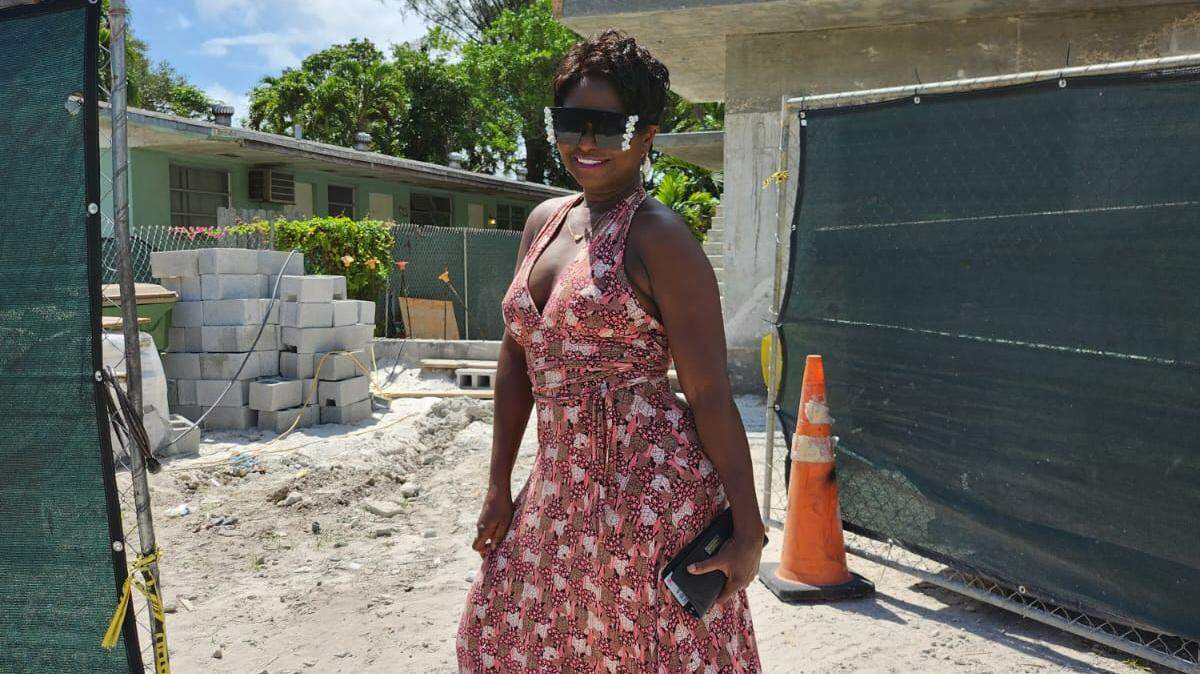
Lynda Harris has owned vacant lots in North Miami and Brownsville for years.
She bought them starting more than two decades ago, following her grandmother’s advice: “Buy land, God’s not making it anymore.”
But in the years since, the land sat empty. Eventually, she realized she was “paying taxes on dirt.” So she decided it was time to do something with the lots.
Now, she’s preparing to go in front of the North Miami City Commission to get approval to build Casa de Lynda, a 20-unit affordable housing development for seniors.
Harris is part of a program run by the nonprofit Miami Homes for All, which supports small-scale developers and landowners looking to build affordable housing or refurbish existing units. Miami Homes for All launched the Small-Scale Affordable Development Alliance last week after running it as a pilot program for several years.
Fifteen projects, including the one by Harris, were in the pilot program. Annie Lord, the executive director of Miami Homes for All, said about 45 developers are interested in joining the next phase.
The program helps landowners raise capital, apply for permits and build their projects. Miami Homes for All can also match landowners with affordable housing developers to help execute their plans.
The nonprofit Miami Workers Center is developing a community center with offices and five units of affordable housing in Liberty City, with support from the alliance. Lord said she encourages nonprofits and houses of worship to participate in the program, in addition to individual landowners.
Project Peach, a small-scale mixed-use development completed earlier this year, was part of the program, too. The building, painted an eye-catching shade of pink, brought three new units of affordable housing and office space for community nonprofits to Overtown.
Earlier this year, the Live Local Act, a state law passed in 2023 aimed at boosting the supply of affordable housing in Florida, was amended to make it easier for nonprofits, houses of worship and schools to build affordable housing on their land, a move Lord has praised.
Lord said she sees the small-scale developer program both as a way to address the county’s 90,000-unit affordable housing shortage and to support the local economy by giving workers opportunities to find affordable housing near where they work. The program also helps communities take advantage of existing housing inventory by encouraging landowners to refurbish existing, often unsubsidized, affordable housing units, she said.
“We wanted to make it easier for people who owned property,” Lord said, “to create affordability for their neighbors.”
It’s not always easy for landowners like Harris to get started as developers. Harris said when she decided she wanted to build something on her lots, she went to the bank for a loan. She thought she’d get one easily because she owned the land outright. But that wasn’t the case.
“I didn’t know what I didn’t know,” Harris said. “Miami Homes for All came in just at the right time and held my hand.”
Harris started working with Miami Homes for All about 2 1/2 years ago. She took the nonprofit’s crash course in affordable development, where she learned about zoning laws and environmental inspections. Since then, a coordinator from Miami Homes for All has been meeting with her regularly to offer technical advice as she works on Casa de Lynda.
Harris, who has spent much of her career working as a financial planner, had no background in development.
“I just thought developers built those 30-story buildings,” she said.
But now she considers herself a full-fledged real estate developer. She’s the president of her own firm, Sunshine State Development, and she said she’s planning to continue working in affordable housing development after Casa de Lynda is completed.
“I really do want to keep making a difference,” Harris said.
Some developers argue that building large-scale projects is the only way to make a difference, considering the sheer scale of the affordable housing shortage in Miami-Dade County.
But even though the small-scale projects Miami Homes for All is supporting with this initiative won’t close the 90,000-unit gap, Lord said they can help keep residents of rapidly changing and gentrifying neighborhoods like Overtown and Allapattah from having to leave their communities in search of more affordable housing elsewhere.
“This is a way to help ... prevent the mass displacement of the people that make Miami special and economically viable.”
This story was originally published June 2, 2026 at 5:49 AM.