More AI data centers are coming to South Florida. Could one open near you?
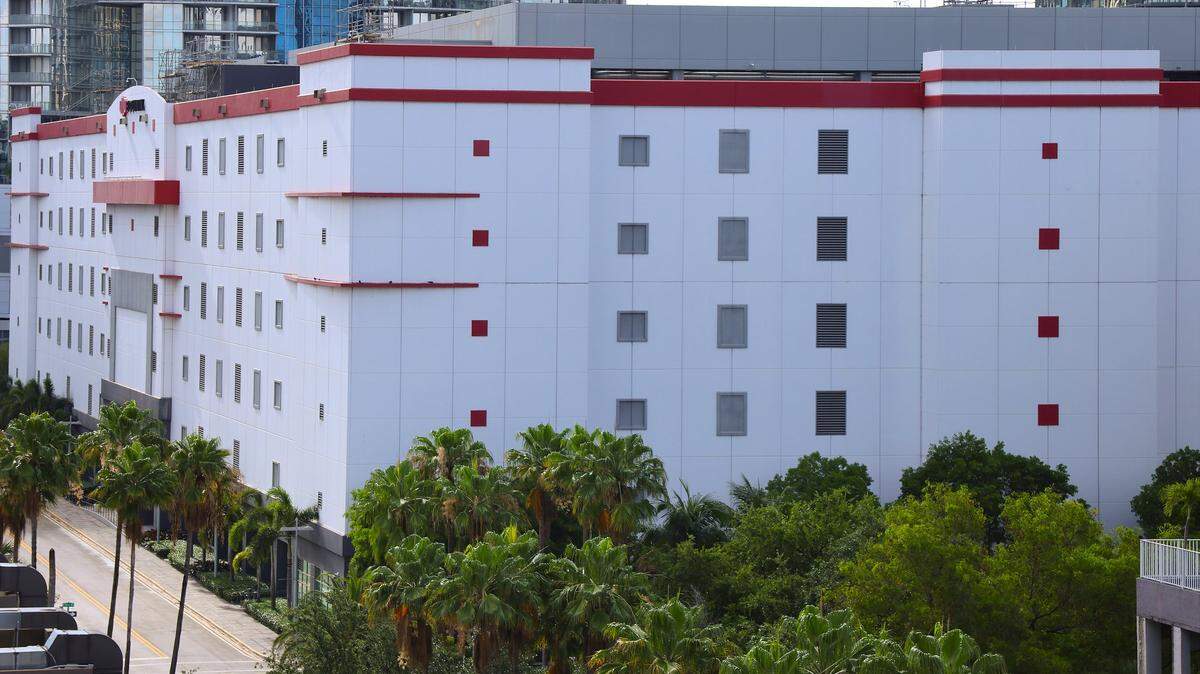
It could look like a sprawling Walmart warehouse. But there are no pallets of snacks and toothpaste inside these walls.
And that low humming sound? That’s from the fans cooling a vast network of computers.
Data centers are popping up across the country as the demand for AI and cloud tech grows. And one can be your new next-door neighbor if you live near an industrial area.
Several data centers are in the works, including two being built in Miami-Dade County, and one massive million-square-foot facility proposed for Palm Beach County, about 35 miles west of President Donald Trump’s Mar-a-Lago. A “micro-data center” is also planned as part of a larger office complex in South Miami-Dade, the area’s first data center.
Downtown Miami got its first major data center in 2001, a massive 750,000-square foot facility that serves as a computing hub for much of Latin America.
Data center development is especially hot now, as the growing artificial intelligence industry has driven up demand for high-powered computing, though concerns are growing over impact to the environment and neighborhoods.
More than 1,500 data centers are in “various stages of development” across the U.S. right now, according to a recent analysis from Pew Research Center. And vacancy rates at the existing facilities, which Pew numbers at around 3,000 nationwide, are low. That signals opportunity for investors, said Joshua Forman, an attorney at Greenberg Traurig who represents data center owners, developers, operators and investors.
Across Florida, there are 120 operating data centers, with eight more planned, according to Pew.
Miami-Dade is not an ideal site for “hyperscale” data centers. Land in the county is expensive and scarce, and environmental risks like hurricanes and floods make developers hesitant to build large data centers in the county. But 27 data centers are under construction or already built in the Miami area, according to the online database Data Center Map.
Tech companies say these facilities bring jobs and tax revenue to the communities they’re built in. And like it or not, they say, data centers are needed to support our tech appetites.
“They’re the backbone for the internet,” Forman said.
He said demand for data centers has surged in recent years because of the pandemic, when more people began video conferencing regularly, and the rollout of generative AI, which requires significant computing power to train.
But not everyone is on board. Across the country, neighbors have come together, often across political divides, to oppose data centers going up in their backyards.
Data centers in South Florida
South Florida is seeing a crop of new facilities built in areas zoned for industry, and many are on the smaller side as data centers go.
In Westview, an unincorporated community in Northeast Miami-Dade, an Iron Mountain data center is under construction. The 150,000-square foot complex, which is slightly smaller than a Walmart superstore, is what the New Hampshire-based information management company calls an “AI-ready” data center. Construction began quietly last year, with many neighbors unaware.
On the edge of the Everglades in unincorporated Miami-Dade, the data center company Metrobloks company is building a 112,900-square foot data center, with expected completion later this year.
To the south, a small-scale data center was just announced for South-Miami Dade. It’ll be the area’s first data center, and it’ll be part of a larger office complex.
In western Palm Beach County, a proposal to build a massive data center has stalled as neighbors in a suburban community called Arden have pushed back against the project, which would require rezoning to build. Project Tango’s data center would span a million square feet, with nearly 2 million additional square feet of warehouses on the 202-acre site.
Concerns about energy and water
Data from Pew published earlier this year shows that nearly 40% of Americans think data centers are bad for the environment and home energy costs. And 30% believe data centers negatively affect the quality of life for people living nearby.
Data centers require massive amounts of energy and water to run. One $2.6 billion data center proposed for Polk County in Central Florida would use an estimated 50,000 gallons of water per day. Neighbors often cite concerns about strain on local utility grids when a data center is set to be built in their backyards.
People who live near data centers also complain about noise pollution from the cooling systems data centers use for their computers, which sometimes produce a humming noise.
Florida Gov. Ron DeSantis, who has emerged as a vocal skeptic of AI and data centers, signed a law earlier this month aimed at keeping data centers from passing along energy costs to nearby residents. The law also includes provisions allowing municipalities to block data center developments.
Nick Tsinoremas, a computer science professor at the University of Miami, thinks the path we’re on right now with AI is not sustainable.
“It requires way too much power and way too many resources,” he said.
But he struck an optimistic note: As technology advances, data centers will likely become more energy efficient, requiring less water and less energy to operate.
How can they build data centers there?
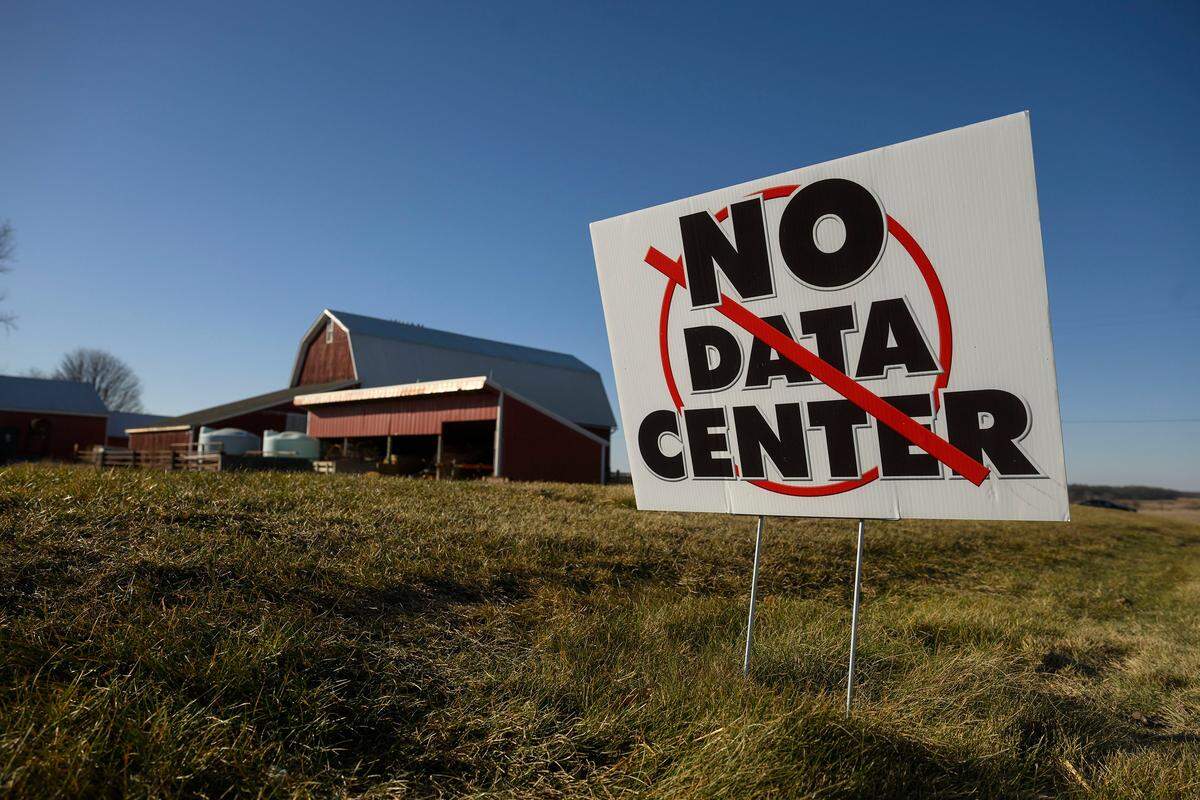
In Westview, some neighbors have taken issue with a data center that went up with little warning.
Residents at a homeowner association meeting in April questioned how an Iron Mountain data center crept into their backyard unnoticed. The data center broke ground in February 2025 and has been in the works since 2023.
At the meeting, Miami-Dade County officials told residents that notices were only mailed to properties within 500 feet of the development because the property wasn’t being rezoned. That radius only included industrial properties, not the homes along Northwest 27th Avenue and a nearby apartment complex.
Under Miami-Dade County zoning code, data centers are categorized as “telecommunications hubs” and are permitted in industrial zoning districts. Because of the zoning, the developer didn’t need permission to build the data center. Iron Mountain had already owned the land, which was home to a storage facility.
Naiya Lynn, who lives about two miles from the data center, said while she walked away with a bit more knowledge about the data center, her concern is the lack of transparency around the project, particularly from Miami-Dade County Commissioner Marleine Bastien, who was at the groundbreaking for the data center last year.
“I don’t think they were dishonest. I just don’t think they were transparent,” she said. “And I think there’s a huge difference.”
Little River Farms resident Trameka Rios said more accountability needs to be had for their elected officials.
“At the end of the day,” she said, “it’s about our quality of life.”
The proposed data center in Palm Beach County, Project Tango, has stalled as the developer seeks to rezone the site.
Corey Kanterman, a stay-at-home dad who lives near the proposed data center, says he’s worried about the strain on his neighborhood’s energy grid, noise pollution and the value of his home, which he expects will drop significantly if the data center is built. He’s been involved in organizing his neighbors in protest of the data center since the project was announced late last year.
“When I’m directly affected, I’m certainly going to get involved and fight for not only my family, but for all my neighbors,” Kanterman said. “We have everything to lose and nothing to gain.”
The main difference between the project in Miami-Dade and the one proposed for Palm Beach comes down to zoning. In Palm Beach County, the land needs to be rezoned, which requires a more extensive and public hearing process. In Westview, the land was already zoned for industrial use, so there was no public hearing to rezone the land.
Jorge Navarro, a land use attorney with Greenberg Traurig, said he thinks it’s fair to zone data centers like warehouses because they’re “compatible” with other industrial buildings. He said living by a data center may actually be less of a nuisance than living by a warehouse, which could have noisy trucks coming and going.
But Tsinoremas, the UM professor, said he thinks data centers should be zoned differently than warehouses because they require much more energy than a typical warehouse. He thinks the county should have a more defined process for approving and building data centers.
“Municipalities, they need to start thinking about what zoning means for data centers,” said Tsinoremas. “Do you even have the power that you can bring in?”
Proposed data centers in South Florida
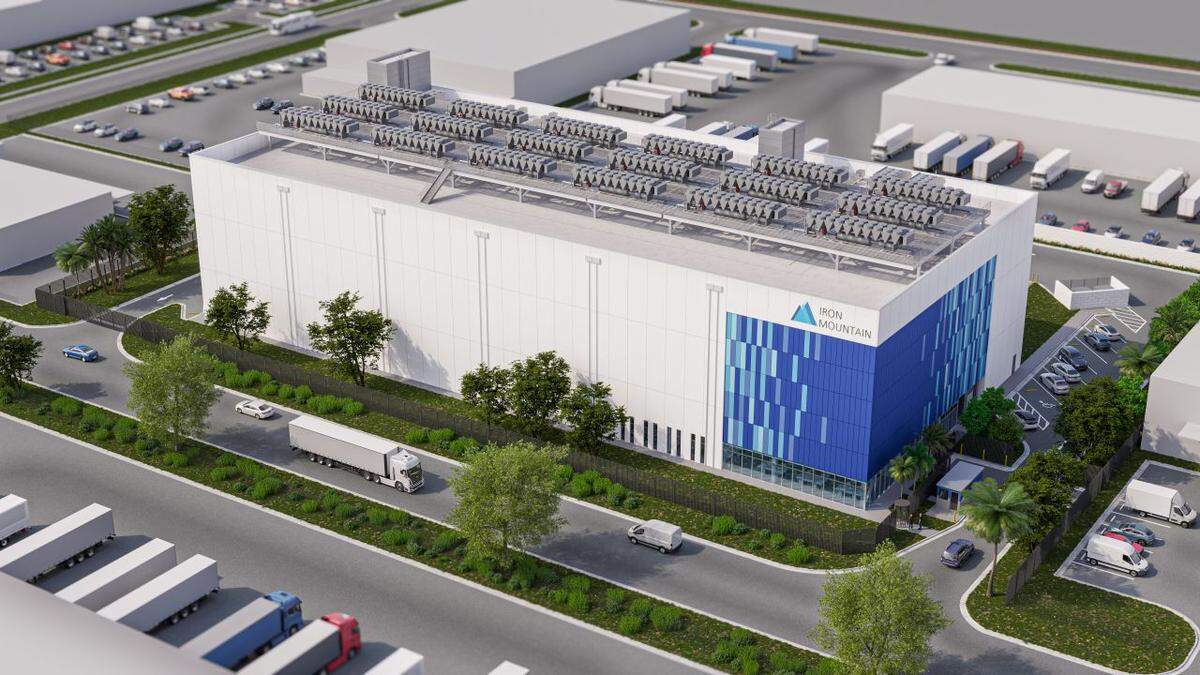
Project Tango: 20125 Southern Blvd., Palm Beach County
Metrobloks: 500 NW 137th Ave., Miami-Dade County
Iron Mountain: 2925 NW 120th Ter., Miami-Dade County
ReadySetFundGrow’s “Fishbowl”: 23095 S. Dixie Hwy., Miami-Dade County