Affordable housing may come to Surfside. Mayor says, ‘We’re going to oppose’
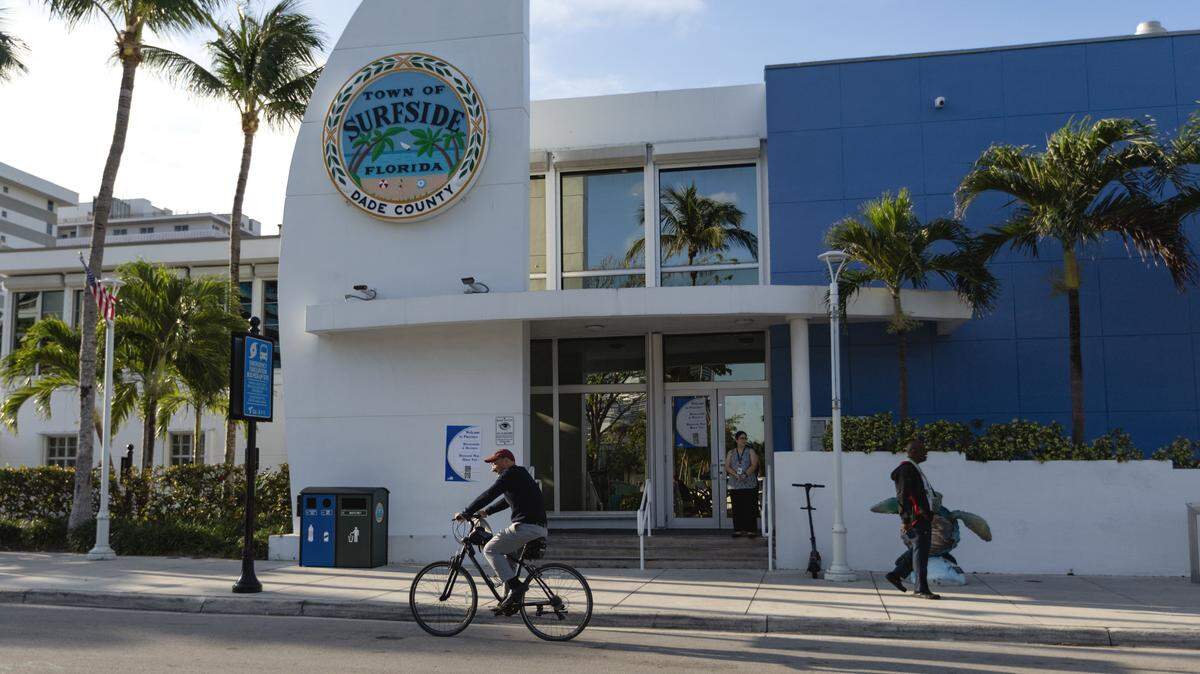
A state law would allow a 12-story hotel and residential building on the site of the old post office in Surfside, even though the town’s zoning rules cap buildings there at 40 feet, or three stories.
This is the first project proposed under the Live Local Act in Surfside, and it’s already sparked controversy in the small seaside town.
Ocean Walk Residences & Hotel, a development proposed for 250 95th St., would take advantage of provisions in the law that allow developers to bypass local zoning restrictions on height if they designate 40% of the units in a project as affordable housing. The upper limit of affordable housing in Florida typically has rent that does not exceed 30% of the income of someone making 120% of the area’s median income. In Miami-Dade County, that’s around $100,000 per year.
In Surfside, 120-foot buildings are typically only allowed to be built on beachfront real estate.
According to plans submitted to the town, the building would have 33 units: 22 residential and 11 hotel rooms. The Live Local Act, which was passed in 2023, stipulates that the designated affordable units must remain income-restricted for at least 30 years.
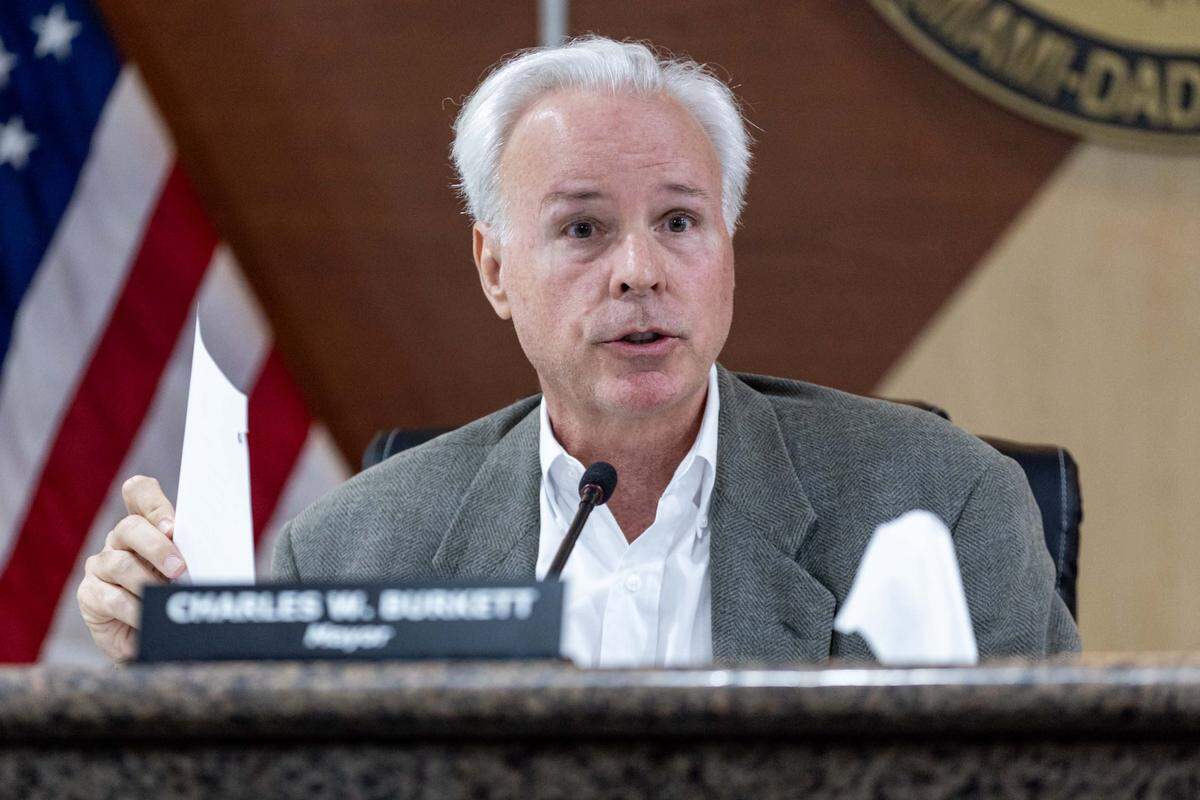
Politicians and residents in Surfside have already begun sounding the alarm over the project. Mayor Charles Burkett has sharply criticized the proposal, which he called “a disaster” and “a developer-driven initiative that doesn’t address affordable housing.” He also thinks the proposed building does not fit with its surroundings.
“Anybody looking at it could look at it and say, that doesn’t belong there,” Burkett said. “It’s just outrageous and ridiculous.”
Eliana Salzhauer, a former Surfside commissioner, said she’s skeptical that the 22 residential units in the building would do much to solve affordable housing concerns in Miami-Dade County.
Salzhauer has criticized both this project and the Live Local Act as a whole. She takes issue with how the Live Local Act limits the power of local governments to make decisions about development and zoning in their towns. Salzhauer said “everyone” she’s spoken to in Surfside is against this development, and she’d expect any politician who supported the proposal to be swiftly voted out of office.
Republican state Rep. Fabián Basabe, whose district includes Surfside and Miami Beach, told the Miami Herald in a statement that the Live Local Act preserves local authority by allowing municipalities discretion over safety, infrastructure, parking and impact fees. “Live Local is not a rubber stamp,” Basabe said.
Ashley Litwin Diego, a Democrat running for Basabe’s seat, said in a statement that she thinks development decisions in Surfside “should be made by the people who live here and the local leaders they elect — not imposed from Tallahassee.”
The proposal was submitted by Ocean Walk Surfside LLC, which is registered to Miami attorney Oren Lieber. According to the plans submitted to the municipality, the firm PLUS will be the architect for the project.
Attorney Graham Penn represents the developer but did not respond to the Miami Herald’s request for comment. Penn has represented President Donald Trump’s son-in-law Jared Kushner in his South Florida development projects. He has also represented the Dubai-based developer DAMAC, which is developing controversial ultra-luxury condos at the Champlain Towers collapse site, where nearly 100 people died in 2021.
The application was submitted in November and has not yet gone before the town commission. Burkett said he expects it will be a “long, long time” before it does. That’s because he and the commission plan to “employ every legal sort of option that we have to stop it.” But municipal governments have little power to reject qualifying proposals under the Live Local Act.
Jeffrey Zomper, a retiree who lives in Surfside, said he thinks the Live Local Act forces development on communities that don’t want it or can’t support it.
Surfside, between Miami Beach to the south and Bal Harbour to the north, covers less than a square mile and is home to fewer than 6,000 people. That’s part of why Zomper thinks Live Local development projects like Ocean Walk are a bad fit for the town. He worries new developments will worsen traffic and congestion problems.
“It’s the towns like ours really that are getting screwed,” Zomper said.

Shlomo Danzinger, a former Surfside mayor, is also concerned about traffic. He’s worried that more congestion on the roads could delay emergency services or slow the evacuation of the barrier island in the event of a natural disaster. Danzinger also said the proposal is at odds with Surfside’s “small-town feel.”
Danzinger said he hopes the town will be able to discourage this kind of development by assessing hefty impact fees, or one-time fees a developer must pay to help a municipality expand utilities, roads and other infrastructure to accommodate the new development.
Burkett said he admires the Live Local Act’s mission of creating more affordable housing in Florida. But he doesn’t think this is the right project or place. He said affordable housing developers should focus on neighborhoods where the land is cheap, not pricier ZIP codes like Surfside.
Burkett said he hadn’t been in contact with the developer of Ocean Walk.
“There’s not much to say,” he said, “other than that we’re going to oppose.”
This story was originally published January 12, 2026 at 11:13 AM.