Miami senator’s bill targets rigged foreclosure auctions, following Miami Herald exposé
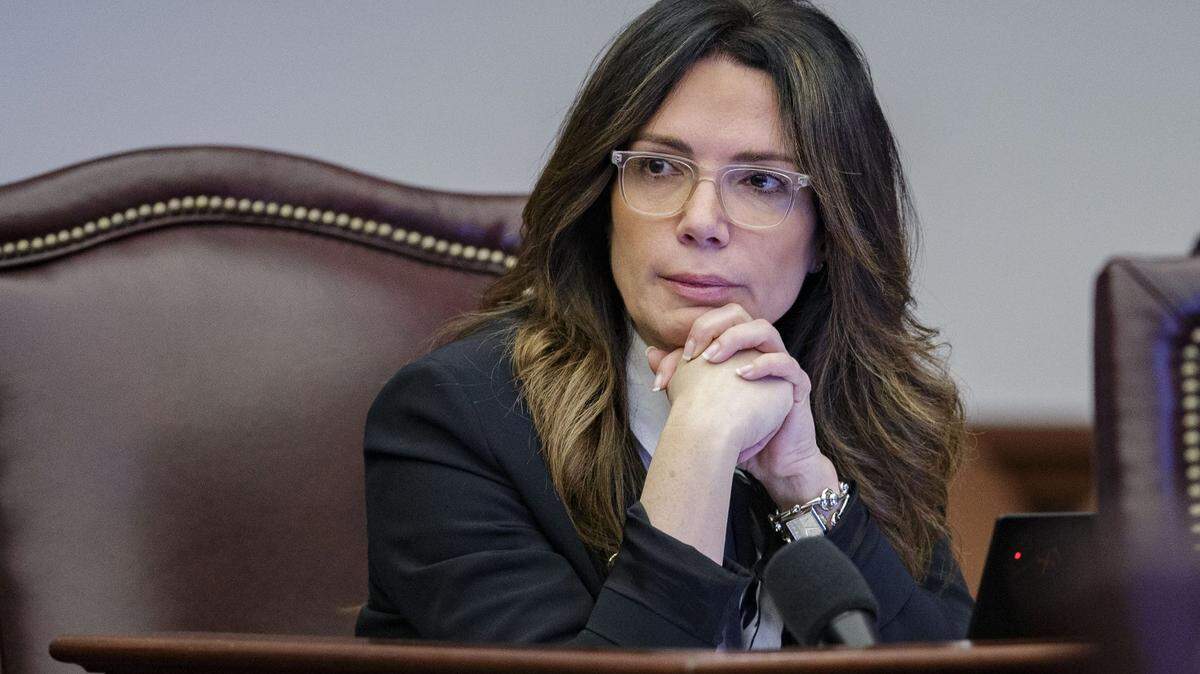
Taking aim at what she called “predatory practices,” a Miami state senator filed a bill this week to close loopholes that allowed a South Florida attorney to manipulate condo foreclosure auctions.
Sen. Ileana Garcia, R-Miami, said the Miami Herald’s “Rigged” reports earlier this year dissecting the maneuvers of South Florida attorney Brad Schandler provided the framework for her proposed legislation (SB 48). Schandler’s strategy for winning foreclosure auctions would be rendered impossible under the bill Garcia filed on Wednesday.
Garcia said she nearly lost her own home at one time, and she hopes to protect homeownership.
By closing the loopholes, “we are supporting our most vulnerable constituents,” she told the Herald.
Foreclosure auction schemes have taken on new urgency in Florida as condo owners face hefty assessments to meet state requirements put in place after the June 24, 2021, collapse of the Champlain Towers South in Surfside.
Using current state laws, Schandler was able to enter foreclosure cases relatively cheaply, take over, and get judges in Broward and Miami-Dade counties to change the auction terms to his benefit. Customarily, such auctions are held online and people from all over can participate. Schandler typically persuaded judges to allow in-person auctions that his clients had virtually no chance of losing. In at least five cases examined by the Herald, he or his associates won condo auctions for $100.
The proposed law, which would take effect in July, would infuse transparency into the process.
Among the new restrictions:
▪ A property that sells at too deep a discount at auction — less than 75 percent of assessed value — would have to be re-auctioned.
▪ If an attorney is running the auction, the attorney’s clients, former clients, relatives, or any legal entity owned by any of them, could not participate as bidders. Schandler’s sister and associates participated in his auctions, the Herald found.
▪ Judges would not be allowed to give advantages to any of the participants. Under the terms Schandler wrote and judges approved, his client was declared the winner at minimal cost if the winning bidder didn’t pay.
▪ Auctions held in person would have to be accessible to the public, not behind locked doors or in locations requiring a key card access. One bidder told the Herald he participated in an auction held in a remote location of a condo tower. An auction attended by a Herald reporter took place in a hallway around the corner from the actual condo.
▪ Judges would not be allowed to approve alternative rules that are not spelled out in state law. Current state law allows such deviations.
▪ Bidding credits would be severely limited. Such credits allow a bidder to offer a sum during the auction that doesn’t actually have to be paid — a mind-boggling advantage. Schandler persuaded judges to grant his clients unlimited bidding credits, so they could offer the highest bid without having to pay. Under the proposed law, credits could not exceed 10 percent of the property’s assessed value — for example, $20,000 on a $200,000 assessed value.
Garcia said she’d push the bill when the Legislature next convenes.
“I’m very happy,” Hernando Posse, who lost one of Schandler’s auctions, said this week when he learned of the proposed legislation. “I’m the one who blew the whistle, and I was very hurt and very angry.”
Posse wanted to buy an oceanview condo at the Emerald Tower in Pompano Beach in 2021, but was outbid by a woman he later came to believe was Schandler’s sister, using a fake name.
In a complaint to the Florida Bar, he accused Schandler of rigging foreclosure auctions and “illegally enriching himself from cheating the system and hurting many honest people that are actually looking for a home.”
Schandler is under investigation by the Florida Bar and could not be reached for comment. He told the Herald earlier this year that he hadn’t invented the procedures he used. In a response to the Bar complaint, his lawyer said his methods were court-approved and that he “took measures to try to locate relatives, even distant ones with little or no connection to the abandoned properties,” before proceeding to auction.
The letter to the Bar noted that “since the publication of the first Miami Herald article, the procedures used by Mr. Schandler have come under court scrutiny. As a result, Mr. Schandler has made changes to court submissions to explain the reasoning behind his requests relating to the location, manner and terms for the foreclosure sales, as well as to provide options for the judges for inclusion in their orders. It is his hope that by doing so he has been able to address the court’s concerns going forward.”
A Bar spokeswoman said Thursday that the case will be heard by the grievance committee, which will determine whether discipline is warranted.
This story was originally published November 22, 2024 at 2:19 PM.