
Front line of housing crunch: Miami nonprofit leader spearheads effort to help residents retain homes
Rising housing prices in Miami-Dade County have caused much pain for residents and led county Mayor Daniella Levine Cava to declare a housing affordability crisis.
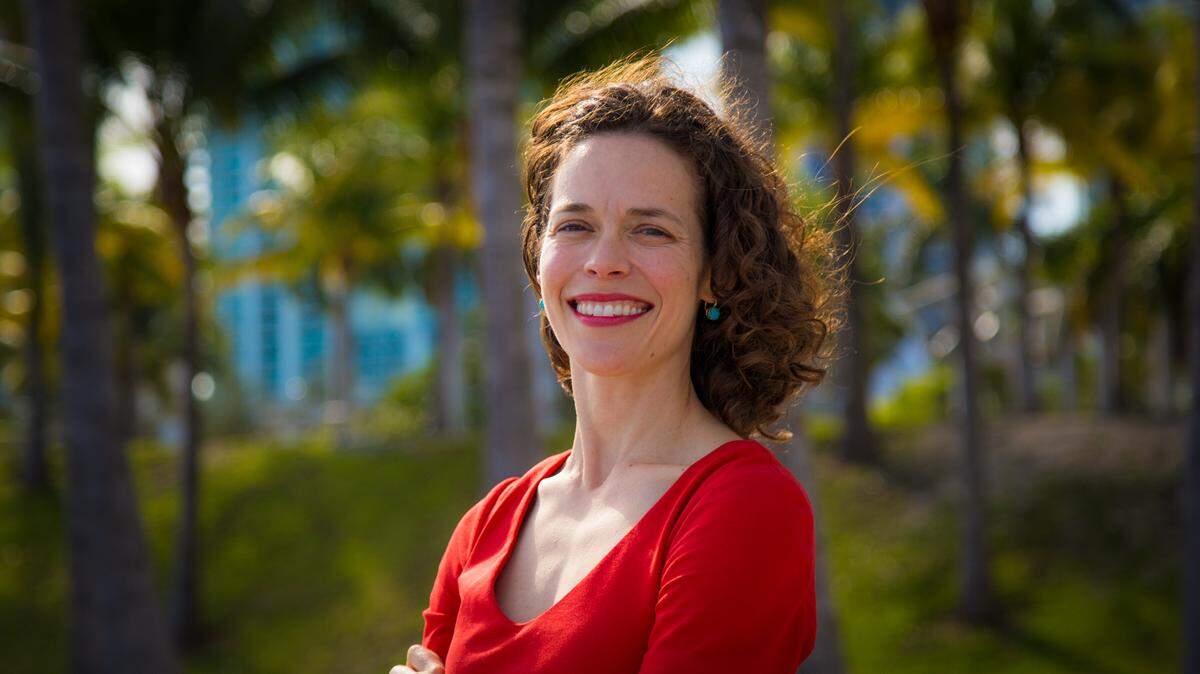
Annie Lord, executive director of Miami Homes For All, leads a group of colleagues to help struggling residents deal with that crisis. From working on solutions for tenants burdened by rent costs or facing eviction, to using community meetings as a way of raising awareness about the county’s housing market predicament, Lord is on the front line with residents trying to retain shelter.
As an alumna of Harvard University, Lord studied Latin American history and public policy with the intention of working in Latin America to eradicate poverty. Learning about Miami’s systemic inequities is what drove her to focus on finding solutions here for these big challenges that widely affect Black and brown residents.
Lord discussed her work, the mission of Miami Homes For All and its importance for residents desperately trying to make it through the housing crisis. The interview has been edited for clarity and brevity.
▪ Question: What attracted you to Miami Homes For All?
▪ Answer: Housing is one of the most central things, so if that is in good shape, there’s a lot people can do. If your housing is stable, safe, you can afford it, you can go to school more easily. You can get a job, you can get medical care and you can rest, so that you’re more healthy. It’s a really key thing to have stable.
A lot of people think of Maslow’s hierarchy of needs. Generation to generation, young kids are super traumatized by not having a place they can count on night after night. That is why I was really interested in advocating for affordable housing.
▪ Q: How is your organization helping residents most burdened by housing challenges?
▪ A: Our vision is that everyone in Miami-Dade has a safe and stable place to call home. When you’re talking about addressing the people we have here, it’s on an enormous scale. Thirty percent of the county or more is experiencing homelessness or very close to it. Our approach is to be very collaborative.
Solutions to a problem that big require everyone to be at the table. That’s bankers, government officials, developers and everyone in the community has to decide that it’s worth making a sacrifice to solve the issue. You have thousands of people experiencing homelessness. What we’re really trying to do is bring people together to have those discussions, promote those solutions and really back them up.
This dovetails with Mayor Levine Cava’s Thrive305 process to understand everyone’s priorities, needs and what people are willing to support as remedies. The money this will take to address at a local level is one complex solution. How do we want to use our land? That includes zoning laws, the urban development boundaries, public land and how that will be deployed for what purpose. How will residents be involved?
▪ Q: How has your work and your group’s mission changed in the pandemic and become even more critical?
▪ A: We were always concerned that there would be some kind of tipping point, but before the pandemic a third of the county was earning less than $35,000 a year. There were 250,000 households spending most of their income on rent. We always wondered, if there would be something that would push things over the cliff. The pandemic pushed the real estate market into an emergency and has affected almost everyone except people that owned before this, and it will maybe affect them at some point.
What changed is the need to put an enormous amount of reinforcement behind keeping people in their homes through rental assistance and legal services to avoid mass evictions. That represented a significant change in our strategy and everyday work. We were thinking about renters and preventing evictions, but I had no concept that it would be so important to create tenant protections in a place that had almost none. Tenants had no recourse whatsoever in the case of a bad landlord.
We thought there are some little things we can do and proposed that framework in 2020. It turned out those incremental steps would be really important and open the door for policy solutions to avoid mass homelessness.
This story was originally published June 14, 2022 at 2:58 PM.
%20Cropped.jpg)