
How to read your Miami-Dade 2020 real estate tax bill

The old excuse “The check is in the mail” doesn’t fly with the Miami-Dade Tax Collector. If you own a home or any other kind of real estate in Miami-Dade County, you should have received your annual tax bill by now. The bills were mailed Nov. 1 and payment is due on March 31, 2021.
But even though the bills come with an explanatory sheet that breaks out all those numbers and figures, the bill can still be daunting to understand. Many people just look at the total due and pay the amount without taking a closer look.
The deadline to dispute the assessed value of your property, which is used to calculate the amount of taxes you owe, was Sept. 18, so there’s no getting around the total due on your bill.
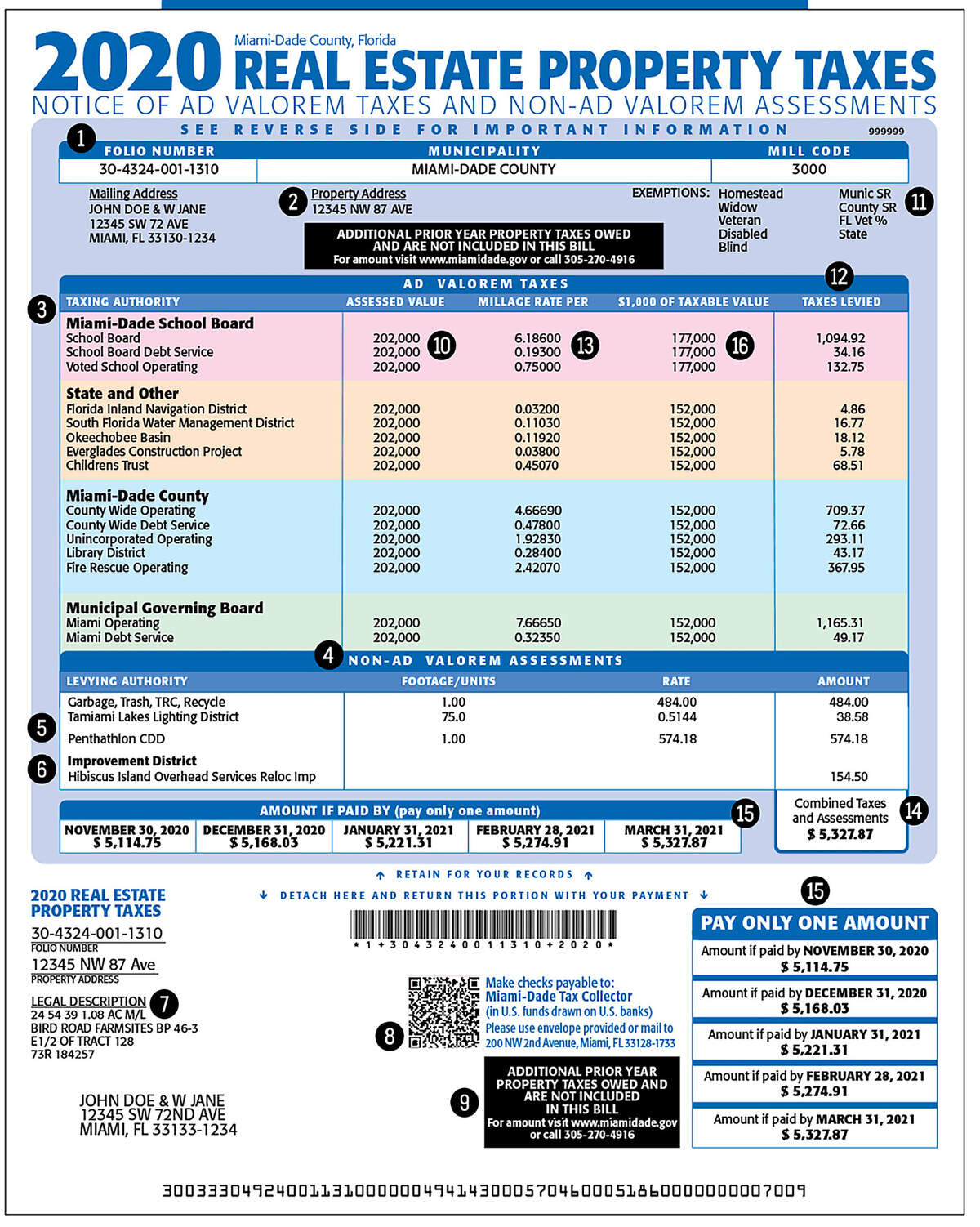
Here’s a breakdown of what each item on your tax bill means:
BOX 1: The folio number listed above your name and address is used to identify properties in Miami-Dade County. You can use it on the property appraiser website to find your home, although your address works just as well.
The number isn’t just a random assemblage of 13 digits, though. Each number means something, such as determining if your property belongs to a specific municipality and township or is part of unincorporated Miami-Dade. You can read a detailed breakdown of the folio number here.
BOX 2: This is the address for the specific property being taxed and can be different from your mailing address if you own several properties around the county. Each property receives its own separate tax bill.
BOX 3: A breakout of the local public service agencies authorized by Florida law to impose taxes, such as the Miami-Dade School Board, the public library system and fire and rescue services. These taxes vary depending on where in the county the property is located and are calculated by factors such as population density and property values.
BOX 4: Non-ad valorem assessments are a service charge, unrelated to the size or value of your property. These funds pay for services such as trash disposal, recycling and landscaping in public areas. Other potential assessments, depending on the location of your property, include Special Taxing Districts, where property owners petition and vote for an extra fee to pay for improvements such as street lighting.
BOX 5: This tax is paid by owners of property located inside Community Development Districts (CDD). A CDD is a mini-government, authorized by Florida state statutes, that manages and finances infrastructure and improvements in designated communities and neighborhoods where large real estate projects were approved. You can see a list of current CDDs here.
BOX 6: Improvement Districts are voter-approved districts where property owners agree to pay a tax in exchange for improvements to the neighborhood and existing properties. Improvement Districts are often used to revitalize a neighborhood, such as the Wynwood Business Improvement District.
BOX 7: A legal description of the assessed property, to be used in any court cases involving the property.
BOX 8: A QR code allows you to use your cellphone to scan the code and access the property’s information or pay your taxes directly.
BOX 9: This box only shows up on your bill if you have unpaid taxes due from previous years that are collecting interest. Those taxes are not included in the 2020 bill. Past-due taxes are payable only via money order or cashier’s check. Contact the Tax Collector’s Office to find out what you owe.
BOX 10: The assessed value of your property as designated by the Miami-Dade County Property Appraiser. The assessed value is what determines the amount of taxes you owe to the taxing authorities listed in Box 3.
BOX 11: A list of the tax exemptions the property owner qualifies and applied for through the Property Appraiser office. Exemptions examples include seniors aged 65 and over, veterans, widowers, disabled/blind owners and the Homestead Exemption, which is granted to all property owners who live at the property. You must apply for exemptions here by Jan. 1 in order to receive the exemption that calendar year.
BOX 12: Ad valorem taxes are determined by the assessed value of your property shown. This column shows the total dollar amount owed to all the various county taxing authorities.
BOX 13: Millage rates are taxes determined by the assessed overall property values of individual cities and municipalities within Miami-Dade County. You can see the 2020 millage rates here.
BOX 14: Your combined amount of 2020 real estate taxes.
BOX 15: The total amount due, along with discounts for property owners who pay their bills before the due date of April 1. The earlier you pay, the bigger the discount, up to a maximum 4% off your total bill if you pay in November.
BOX 16: This is the taxable value of your property, calculated after all eligible exemptions, that is used by the various taxing authorities to determine the amount you owe. The property value differs depending on the tax being paid, because not all taxing authorities accept all exemptions. For example, the school board does not recognize the Homestead Exemption.
For more information on your 2020 real estate tax bill, including programs to assist property owners to pay their taxes, go here.
This story was originally published November 16, 2020 at 7:00 AM.
_pp%20Cropped.jpg)