
Miami-Dade is processing evictions again. What that means for renters and landlords
Larry Walden was earning $900 a week working as a cook at Miller’s Ale House in Doral, which was more than enough to cover his monthly $700 rent on his one-bedroom apartment on NW 16th Street in Miami.
Then the COVID-19 pandemic closed all Miami-Dade restaurants. Suddenly Walden, 51, who lives alone and has no other form of income, was stuck. He applied for unemployment and received one check for $600, part of which he used to pay a portion of his April rent.
But Walden said he never received another check. He went back to work on May 18, when restaurants in Miami-Dade were allowed to reopen at a reduced capacity. But his hours got cut, so he’s now only taking home around $500 per week.
“I’ve been trying to pay whatever I can, and my general manager sent the landlord a letter stating that I was back at work,” Walden said. “I told them I’m going to pay. I’m expecting to get paid this Friday and will pay some more again.”
Despite the communications, Walden’s landlord, Overtown Housing LLC, filed an eviction notice in Miami-Dade Circuit Court on Tuesday, claiming he owes $3,270.00 in unpaid rent and attorney’s fees as of Aug. 12.
“My client waited half-a-year to file,” said Alexander Almazan, founding partner of Almazan Law, the firm representing the landlord. “He is filing to ensure he gets into the growing line.”
The case underscores a growing dilemma for tenants who have lost income and for landlords with ongoing costs but without the revenue to cover them. Both are caught in the middle of a statewide moratorium on evictions and foreclosures that offers few legal solutions for either.
The stakes are huge. There are 2.6 million renter households in the state of Florida, according to the University of Florida’s Shimberg Center for Housing Studies. According to Bisnow, landlords across the U.S. could lose as much as $21.5 billion in unpaid rents once evictions start if their tenants cannot pay the back money they owe.
Confusion reigns
Under normal circumstances, landlords begin eviction proceedings against tenants for non-payment by placing a three-day notice on their door informing them of the rent they owe. If the tenant does not respond, the landlord files a formal eviction complaint with the court, which issues a summons to the tenant.
That notice gives them five business days to pay the owed rent into an escrow account before being granted the opportunity to make their case before a judge.
If the tenant does not respond to the summons, the judge issues a Writ of Possession, which grants the Miami-Dade police the power to physically remove the tenant or homeowner from the property, along with their belongings, within 24 hours. But the eviction also means the landlord will not receive the money they were owed. Banks foreclosing on residents for unpaid mortgages follow a similar process.
For landlords with tenants who have not paid rent for months during the moratorium, that lost revenue can be formidable.
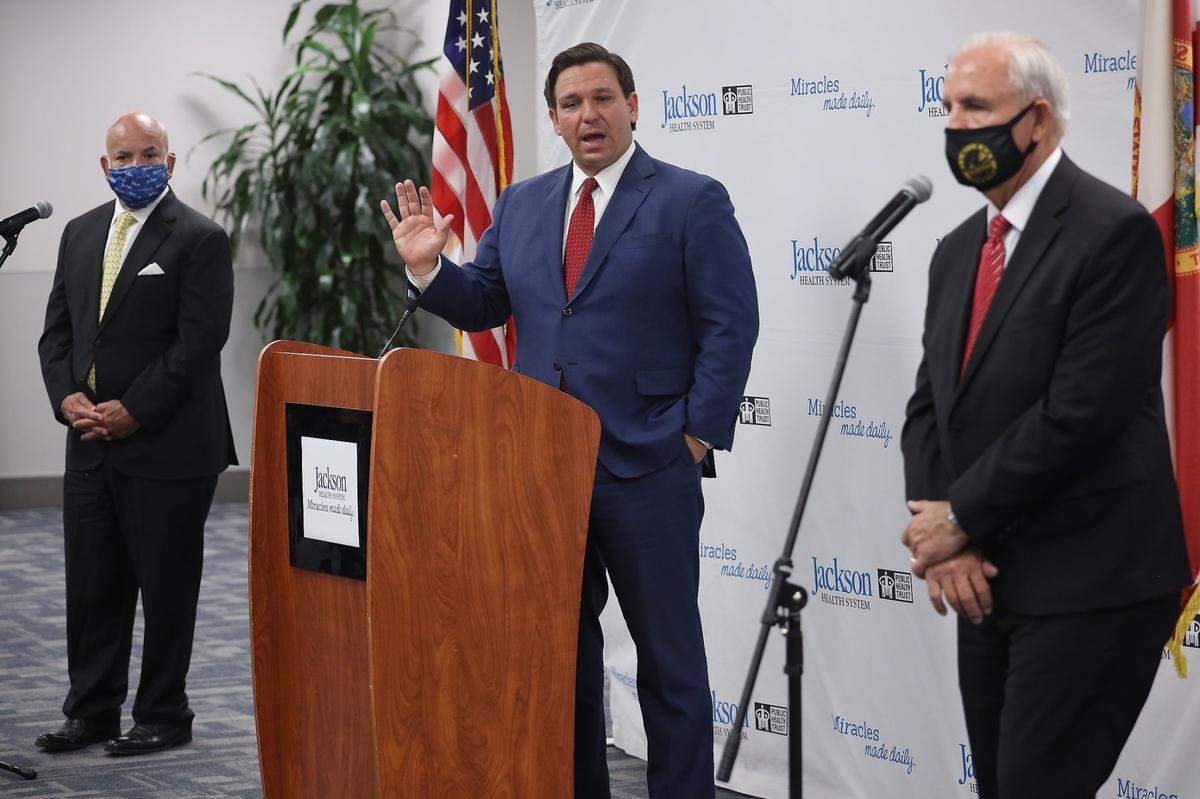
On Aug. 1, Gov. Ron DeSantis issued an executive order extending Florida’s ongoing moratorium on evictions and foreclosures related to people impacted by the COVID-19 through Sept. 1. This new order came with a twist: landlords and banks can now file court papers and serve tenants and homeowners with summons notices — notices that have been prohibited since April.
But the governor’s extension also forbids “final action” on evictions and foreclosures, a vague term that legal experts say could range from final judgment on cases to authorization to remove residents from their homes.
Landlords and banks now “can get in line,”said Luis Montaldo, general counsel to the county’s elected court clerk, Harvey Ruvin. But when it comes to evictions and foreclosures, “you can’t execute on them.”
Open questions
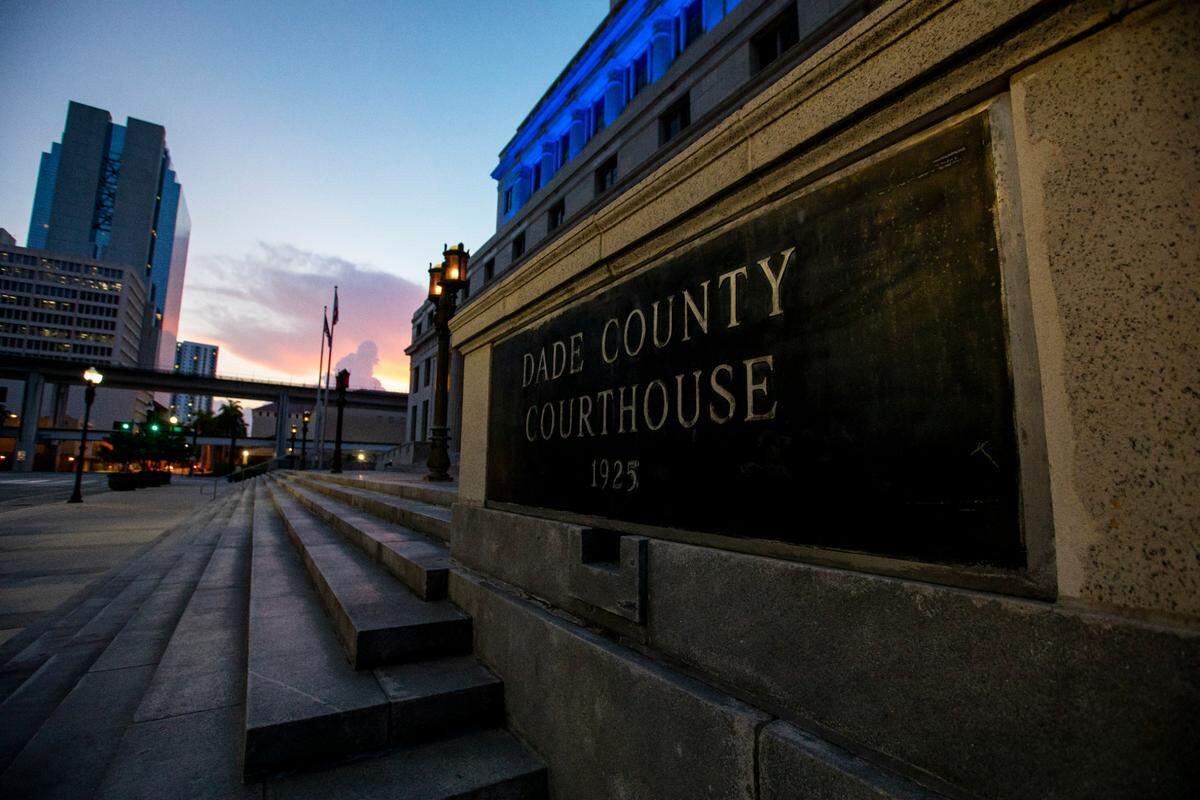
Overtown Housing’s complaint against Walden is one of 585 eviction motions filed in Miami-Dade Circuit Court between Aug. 1-Aug. 18. That’s nearly as many as the 596 evictions filed through all of June and July combined.
As of Aug. 18, a handful of eviction summons have already been served in Miami-Dade, and more are in the pipeline. But what happens after that will be decided by the individual judge presiding on each case, according to Eunice Siegler, spokeswoman for the Miami-Dade circuit court.
David Winker, a Miami lawyer who has been representing tenants facing eviction, said the amendment in DeSantis’ latest order moves Florida closer to the day when cash-strapped tenants and borrowers will be forced to resume monthly payments on their homes.
“It’s still not going to result in people being on the street,” Winker said. “But it’s a step forward to thousands of families being put on the street. You’re basically awaiting the final stage.”
But for workers laid-off for COVID-related reasons or hampered by the disease itself, such requirements make no sense. And lawyers say no one knows how the courts will rule, because no cases have been heard yet.
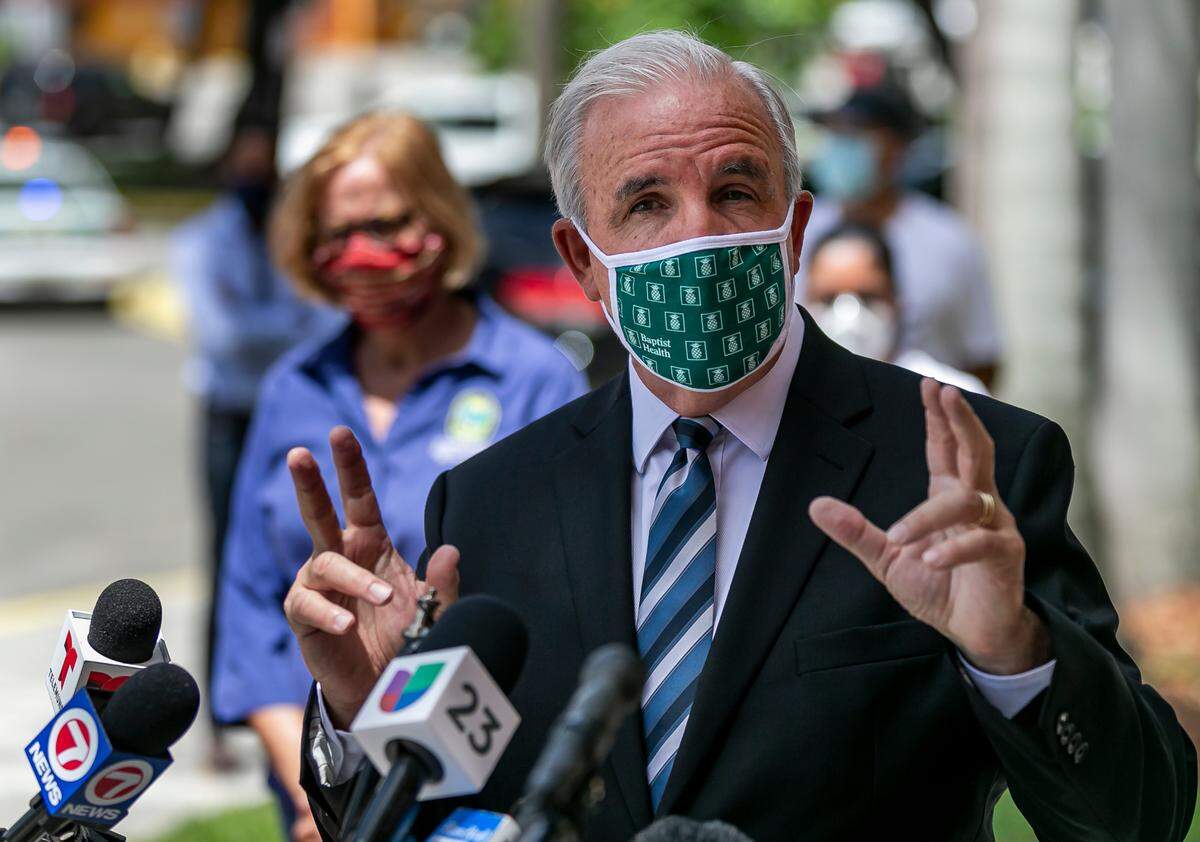
And even if a case makes it through the court system to that endgame, Miami-Dade’s police agency — the only entity able to physically carry out evictions — is under a moratorium issued in March by Mayor Carlos Gimenez.
A spokesperson for the mayor confirmed the moratorium remains in place.
The landlord situation
For landlords, the costs of ongoing uncertainty are piling up. Some — especially those with only a few units — say even if they now can successfully evict non-paying tenants, they likely won’t get back rents owed rents during the last six months.
“If you haven’t paid and you leave my property tomorrow, all I can do is get a judgment against you,” said Paul Vota, a private landlord who owns several rental properties in Palm Beach County. “The government is forcing me to subsidize their program. I have no problem with people who can’t pay rent because of the pandemic. But it’s not my responsibility to pay it for them.
Vota said he has two ongoing evictions, both for tenants at a duplex in Riviera Beach where each pays $1,175 for an 800 square-foot, two-bedroom, one-bath unit.
One tenant moved into the duplex in January and hasn’t paid rent since February, when she gave Vota $700. The other tenant lost his job in March and said he could not afford to pay rent because his $600 unemployment checks were being garnished by the state to pay child support.
“My lawyer tells me landlords are in bad shape,” Vota said. “There’s no solution. DeSantis is unavailable. Nobody seems to be taking these government officials to task.
“I can’t go to the supermarket and say ‘I’ll pay you next week.’ You can’t check into a Hilton and pay half the rate. I did not go into the rental business and buy a building so people could live off me for free. I can work with a five-week eviction termination. A 10-month eviction, though, is untenable.”
Legal experts say the current situation is the result of a flawed state-mandated moratorium that only looked at one side of the tenant-landlord relationship.
“If there had been a moratorium on mortgages and rentals and property taxes and foreclosures when the pandemic started, we would not be in this situation,” said Armando Alfonso, a Miami attorney who represents landlords. “Our government fell short there. You’re going to have tenants who have no way to pay these accrued months and are going to be evicted.”
Legal resources
Some landlords have already started trying to circumvent the slow legal process via creative — and illegal — means, said Sean Rowley, advocacy director for Legal Services of Greater Miami.
“Even though he has an eviction pending, one landlord went and changed the locks to his unit so the tenant could not get in,” he said. “The tenant hired a locksmith to get back in, but we had to go into court to get an emergency order to make sure the landlord doesn’t do that again. It was filed on an emergency motion for an injunction.”
Renters who receive a five-day summons should seek legal advice on how to respond or avail themselves of free tools such as the Florida Eviction Answer Interview, which guides users through the process. Tenants who think they are protected by the moratorium and ignore the summons may find themselves out on the street, said Rowley.
“The biggest problem we’re going to see is this rent-deposit statute,” he said “In order for the court to hear your defense, you’re going to need to pay money into the court. A lot of tenants who have been pressured by their landlords over the last few months are not going to be heard because they won’t have the funds.”
Landlords, too, need to shore up their legal plans, say experts. In April and May, when the moratorium started, many landlords were able to work out deals with their tenants, either temporarily reducing their rents or using their security deposits as payment.
But as the COVID closures have dragged on, experts say landlords need to start thinking about the situation as a legal matter.
“It’s a mess,” said attorney Almazan. “In April and May, our message to landlords was let’s be human, let’s sit down and work something out. Now both sides need help. But it’s the landlords who are being left out to dry in the process. These stories are sad, but landlords can’t afford to be emotional. There’s no federal act that is helping them.”
This story was originally published August 20, 2020 at 2:42 PM.
_pp%20Cropped.jpg)