
Panelists: Cuba could help drive South Florida’s future
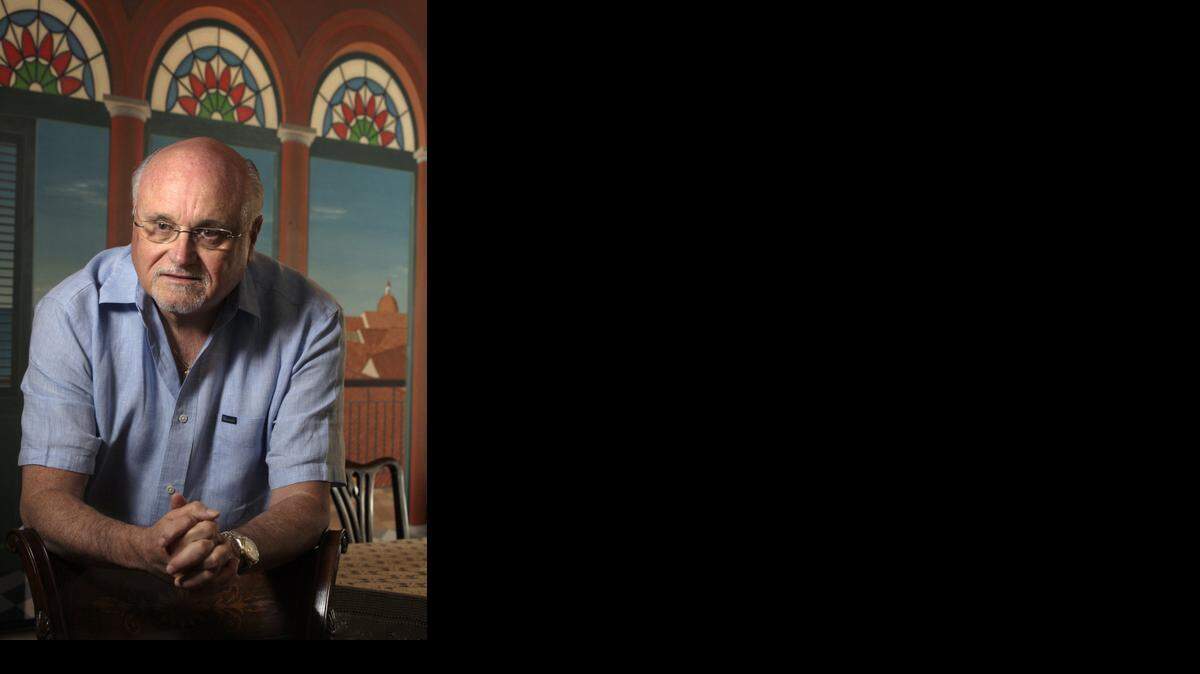
A new relationship with Cuba could lead to economic growth in South Florida.
The potential for local companies to profit from trade with the island nation dominated the conversation at Thursday’s annual South Florida Economic Summit, hosted by the Greater Miami Chamber of Commerce. But speakers also urged caution in dealing with a regime long known for human rights violations.
Cuba’s most successful industries are the same ones that drive South Florida, including tourism, software and construction, said Carlos Saladrigas, a local businessman and chairman of the nonprofit Cuba Study Group, which supports engagement with the island.
“Out of sight for many of us, Miami and Havana acquired border town characteristics with a thriving trade on commerce development,” said Saladrigas as he addressed an audience of about 300.
Saladrigas pointed to retail purchases made here and shipped to Cuba, local Cuban Americans who seek medical care in Cuba, and seed money from South Florida that helps small enterprises on the island. “In the end, it is people doing what people do. Moving faster than their respective governments,” he said.
About 2,800 Cubans have now graduated from a course on entrepreneurship run by the Catholic Church, he added.
“Independent Cubans are potential partners for us here,” agreed Rolando Anillo, a lawyer who spoke on a panel at the chamber’s fifth annual summit.
But many questions remain before local companies can move into Cuba, both said, even though some major U.S. credit card companies have already said they will do business there. Negotiators from the two countries are engaged in diplomatic talks aimed at normalizing relations.
One problem: Cuba remains a state sponsor of terrorism, according to the U.S. Department of State.
“A lot of banks don’t want to touch Cuba while it’s still on that list,” said Mimi Whitefield, an international business reporter for the Miami Herald, who spoke on a panel about the future of relations between the two countries.
And any talk of rapprochement with Cuba sparks anger in South Florida, said Augusto Maxwell, a lawyer who specializes on the U.S trade embargo against the island.
“It is almost sinful to reconnect with Cuba” for many people, said Maxwell, who added that his father participated in the Bay of Pigs and that the Castro regime executed several of his relatives. But engagement by South Florida’s business community could help build a functioning free market economy in Cuba and encourage the growth of civil society, he said.
While one panel discussed the potential of U.S. dollars flowing to Cuba, another focused on foreign investment in South Florida.
Latin American buyers have pumped up Miami’s real estate market, said Allen Morris, a local developer. But as prices rise and bargains dry up, developers late to the market may see the bottom drop out from under them.
“I think in some ways we are in a bubble,” he said.
But there’s also been less speculation — developers bringing properties to market without firm prospects for selling units — than before the last market crash, Morris said.
And many developers now insist on large cash deposits, said Avra Jain, who last summer reopened the long idle Vagabond motel on Biscayne Boulevard. “That takes the air out of the bubble,” Jain said.
Even so, Miami is a boom-and-bust town. “The only thing constant is change,” Morris said.
Those who suffer the most in busts received attention at the summit, too.
“One of the issues we don’t like to talk about is income inequality,” said panelist Eduardo Padrón, president of Miami Dade College. “The middle class is dwindling.”
A recent study by the progressive Economic Policy Institute showed that Florida’s top one percent of income earners make an average of 43.3 times more than the bottom 99 percent.
“As long as we have that big gap between the haves and the have-nots, we have a problem: We have a social problem, we have a moral problem, but most of all we have an economic problem,” said Padrón, who has championed education as a way to level the playing field.
Hotelier Julie Grimes urged attendees to reach out to less prosperous residents who might be potential employees. That was a message echoed by afternoon keynote speaker Don Peebles, who runs a real estate firm with interests on both coasts.
As business leaders, Peebles said, “it is our responsibility to provide economic opportunity for those who have given up on realizing their vision of the American dream.”
Panelists also identified infrastructure as a pressing issue.
“We have a problem moving people around,” said Norman Braman, auto magnate and civic activist. “It's going to affect our economic development.” Despite his profession, Braman said more roads are too expensive and take too long to build to provide an effective solution. Instead, he suggested two simple initiatives: synchronizing traffic lights and scheduling road repair work to times that are less disruptive to traffic. He also urged exploring water-borne transit systems — such as those used in Venice and Hong Kong.
Attendees also heard from Lt. Gov. Carlos López-Cantera, who filled in for scheduled speaker Gov. Rick Scott. López-Cantera, the former property appraiser for Miami-Dade County, promised $670 million worth of tax cuts and more education funding as part of Scott’s proposed state budget.
As for the overall U.S. economy, expect a strong performance through 2015 and into 2016 as part-time workers and recent graduates find full employment, said morning keynote speaker James Glassman, managing director and head economist for commercial banking at Chase.
"We've got a lot of growth ahead of us," he said.
Miami Herald staffers Jane Wooldridge and Nancy San Martin contributed to this report.
This story was originally published January 29, 2015 at 6:33 PM with the headline "Panelists: Cuba could help drive South Florida’s future."