Rodents, roaches — and 250 pounds of food trashed at noted Miami Beach bakery
Why did state inspectors halt all food processing and put Stop Sale orders on hundreds of pounds of food at a longtime Miami Beach bakery once featured in national media?
The roaches crawling in a drawer with clean utensils and rodent poop on a counter didn’t help.
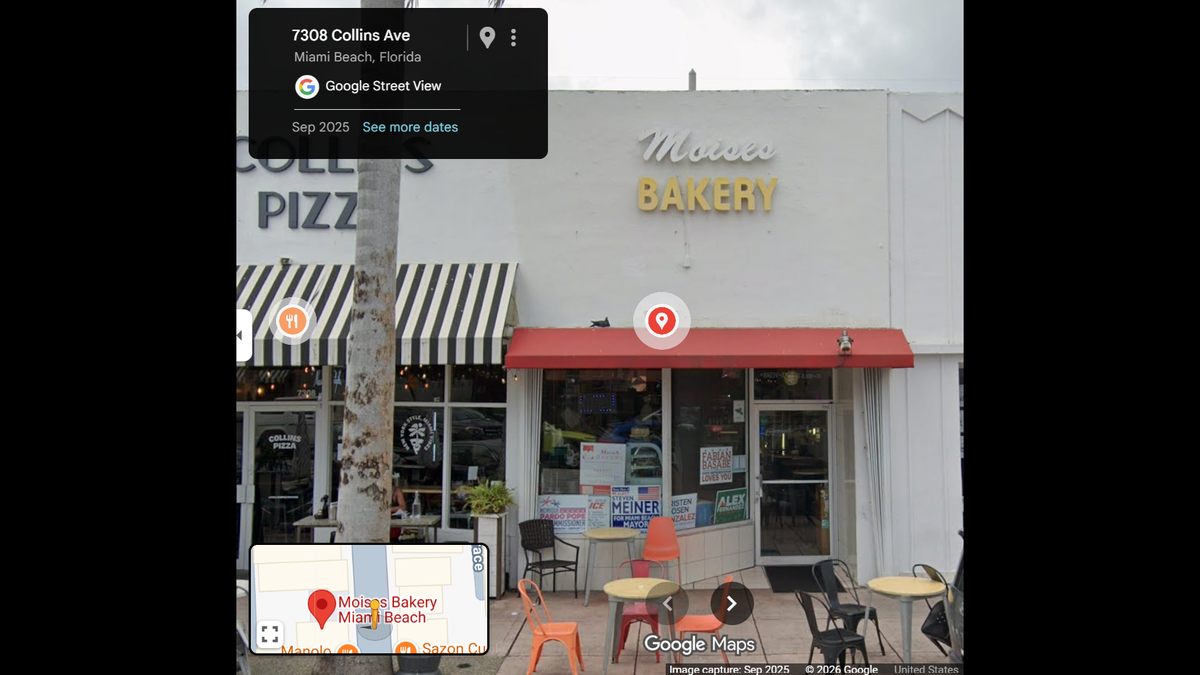
Monday’s disastrous inspection of Moises Bakery, 7310 Collins Ave., included a plethora of other violations spotted by Florida Department of Agriculture and Consumer Services inspectors Pedro Llanos and Kaitlyn Loeb.
Failing an Ag Department inspection doesn’t shut down a bakery, grocer or food storage facility as a failed inspection by the Department of Business and Professional Regulation does for restaurants. But inspectors can slap Stop Use Orders on equipment and areas — and Llanos and Loeb got slappy with those orders: all food processing, dispensing, food equipment and utensils because of vermin; a deli slicer, hot display case and cold display case as “unsanitary equipment.”
READ MORE: Rodent poop gets two Florida Keys restaurants closed by inspection
The re-inspection will be on or before April 27.
“If evidence of pest infestation is observed on the next inspection, a Stop Use Order will be issued on all receiving areas of the establishment and the establishment will no longer be allowed to receive additional food items,” the inspection stated. “A Stop Use Order of all processing equipment will be issued, and a Stop Sale Order of all exposed food items will be issued until the infestation is eradicated.”
Over its 34 years, Moises Bakery has been featured on CNN, in the Washington Post, Southern Living as well as local media. State records list founder Philip Coleman as vice president and treasurer of Moises Bakery of Miami Inc., and Joaquin Bras as president and secretary.
Some of the violations found at Moises Bakery
In the food service area, the inspector saw a “heavy accumulation of retail food items, cases of beverages, single service items, and other items used in food establishment stored on shelves, behind display cases and inside cabinets creating harborage conditions for pests.”
So, maybe it’s not surprising that, in that same area, “Rodent excrement was found on counter behind the microwave and next to the handwash sink.” That’s where dead roaches were found, too.
Also, “living roaches were found on the floor between the cabinet storing a microwave and a display cooler” and, in the food processing area, a “living roach found inside a drawer under the prep table storing clean utensils.”
That resulted in the sweeping Stop Use Orders on food processing and utensils as well as Stop Sales on 250 pounds of bakery items, such as “cookies, danish, rugelach and biscotti.”
More food would join in the garbage.
The deli slicer did its first work at 7 a.m., but hadn’t been washed, rinsed and sanitized as of 11:45 a.m. That exceeded the four-hour limit. Inspectors hit it with a Stop Use Order.
A food service area employee “did not wash hands after handling cash and before donning gloves to dispense food items.”
Then again, the handwash sink in that area was “blocked with a bucket in the basin.”
The food service area featured, “throughout the area,” a mass of filth: “heavy soil and debris buildup in door jambs, bases of display cases, inside cabinets, and inside drawers;” “heavy soil and debris buildup on floors;” and “dust accumulation on the ceiling.”
Similarly, the food processing area was described as having “heavy soil and debris buildup” in drawers, on shelves, on the floors, walls and ceiling “throughout the area.” The backroom walls and floors also had heavy soil and debris buildup.”
The backroom drainboards were “not large enough to accommodate the equipment and utensils that accumulate during hours of operation.”
A “pipe from a condenser unit inside the walk-in cooler was draining into a large tub.”
A reach-in cooler contained undated deli meats and nobody could tell the inspectors when they got opened. Stop Sales on all.
The hot holding unit exists to keep food at or above 135 degrees. But measuring between 114 and 121 degrees were cheese and egg croissant, meat Venezuelan empanadas, chicken Venezuelan empanadas, cheese Venezuelan empanadas, chicken Chilean empanadas, meat Chilean empanadas, tequenos, cheese pastelitos, spinach Argentinian empanadas, chicken Argentinian empanadas, and croquetas.
All were hit with Stop Sales.
All cold storage units exist solely to keep the foods inside at or under 41 degrees. A meringue cake and a custard pie in the retail cold case measured no cooler than 57 degrees. In another cold storage unit, chocolate cheese cake, creme brulee, cuatro leches, brazo gitano, profiterol, torta de oreo, menrollado de chocolate, tres leches, mousse de parchita, selva negra, torta de chocolate sirup fresca, canoncitos milhojas arequipe, and opera measured from 43 to 47 degrees.
Stop Sales on all. Also, the food in the reach-in cooler wasn’t date-marked and nobody knew when the items were prepared.
Back to the food service area, where employees weren’t “wearing effective hair restraints when working with open food and beverage items.”
Wet wiping cloths sat on counters instead of in sanitizer solution.
Food equipment in use and stored in water need to be in water that’s at least 135 degrees. Moises Bakery had tongs, spoon and knife in water of 73 degrees.
“Chemical sanitizer not provided at the time of inspection.”
This story was originally published April 15, 2026 at 11:13 AM.