South Florida lawyers suspended for attempted murder charges, helping a paralyzed child
.jpg)
Four suspensions, two of them emergency suspensions after attempted murder charges, put South Florida lawyers on the monthly Florida Bar list of attorneys disciplined by the state Supreme Court.
In alphabetical order...
Beatrice Bijoux, Fort Lauderdale
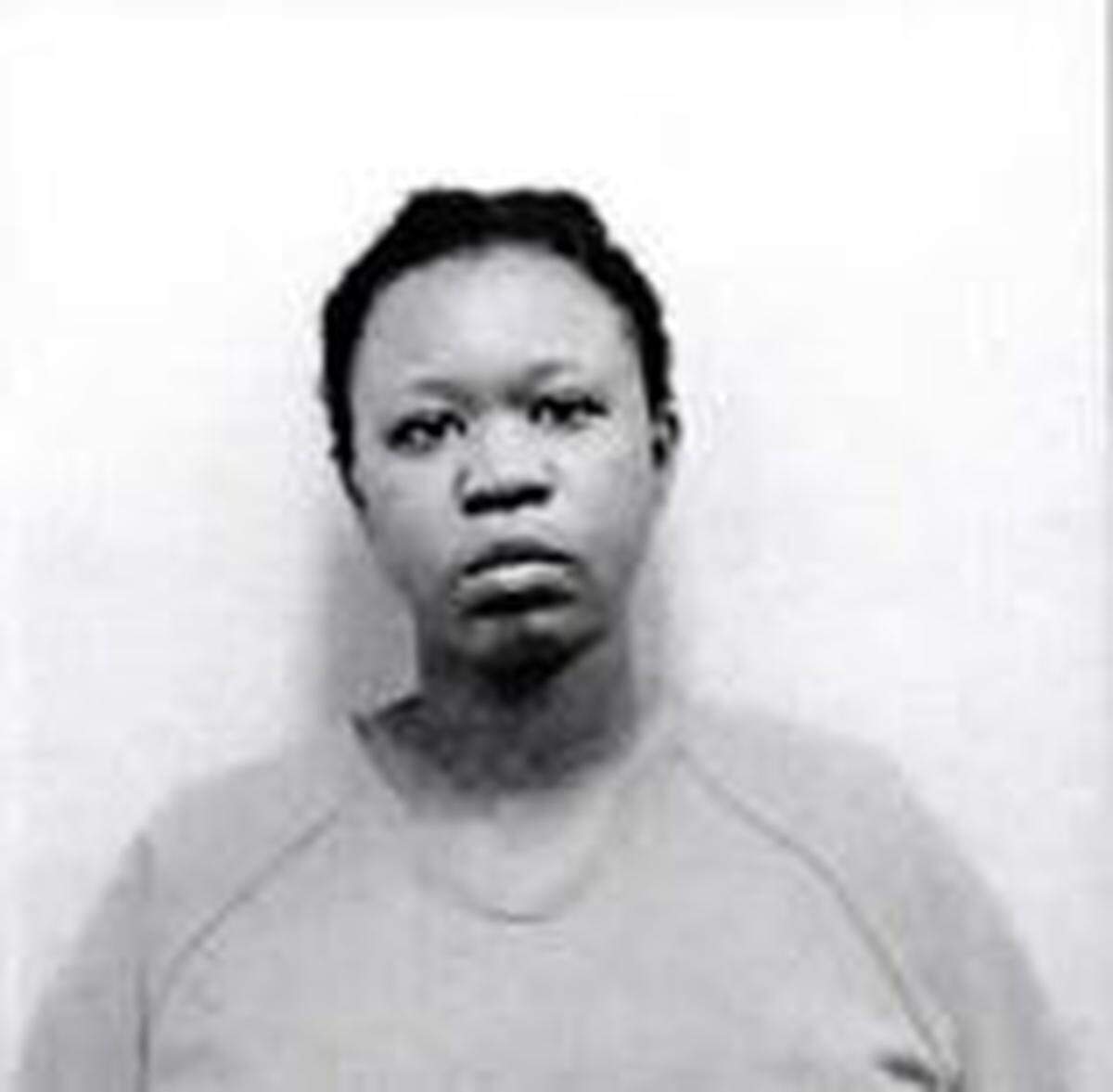
Bijoux (admitted to the Florida Bar in 2016) was charged with four counts of attempted murder on March 10. That and her alleged claim that voices in her head told her to kill the people she allegedly ran over outside a Fresh Market in Stuart were two reasons the state Supreme Court granted a request for an emergency suspension on March 21.
READ MORE: A Fort Lauderdale personal injury lawyer ran over 4 people at a Fresh Market, cops say
Arthur Calvin, Miami
Calvin, an assistant state attorney when future U.S. Attorney General Janet Reno was the Miami-Dade state attorney, has been a Florida Bar member since 1979. He has a perfect discipline record, as acknowledged by the referee in his case, 15th Circuit Judge Charles E. Burton.
Calvin “has devoted a good part of his career to the protection of the disadvantaged and personal freedoms, frequently taking on unpopular causes,” Burton wrote in his referee’s report.
Burton noted Calvin argued before the U.S. Supreme Court to allow rooster sacrifices in the practice of Santeria. He volunteered for 10 years at the Haitian Refugee Center, fighting for equal treatment of Haitian refugees before the law. If indigent people need a lawyer for a Section 1983 civil rights lawsuit, for which the defendant is the government, Calvin charges reduced fees or nothing.
One of the things that got Calvin in trouble here? Loaning the single mother of his client, a paralyzed child, $2,000 to keep the water and lights on at their home.
In July 2014, Calvin began representing J.J., a minor who was paralyzed when hit by a car. J.J. was one of his mother’s four children and the family was in a “dire financial state,” the referee’s report said. Calvin helped the mother get pre-settlement advance loans in 2014.
After “aggressive investigation and research,” Calvin got a $1 million settlement agreement from State Farm Insurance on Sept. 3, 2014, subject to court approval. A guardianship petition was filed in Broward County on Sept. 23, 2014, but the earliest hearing they could get was Nov. 5, 2014.
When Calvin got the $1 million on Oct. 28, 2014, he put it in his business trust account instead of an interest-bearing trust account.
Calvin chose to do this, the referee’s report said, “to preserve eligibility for creating a special needs trust. [Calvin] was of the opinion that if the settlement proceeds were placed in an interest-bearing trust account, his client would be disqualified from the benefits of a special needs trust.”
A Guardian Ad Litem was appointed on Oct. 30, 2014. The guardian’s attorney scheduled an Aug. 25, 2015, hearing on a motion to approve the settlement. At that hearing, the court said the $1 million settlement had to go back to State Farm that day so the company could hold it in managed investments for J.J.’s benefit. An Oct. 15, 2015, court order reaffirmed the Aug. 25, 2015, court order.
Calvin was going to appeal the order, so he kept the funds in the trust account. On Oct. 30, 2015, the Guardian Ad Litem filed a motion to compel to make Calvin return the $1 million to State Farm. Calvin did so on Nov. 10, 2015, thinking he had 30 days from the Oct. 15, 2015 order.
Instead, because he hadn’t returned the money immediately, he was found in indirect criminal contempt of court and given six months of probation and 150 hours of community service.
Calvin didn’t “misappropriate” the funds in the trust account. A Florida Bar review showed every penny of the $1 million stayed in the trust account until the money went back to State Farm.
Twice in 2015, while all this was going on, Calvin made the two aforementioned loans. Without lights or water, J.J.’s colostomy bag couldn’t be cleaned every four hours, as required to combat sepsis infection.
Though Burton said Calvin “did not have a dishonest or selfish motive, but always (was) motivated by his desire to assist the minor and his family in tragic circumstances,” the loan activity and the contempt of court got Calvin a 90-day suspension.
Donald Jacobson, West Palm Beach
An arrest report says Jacobson’s girlfriend told a Broward Sheriff’s Office detective that thrown her into a toilet hard enough to break the toilet, pounded her against cement and left her outside their Pompano Beach home unconscious on Dec. 19. The next day, when she returned to get necessary medication, she said he yelled at her “You’re going to f------ die!” before aiming a shotgun and shooting her with pellets in the back of the head.
Now, the question is, will Jacobson (admitted to the Bar in 1990) stand trial and will she be around to see it?
As for the former, a psychological examination to determine trial fitness has been ordered for the 56-year-old charged with aggravated battery-domestic violence and attempted murder. His girlfriend told BSO that Jacobson had been off his medication when he attacker her.
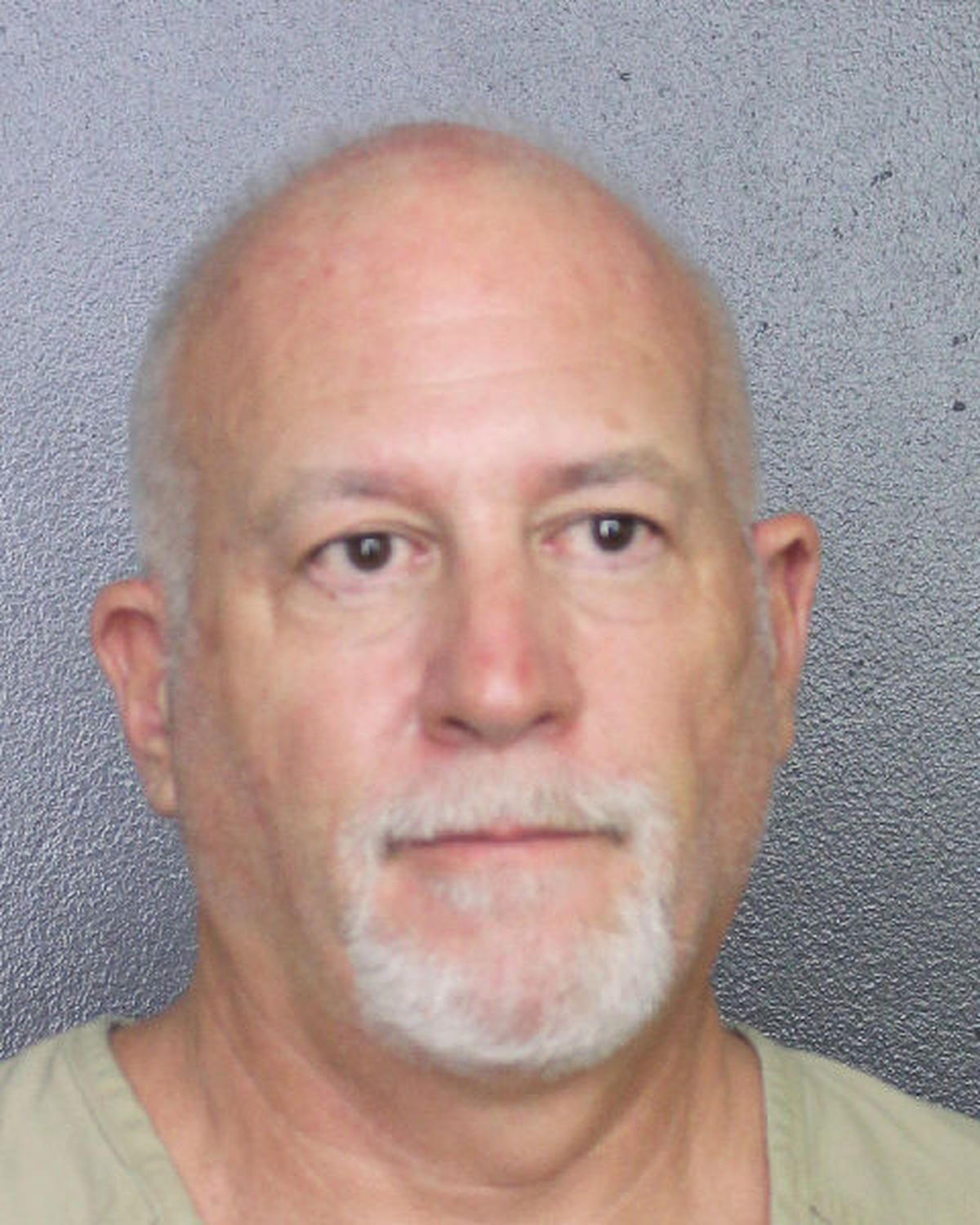
For the latter, Jacobson’s girlfriend told the detective she’s terminally ill with stage 4 lung cancer, doesn’t expect to live to see a trial, but wants Jacobson prosecuted and “to get help.”
Obviously, Jacobson has bigger legal problems, but the state Supreme Court granted the Bar’s request for an emergency suspension.
Wendell Locke, Plantation
Preston Bussey III died Dec. 19, 2009, after being Baker Act-ed and fighting with Rockledge police officers in the lobby of a hospital emergency room. His mother, J. Pearl Bussey-Morice, filed federal lawsuit against the City of Rockledge and the officers involved in 2011. Locke joined Kelsay Patterson as co-counsel in May 2012.
By this point, the referee’s report said, the court had ordered a Case Management Scheduling Order that required a meeting by Sept. 28, 2012, to which each side would bring “marked original trial exhibits, final exhibit lists and witness lists and prepare the Joint Final Pretrial Statement.”
That statement was due by Oct. 10, 2012. The meeting was scheduled on Sept. 28, 2012, at the law offices of Dean, Ringers, Morton & Lawton. The referee’s report said Locke showed up first without any of the necessary information and documentation, claiming Patterson would bring the necessary paperwork and exhibits. The report says Patterson showed up an hour late and didn’t bring a number of things required.
Locke filed for an emergency extension on Oct. 10 at 10:10 p.m. after emailing Dean Ringers lawyers at 9:21 p.m. The referee said this didn’t count as good faith. The Joint Pretrial Statement wouldn’t be filed until Nov. 5.
By 2015, judgment had been entered in favor of the city and the seven officers. Locke and Patterson filed for a motion to vacate based on an affidavit handwritten by Patterson and signed by Patterson as the notary, but not properly notarized. That, too, was rejected.
But none of that lead off the Bar complaint against Locke, a complaint based mostly on a 42-page order from U.S. District Judge Carlos Mendoza, accusing Locke and Patterson of unprofessional conduct (“vexatious” was the adjective the Bar unpacked in its complaint against Locke).

By the time Locke joined the party, Patterson had refused to show for a deposition at opposing counsel Dean Ringers’ offices. The referee’s report of his discipline case says he wrote to Dean Ringers’ lawyers, “These are the circumstances when Blacks are often portrayed in a negative regard to justify some accidental or strange death. That is not the way I am leaving this planet, over the false representations of these officers and others while at Dean Ringers. No chance that is going to happen to me.”
Patterson even filed for a temporary retraining order against the deposition, which was denied. Patterson and Bussey-Morice didn’t show up for it, for which the court ordered them to pay for the attorneys’ time and court reporter’s fees.
Locke (admitted in 1997) would call the officers “Brutality Officers” in court filings, such as “While the Brutality Officers’ counsel dislikes Plaintiff’s use of the phrase “Brutality Officers” to collectively describe Defendants...Plaintiff’s use of the phrase “Brutality Officers” has been and continues to be used in argument, attempting to describe the individual defendants collectively in a manner that best describes their actions towards the Decedent. Other phrases that come to mind...include “killers,” “murderers” and “torturers.”
The referee’s report says Locke kept referring to the officers thusly even after U.S. District Judge Charlene Honeywell told him to stop and referred to the officers’ lawyer Joshua Walker as “Massa Walker” in an email chain with all attorneys involved.
Locke also said in a court filing he’d “called out what Ray Charles and Stevie Wonder could see —“a pattern and practice of discriminatory conduct of the defendants and defendants’ counsel in this case, consistent with the history of discriminatory customs and rituals used against Black Americans and other minority groups.”
Locke also took issue with Mendoza, writing in a filing “between the repeated allegations of wrongdoing, misconduct and flagrant disregard of the rules of professionalism, multiple motions for sanctions filed by the appellees and the tone of some of the District Court’s recent rulings, Bussey-Morice’s counsel’s ability to pursue her claims has been in some way undermines, primarily because of the recent intimidation from the District Court, knowing the inherent power of the Court to stifle, cripple and/or destroy an attorney or his/her practice with the stroke of a pen.”
Mendoza told the referee he found Locke’s language throughout the litigation “over the line” and his comments imply “a lack of objectivity by the Court with no underlying basis for making such an accusation.”
The referee in the discipline cases against Patterson and Locke, Judge Ernest Kollra, recommended 90-day suspensions for each. The Florida Bar wanted more and the state Supreme Court gave it to them: two years for Patterson, who had been previously suspended for behavior in another case, and one year for Locke.
On March 16, Locke filed a motion for rehearing and clarification on the court’s decision.