Remember these old Miami stores? We loved it at Levitz, Spec’s, Luria’s, Burdines, others

The stores are gone now. But how we loved them so. Until we didn’t anymore, and they went out of business.
Burdines. Jefferson. Luria’s. Service Merchandise. Incredible Universe. Food Fair and Pantry Pride. Eckerd. Spec’s. Kaufman and Roberts. Levitz.
Are we jogging your memory?
We spent a lot of time in them, browsing through the newest record albums or looking over the latest Sunshine Fashions.
Let’s take a trip down memory lane and through the Miami Herald archives to revisit some of the lost stores of South Florida.
Incredible Universe goes out with a bang
Published April 26, 1997
It was like a giant garage sale Friday inside Incredible Universe’s store in West Dade.
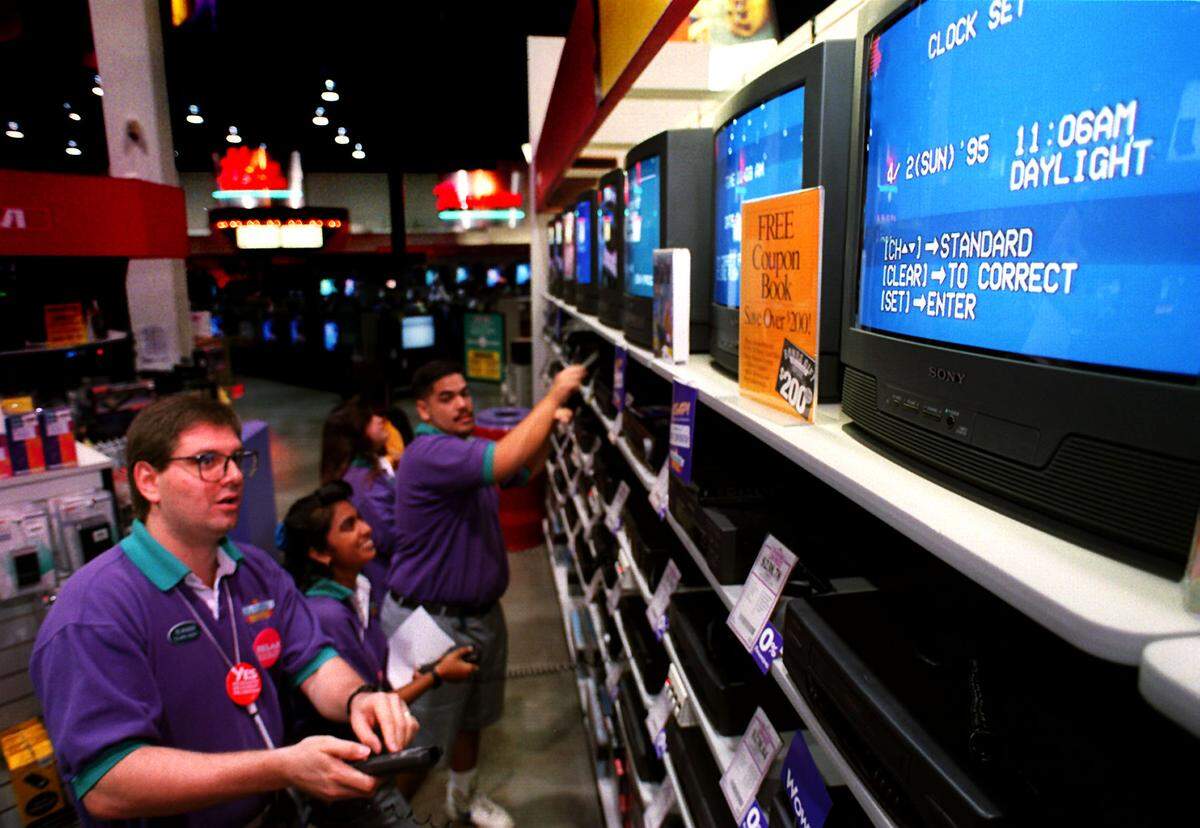
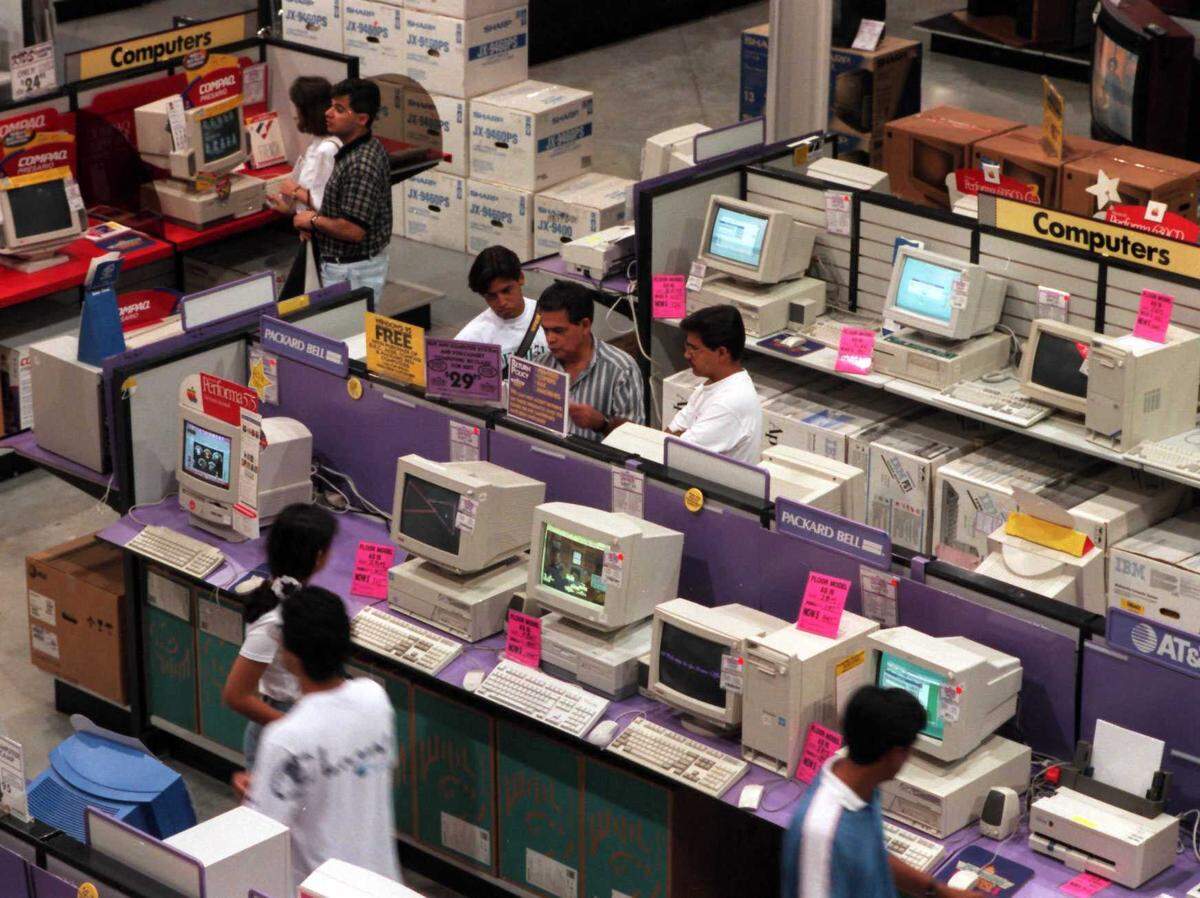
Three years after entering South Florida, the mammoth electronics store looked more like a flea market, with rows of cordless phones, compact disc players, answering machines stacked atop folding tables. The huge signs hanging from the ceiling - a hallmark of Incredible Universe stores - pointed to racks and fixtures bare of merchandise.
Even the in-store McDonald’s tables and soda fountain were up for bid.
“Although it’s a difficult time for [parent company] Tandy, we look at it as an opportunity for consumers,” said Mark Weitz of Great American, one of two companies handling the liquidation of Incredible Universe stores. “These stores were unique in the amount of fixtures and equipment they had. Tandy spared no expense to build these stores.”
Indeed, Tandy Corp.’s expenditures to build, stock and run Incredible Universe stores were among the factors that led to the chain’s demise and short history. Tandy introduced Incredible Universe in 1992.
Built at an average cost of $20 million to $22 million apiece, Incredible Universe stores were supposed to be the end-all of electronics superstores.
They were triple the size of a regular Circuit City or Best Buy. Huge neon signs and gigantic video screens hung throughout the store. A big draw was entertainment, such as karaoke contests and interactive product demonstrations.
But sales never measured up.
“These large footprint stores are too costly for their own good,” said Eric Boyce, analyst with First Dallas Securities in Dallas. “They were generating a lot of traffic, but the traffic wasn’t buying in mass.
“They obviously had a very large product selection,” he said. “But a lot of customers are more savvy these days. They know what they’re looking for. They don’t necessarily need these superstores.”
The large selection wasn’t enough to make customers make the special drive to Incredible Universe’s locations. Stores were located farther apart than other electronics stores. In South Florida, the chain entered in 1994, opening at the Oakwood Plaza off Interstate 95 in Hollywood and on the Palmetto Expressway and Northwest 25th Street in Dade.
Meanwhile, competitors peppered their stores in between the two locations.
“There wasn’t much that you couldn’t find at a Circuit City that you could find at Incredible Universe,” said Herbert Leeds of Leeds Business Counseling, a Miami retail consulting firm.
In December, Tandy said it would close the chain, which had 16 stores nationwide, unable to reverse declining sales and mounting losses. Industry analysts have estimated that Incredible Universe and Computer City, also owned by Tandy, had a combined loss of $50 million in 1995.
Closing Incredible Universe allowed Tandy to focus on its other divisions -- Computer City and Radio Shack, something analysts said helps the company’s prospects.
Not that life is going to get easier for surviving electronics stores, Leeds said. Retailing TVs, computers, VCRs and other artifacts of modern electronic life requires stores to move in tandem with a technology that makes today’s hot product a dinosaur by next week.
Retailers will be at the mercy of manufacturers’ new products to drive sales, as one new technology forces the purchase of related equipment.
“If they’re not getting the benefit of the new technology, then they have nothing to talk about but price,” Leeds said. “But they’ll be selling obsolence at a low price.”
None of that worried Alex Becerra of Commercial Vending, who walked away pleased with Friday’s auction.
He got a Magnavox five-inch color TV for $40 and a 19-inch Panasonic TV-VCR combo for $200. But his real coup was a coin counter he got for $900.
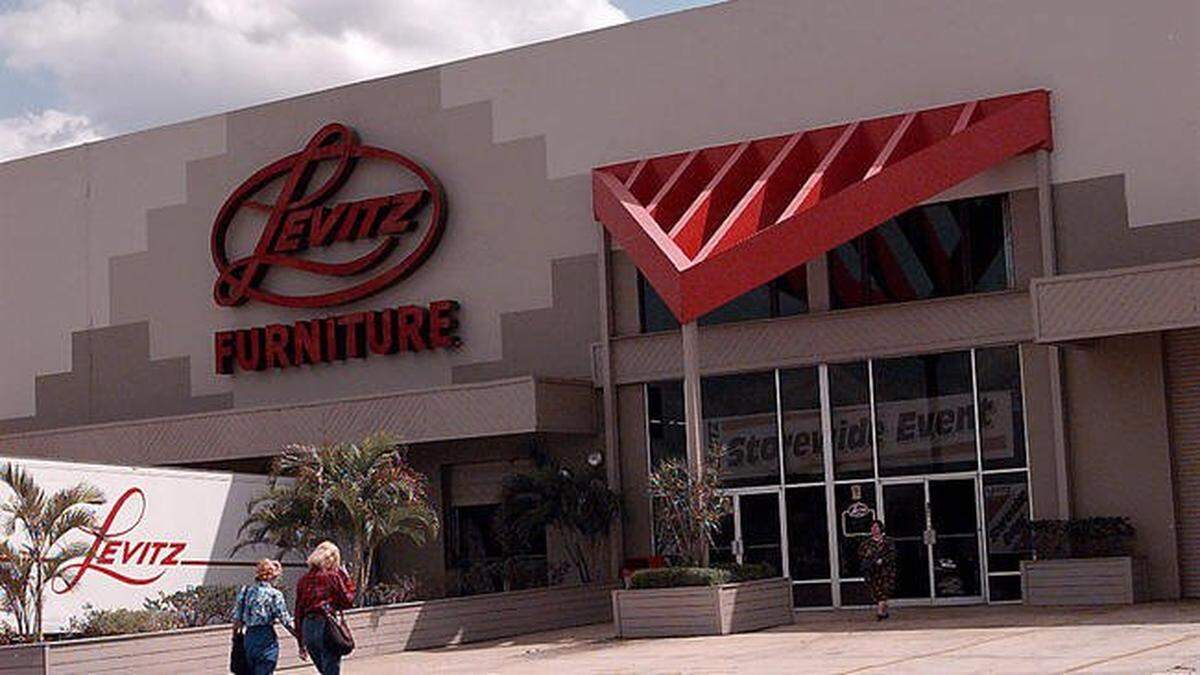
We loved it at Levitz, but then it went bankrupt
Published July 8, 1999
Almost two years after filing for bankruptcy protection, Levitz Furniture on Wednesday took a giant step toward the future with a new business strategy and a plan to cut its previous debt in half.
The Boca Raton furniture retailer filed its plan with the U.S. Bankruptcy Court in Delaware to emerge from bankruptcy, possibly by the end of the year.
Under the proposed plan, Levitz common stock would be canceled and shareholders would receive no compensation for their losses. Other unsecured creditors, including bondholders, would receive stock in the reorganized company.
“This plan simply de-leverages the company,” said Peter Chapman, an analyst who runs Bankruptcy Creditors’ Service, a Princeton, N.J.-based newsletter and also is a general unsecured creditor of Levitz. “It’s the best idea we’ve got.”
The plan must be approved by the court.
The reorganization is possible largely because of the company’s ability to generate $76.6 million in cash through the sale of closed stores and the sale-leaseback of existing stores. Those funds reduced the company’s post-bankruptcy debt by approximately half, leaving it with about $70 million in debt.
“By cutting our debt in half, we’ve made the plan for recovery viable,” said Edward Grund, who has been chairman and chief executive since November. “This is a milestone along our journey to emerge from Chapter 11.”
Levitz filed for bankruptcy protection in September 1997, burdened by mounting debts and slumping sales as aging baby boomers looked for stores with more upscale brands and cozier interiors.
Analysts were skeptical about the chances for the nation’s second-largest furniture retailer to emerge from bankruptcy.
But Levitz was able to reduce its debt by $58.4 million when it completed the sale-leaseback last month of 22 operating stores around the country. Another plus was a $19.4 million deal Levitz closed late Tuesday to sell 10 former stores, including locations in Cutler Ridge, Plantation, Miami and West Palm Beach that are expected to be leased to other retailers.
Both deals were joint ventures between Klaff Realty of Chicago and Lubert-Adler Real Estate Opportunity funds of Philadelphia.
“We needed to look at whatever we could to reduce our debt,” Grund said. “We were able to reap the value of our real estate assets.”
By reducing its debt, Levitz now has about $800,000 a month in debt service, compared with as much as $2.4 million, Grund said. He expects the company’s sales will be able to support the reduced debt level.
Levitz still plans to sell or complete sale-leaseback transactions on other properties.
Analysts say the strategy was a good move and one that previous management had resisted because it wanted to keep as many stores open as possible. After Grund took the helm, he closed about one-third of the company’s stores and pulled out of several markets, including Florida, Texas, Indiana and Virginia.
Following the store closings, Levitz operates 64 stores in 13 states, focused primarily in the Northeast, West Coast and Minneapolis.
“Levitz was a cash-poor, asset-rich company,” said Blake Carter, a research analyst with Tejas Securities Group in Austin, Texas. “This made them cash-rich by selling assets they don’t need. It’s a very smart thing to do.”
In addition to improving the company’s financial position, Grund and his management team have spent the last six months revamping the company’s operational structure. The changes:
- Pulling out of unprofitable markets to focus on areas where Levitz is a dominant player with opportunities for long-term growth.
- Closing about half of its warehouses to reduce inventory costs.
- Creating locally-based field managers, who can tailor product assortment and marketing to a specific market.
- Developing a prototype store that is about 30,000-square-feet with furniture organized by style, not by the rooms where it belongs.
- Hiring the Fort Lauderdale advertising agency of Harris Drury Cohen to design a broadcast and print media campaign to relaunch the Levitz brand name.
Analysts believe the changes have put Levitz in position to become a profitable company when it emerges from bankruptcy.
“Operationally they’ve really pared down, rearranged and improved a lot of the problems they had,” said Chapman, whose newsletter follows high-profile bankruptcies. “They’ve actually done a good job of restructuring their business.”
Those changes are already starting to pay dividends, Grund said. As the company has opened new prototype stores or remodeled old stores in the Philadelphia, Phoenix, Las Vegas, Minneapolis and Los Angeles markets it has increased triple digit increases in sales.
“Here’s what the future of our company can be,” Grund said.
The feat of Burdines
Published Sept. 28, 1998
“We will say that we expect, as in the past, to carry reliable up-to-date goods and sell them as low as any reputable dealer. We expect by honorable, upright dealing, to merit a share of your patronage, as well as your good will. Yours to please, W.M. Burdine & Son.”
- First Burdines ad, Miami Metropolis, Sept. 2, 1898
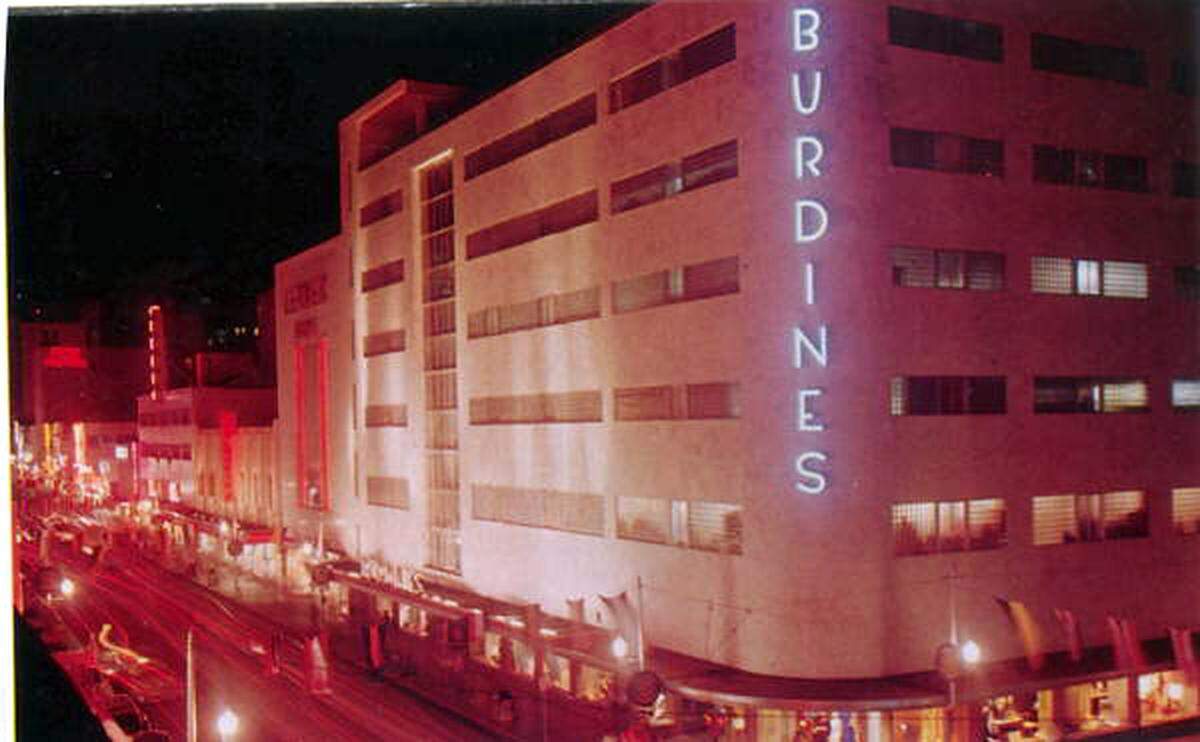
When William Burdine opened W.M. Burdine & Son in downtown Miami in 1898, the frame shack at the southwest corner of Avenue D and 12th Street (today’s Flagler Street), was more like a frontier trading post than a department store.
The 1,250-square-foot dry goods and furnishings store held only a few shelves with goods such as work uniforms, notions, jars of rock candy, shoes, lace curtains, hosiery, umbrellas and table linens.
And the population of Miami was about 1,200.
It was a far cry from today’s vast department stores, filled with specialized departments for clothing, cosmetics, shoes, accessories and home furnishings. But the customers actually had a lot in common with today’s shoppers who hop in the car, hit the ATM, and travel down the highway to get to the large department stores.
In the 1890s, some of Burdines’ best customers were the Seminole and Miccosukee Indians. They came by canoe, sold their alligator and otter hides, then took the cash to Burdines, where they would buy bolts of cloth, vests, derby hats and ostrich plumes.
The stores’ focus on customer service hasn’t changed much over the century. Back then, Burdine’s stayed open until 10 p.m. weeknights and midnight on Saturdays and lured new customers with incentives such as free train fare.
These were just some of the ways that Burdine’s, as it was spelled in the early years, quickly distanced itself from its competition.
“There was no store close to them by the early- to mid-20s,” said Miami historian Paul George, who is writing a book about the history of the Burdine family. “They outstripped the competition. They were more astute as business people, merchandisers and advertisers.”
Much of the credit goes to the Merchant Prince of Miami - as Roddey Burdine was known. Roddey Burdine took the helm in 1911 when his father, William, died. Although Miami was little more than a boondocks on the edge of the Everglades, the Merchant Prince envisioned a kingdom.
“He really felt there was a future in this business because of the people that would be coming to South Florida,” said Zada Burdine Phipps, Roddey’s oldest daughter who is now 81 and winters in Fort Lauderdale. “He felt
Miami was an up-and-coming place.”
Trading on Florida’s resort reputation, Roddey Burdine coined the name, “Sunshine Fashions” to refer to clothes you couldn’t find anywhere else because of their design, color or fabric.
Burdine crafted the store’s image as a leader in the fashion industry. He held fashion shows and sent buyers to Europe. His advertisements in national magazines urged northern visitors to “bring your trunks empty” and fill them up with Sunshine Fashions to wear and take home.
Manufacturers used Burdines as a test market for the newest spring and summer merchandise to see how it would fare, a practice that continues today.
“It was fashionable to have bought things at Burdines,” said Herbert Leeds, president of Leeds Business Counseling, a Miami retail consulting firm. “Customers would buy something at Burdines that they couldn’t get at home.”
When Roddey Burdine died in 1936 at age 49, he had just begun to see the fruits of his labors. Sales for the 1936 fiscal year were $5.6 million and net profits were close to $500,000 after taxes. The downtown store was about to be expanded and a new store had just opened on Miami Beach.
As Miami continued to grow, so did Burdines. New stores opened during the 1940s and ‘50s to serve the growing populations in West Palm Beach, Fort Lauderdale and North Miami Beach.
But in the mid-1950s, some shadows fell over the sunshine store. Money started getting tight. Former employees say that usually by early November Burdines had used up its credit line at First National Bank in Miami, and buyers were told to put their order forms away until after they saw how business went during Christmas.
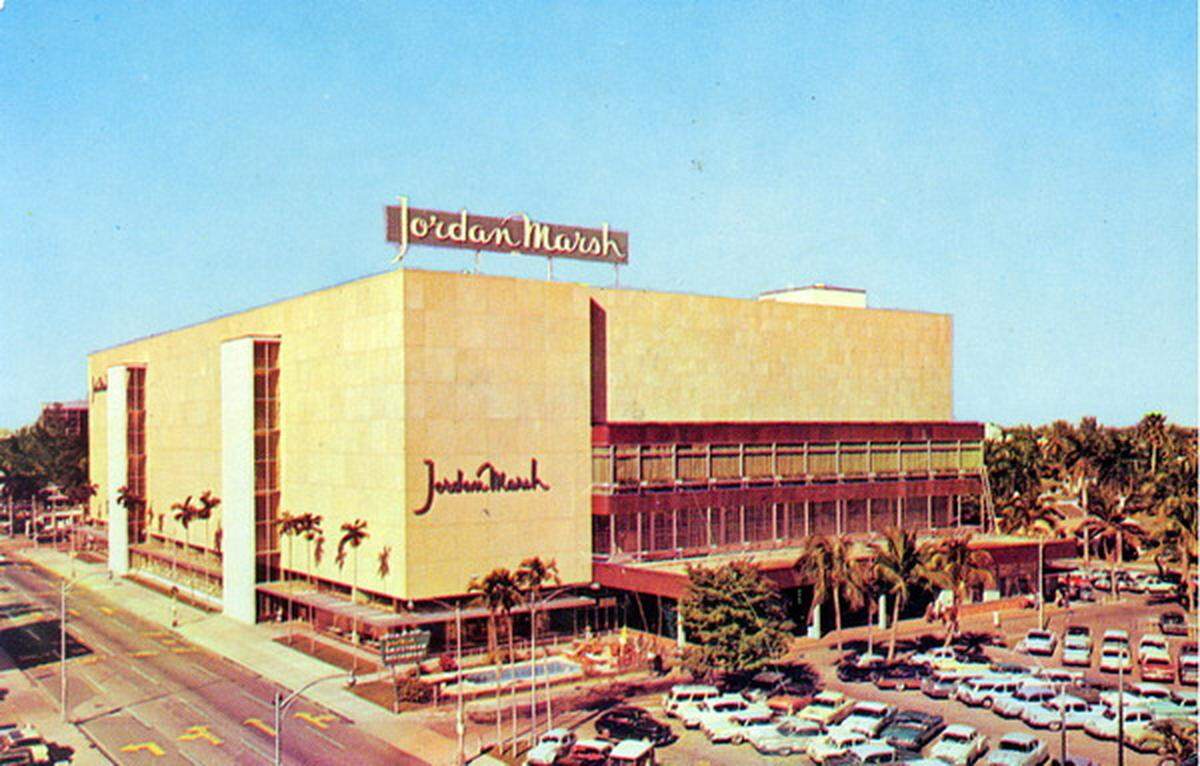
The problems got worse in 1956, when Jordan Marsh, a successful northeastern store controlled by Allied Department Stores, moved into Miami and cut into Burdines domination of the market. They had a fancy new store at what would later become the Omni Mall and more money to spend on buying merchandise.
After years of overtures from Federated Department stores, the Burdines family decided the time was right to sell. Burdines shareholders approved a merger with Federated in May 1956 and shareholders received six-tenths of a share of Federated stock for every share in Burdines.
The merger opened new doors for Burdines and marked a new era.
“The biggest change is there was sufficient capital to do a lot of things we couldn’t do as an independent store,” said George Corrigan, who worked at Burdines from 1950 to 1983, rising through the ranks from assistant buyer to vice president and general manager of Burdines’ Dadeland store. “It changed the whole complexion of our merchandise assortment and buying patterns.”
The new era marked the beginning of an adventurous expansion strategy. During the 1960s, Burdines surprised many when it opened stores at what would become Dadeland Mall and Westland Mall in Hialeah -- stores standing, then, in the middle of nowhere.
Critics said the stores were doomed to fail, but in hindsight the strategy was an astute business move.
The malls came after the stores because Burdines would typically buy between 100 and 200 acres of land, then sell the majority to a developer to build a mall. Burdines had the demographic information to determine where stores would succeed and wanted to make sure it stayed ahead of the growth curve.
“You had to get your sites pinned down or they wouldn’t be available when it was time to open,” said Richard McEwen, who joined Burdines in 1966 as senior vice president of finance and went on to become president and chairman during his 18-year tenure. “The future has always only been five years away. If you didn’t move fast you lost.”
During McEwen’s tenure as chairman from 1977 to 1984, he led the company through its most aggressive expansion efforts and branched outside of Southeast Florida for the first time.
By the time he retired in 1984, Burdines was truly a “Florida store” with 27 locations around the state including Hollywood, Orlando, Clearwater, Tampa, Sarasota, Boca Raton, Fort Myers, St. Petersburg, Cutler Ridge, Gainesville and Melbourne.
But the growth train screeched to a halt during the late 1980s, as Burdines struggled through some of the most difficult years in the company’s history.
Federated was taken over in 1988 by Canadian-based Campeau Corp., which had already acquired Allied Stores, parent company of Jordan Marsh and Maas Brothers.
The extensive debt accumulated during the takeover forced Federated and Allied both into Chapter 11 bankruptcy two years later. The reorganization led to store closings, layoffs and mergers with Jordan Marsh and Maas Brothers. Yet it wasn’t all bad.
“It was a healthy experience for Burdines,” said Jim Gray, Burdines president from 1988 to 1994 and now president of Macy’s East. “It forced us to take a real pragmatic view of some of our assets. We became a leaner organization and in effect a healthier organization. It was a matter of survival.”
Burdines has done more than survive. After Federated emerged from bankruptcy protection, Burdines’ sales broke the $1 billion mark for the first time in 1992 and the company became one of Federated’s most profitable divisions. Profit margins have reportedly grown from about 8 percent in 1986 to around 12 percent -- according to industry estimates, since Federated doesn’t release profit figures for divisions.
As Burdines celebrates its centennial, industry experts hail the company as one of the strongest retailers in the country.
“To be around in one of the world’s toughest businesses, 100 years later, puts them up there with national retailers like JC Penney and Sears,” said Erik Gordon, director of the Center for Retailing Education and Research at the University of Florida in Gainesville. “If there is a hall of fame for retailers, Burdines gets inducted this year.”

Spec’s was a record-setter
Published Jan. 6, 2013
By Howard Cohen
In the end, even the almighty Adele and Taylor Swift could not hold back the inevitable.
Spec’s, one of the last great record stores, will close its flagship location in Coral Gables on U.S.1, thus joining once-favored chains like Virgin, Tower and Peaches, locally and abroad, that have withered from Internet shopping.
With the closing, sometime in January after the merchandise is liquidated, 64 years of history becomes memory for countless people who discovered a love of music in the home Martin “Mike” Spector built in 1948 when U.S.1 was but a two-lane road.
The original store, which sold cameras alongside 78-rpm records, was a few blocks south on the highway in South Miami and is now an Einstein’s bagel spot. The present location, opened in 1953 in Coral Gables, lived through the bobby sox era, Beatlemania, disco, punk, hip hop/rap, grunge, electronic dance music and all the format changes including 12-inch vinyl, 45-rpm, reel to reel, 8-track, cassette, compact disc and mp3.
After the first music industry recession in the late 1970s, Spec’s still managed to double in size by breaking through the walls of two restaurants in 1980 on its north side. The original room on the south side of the building would house, first, Spec’s’ VHS movie rentals and sales - Saturday Night at Spec’s! - and, later, one of the most expansive collections of classical music in town.
“It’s the soundtrack of our lives,” said store manager Lennie Rohrbacher, who spent 23 years of his life working at Spec’s, from Clearwater to Coral Gables
At its peak, the Spec’s chain grew to some 80 stores in Florida and Puerto Rico. In 1993, annual sales exceeded $70 million. Spec’s went public in 1985 and, in 1998, the Spectors sold to Camelot Music Group, which was acquired by Trans World Entertainment Corp. Trans World, which did not return several telephone messages, shrewdly kept the Spec’s name attached to the flagship store as goodwill even though, technically, it operated under the company’s retail subsidiary, F.Y.E. (For Your Entertainment).
But those are the cold, hard business facts. Spec’s was “not like another Eckerd’s,” a drug store chain that also slipped into oblivion amid changing times, said Rohrbacher. “This was part of the community, part of my life. It’s not another store going under.”
Indeed, Spec’s was, first and foremost, a community gathering spot to share a love of music. In the ‘70s and ‘80s Spec’s resembled a makeshift camp site where people would sleep overnight in the parking lot to get the best shot at concert tickets in a pre-Internet world. Spec’s, a hop-skip from the University of Miami’s music school, served as its own music education outlet thanks to a knowledgeable sales staff.
“The proximity to the UM is prime real estate. Not to have it there will really be different. Even if they didn’t have what I was looking for, the staff was knowledgeable and you were sort of tapping into this knowledge base of people who could turn you on to new music. That’s what I’ll miss about it and the community around the store,” said Margot Winick, an employee at the Coral Gables Spec’s in the mid-1980s when she was a freshman at the UM.
“That was the place to be on Friday nights. I never minded working there, it was the place to see and be seen and I got paid to work there,” laughed Winick, now an assistant vice president for communications at the UM. “I worked in the movie section and Dave Barry would come in and I’d recommend films to him. As a freshman, that was pretty cool.”
Later this month, when the shelves are as bare as a Rihanna photo and the store manager turns the key in the glass doors for the last night, the building will be reduced to rubble. Chase Bank will open in its place in the fall.
For local historian Cristina Favretto, head of special collections at the University of Miami’s Otto G. Richter Library, the loss of Spec’s is significant.
“Spec’s’ closing is a great loss to the community,” she said. “Book stores, record stores, hair dressers, are the glue that holds communities and neighborhoods and bind individuals together. These are not just commercial places but they are a meeting place for ideas.
“They had all sorts of shows at Spec’s,” Favretto added. “You could distribute fliers, leaflets, ‘zines. A record store that sells music is a very positive meeting place because who doesn’t like music? This is not like a doctor’s office. You are making a purchase that makes you happy and finding out about other types of music that you may not have known about. When anything like that closes it’s a hole in the community fabric.”
Thanks to a generous family donation of memorabilia that traces the history of Spec’s, the UM library has 38 boxes of material including postcards, photographs, business records and plaques available to researchers and the public. “This is an interesting thing for the music lover,” Favretto said. “Mr. Spector was one of those guys who believed women could do anything men could do so the business went to his daughters.”
Sure enough, two decades before Spector died at age 98 in September 2003, he had placed his labor of love in the hands of daughters Ann Lieff, who served as Spec’s CEO, and Rosalind Zacks as its vice president.
“The love of music was the landmark of the whole thing and taking care of those customers,” said Lieff, who now heads her own consulting company, The Lieff Company, in Colorado. “I’d like to thank all of our customers, the city of Coral Gables, the university, everyone who was so loyal to us for so many years and helped create a company that grew to 80 stores. We were always trying to have the newest and best for our customers. I thought of dad as really the heart and soul but his love of music brought culture to the community.”
Impresaria Judy Drucker, founder of the Concert Association of South Florida, turned to Spec’s to showcase appearances by her classical and opera acts, including Plácido Domingo and Cecilia Bartoli, both of whom drew lines around the block for signings at the Gables store. Drucker mourns the loss of a cultural institution.
“Breaks my heart. Whenever I wanted to pick up a CD I knew nobody else would have, they had the greatest record department and they are the ones who used to save them for me. I relied on them to get the best there was and we became friends,” Drucker said. “You don’t find that with stores where you become friends with the people who save things they know you like. This takes a lot away from my life. The world has become so unaffiliated with other human beings. You don’t have that personal touch anymore. When Martin Spector was sick and dying he saved all kinds of old CDs and 78-rpms and gave them to me as a gift in a big box. That touched my heart. What can I say? The best things in life go away.”
Spector loved those who loved music, especially his beloved classical, but he could be tough. When long-gone stores like Viscount Records opened at University Centre across from the UM or the mammoth Music Makers, which boasted entire rooms for each musical genre and even sold ice cream, opened nearby in the late 1970s, Spector would pop in to check out the competition. He was especially none-too-pleased when used CD shops like CD Solution started sprouting like mushrooms after heavy summer rains in the early 1990s - one rival opening a mere two doors down.
But he recognized true music lovers, like Rich Ulloa, who ran Miami’s independent Yesterday & Today record shop. Ulloa’s Y&T music label issued the first recordings of The Mavericks and Mary Karlzen. He held CD release parties for his acts inside the Spec’s store in the 1990s.
“Mr. Spector - I always called him Mr. Spector - I always felt a personal connection with him,” Ulloa said. “I’ll never forget when I expanded Y&T and we moved to the Ludlam shopping center. That was a big expansion for me and Mr. Spector came by my store to congratulate me and wish me well. That blew me away. I was stunned.
“I’m very saddened. To me, it means it’s the end. Spec’s was the last link to the great traditional record stores. Spec’s got very involved in the local music scene for most of the ‘90s and they supported local music like no other chain,” Ulloa said.
Adds Lieff: “I’m thinking what my father would be saying, ‘We’ve had a great run.’ I think it’s bittersweet right now. Even though we sold 14 years ago we feel like we’re saying goodbye again.
“And that’s OK.”
The Pepe behind Kaufman and Roberts
Published May 21, 1984
When customers come into a Kaufman & Roberts store asking for Mr. Kaufman or Mr. Roberts, employees eye them curiously.
Mr. Kaufman and Mr. Roberts, the employees explain, do not exist.
They never did.
There is only Jose “Pepe” Saumat, sole owner and president of the 20-store chain of appliance stores that extends through Palm Beach, Broward and Dade counties.
Cuban-born Saumat, 44, said he found the American-sounding names for his store by leafing through telephone books.
“My ego did not need to have a store named Pepe and Associates,” he said. “I wanted a name that everyone could relate to, not only Latins. Something that would give the idea that it was a powerful company.”
The name of Saumat’s former employer, Kennedy and Cohen, a national appliance store chain that went bankrupt in 1976, helped inspire him, he said. There was no Mr. Kennedy or Mr. Cohen, either.
In 1975, Saumat gambled $15,000 in savings to open his first store in Hialeah at an old Kennedy and Cohen location. There were only four employees, including Saumat and his wife, Irela. The store sold $900,000 in merchandise that year.
In 1983 the firm had sales of $41 million, and this year it expects to have sales of $70 million. There are now 260 employees helping to sell refrigerators, air conditioners, televisions and washers and dryers. They often bargain with customers to make a sale, offering to take a little off the prices listed for the merchandise.
Last Thursday - amid raffles, musical entertainment and a ribbon-cutting ceremony - Saumat opened his 20th store and corporate headquarters in a large building at 7445 NW 12th St. in unincorporated Dade County.
And there are plans to open stores in Orlando, Tampa and the Treasure Coast.
“Everything Pepe predicted would happen to the stores has happened,” said Lamar Williams, 28, general supervisor and sales manager. “I listened to his dreams and decided to work for him. I’m glad I did.”
Saumat likes to hire the inexperienced and teach them to be sales people for the “family empire,” as employees call the company.
Williams was 18 years old and working as a telephone installer when he walked into Saumat’s Hialeah store in 1975. Saumat quickly convinced him to work as a Kaufman & Roberts salesman. In the past nine years, Williams has supervised the opening of every Kaufman & Roberts store in Florida.
Saumat grew up in Havana, the son of a Lebanese refugee who emigrated to the island. When he was 17, his parents sent him to the United States with some relatives.
He ended up in New York, where he worked first as a stock boy at Saks Fifth Avenue, then as a clerk for Merryll Lynch.
By 1966, married and with three children, Saumat came to Miami. First he opened a nightclub in Little Havana; then he settled into a job as a salesman for Kennedy and Cohen. From 1969 to 1974, he was general sales manager there, with responsibility for training new people.
But still he had the urge to own his own business.
“I had saved $15,000 and asked for $20,000 more in loans,” Saumat said. “At first, the banks didn’t want to give me a line of credit.”
Today, Kaufman & Roberts spends $5 million in advertising alone.
“Our only competition right now is Sears,” Saumat likes to say. “And at the rate we are going, in two years we’ll surpass their sales.”
The end of Eckerd
Published Aug. 3, 2004
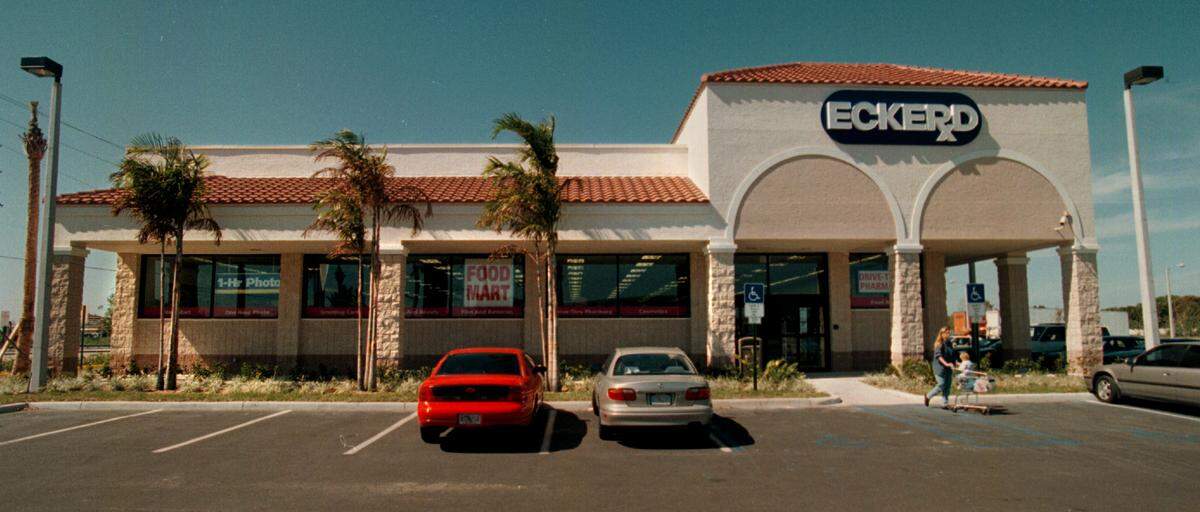
Eckerd’s 620 drug stores in Florida will get a new name and a new look over the coming months, as part of the takeover by CVS Corp.
But customers can still access their prescription accounts at Eckerd, while the transition takes place in Florida over the next six months to a year. Once all stores are converted to the CVS name, customers will also be able to access their prescriptions at the 60 existing CVS locations in the state.
CVS on Sunday finalized the deal to purchase the 1,260 Eckerd stores in the southern United States from J.C. Penney Corp. The acquisition makes CVS, which is based in Woonsocket, R.I., the largest drugstore chain nationally in terms of store locations. The Canadian-based drugstore, Jean Coutu Group bought the remaining 1,539 stores.
CVS will close about 200 stores nationally as a result of the purchase, but there were no estimates about how many of those will be in Florida, said Todd Andrews, CVS spokesman.
Industry analysts expect there won’t be many, since CVS has only recently moved into Florida and has 60 stores in the state.
CVS will invest between $300,000 and $350,000 in each location to redo the signage and install new carpeting, lighting and lower shelves. Within 18 months, the transformation will be complete and the Eckerd name will disappear from the Florida landscape.
“It’s a very long process that requires great deal of work,” Andrews said, “but what the consumer is going to see is essentially a brand new store.”
In the case of store closings, CVS plans to incorporate the inventory and staff of closed stores with nearby locations.
Florida is the first market where CVS will make the transition, Andrews said.
“Customers will see changes in terms of improved service and more competitive pricing,” Andrews said.
CVS now owns more than 5,000 locations in 36 states and about 13 percent of the nation’s retail prescriptions, as well as PharmaCare, a $2 billion mail order pharmacy business.
But the acquisition of Eckerd will present CVS with several risks, according to a report from John Ransom, an analyst with Raymond James in St. Petersburg.
These include “slowing revenue growth amid a large number of conversions from branded drugs to lower-priced revenue drugs, increased competition from other drug retailers, as well as mail order pharmacies and mass merchandisers, and sluggish growth in front end sales, which are rather sensitive to broader economic trends and consumer spending habits.”
The sale helped JC Penney eliminate $3.4 billion worth of property lease obligations.
“That takes out a big portion of our total invested capital with the sale of Eckerd, even though its not cash,” Eli Akresh, vice president of investor relations at JC Penney, told analysts on a Monday afternoon conference call.
The catalog stores: Service Merchandise, Luria’s and Best
Published Oct. 6, 1986
By Joan Chrissos
Once the showpiece of the retailing world, the catalog- showroom business has fallen out of fashion.
Increased competition from department and speciality stores, poor decisions by the showroom companies, and the advent of shop-at-home services, warehouse clubs, sophisticated mail order, and other retailing phenomena have hit the $8.5 billion industry hard.
“The catalog showrooms are having a lot of problems,” said Kenneth M. Gassman Jr., an analyst who follows the industry for Wheat First Securities in Richmond, Va.
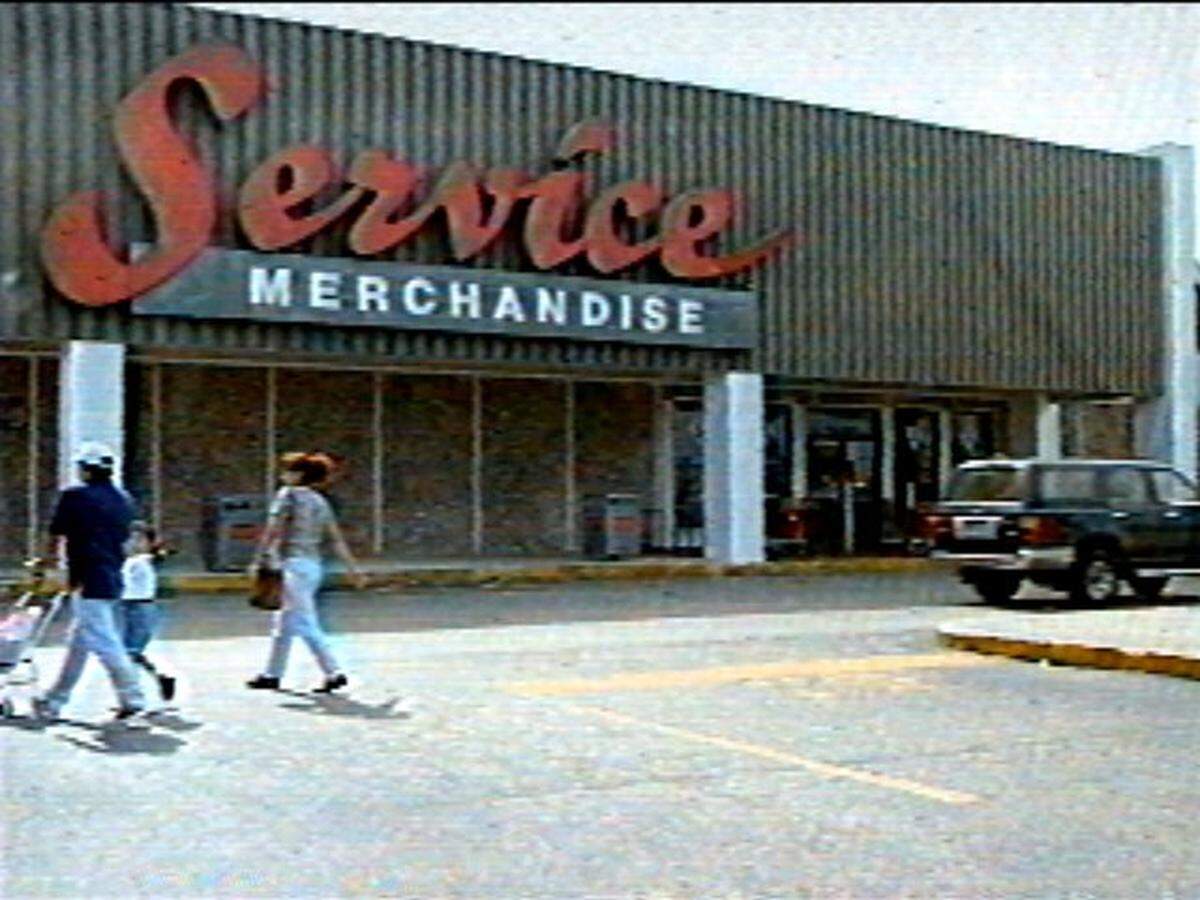
The problems are reflected in declining sales and diminishing profits at some of the largest and oldest catalog- showroom chains, including industry leaders Service Merchandise and Best Products, and to some extent, Miami Lakes- based L. Luria & Son.
Consider:
- Service Merchandise, the nation’s largest catalog retailer, reported an aftertax loss of $38.5 million for the six months ended June 30, 12 times higher than a year ago and the largest loss in its history.
- Best Products of Richmond, Va., the industry’s second- largest chain, recently said it would be shutting 17 of 212 stores nationwide, including two of its three Dade County stores, in North Miami Beach and in Hialeah. The decision was announced the same day the company reported a $5.7 million loss for its second quarter.
- L. Luria & Sons has seen its profits drop 20 percent from its 1984 to 1985 fiscal years.
The experts say a catalog of woes - competition, lack of service and overexpansion - has beset the catalog-showroom companies.
“Catalog showrooms got their start by offering the lowest prices on nationally advertised brand-name hard goods,” Gassman said.
That was a strategy that worked successfully for much of the industry’s 30-year history.
In 1975, however, the seeds for today’s problems were planted when the country’s fair trade laws were abolished, paving the way for retailers such as Kmart, Wal-Mart, Zayre’s and others to start selling merchandise at reduced retail rates. (Under fair trade laws, manufacturers told retailers how much they could charge for goods. Catalog stores were exempt because they were not considered true retailers).
“It became fair game for everyone to sell at a discount,” said Gassman.
At the same time, speciality stores such as Circuit City, Crazy Eddie, Toys ‘R’ Us and others began offering tremendous selection - again, at discounted rates.
And department stores began cutting prices on the same merchandise.
As a result, catalog showrooms lost their price advantage.
“The 30 percent price differential does not exist like it did before,” said Peter Luria, vice president in charge of merchandising at Luria.
Without price, customers then began to look to service, something the catalog companies historically have been short on.
“When you go into a typical cataloger, you have to stand in one line to write up your order, then stand in a second line to pay for it, then in a third line to pick your order up,” Gassman said. “And if you need help with something, forget it.”
The catalog showroom dealers acknowledge service - or lack of it - has been a problem. But they’re beginning to do something about it, they say.
Best Products, for example, has instituted “Best Express,” said Mark Murphy, a Best’s spokesman. Under the system, now operating in 50 Best stores across the country and one Best hopes to set up in all of its stores, the customer is guaranteed delivery of his merchandise within eight minutes.
That’s because the clipboard has been replaced by one central desk, where the merchandise is ordered, processed and delivered back to the customer.
“You don’t have the luxury of the price differential anymore, so we can’t expect the customer to go through that hassle to shop,” said Murphy.
The catalog showroom companies also are modernizing their stores to compete more effectively.
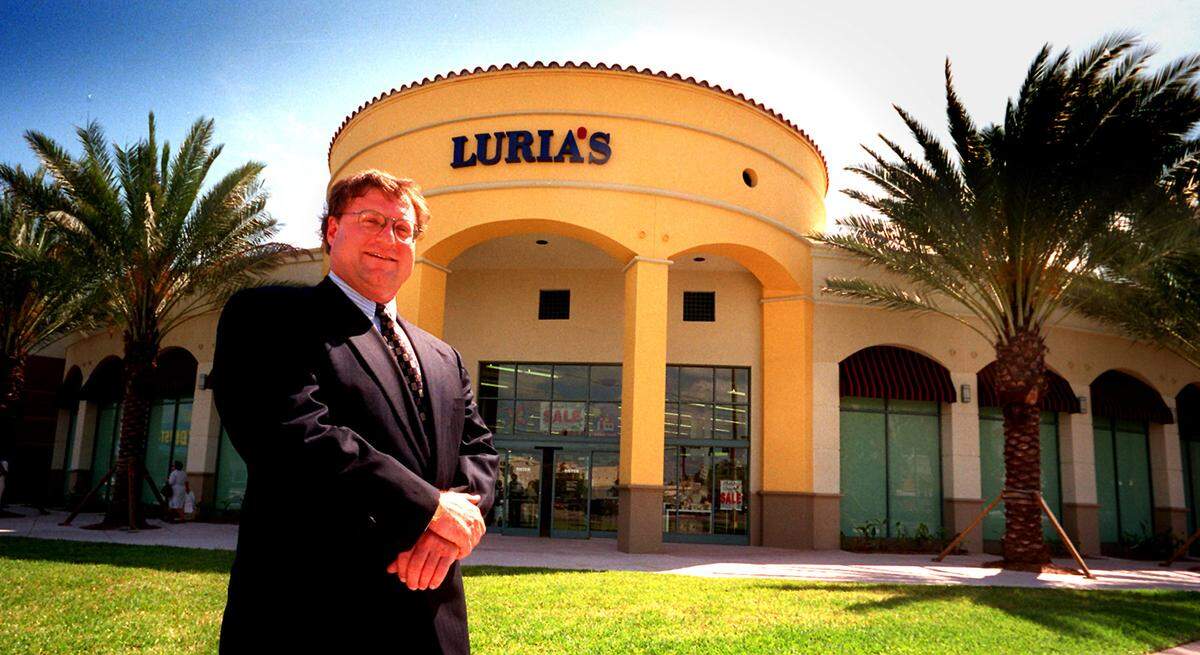
Luria’s, for example, will be opening later this month a new store in Sanford that will be the prototype of its future stores. The store will be modeled after the “racetrack” design that has become popular in department stores - wider aisles, narrower departments, and a circular format that keeps the customer moving past the merchandise.
The new store format is part of a larger effort by Luria’s to renovate and refurbish its existing stores rather than focus on opening more stores.
The company had been opening an average of six stores a year between 1982 and 1984. But when its profits declined by 20 percent from its 1984 to 1985 fiscal years, the company paused and began to beef up its existing operations and stores. It is now opening between two and three new stores a year.
“I think we were concentrating more on growth than on our current stores in operation,” said John Mann, chief financial officer of the company.
Luria’s, however, has been exempt from many of the industry’s problems. It has not made any unprofitable acquisitions and it has stuck to its formula of selling jewelry and giftware -- high mark-up items that have not been as susceptible to competition. About 40 percent of Luria’s sales, for example, stem from jewelry while most catalog companies sell about half that, Gassman said.
Best’s, too, is modernizing its stores. In 1985, the company remodeled 22 of its 212 stores at a cost a $1 million per store. By the end of 1986, Best plans to have either partially or fully remodeled 40 additional stores, Murphy said. Bad decisions
Cosmetic changes, however, won’t alter the fact that some showroom dealers made some bad decisions when it came to expanding their businesses.
When business was doing well, many of the catalog showrooms, flush with cash, started to expand into areas they were unfamiliar with, buying businesses that drained time and money from the showroom operations.
At Service Merchandise, for example, $6 million of its $38 million second quarter loss came because of write-offs from the sale of six of its unprofitable Mr. HOW stores, which were acquired in 1983.
Best Products, too, has acknowledged it erred in purchasing Ashby’s Ltd., a chain of 33 discount apparel stores in seven Southeastern states. In August, the company announced it would sell off Ashby’s, which it acquired in 1982 and which has yet to make a profit for Best, Murphy said.
The catalog companies also have had difficulty digesting other catalog showrooms because of costs associated with paring down overlapping operations.
In 1982, Best acquired two other catalog companies - Modern Merchandising and Basco. Meanwhile, last year Service Merchandise acquired H.J. Wilson Co. and Ellman’s.
“I think we’ve seen some major acquisitions that have turned out to be disastrous,” said Gassman.
But, say the catalog showrooms, the worst is over. New store designs, new merchandise, more sophisticated marketing techniques all are contributing to their turnaround.
“It’s ancient history,” said Service Merchandise’s Zimmerman, referring to recent problems Service has had.
Others are less certain. For one thing, catalog showrooms still must rely on a once-a-year catalog for setting the price of the majority of goods they sell.
“There aren’t many retail environments where you have to set your retail price and live with it for a period of time,” said Cynthia Cohen, retail analyst for Touche Ross & Co. “That causes an additional burden that other retailers don’t have.”
Moreover, those other retailers have grown as electronic home shopping services, warehouse clubs, mail-order catalog merchandisers, among others, have proliferated over the past few years, making the catalog showroom field even that much more competitive.
“Catalog showrooms seem to be fighting back, but I don’t know how successful they’ll be,” said Paul Rothman, an analyst who follows the industry for Advest Inc.
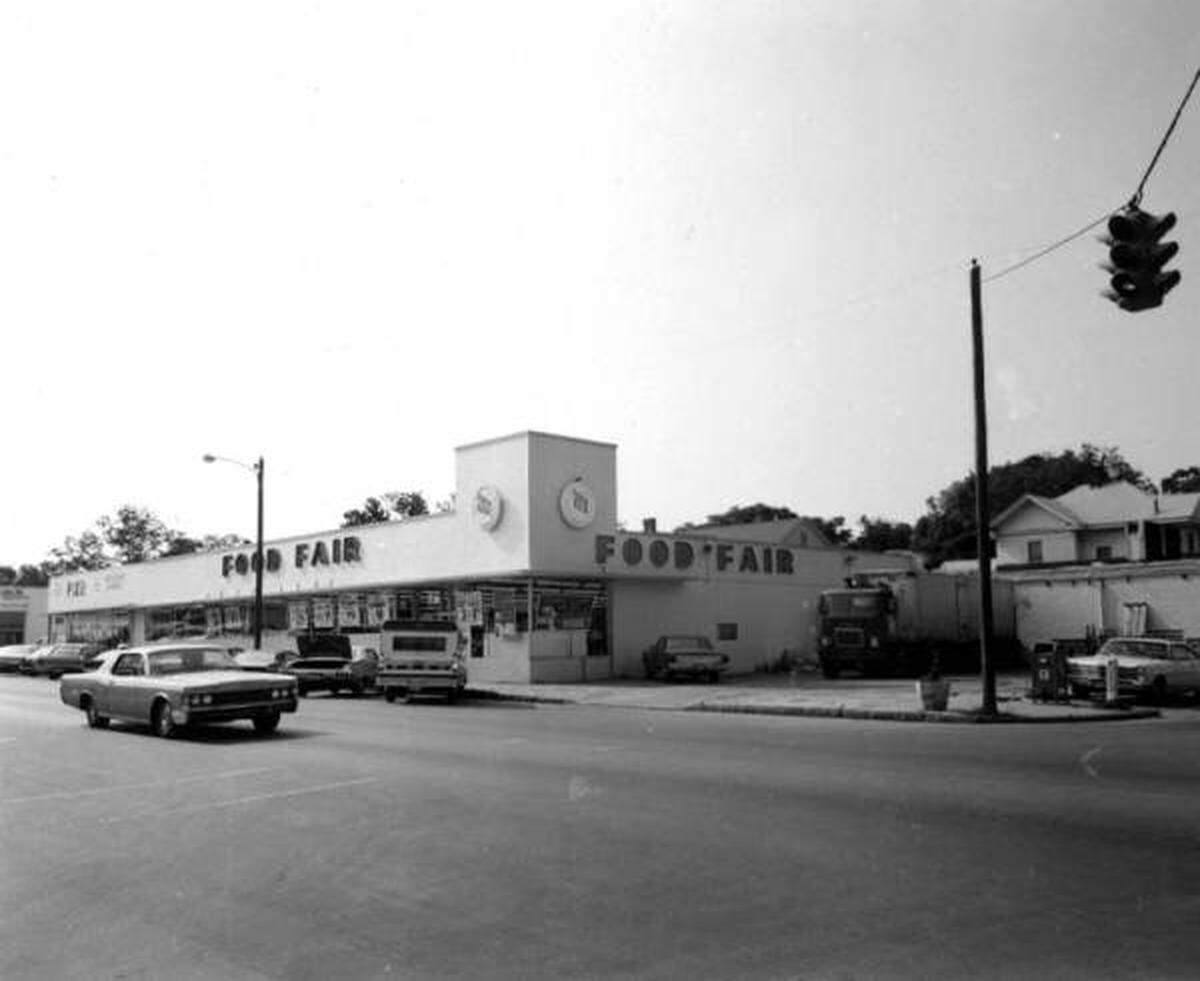
Food Fair / Pantry Pride
Published Sept. 4, 1983
The contents of the wire carts senior citizens pushed at the 163rd Street Pantry Pride — single bags of groceries, many half empty — told a sad but simple story: plenty of business, not enough revenue. Translation: store closing.
Outside, two dozen retirees were lamenting the imminent end of their neighborhood market, along with its kosher shop next door.
“It’s not fair,” they said, one after another. But William Fureisen stood among them and took the hard view: “The people are squawking, but they’re not shopping.”
That’s why Store No. 222 — along with No. 229, at 8000 NE Fifth Ave. and 14 others in Dade County — will soon close its doors, said Pantry Pride spokeswoman Judy Napier. “
‘There are always people in the store.’ I hear it all the time,” she said. “Well, that may be true, but they’re not buying enough. The store is unprofitable.”
And so it will close, taking away the only kosher goods within walking distance of the carless Jewish retirees who live in the condominiums surrounding the 163rd Street Mall.
“I don’t know what I’ll do. It’s a little far for me to walk to any of the other three kosher shops along NE 163rd Street,” said Ida Rosemarin while shopping at the kosher shop Wednesday.That was the most common complaint. Barbara Coplowitz had a milder one.
“I don’t know where I’m going to buy wine,” said the Hollywood resident. “I come all the way down here just because they have the best selection in the area.” Ruth Kram looked at the short-term future: “The Jewish holidays are coming — we’ll triple their business.” But the long view is what interests company officials.
“Demographics,” said Napier. “When we opened that store, the neighborhood could support it. Now it can’t.”
Harvey Meyers, who has managed the store’s kosher butcher shop the last 13 years, has seen the changes. “This was started by Sam Friedlander, the founder of Food Fair, Pantry Pride’s former name,” Meyers said. “This was his pet. He always wanted a few kosher markets in the chain.”
Napier said no kosher section will be added to any of the area Pantry Prides remaining open. For Myers, hope remains. With his seniority, he expects to go another store. Other employes were bitter, though.
“The top two guys in this company make over a million dollars, combined. The company just put out an eight-page color flyer. They’re still hiring and training,” said one $6.50-an- hour clerk. “And they’re telling me, with 2 1/2 years as a full-time clerk, that I’m gonna be busted to part time at $5 an hour. How am I supposed to support my family on that?”
The clerk asked for anonymity. Pantry Pride employes are under orders not to speak to reporters, but one stockboy who said he faces layoff when the store closes figured he had little to lose.
“They just hired me two months ago. I went through a lot of trouble. I work hard, but they’re still hiring new people,” said Todd Kreiger. “It stinks.”
Napier said no new hiring is going on. Training sessions are for employees changing roles, she said. In this case, the disgruntled employes concurred with the maxim: The customer is always right. Said both parties, bitterly: “The company doesn’t care.”
Jefferson
Published Aug. 11, 1985
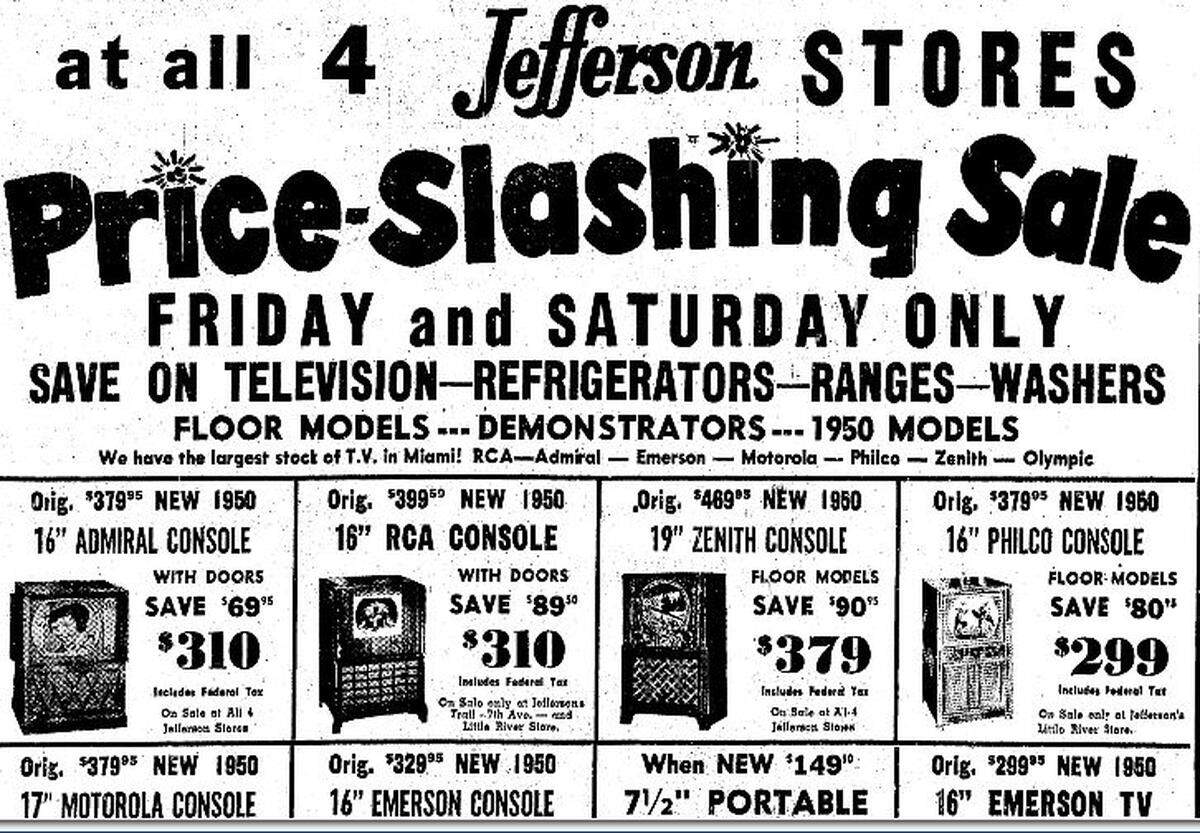
Just after World War II, Jules Mufson, an Army veteran and CPA from New York, came to Miami with $50,000 to start a tire store on the Tamiami Trail.
Mufson wanted to name the store after Andrew Jackson, but Miami already had a store called Jackson Byrons — now JByrons. So he settled on the Jefferson Co., borrowing the name of the nation’s third president to appeal to his southern clientele.
As South Florida grew, so did Jefferson. From a tiny dealership peddling scarce postwar tires, Jefferson by 1973 had become a 10-store discounter of appliances and apparel from Miami to West Palm Beach, with more than $60 million a year in business. Jefferson’s formula for success was simple: Knowing its customers, knowing its niche in the marketplace — and, as when Mufson named his store — knowing when not to compete head on with entrenched rivals.
Enter Montgomery Ward, Chicago-based retailing giant, which in 1973 bought Jefferson and set the stage for the collapse of the empire Mufson built.
“Montgomery Ward undermined the success of Jefferson’s, and you can quote me on that,” said David Kenny, president and chief executive officer of Jefferson from 1977 to 1981. “They weren’t making money in Chicago, but they insisted Jefferson’s carry their merchandise, which was inferior in quality and price. It was not suitable for South Florida. This was a Harvard Business School case of what not to do.”
Kenny’s view of what happened was echoed by former Jefferson executives and analysts interviewed last week. Jefferson Ward Last May, Ward put Jefferson up for sale. The company laid off 200 of its 500 Miami headquarters employees in July and canceled merchandise orders and advertising after September.
A liquidating company came in last week to sell off the merchandise. In the absence of a buyer, the stores will be closed after the back-to-school season, at a cost of some 4,500 jobs.
“I get sentimental about it,” said Mufson, who retired from the company in 1978 and lives in Miami Beach.
“I’m sorry to see the turn of events. I was the original worker. My brothers, Sam and Harry, later joined me. We made a lot of money, and I felt good when things were going well. I guess nothing is forever.”
Officials at Montgomery Ward, now the nation’s sixth largest retailer, refused to be interviewed for this story “Every aspect of the company is under review and study,” said Ward’s spokesman Chuck Thorne. “We’re not granting interviews at this time. There is too much change in the company.”
Analysts and former Jefferson executives, however, cite as the main reasons for the demise of the Florida-based retail chain Jefferson moved away from offering discounted, brand-name appliances and apparel and into more expensive goods carrying the Montgomery Ward label.
This strategy blurred its image as a discounter and confused shoppers. Ward mismanagement filtered down to Jefferson. A constant stream of managerial and policy changes at Ward meant frequently changing gears at Jefferson, which Ward tried to run from Chicago. Ward, under pressure from its parent company, Mobil Corp., set Jefferson on a costly and unsuccessful expansion that in 18 months from 1979-81 added 38 stores along the East Coast to the 13-store chain.
The result: Jefferson lost more than $200 million between 1980 and 1984. The chain this year is expected to turn its first profit since 1979 because of Jefferson’s return to its old formula.
But it is too little, too late. In the 1960s and ‘70s, Jefferson had been a profitable discounter of a wide assortment of brand name appliances, housewares and apparel. It relied on high turnover and a heavy advertising program.
But when oil prices rose during the early 1970s, triggering inflation and industrywide recession, Jefferson lost money. The Mufsons — who held a majority of shares in the chain — decided to sell out. In 1973, Ward was looking to expand. With 360 stores, mainly in the Midwest and West Coast, the Chicago retailer saw Jefferson as an easy entry into the lucrative Florida market and bought the chain for $37 million in stock. Ward immediately set about replacing Jefferson’s discount brand-name goods with more expensive Montgomery Ward-label appliances and fashions.
Jefferson became a hybrid between the discounter it had been and a conventional department store, a la Montgomery Ward. It ended up being neither a discounter like K mart, nor a mass merchandiser like Sears or Penney’s.
“The Mufsons developed a formula in Florida that had worked since 1946,” Kenny said. “They had lower prices, heavy promotions and a wide assortment of merchandise.”
The Mufsons understood their market. They catered to retirees, to lower-income shoppers and to higher-income customers with special promotions.
“You could look out at the parking lot on any day and see everything from pick-up trucks to Mercedes,” Kenny said. “Then Montgomery Ward came in and tried only for Buicks and Oldsmobiles. It just didn’t work. The bulk of the sales were going to the people in the pick-up trucks, and they soon went over to Zayre and K mart.”
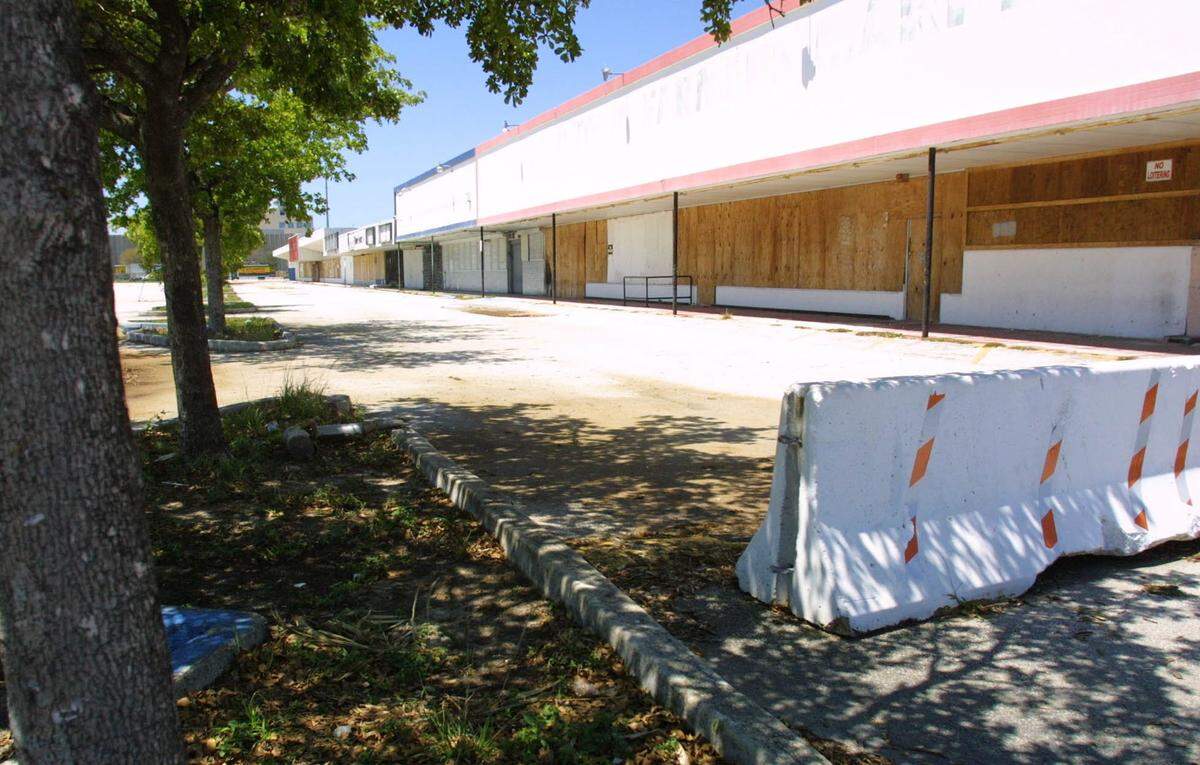
Said retail analyst John Landschulz of Mesirow & Co. in Chicago: “I question whether it is wise to join a discounter with a conventional store. The promotions, controls and markets are all different. The failure of this venture was in the wind. Jefferson’s should have been put into a holding company and managed on its own. Montgomery Ward ruined it.
“Retailers have to have their own character. When you disturb that, you get into trouble. Jefferson’s turned into a hybrid that bombed out.”
Ward’s style of management was also to blame, Landschulz said.
“Montgomery Ward ran on a traditional set-up similar to Sears, with a central office and various regions,” he said. “But Jefferson was a local store, and when it got hooked into the system, it got lost. Jefferson Ward was never critical to Montgomery Ward’s success, so it didn’t get much attention. And that hurt Jefferson’s. It is a business where you have to pay attention to every detail.”
When Mobil became impatient with Ward’s declining profits in the late 1970s, Jefferson became the focus of efforts to bail out Ward, an ambitious strategy that plunged Jefferson into the red.
More than a third of Ward’s 360 stores, many of them unprofitable, were to be converted to Jeffersons. Mobil also mandated a $300 million expansion program to spread the then- successful Jefferson chain up the East Coast, which brought the chain to a high of 51 stores in Florida, Tennessee, Delaware, New Jersey and Virginia by 1981. Many of the new stores were opened in locations where other retailers had failed.
Former executives and analysts agree that of all Ward’s sins, it was the hasty, expensive and ultimately unsuccessful expansion plan that did Jefferson in.
Jefferson converted eight Ward stores into Jeffersons, one each in Melbourne, Cocoa Beach, and Daytona Beach, two in Orlando and three in Jacksonville.
Outside of Florida, Jefferson took over the former locations of Almart/J.B. Hunter stores in Tennessee, Delaware and Pennsylvania; former J.M. Fields stores in Pennsylvania, New Jersey and Florida; Murphy stores in Richmond; Two Guys discount stores in greater Philadelphia. Jefferson also opened a single store in Bluefield, W.Va.
“Ever since the big expansion, Jefferson had a lot of problems,” said company founder Mufson. “They never should have moved out of Florida.”
Analyst Herb Leeds of Leeds Business Counseling in Miami agrees: “Jefferson’s over-expanded and moved into markets it shouldn’t have been in.”
Ward lost a total of $415 million in 1979-82; even when it became profitable in 1983 and 1984, its profit margins were below 1 percent. Jefferson lost at least $200 million between 1980 and 1984. Its profit had been 4 percent in both 1978 and 1979, pre-expansion years.
The expansion was halted in 1981 as a result of one of the frequent and drastic management changes that marked the early 1980s, both at Ward and Jefferson, and which further exacerbated the confusion over Jefferson’s direction.
“The Ward company was in turmoil and in rapid change,” Landschulz said.
Stephen L. Pistner, a former Dayton-Hudson president, swept through Ward’s executive suite in March 1981, replacing senior executives and reversing almost all of the expansion and merchandising programs set in motion by his predecessor, Edward Donnell.
Since 1976, Jefferson has had six changes in chief executive officer, three of them in the past year and a half.
“You can’t have so many CEOs without directional or managerial instability,” said one of those who held the post.
Finally, when Gerald Nathanson took over in early 1984 for a second term as CEO, brand names returned to Jefferson’s shelves and the chain’s losses began to turn around. Nathanson bailed out in May when the sale of Jefferson was announced.
Since then, Bradlees, a division of Stop & Shop, bought 18 Jefferson’s stores in Pennsylvania, New Jersey and Delaware. That left 23 stores in Florida, along with three in Virginia that are likely to close. Zayre, K mart and other discount chains are considering taking over the leases of some of the Jefferson stores.
Retail analysts and former Jefferson’s executives now say the sell-off of Jefferson’s amounts to the only smart alternative for Montgomery Ward, which further trimmed back earlier this month when it closed the book on its 113-year-old catalog operation.
“It was just a matter of time,” one former Jefferson’s executive said. “Montgomery Ward is doing the right thing. If you take a huge company that wants to do better, the first thing you cut is the thing outside of the main event. That’s Jefferson’s. It was doing great compared to Montgomery Ward. But it was like the tail was wagging the dog.”