Sex with a client, domestic violence among things that got Florida lawyers disciplined
.jpg)
Bad relationships, poor choices and poor health keep coming up on the Florida Bar’s most recent list of attorneys disciplined by the state Supreme Court.
In addition to the usual disbarments and suspensions, what follows features several public reprimands and an admonishment.
A public reprimand, as defined by the Florida Bar, is “a Supreme Court-ordered form of public discipline that declares the conduct of the lawyer improper.” Sometimes, they’re in a letter, sometimes they involve an attorney standing up and getting, well, publicly reprimanded before the 52-person Bar Board of Governors.
An admonishment “is the lowest form of discipline. An admonishment can be contained in a Supreme Court order, or may be issued by a grievance committee or the Board of Governors.”
In alphabetical order...
▪ A May Miami Herald story detailed the many reasons Orlando attorney Francine Bogumil (admitted to the Florida Bar in 2006) sits in the Orange County Jail, reasons that include ramming a Land Rover into her ex-husband’s home and telling his girlfriend “I will kill you b----!”
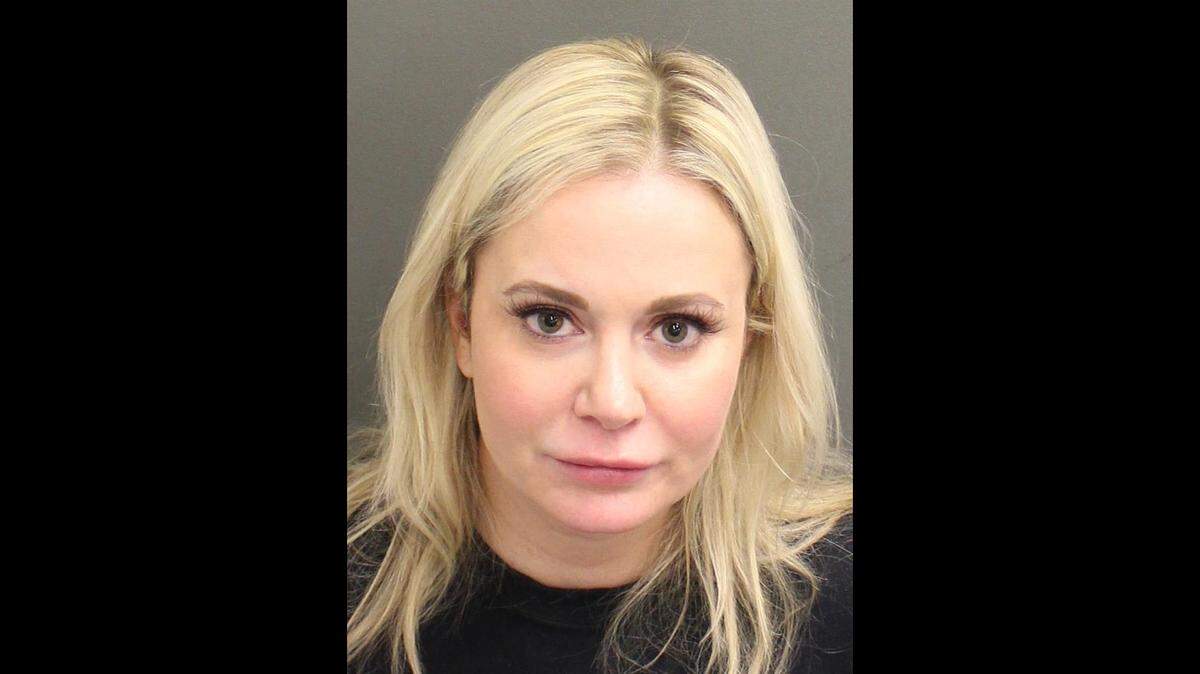
Those are the same reasons Bogumil was disbarred on July 29.
▪ Winter Haven attorney Sonya Davis (admitted in 2001) got a public reprimand after problems with two child-custody case clients. According to her guilty plea, Davis “failed to timely respond to some client communications” with one client and “failed to diligently proceed or effectively communicate” with another client.
▪ When Jacksonville area attorney Catherine Faughnan (admitted in 2007) was suspended in 2019 for abandoning a married couple for which she’d been handling a case, she seemed to have a pretty good reason — she could no longer talk.
Granted, there hadn’t been any activity on the case for a year when an intent to dismiss for lack of prosecution was filed in January 2018. But January 2018 is when, Faughnan’s guilty plea said, she “became seriously ill, very suddenly, which rendered her bedridden and unable to speak for a lengthy period of time...”
Faughnan’s guilty plea says she thought it was thyroid cancer returning. She closed her practice and moved to Binghamton, New York, where she could be around family. When she got well enough to answer the Bar in 2019, she had been treated for a systemic lymph node infection and was still being tested for lymph node cancer.
Faughnan “confirmed that she has no intention of returning to Florida and, likely, never be able to practice law again,” her guilty plea said.
So, it makes sense that Faughnan didn’t go through the hassle of making the required notifications when she was suspended. She was found in contempt of court for that, didn’t make the notifications required again and has now been disbarred.
▪ Jacksonville attorney Robert Pelletier (admitted in 2012) didn’t just want to be known as a pit bull of a lawyer, he wanted to be known and called “Pitbull Lawyer.”
He had “Pitbull” on his business cards. He had it on the door at The Law Office of David Taylor, where he was an of counsel attorney. He had “Pitbull Lawyer at Taylor Law” with “the logo of a pit bull with a spiked collar” on a blog, a Facebook page and as the wrap on a boat.
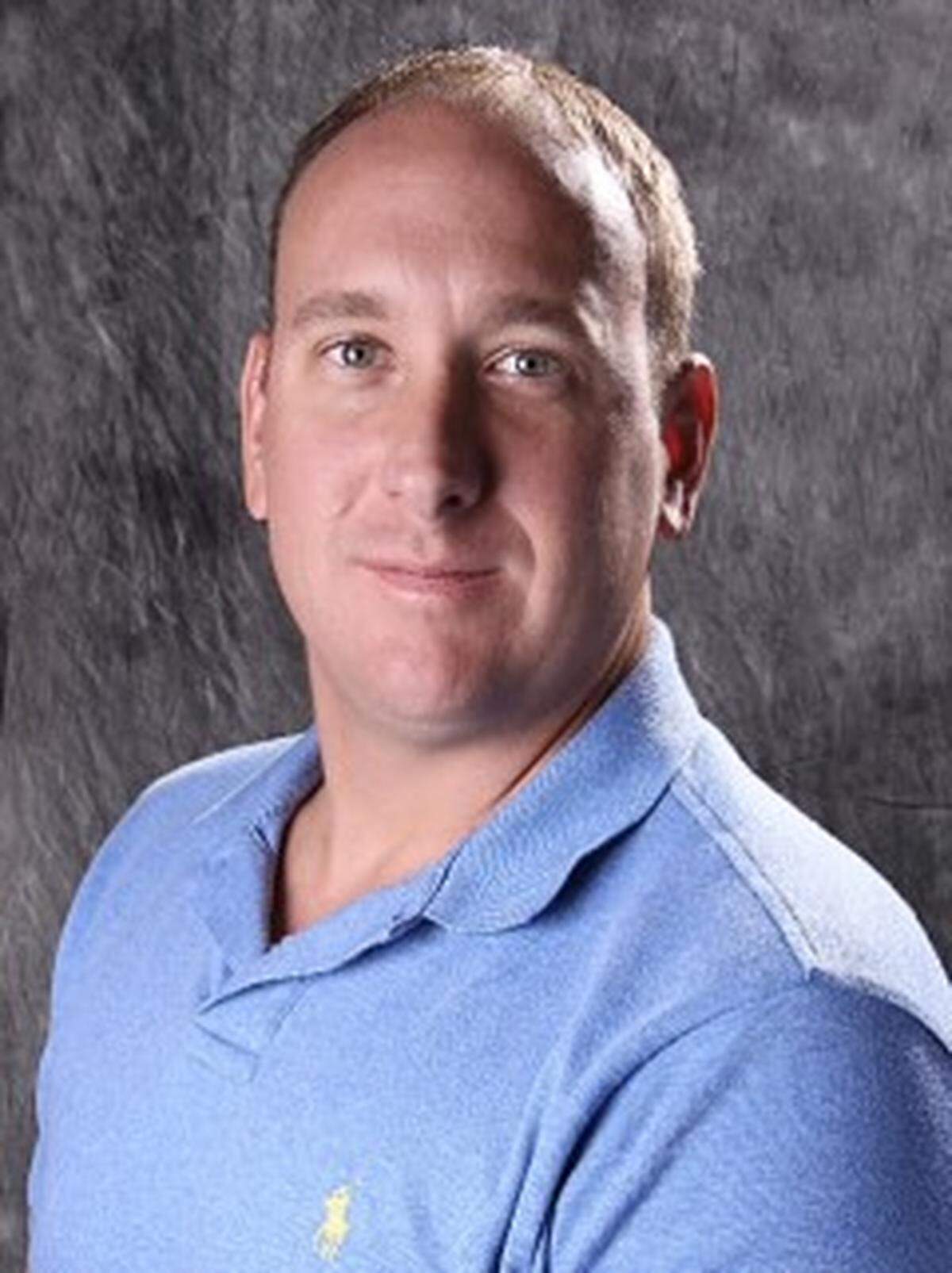
Problem is, the state Supreme Court doesn’t want attorneys linked with pit bulls. In a 2005 decision, the court said, “These devices, which invoke the breed of dog known as the pit bull, demean all lawyers and thereby, harm both the legal profession and the public’s trust and confidence in our system of justice.”
Pelletier and Taylor had to be told a few times to remove the images and nickname, according to his guilty plea. Pelletier got a public reprimand.
▪ Pamela Randle (admitted in 2006) owned the People’s Choice Law Group in Jacksonville, but was a figurehead who, her guilty plea said, “failed to properly manage her cases, her staff or her practice.” That especially became the case after an illness was diagnosed as sepsis and she needed heart surgery after that.
Though Randle’s officer workers provided some “inadequate legal assistance” and “engaged in the unlicensed practice of law” in a limited way, no clients were harmed. Randle got a public reprimand.
▪ The complaint against Bradenton’s Simon Rosin (admitted in 1968) says while representing the owner of the home at 403 Snapdragon Loop in a foreclosure action, he got an email from the other side’s attorney that clearly was meant only for the the lender. Rosin not only didn’t destroy it when requested to do so by opposing counsel, he included it in a motion he filed. — a motion in which Rosin got unprofessional.
He “called opposing counsel “arrogant” and“laz[y]” and disclosed information about opposing counsel’s personal life.” He often referred to his counterparts as a “gang,” as in “[the lenders] here and their gang of attorneys acted as the richest and biggest bullies to run up legal fees…”
Rosin ripped the law firm as having a “high turnover rate of attorney employees” and referred to “… sloppy pleading practice [is] often found in[opposing counsel’s firm] pleadings…””
When white-collar trash talk makes its way to court documents, it draws the public reprimand that Rosin received.
▪ Miami Lakes attorney Mario Serralta (admitted in 1999), according to the Bar “failed to protect a charging lien of another attorney for the previous representation of a mutual client. He also failed to supervise his nonlawyer assistant responsible for gathering all costs on the file, including liens and referral fees.”
This earned Serralta a public reprimand.
▪ A diverse set of violations earned DeLand’s Bradley Sherman (admitted in 1997) his one-year suspension that starts Aug. 21.
While representing a woman with documented mental health issues in a custody dispute with her daughter’s father, Sherman started a sexual relationship with the woman (identified in the referee’s report as “J.S.”) in 2016.
He imitated J.S. on the feuding parent communication online platform OurFamilyWizard in messages to J.S.’s daughter’s father (“B.F.”) when J.S. checked into a facility to deal with some mental health issues.
“By signing onto the “OurFamilyWizard” application, pretending to be J.S. and by sending B.F. a messaged intended to deceive him about the true reason J.S. could not exercise time-sharing with E.F., [Sherman] engaged in conduct that was contrary to honesty and justice,” the referee wrote. “Moreover, he potentially put J.S. at risk in her litigation with B.F.”
Sherman and J.S.’s sexual relationship produced “N.S.” in January 2018. By N.S.’s birth, his parents personal relationship had collapsed to the point that J.S. didn’t let Sherman attend the birth and didn’t list him as the father on the birth certificate.
During a 2019 court hearing to settle where to meet for joint custody exchanges and during a later hearing on Sherman’s motion to require J.S. to undergo a psychological examination, J.S. alleged Sherman used information about J.S.’s mental health he learned as her lawyer and from her psychiatrist. The referee agreed.
The referee didn’t blame Sherman for some actions in his legal disputes as N.S.’s father. Still, the referee ruled that Sherman had made his own problems.
“But that justification aside, the whole reason that [Sherman] found himself in a proverbial rock and a hard place is that he intentionally began a sexual relationship with a client who was, at the time, fragile, vulnerable, purportedly traumatized and struggling with mental health and medication issues that, on at least one occasion, resulted in a potentially life-threatening overdose.”
Sherman’s suspension begins Saturday.
▪ Fort Lauderdale attorney Jacob Weil (admitted in 2018) hasn’t answered a March 15 letter from the Bar about a complaint filed against him. That’s called contempt of court and Weil’s 30-day suspension began Saturday.

▪ The admonishment for Naples attorney John White (admitted in 1973) says his title company was hired to do a sales contract and be the closing agent for a client buying Florida property. This required the admission of a Georgia will in Florida.
“You failed to diligently seek the admission of a foreign will in Florida or move forward with the closing and failed to reasonably communicate with the complainant. Your actions caused the closing of the property to be delayed and the complainant ultimately proceeded with another title company to complete the Florida probate process and close the transaction.
“John Parquette White, your actions, while found to be minor, have discredited the legal profession in the state of Florida.”
This story was originally published August 19, 2021 at 11:28 AM.