Big tech and finance are here — now what? Local leaders debate opportunities, challenges
Miami faces a transformative moment thanks to an unprecedented influx of high-tech and finance professionals. But how can the entire community benefit?
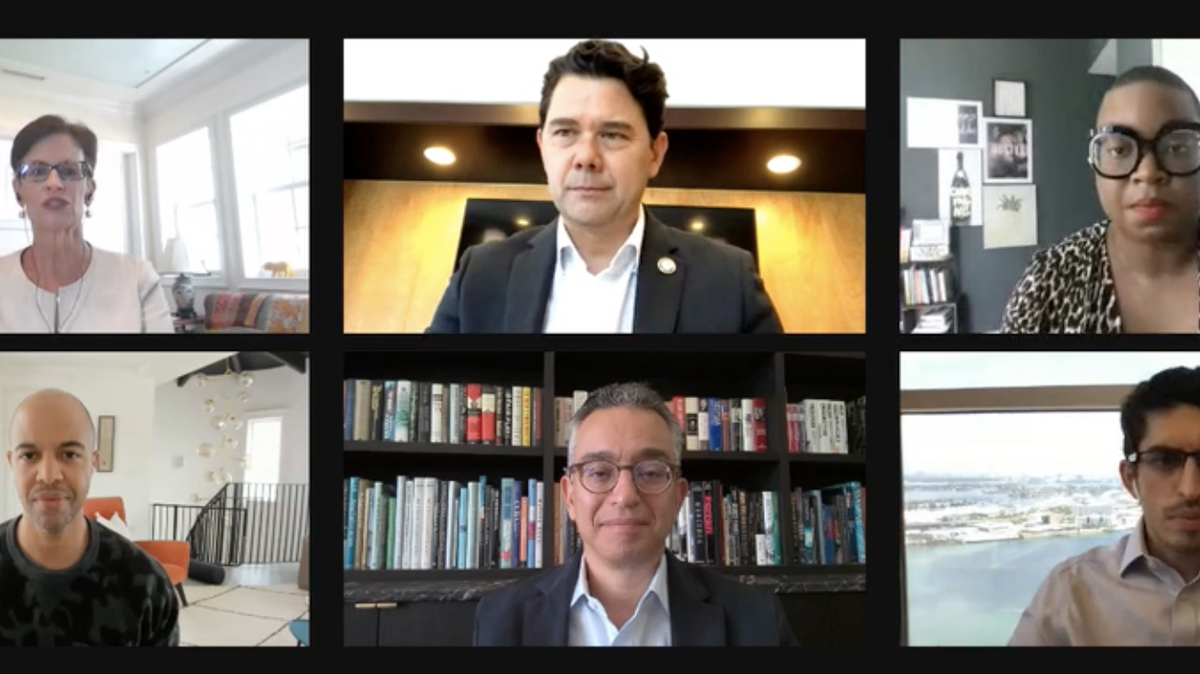
A panel of entrepreneurs — both longtime and new arrivals — debated that question Tuesday at a Miami Herald Florida Priorities virtual panel.
For Felecia Hatcher, CEO of Black Ambition and a stalwart leader for minority entrepreneurs, Miami’s current tech movement must be channeled intentionally toward the wider community, lest it be left to its own insular tendencies.
“As a result of this tech boom, we should see our lowest-performing schools increase in their performance, in their capabilities in the resources allocated to these schools if we are truly aligning technology’s best intentions to our city,” she said. “We should see an increase in the number of people in the Black community with tech jobs. We need to be putting the right policies in place, and the right pressures being applied.”
But how those policies are put in place — and by whom — is an open question.
For recent tech arrivals Keith Rabois, general partner of Founders Fund, and Shu Nyatta, managing partner at SoftBank, which has moved its $5 billion Latin America Fund to Miami and also launched a $100 million Miami initiative, it is tech itself that is best equipped to address the challenges Miami faces.
“Often problems like the ones Miami is facing, even ones regarding inclusion — elevating those problems to the entrepreneurs is a very natural way to do things,” Nyatta said. “I’m not a believer that very bureaucratic, public-private partnership, commission driven solutions work very quickly.”
Rabois, who moved to Miami in December, said tech companies are the greatest job creation engines in the world — and high-paying jobs at that.
City of Miami Commission Chair Ken Russell said government policy should be part of the answer.
“I am really concerned,” he said about the threat he perceives to longtime Miamians. “I have to be the gatekeeper — the ‘bad cop’ to the mayor’s ‘good cop,’ ” he said, referring to Mayor Francis Suarez’s efforts to recruit tech firms. “We are the policy-setting body here, and we want to welcome tech in a way that serves us instead of letting ourselves be a victim.”
Russell said the city is creating a Tech Equity Task Force designed as “the flip side of the welcome mat.”
“If you’re going to be here, we’re saying, here are the rules of the road — there are going to be a lot of strings attached.”
Specifically, Russell said he is angling for new firms to pay lower-skilled workers a starting salary of at least $15 an hour.
SoftBank would likely be among the firms affected by any new city requirement. During the panel, Nyatta announced that in addition to its multibillion-dollar Latin America and Opportunity funds, leaders of SoftBank’s flagship Vision Fund were also in the process of moving to Miami. They will all be housed under a single roof in a soon-to-be announced SoftBank Miami headquarters; according to a recent Wall Street Journal report, SoftBank is looking for as much as 100,000 square feet of new space.
Panelists also included Knight Foundation Miami Program Director Raul Moas and I Squared Capital Chairman Sadek Wahba, who praised Miami’s attributes and its diverse population but noted room for improvement in primary education and mass transit.
“As diversity becomes more important to the rest of the country — Miami has been living it for decades,” Wahba said.
Moas talked about Miami’s “grit and hustle” and the Knight Foundation’s investments in higher education to align curricula with the knowledge required for tech and New Economy jobs.
The discussion comes as a torrent of new tech and finance firms continue to announce their arrival in Miami amid a search for a more business friendly locale, quality of life changes and refuge from harsher pandemic rules elsewhere. The trend was kicked off last fall by the announcement that global finance group Blackstone would be creating a new tech office here, followed by the beginning of Suarez’s impromptu social media campaign to lure tech heavyweights to the Magic City.
Since then, dozens of firms have announced the collective creation of hundreds if not thousands of new high-paying jobs — while also creating fears that they are leaving longtime local players behind while driving up the cost of living.
Moas said the city can already claim a major victory: There is no longer a social or professional penalty for a company or worker to be based in Miami.
“We have bought ourselves a chance at long-term success — a ticket to the dance,” he said. “And there’s a lot of party left to be had.”
This story was originally published May 25, 2021 at 6:09 PM.