Facebook donates $1 million to Miami Foundation to tackle racial inequity
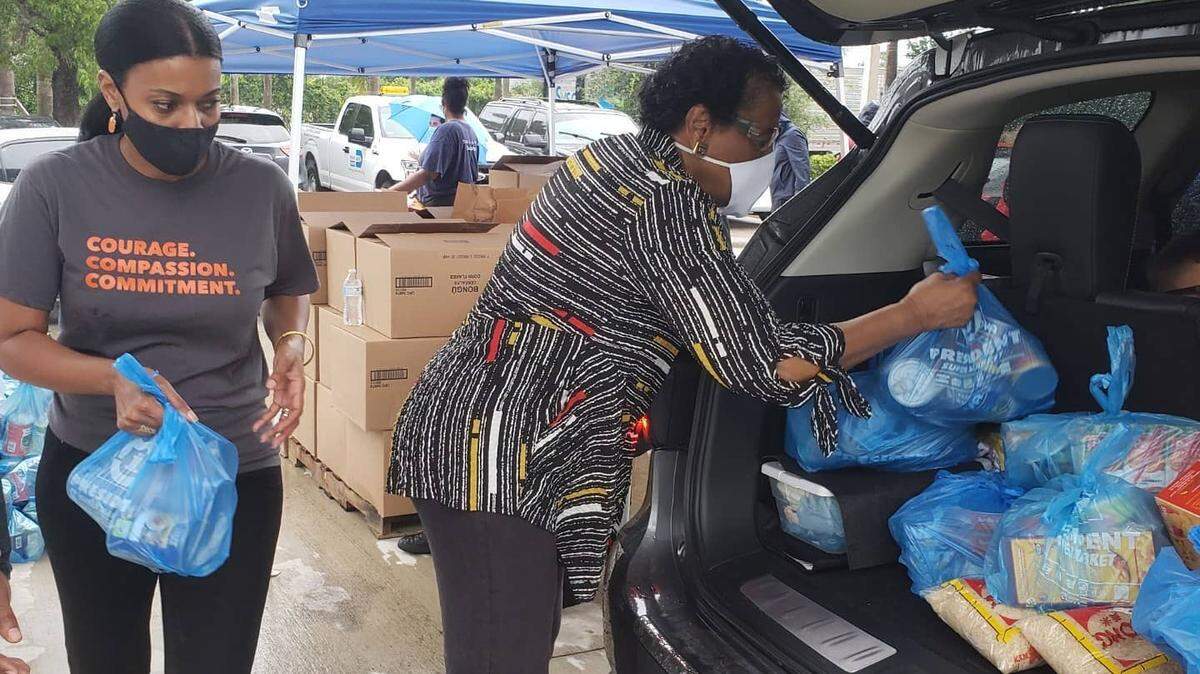
Miami’s racial divisions run deep. One of the most powerful businesses in the world wants to help close the gap.
On Friday, Facebook announced it was donating $1 million to The Miami Foundation’s Racial Equity Fund, created earlier this year to tackle racial injustice.
“We’re providing funding directly to The Miami Foundation to build on their track record of supporting Black-led nonprofits and ensure that people locally are making the decisions about where these dollars are most needed and can have the most impact,” said Marcy Scott Lynn, director of global impact partnerships at Facebook, in a statement.
In an email, Miami Foundation president and CEO Rebecca Fishman Lipsey said Facebook’s contribution, along with as much as $500,000 in matching funds the Foundation plans to raise, will be used to bolster local leaders and organizations focused on addressing systemic racism. In the coming months, three specific issues will be selected in collaboration with these groups to each be addressed using $500,000 in aid.
The Foundation’s Racial Equity Fund was created in June following the deaths of George Floyd in Minneapolis, Breonna Taylor in Louisville and Ahmaud Arbery in Georgia to attempt to bridge racial divides in Greater Miami.
The Foundation seeded the fund with $100,000, and quickly raised another $80,000. Out of that initial round of funding came the South Florida Racial Justice Table, composed of the Fund’s first set of grantees.
In an open letter to the community dated Sept. 9 and titled “South Florida Philanthropy Fails Black Led Orgs — Do Better,” the table called out what it said was a “widening resource gap among non-profit organizations in South Florida.”
“White-led or white-passing Latinx-led organizations [are] accessing larger and more consistent funding than Black-led organizations focused on systems-change work (including policy advocacy and community organizing),” they wrote.
Fishman Lipsey echoed the sentiment in her email Friday.
“A major priority of our Racial Equity Fund is investing in Black leaders,” she wrote. “We have to trust the lived experience of residents confronting racism as we work to fight it. Their voice MUST be at the center of our strategy, and ultimately, the solutions.”
The question of racial justice in South Florida continues to be debated. This week, Broward County formed a racial equity task force that will seek to identify issues preventing racial equality, then create strategies to remove them. Commissioner Dale V.C. Holness, who sponsored the ordinance, made an economic argument for its creation, saying it could grow the county’s economy “by $5 trillion over the next five years.”
Meanwhile, newly elected Mayor Daniella Levine Cava has said she plans to release a report following her first 100 days in office on “the progress that she and her administration have made to build a more equitable and inclusive Miami-Dade County.” Yet her move to hire Jimmy Morales as the county’s chief operating officer brought immediate denunciation from Miami-Dade’s NAACP chapter, which said Morales had singled out Black residents and tourists while serving as Miami Beach’s city manager.
While the Miami Foundation may be the focus of Friday’s announcement, it is merely facilitating a region-wide effort, Fishman Lipsey said.
“This is about the community — activists, residents, nonprofits, companies and elected officials, all standing together to tackle racism,” she said. “Systems of injustice are deep, far-reaching and multifaceted, so we need everyone united and working on solutions.”
This story was originally published December 11, 2020 at 2:17 PM.