This Miami company’s devices power global brands — but you’ll likely never see its logo
Stores, restaurants, hospitals — nearly every business relies on devices like scanners and tablets to check prices, track tasks and monitor inventory. But many organizations have device and technology requirements too specific for big consumer electronics brands to fill.
That’s where Miami-based Social Mobile comes in.
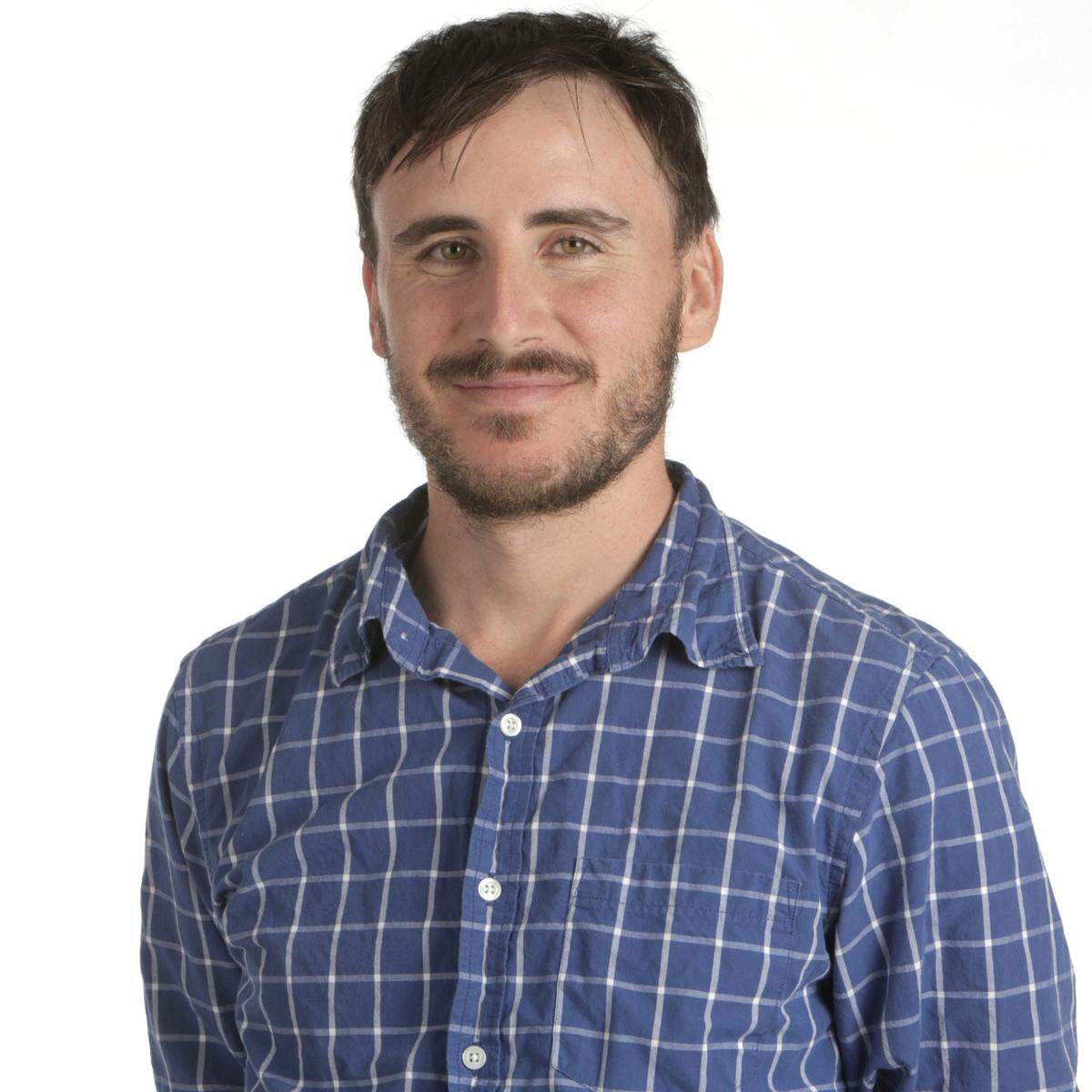
“We’re the guy behind the guy behind the guy,” says founder and CEO Robert Morcos. “No one is supposed to know we even exist.”
Social Mobile is an under-the-hood business, providing white-label products to some of the largest businesses in the world. Think of it like the modem provided by your cable company, Publix or Trader Joe’s store-brand goods, or the home alarm panel installed by your security service — high quality, but without a manufacturer label.
Morcos, 36, has built the company from the ground up alongside three siblings since founding it in 2011. While most of Social Mobile’s manufacturing occurs in East Asia, almost all planning and business development takes place inside a nondescript office off I-95 in North Miami.
There, Social Mobile’s team plots out bespoke devices like barcode scanners, walkie-talkies, tablets and point-of-sale kiosks to be deployed throughout a company’s workforce. While there are numerous companies that make specialized devices for name-brand, consumer-oriented firms, Social Mobile specializes in so-called “enterprise solutions” for behind-the-scenes business needs.
The catch: In most cases, Social Mobile cannot say who its clients are to protect trade secrets, and does not have an advertising budget to speak of. Instead, it must rely on word-of-mouth to let companies know about its services. And it must do so while competing against both major electronics firms and other, smaller players that also vie for this business.
“They compete with a lot of different companies,” said Anshel Sag, senior analyst at Moor Insights and Strategy, an Austin-based global technology analysis and advisory firm. “And there is a market ‘owner’ who has the majority of market share in each.”
Past and present Social Mobile clients include DoorDash, Honeywell and wireless provider Telrite Holdings. (All relationships were verified by the Miami Herald.)
Since its founding, Social Mobile has turned out more than 11 million devices, the company says. A huge player like Samsung may hit that figure in a matter of weeks.
But Social Mobile is growing. It is now seeking to bring in even more employees thanks to significant new demand, especially from hospitals and restaurants who must adapt to COVID protocols.
Morcos said the company has been profitable every year it’s been in business. Revenues have more than doubled in 2020 and are forecast to double annually for at least the next three years, he said. He declined to state the company’s revenues. The company remains family owned; it has not taken any outside capital. The company has 75 employees, 40 in Miami and the rest spread across the world, with plans to boost staff by 20%.
“The business has grown throughout [the pandemic],” he said. “Humbly, we’re growing and trying to bring in more folks.”
Social Mobile’s success also represents triumph against daunting odds — a climb out of poverty that continues to fuel the business to this day.
“It’s grit,” he said. “A lot of stuff we’ve done, do, and continue to do is just gritty work.”
HUMBLE START
Morcos’ origins would be familiar to many South Florida entrepreneurs who have built businesses from scratch. The child of immigrants who left Jordan in 1986 in search of a better life, Morcos and his siblings were raised mostly by their mother and often felt financially inferior to friends and neighbors in tony Aventura.
“Most of the friends we had were more upper class than my family,” Morcos said. “I couldn’t believe how much money the other kids and families in the neighborhood had.”
Morcos’ mother worked at a flea market to support her five children. Though his family is of Middle Eastern descent, Morcos said he always felt American, motivated by a desire to do whatever it took to support his family.
“I didn’t really care what was in front of me,” he said of growing up alongside Miami’s more populous religious and ethnic groups. “I just had to keep grinding, grinding it out.”
One day, he visited the Doral-based cellphone refurbishing office owned by a family that seemed to have even more money than most of his buddies.
To the young Morcos, “it looked like the biggest business in the world.”
“I asked, ‘How can I make money with you?’”
He was told he could help source more phones. So Morcos became an unofficial agent, buying old devices from other students and even teachers.
“I’d show up to school with $10,000 in cash, and get a hundred-plus cellphones and trade them in in Doral,” Morcos said.
He eventually expanded from students and teachers to local pawn shops, where Morcos made handshake agreements to serve as unofficial mobile phone buyer. In time, Morcos learned how to engineer and repair phones himself.
His younger sister remembers him as a scrappy, driven teen. “From the day I can remember, he was just hustling, working, just dealing with cellphones,” said Sarah Morcos, 31, Social Mobile’s finance controller. “Our father was never around growing up, so him more than all of us, he felt he needed to be the man of the house and a source of income to my mom. He felt he needed to be successful for the sake of the family.”
SOCIAL MOBILE
Morcos attended Florida State University on scholarship, earning his Bachelor’s in criminology in 2010. Unsure of what to do as he graduated, he figured he knew the cellphone business better than anything else, and started Social Mobile.
“I didn’t have a business plan, but I thought I knew everything,” he said. “I found out quickly I did not.”
He had originally planned to sell his own line of cellphones but soon realized establishing any kind of market share as an upstart in the consumer phone business was nearly impossible.
Social Mobile’s first big contract — selling its own brand of low-cost phones through a major telecom — was scuttled after a Chinese conglomerate undercut it on price.
Plus, he said, “nobody wanted anything to do with our brand.”
So Morcos decided he would simply supply white-label phones to established brands. While other firms were already working in this niche, Morcos said, his years of learning the mobile phone business — plus sheer persistence — helped him win new business.
His grit eventually led to a deal with Atlanta-based Telrite, a holding company in the wireless sector.
Social Mobile was bidding for Telrite’s Life Wireless brand, which provides free or low-cost cellphones and smart phones through the federal government’s Lifeline phone subsidy for low-income Americans. William Curry, Telrite’s chief strategy officer, said the company fields waves of inquiries from potential vendors like Social Mobile, but that Morcos’ persistence stood out.
“He wouldn’t give up on the deal,” Curry said. “We were impressed with his conviction that he would save us money in a number of places, and he was correct.”
Namely, Social Mobile offered a full-service, turnkey product that allowed Telrite to operate more efficiently.
“That’s based on him understanding the business,” Curry said. “Our margins are very thin — even saving 25 cents on something, when you’re buying millions of devices a year, that adds up to savings. It allowed us to focus on our core business.”
DELIVERY
In 2017, the already-slim margins on selling low-cost phones through Lifeline became even narrower after the Trump administration capped government support for the program. So Social Mobile pivoted again, trying to find a way to establish more long-term, specialized projects for enterprise, or non-consumer-facing, projects.
“It didn’t make sense to operate on microscopic margins,” Morcos said. “We wanted to apply our value and expertise to something more scalable, where there would be a bigger project that would give us business for years to come.”
Though volumes would be lower, margins would be higher.
“We wanted to make a $1,000 device, not more $40 products even if we could sell more of them,” he said.
One of its first big contracts after this latest business shift came from a large digital food delivery company. Even just a few years ago, digital and online food ordering were still in their infancy. The company, which Morcos declined to name, needed a tablet that would spit out orders as they came in from hungry diners through the company’s app.
Social Mobile designed a tablet that could sit in the back of a kitchen and print out orders for restaurants. It now makes them for many of the major food delivery app providers, churning out hundreds of thousands of devices.
Morcos says even he had never ordered through an app before COVID hit.
“Now, it’s almost the norm,” he said. “As those places grow, they need technologies in stores to get orders, and there needs to be hardware designed to print out receipts...it’s led to massive demand for product.”
MARKETING, COMPETITION
Contract clauses prevent Social Mobile from disclosing its clients. The Miami Herald confirmed that Social Mobile continues to work with DoorDash, and has worked with Honeywell and Telrite. Morcos declined to name others.
Those clients indicate a significant business, said Bob O’Donnell, President and Chief Analyst at consulting firm TECHnalysis Research. But the odds for a company like Social Mobile are stiff against giants like Samsung and Panasonic.
“Hardware is an extremely difficult business to make a lot of money in,” said O’Donnell. “It’s especially hard to break into [it].”
At the same time, Social Mobile must fend off other providers its size.
“There are new entrants all the time,” said Sag, of Moor Insights and Strategy. But, he noted, “a lot of companies that are very big in enterprise, or even consumer and could be big in enterprise, don’t go after smaller, lower-volume opportunities for more bespoke solutions. That tends to cater more to smaller, more competitive, more agile companies like Social Mobile.“
Mohit Bhushan, Vice President and General Manager of U.S. Business Development at MediaTek, whose semiconductors are used in many Social Mobile products, said Social Mobile has established itself as a respected supplier in the white-label device industry.
“They’re a credible supplier and made business with certain key players,” Bhushan said. “The competition is always there. ... it’s not a new space they’ve carved. There are enough companies working on providing enterprise-grade products. But [Social Mobile] tends to be niche, specialized. So volume is not much, but profit is very good.”
GROWTH
Though the company is now rounding its first decade in business, Social Mobile’s story is likely still in its early chapters. For one thing, Morcos said, he often still finds himself having to explain to prospective clients why they need to manage their supply chain more closely. While a company may reflexively reach for the lowest-cost solution, it may end up paying more on the back end if it must source from multiple suppliers, or if it ends up having to retrofit.
“We often have to say to someone who insists they only have $100 that if you pay $108, you’re going to save $22 in supply-chain savings, so net-net you’re going to see significant value,” Morcos said.
Even for the companies that do understand the value proposition, the technology can be complex. “When these companies come to us, they often don’t know what they want. They need someone to handhold them from semiconductor selection to software and security compliance.”
As companies upgrade for 5G-ready hardware, demand will likely surge, according to Moor Insight’s Sag.
“We’re going to see a rapid expansion in enterprise connected devices,” Sag said. “There’s a need for more hand-held connected devices that manage a lot of infrastructure. It’s going to be interesting to see what kind of growth they have.”
Morcos is also working to establish Social Mobile as a defense contractor. To do so, he will need to set up what is known as a trusted foundry — or production facility — that can manage the government’s security requirements. Washington requires such facilities to be on U.S. soil, and Morcos said that while he would solicit bids among municipalities, it could end up getting built in South Florida.
“I would love nothing more than to bring the foundry to the city that raised me,” he said.
Social Mobile is adding 20 new employees, half of them based locally. Whatever growth comes next, the company remains family focused.
“Everyone is vested, everyone cares, everyone gives 100%, 100% of the time,” Morcos said.
NAME: Social Mobile
DESCRIPTION: Enterprise hardware and software solutions
ADDRESS: 16400 NW 2nd Ave #201, Miami, FL 33169
LEADERSHIP: Robert Morcos, CEO; Sarah Morcos, controller for finance; Freddy Morcos, chief information officer; Kathreen Morcos, production manager
YEAR FOUNDED: 2011
NO. OF EMPLOYEES: 75
ANNUAL REVENUE: Not disclosed
OWNERSHIP: Family; no outside capital