
Farm life has never been easy. COVID-19 adds a new layer of stress for workers, growers
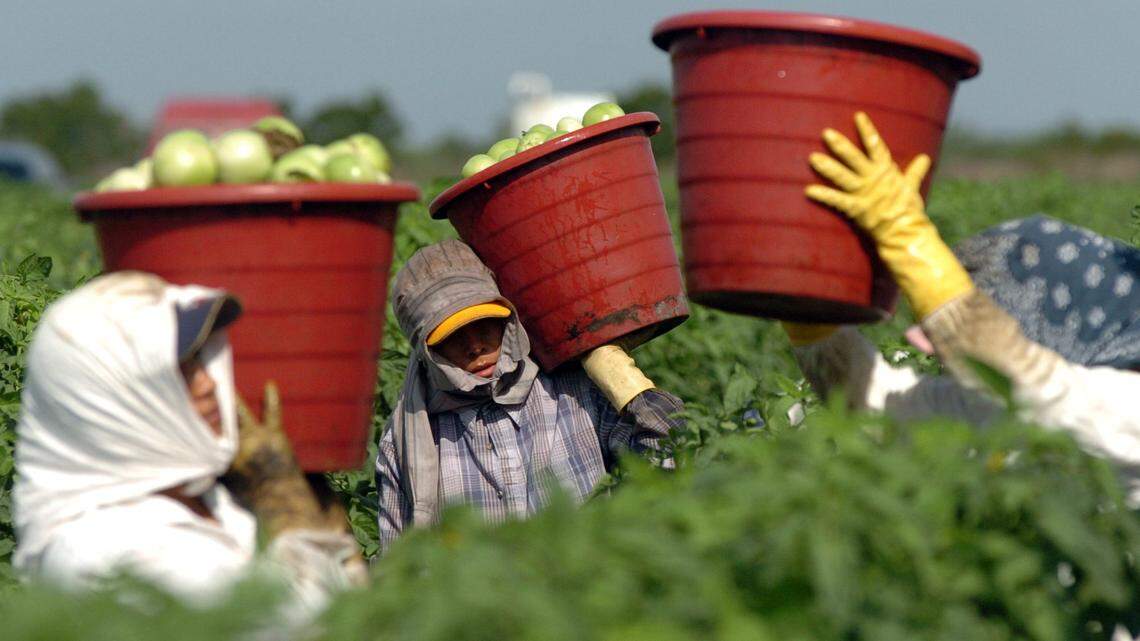
In late March and early April, Manatee County tomato growers had one of their best crops in years. But the market was in in free-fall.
Restaurants across the country had closed their dining rooms as COVID-19 spread, and transportation to the Northeast had dried up.
Some growers plowed their crops under, or sold 25-pounds of tomatoes on street corners for five bucks a box — a price that didn’t even cover the cost of production, according to Paul Hoker, Pacific Tomato Growers’ chief financial officer.
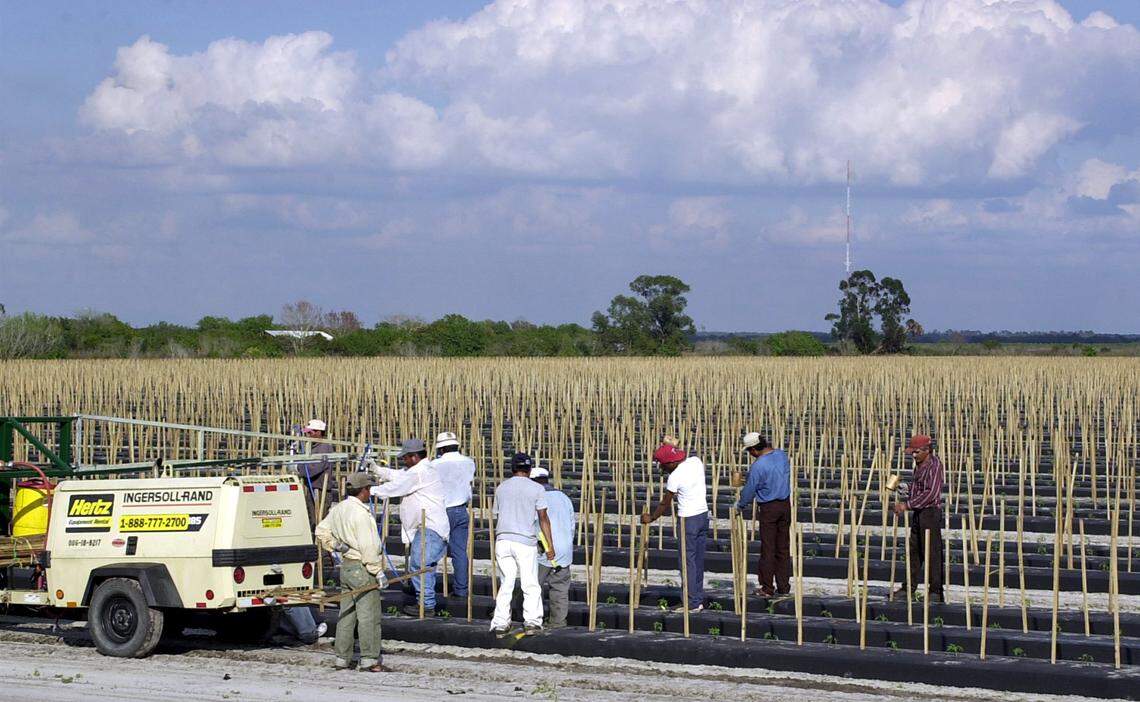
This month, Manatee County growers — who lead the state in tomato production — are getting ready to try again, laying plastic on their fields for protection from weeds and insects in preparation for planting their next crop.
But Manatee County has become a Florida hot spot for coronavirus, with 187 residents dying from the disease, and more than 7,000 testing positive since the pandemic’s arrival, creating logistical complexities.
“This has been a really challenging time for the field workers and harvesters,” said Bob Spencer, president of West Coast Tomato in Palmetto.
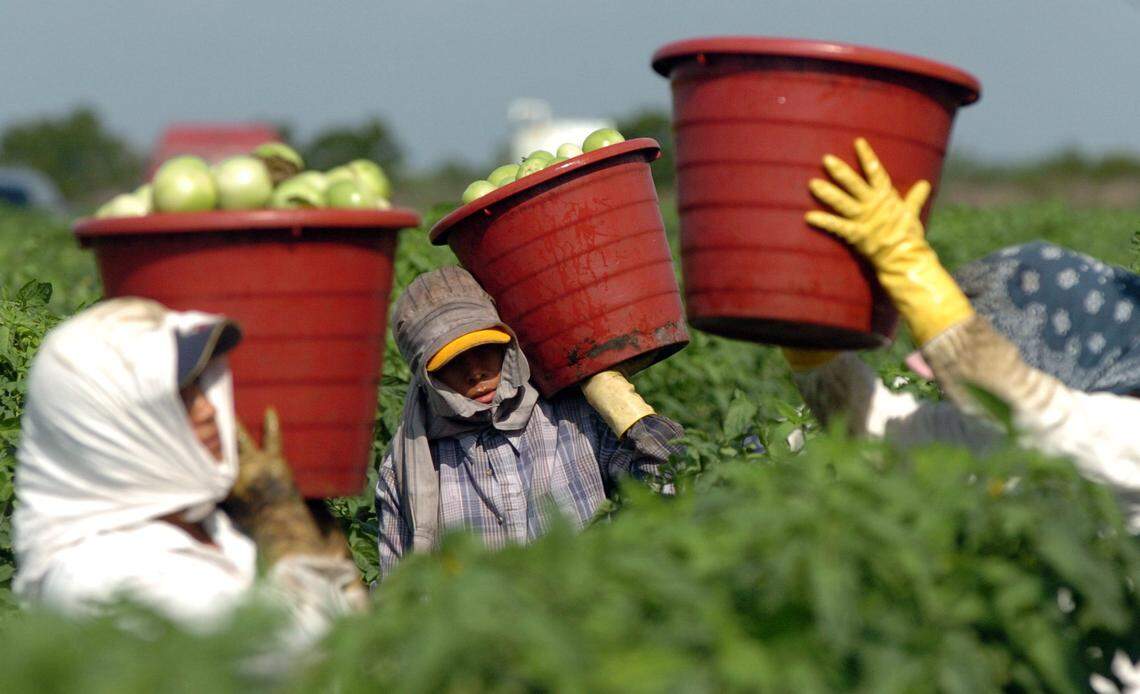
One farm worker at West Coast died from COVID-19 in May. Others have tested positive for the disease, although many are asymptomatic, Spencer said.
“We have changed a lot of protocols at our company. Now it is one worker per row on the bus when in the past there would have been two, and we require them to wear masks and social distance,” Spencer said.
It is difficult for the farmworkers, because they don’t have the ability to isolate or quarantine, and COVID-19 has spread through the farmworker community, he said.
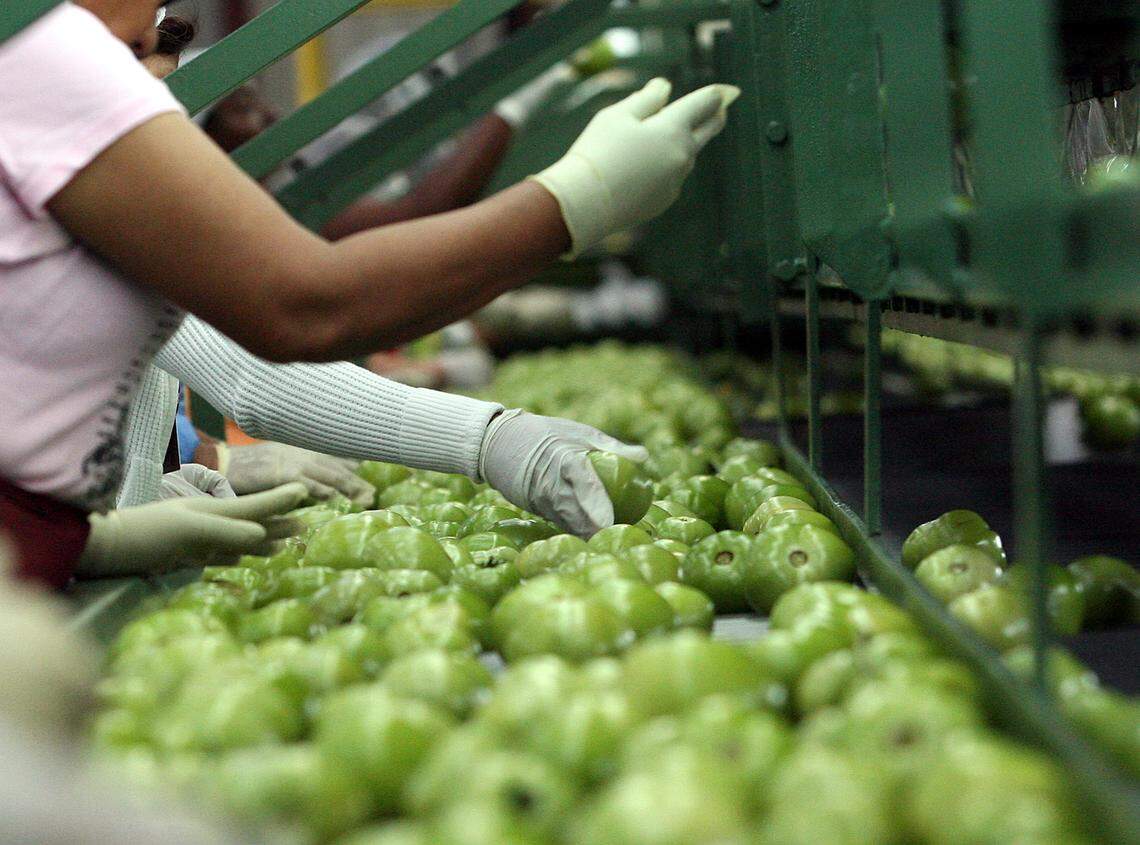
Volunteers with Doctors Without Borders are among those who have been testing farmworkers to try to help inhibit the spread of the disease, Spencer said.
“It is a serious issue and it has a greater impact as you age. We take this seriously,” he said. “This is a big issue for everyone.”
Luz Corcuera, executive director of Unidos Now, a nonprofit created to empower Latinos to achieve their American Dream in the Bradenton-Sarasota area, said the pandemic caused fear throughout the farmworker community.
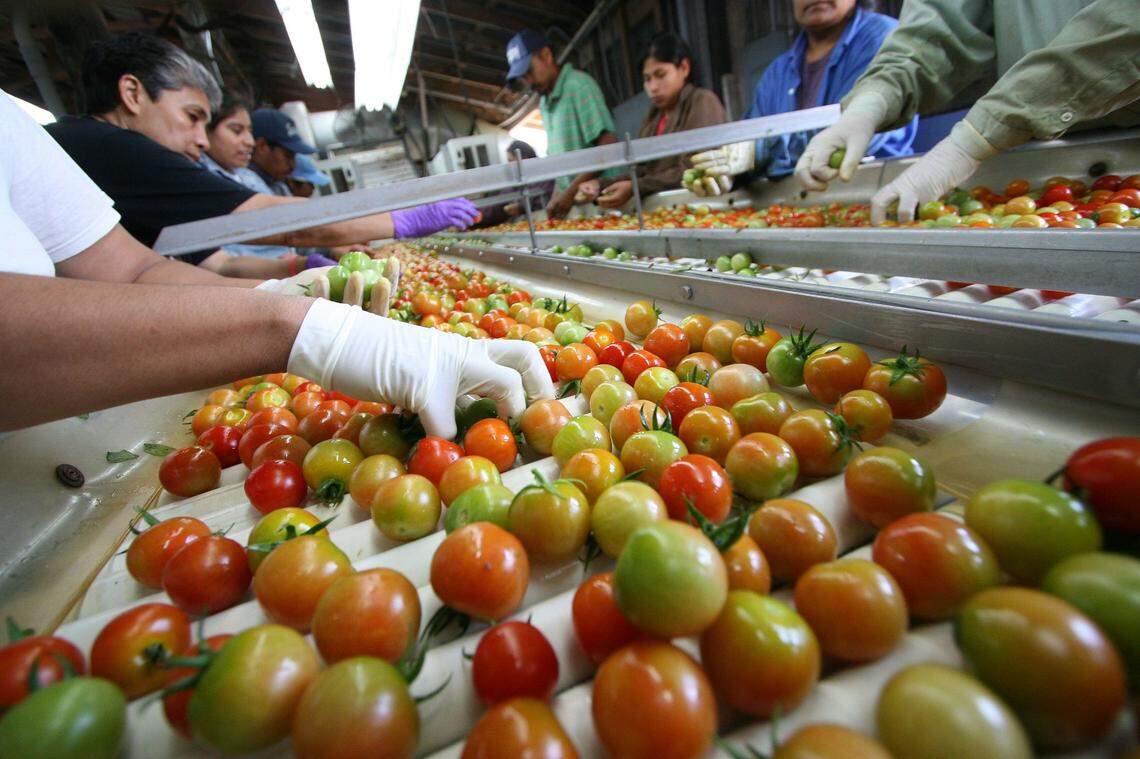
“They don’t have health insurance and they aren’t close to healthcare facilities,” Corcuera said. “It is very difficult and scary for the community.”
Many of the migrant farmworker community are not in Florida right now but working seasonal crops in Michigan, she said.
“In general, they are a very close, tight-knit community. We have to stay positive and remain hopeful,” Corcuera said.
The state is trying to protect workers as well, according to Christopher Tittel, communications director for Florida Department of Health-Manatee County, by making tests available through expended testing capabilities statewide and working with other agencies.
“The Department is engaging with farming communities and migrant camps to strengthen and foster relationships by distributing cloth face coverings and COVID-19 testing opportunities,” he wrote via email.
“The Department of Health, in conjunction with state and local leaders, is working with the medical community, federal health clinics, and local hospital systems to ensure that every farm worker can receive a COVID-19 test.
“DOH-Manatee has conducted specimen collection and educational outreach in partnership with local agencies, businesses and nongovernmental organizations that serve farmworkers (migrant labor camps, flea markets, food banks, Latin and Caribbean grocery stores, faith-based organizations, etc.). Material has been distributed in English, Spanish and Haitian Creole. DOH-Manatee has also partnered with a local Spanish-language radio company to help reach this population.”
Tittel declined to provide any information on the number of COVID-19 cases that have been reported in the farmworker community.
Farmworker recognition
In recognition of the pandemic and those who bring in the crops, the Manatee Farm City Week committee has chosen the theme: “Original essential workers – Ag is here to stay!” Farm City Week will be observed Nov. 18-25, the week leading up to the Thanksgiving holiday.
Most other details about Farm City Week events are in flux, including the annual bus tour of farming operations.
“We will have some kind of events, but it depends on what the COVID-19 numbers do,” said Crystal Snodgrass, Manatee County extension director. “Our plans are flexible.”
In the interim, the farm-city week committee is inviting nominations for Manatee County Outstanding Agriculturalist and Agriculture Hall of Fame, honoring those who have contributed to the success of Manatee County’s agriculture industry. This includes farmers, industry representatives, crop consultants, agriculture educators and others who have had a significant impact on Manatee County’s agricultural industry. Nominations must be submitted by Aug. 31
Outstanding Agriculturalist nominees must be current members of the community; the awardee will be honored during the Kiwanis Club of Bradenton Farm City Week Luncheon on Nov. 17. Nominees for the Manatee County Agriculture Hall of Fame may be living or deceased and will be honored at the Hall of Fame Luncheon on Nov. 19.
Nomination forms and award guidelines may be obtained by contacting Wendy Henry at the Manatee County Extension Office at 722-4524 ext. 1811 or at w.henry@ufl.edu.
This story was originally published August 3, 2020 at 4:07 PM with the headline "Farm life has never been easy. COVID-19 adds a new layer of stress for workers, growers."
