Need a hospitality gig — or a hospitality worker? A new platform is launching in Miami
Maximiliano Diaz, 21, works two jobs. One is a full-time gig as a bartender. The second is ... well, whatever he can get.
Thanks to a new platform launching in Miami this week, these short-term gig jobs are getting easier for Diaz, a Coral Gables-area resident, to find.
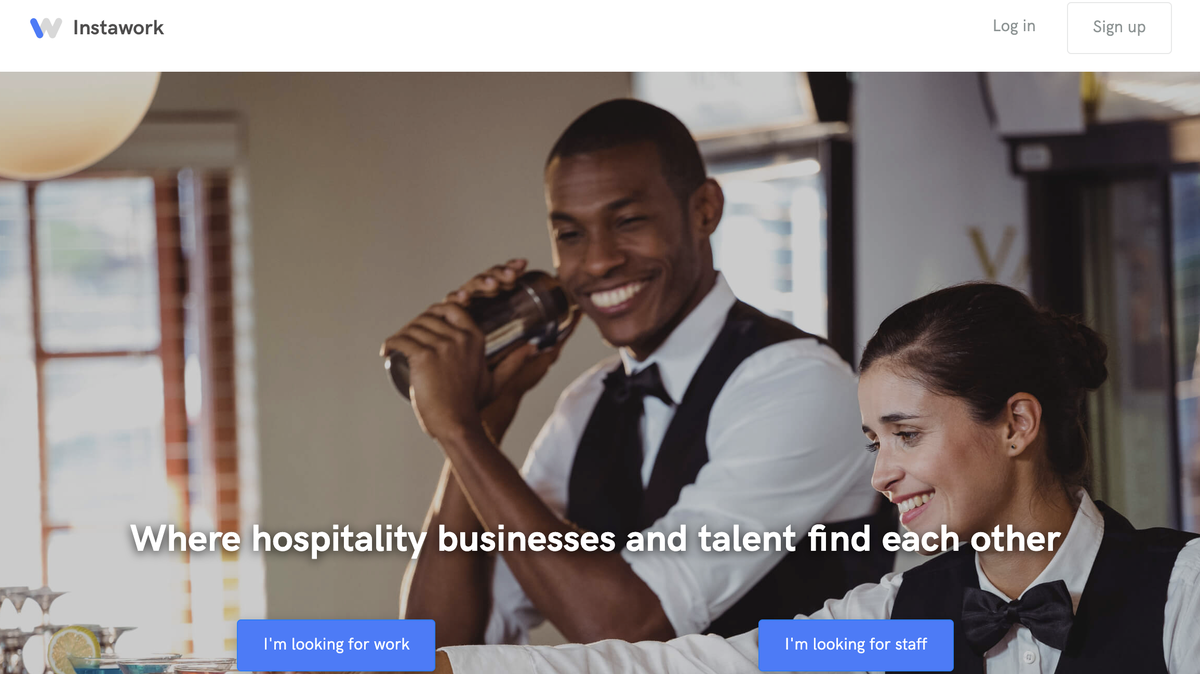
The platform is called Instawork. It’s part of a growing cohort of apps looking to connect companies hiring for short-term gigs — such as waiting tables, bartending, or catering — with local workers willing to take them.
Instawork has been around for several years on the West Coast. At the end of December, it launched in Austin, Texas, where the company says it has already been downloaded more than 6,000 times. An Instawork worker makes an average $16 an hour per gig, according to the company. Instawork makes money by charging a $10 booking fee.
Miami is Instawork’s 14th city — but unlike in other markets, the company is aggressively going after the area’s immigrant and Spanish-speaking workers. Regional General Manager Andreina Morales says many of these professionals are well-qualified and simply need a trusted — and mobile friendly — way to find work.
Many in this category, she says, “Don’t know how to navigate staffing agencies or flex work.”
For employers such as Bill Hansen, a long-time Miami-area caterer and Instawork’s local advisor, there is a particularly urgent need for platforms such as Instawork. Although Miami has plenty of hospitality workers, the hiring network here remains weak, he says.
“Miami hasn’t matured enough,” he said, to the point where one can find reliable hospitality talent at a moment’s notice.
The launch of Instawork comes directly on the heels of Uber’s own professional gig platform, Uber Works. It’s a sign that large tech companies see a market for tapping into gig work, which comprises an increasingly large share of the labor market.
At the same time, lawyers in some states have increasingly put gig work under a microscope. Massachusetts’ attorney general recently settled with one healthcare-gig platform company, called Stynt, to ensure that workers hired through it would be treated as full-tme employees. That company does not operate in Miami. And last year, California passed a law restricting the ability of employers to treat workers as independent contractors. That legislation has led to some backlash among frequent giggers.
Instawork gives employers the option of hiring workers as either W-2 or 1099 workers.
Barry Asin, president of Staffing Industry Analysts, a workforce solutions advisory, says no clear “winner” has emerged among the platforms. Indeed, he says, there is likely to be further fragmentation— which might give companies that aim at specific industries an advantage.
“It’s still the early days in terms of how the rest of the gig economy will shape up,” he said. “Driving and food have been the tip of the spear. The question now is how things will shake out for every other type of job.”
For Diaz, the Instawork app’s ease of use is its trump card. He says that in the three months that he has been on the app, he has picked up 10 gigs. He declined to say how much he has earned but said the offers on the app seem to be better-paying than other similar gigs. And unlike some other services, Instawork uses direct deposit.
“I think it’s going to take off,” he said.
This story was originally published January 17, 2020 at 7:00 AM.