
Government should act to address high drug costs, Gables pharma CEO says
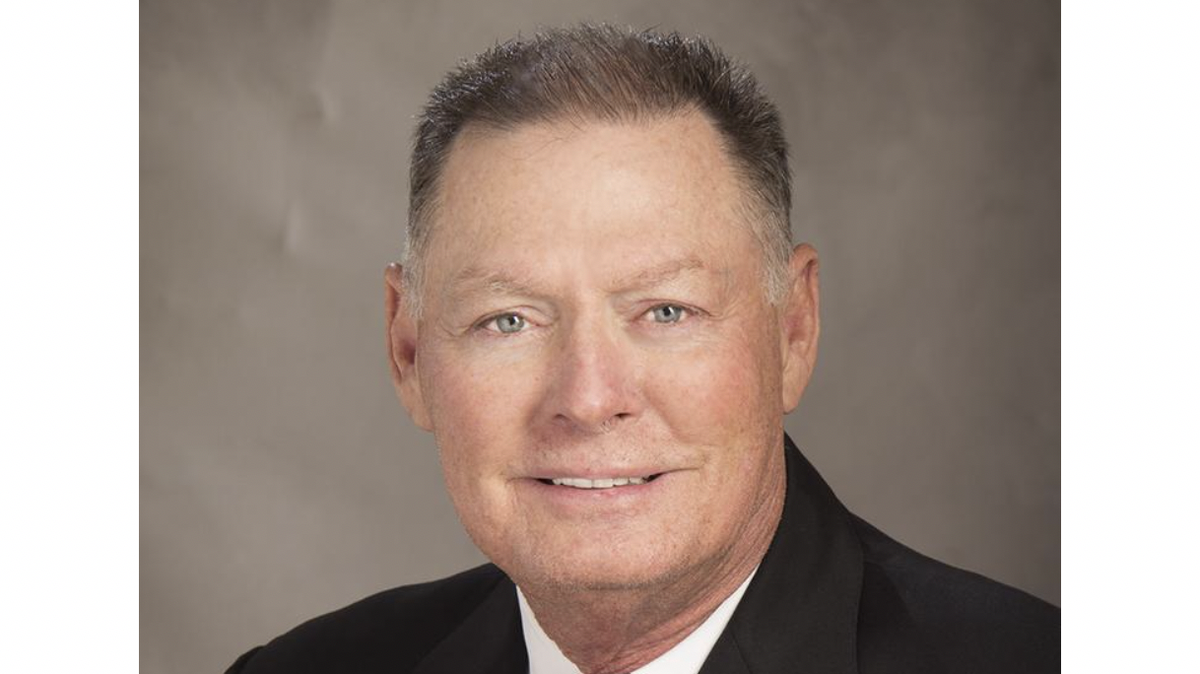
After years of development, regulatory hurdles and consumer testing, Coral Gables-based Catalyst Pharmaceuticals announced in December it was ready to bring Firdapse, a drug that treats a rare neuromuscular disorder, to market.
The annual list price: $375,000.
It’s a figure whose range has become increasingly common thanks to the Orphan Drug Act, which allows companies like Catalyst to obtain extended patents for drugs that treat diseases or conditions afflicting fewer than 200,000 individuals if a company can successfully bring it to market. In recent years, an increasing number of firms have taken advantage of these protections while marking up prices of orphan drugs.
When the Miami Herald checked in with Catalyst in 2015, uncertainty loomed over whether the company’s gambit to patent Firdapse would pay off: A different version of the drug was already available for compassionate use cases and attainable for free from another company, Jacobus. Catalyst said in 2015 it had already invested more than $30 million in the drug; it has since invested an additional $11 million, according to public records. It has been operating at a net loss since at least 2014.
The plan seems to have paid off: In a recent call with analysts, CEO Patrick McEnany noted the current median of analysts’ forecasts had the company reporting revenues in 2019 of $41 million, though he declined to verify whether he agreed with the forecast.
Companies like Catalyst say the financial gains that can come with the Orphan Drug Act’s extended monopoly are necessary to develop treatments for conditions that are both unusually uncommon and debilitating. (Only about 3,000 to 3,500 people suffer from LEMS.).
Reports indicate some insurers are willing to pay the list price, though there are sometimes discounts involved. According to pharma news group StatNews, a recent survey showed orphan drugs represent “a ‘very’ small part” of insurers’ budgets, comprising between 4 percent and 6 percent of spending. A Catalyst spokesman said it consulted with insurance payers and patient groups before setting the price for Firdapse.
Almost immediately after Catalyst announced its pricing scheme, the company received a letter from Sen. Bernie Sanders of Vermont demanding the company justify it.
“By setting such a high price and forcing production and distribution of the older, inexpensive version to cease, you are threatening access that patients had to a cheap version of this product, and handing a completely unwarranted bill to American taxpayers,” Sanders wrote.
The letter is part of a broader public backlash against spiking drug prices, and Orphan Drug-related cases in particular. Most notoriously, Martin Shkreli, a young pharmaceutical entrepreneur, raised the price of a drug used by AIDS patients from about $14 to $750 in 2015. He was later convicted on unrelated financial fraud charges. Drug maker Mylan has also been the subject of public scorn after it slowly raised the price of EpiPens before a generic was introduced.
Even the author of the Orphan Drug Act, former Congressman Henry Waxman, has decried the new pricing schemes, saying the law was not designed to encourage markups. According to the Organization for Economic Cooperation and Development, Americans spend more on drugs per year, about $1,200, than any other country in the world.
In response to Sanders’ letter, Catalyst replied that was addressing a significant unmet medical, and that many patients would be receiving financial assistance in addition to whatever insurance coverage they received. The company said more than 300 LEMS patients have enrolled in “Catalyst Pathways,” which is Catalyst’s comprehensive patient services program for LEMS patients, and that more than 250 LEMS patients are currently being treated with Firdapse. It declined to say how many patients are not receiving assistance, but said patients could receive it for free if their insurance had not kicked in.
In a recent interview, McEnany explained the history of Catalyst, why it chose to develop Firdapse, why he believes it is necessary to have such a drug approved by the FDA, and the mechanics and politics of drug pricing. The following Q&A was edited for length and clarity.
Q: Firdapse, or its active ingredient, was already available for free or a few hundred dollars a year to most patients. Why did Catalyst go after this drug?
A: We estimated about 300 patients already had access before [Firdapse was] approved. Some of those were in our patient payment assistance program, some in a different compassionate use program. We said all along when we were getting ready to launch this drug that the goal was to get as many of those patients transitioned to a commercial, FDA-approved product as seamlessly as possible, so they would never miss a dose.
So we’ve been at it for two months, and our initial goal was to have 300 patients on the commercial drug by the end of Q2...and I’m happy to announce that we’ve got over 300 patients in the patient-assist program, Catalyst Pathways. Of those 300 patients, 250 are already on the drug. Not all have been processed by their insurers. Until then, Catalyst is giving it out for free until the insurance kicks in, or if insurance doesn’t kick in for one reason or another.
We have 165 individual doctors who have each written one prescription, which is pretty good prescription coverage in just two months. We know plenty of patients out there who didn’t have access to the drug, or weren’t aware of the drug, or their physician didn’t want to participate in compassionate use because [the FDA had not approved the drug]. We’ve had 39 patients in the past five weeks who through the Catalyst Pathways patient-assist program are now receiving drugs from us.
And since we’ve announced the release of Firdapse, none of the insurance companies, including Cigna, Aetna, Caremark — so far, with few exceptions, every payer that has been presented with a claim has indicated that they would cover Firdapse. So we’re pleased to see that as well.
Can you talk about the founding mission of Catalyst? Was the original goal to leverage the Orphan Drug Act?
Based on our founding in 2002, we were looking to provide drug therapies to patients that had unmet medical needs. We were founded on the basis of a license to treat stimulant dependence, specifically cocaine and methamphetamine. Two million people are addicted to stimulants, and tens of thousands are dying every year. We were pursuing that initially. Those treatments are not orphan drugs.
So we partnered with the National Institute on drug abuse to bring a treatment to market, all based on behavioral or psychotherapy platforms. And in a pivotal study, it blew up. The drug did not work in that population of crack cocaine addicts. We spent $50 million to try get that drug approved. Unfortunately stimulant-dependent addicts are not compliant people...which made it difficult to do a proper study.
Right before the readout on that study came out, we acquired the North American rights to Firdapse from BioMarin, which is based near San Francisco and had been selling it in Europe. We believed there were 3,000 patients [with LEMS], and recognized this was an unmet medical need — there was no drug available with FDA-approved evidence to treat this population. We knew about Jacobus [the existing compassionate use program for LEMS patients]; for over 20 years they had treated 200 or 300 patients but never pursued a new drug application.
We felt 2,700 patients weren’t getting this drug, and we wanted to get it approved so all patients would have access. That’s what sent us off on this mission.
We and BioMarin have conducted over 70 clinical and non-clinical studies to get this approved. That gave us breakthrough therapy and priority review. The FDA would not have given us these various designations if they didn’t believe there was an unmet medical need, if they thought patients were being adequately serviced by Jacobus.
So now, all patients have affordable access, at less than $10 a month, and all their doctor has to do is write a prescription. They don’t have to travel hundreds of miles or go through enormous mountains of forms [required for compassionate care access]. There’s now affordable access for everybody.
How did you arrive at a list price of $375,000?
We spent about a year on that. High drug prices have been an issue since Hillary [Clinton] started tweeting [about prices of orphan drugs] in 2015, and it’s certainly caught bipartisan attention. So it’s not a new issue.
Ultra-rare disease drugs for patient populations with less than 6,000 patients in the U.S. are all fairly high priced. The reason is, you spend tens or hundreds of millions to get a drug approved. You have to follow all the statutory requirements — there are 70 or more studies FDA requires. So to make it worthwhile to pursue, they are all typically higher priced. There are 7,000 drugs with the Orphan Drug designation. Only 5 percent of [rare] diseases have an approved drug therapy. The only way you can afford to study these drugs in a clinical lab setting [is if insurance payers] do pay these kinds of prices.
[Insurance] payers are used to [paying out for treating rare conditions].... Payers want to know the clinical benefit. They want to know that we’ve had a clinical study, [and that the drug] has improved the lives of patients. And so payers pay for these drugs.
We spent about a year pressure testing various price points, consulting big pharma companies, especially in rare disease space, establishing a committee with some outside consultants to pressure test various price points. Ultimately our recommendation had to be approved by our board, so this didn’t happen in a vacuum.
The most important thing: We have programs in place for patients. We know patients can’t afford $375,000 a year. Under Catalyst Pathways, we provide a $10 copay to commercial patients who [are uninsured], and most Medicare patients pay nothing. I’ve got to say, patients and physicians are thrilled with these programs .
How much did Catalyst spend to develop FDA-approved Firdapse?
Well, we conducted clinical trials all over the world, 25 sites — around the U.S. including the University of Miami, and a commercial site in South Miami. In the first trial, we had seven or eight European sites, East European. You don’t do these trials in a vacuum. We have to pay medical staff, our chief commercial, chief medical, all the attendant costs go with it...We have a cumulative loss … BioMarin spent a lot of money on nonclinical studies; we’ve done an awful lot on direct and indirect studies. It’s in the tens of millions.
Across the board, drug prices generally seem to keep going up. How can these costs be contained?
That’s a policy issue I can’t address. We’ve talked to a fair amount of folks in Washington. We know it’s a bipartisan topic, and I get that. I’m not sure what the fix is. I’m not sure I’m in a position to know the solution to the problem. I do know patients have these rare diseases, and that companies like Pfizer and Bristol Myers Squibb are not in the rare-disease space and don’t pursue these particular drugs.
If your child has muscular dystrophy, all of a sudden these things become very important. If you’re delivering value and giving someone back their life — patients who couldn’t pick up their grandkids anymore because they were so weak, and now they can; or they don’t have to go around Disney in a wheelchair — I don’t know how you put a value on that.
Can you say a bit more about Catalyst’s footprint in Miami?
I live here and love Coral Gables and love Miami. I was previously chairman and CEO of a generic drug firm in Miami Lakes, then in 2002 co-founded Catalyst. Just in May of last year we had 18 employees, and today we have 56 and are continuing to grow. We’ve moved offices three times. We’re a virtual pharmacy company, so we don’t do manufacturing — we contract manufacturers that manufacture our drug, and our supply chain is all outside the state of Florida.
We’re currently pursuing treatments of three other neuromuscular disorders using Firdapse, or the Firdapse platform, doing pivotal studies [as we look to expand] beyond LEMS. We’re expanding our business, for medical affairs, liaisons...our business continues to grow even at our home office, [with] regional account managers, sales reps, patient access liaisons in the field helping patients. And then we have a specialty pharmacy in Memphis. I think between direct employees and the vendors that do work for us, there are hundreds of lives that touch our product.
This post has been updated.
This story was originally published April 8, 2019 at 7:00 AM.