
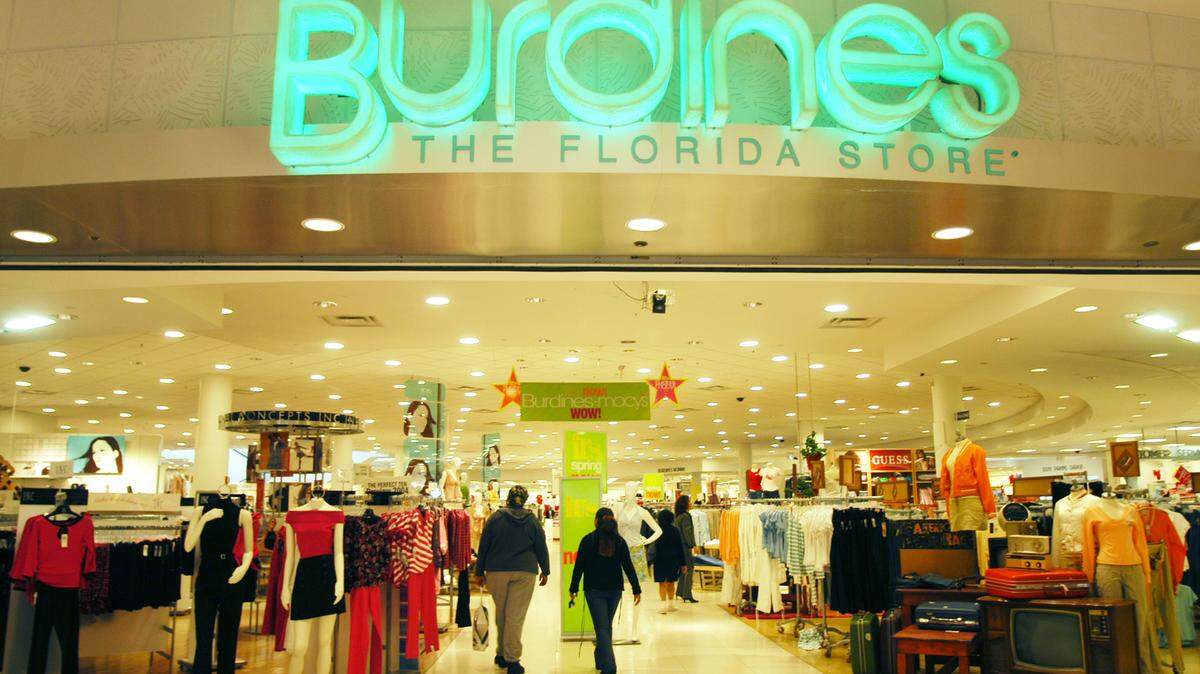
We remember Burdines. But what about Jefferson’s and other departed department stores?
Way before Amazon ruled the shopping world, and before Target and Walmart came to town, there was Zayre.
And Ames. And Mervyn’s. And JByrons. And Jefferson. And Richards. And Jordan Marsh. And Burdines. And Gold Triangle.
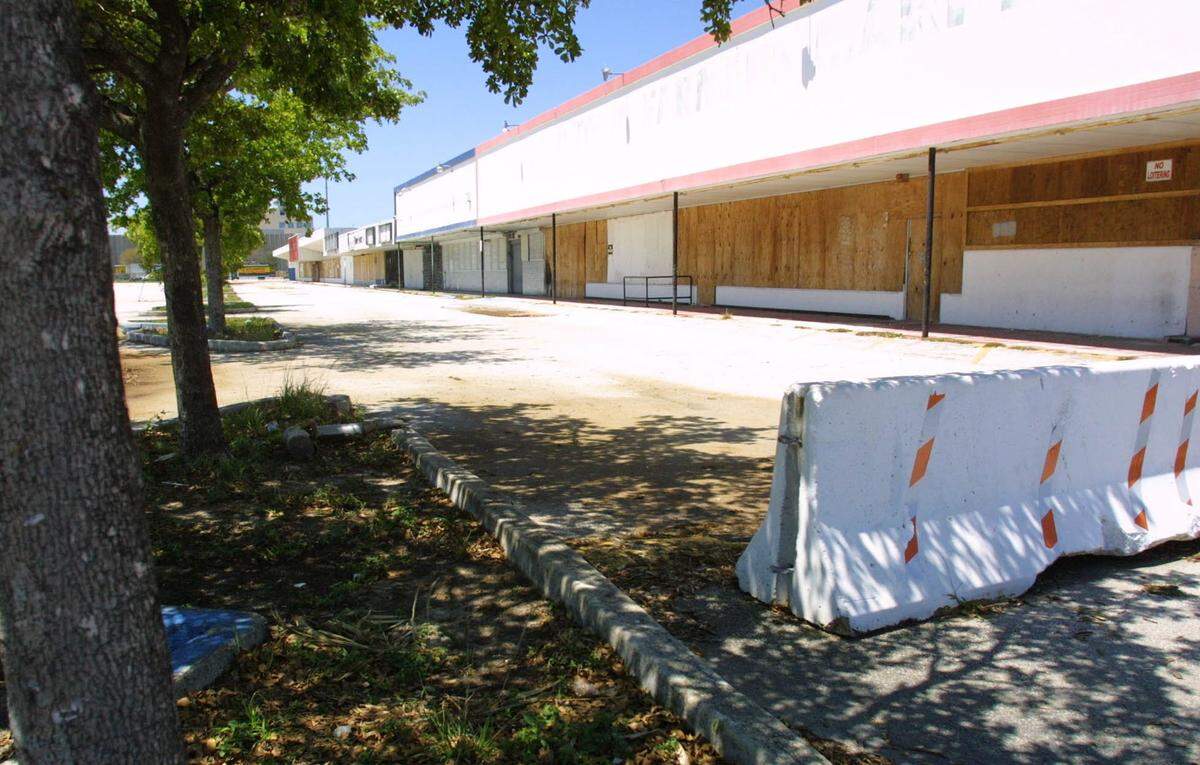
South Florida is a landfill of department stores that have disappeared through the years.
What are your memories of these stores of old? Let’s take a trip through the Miami Herald archives and go shopping.
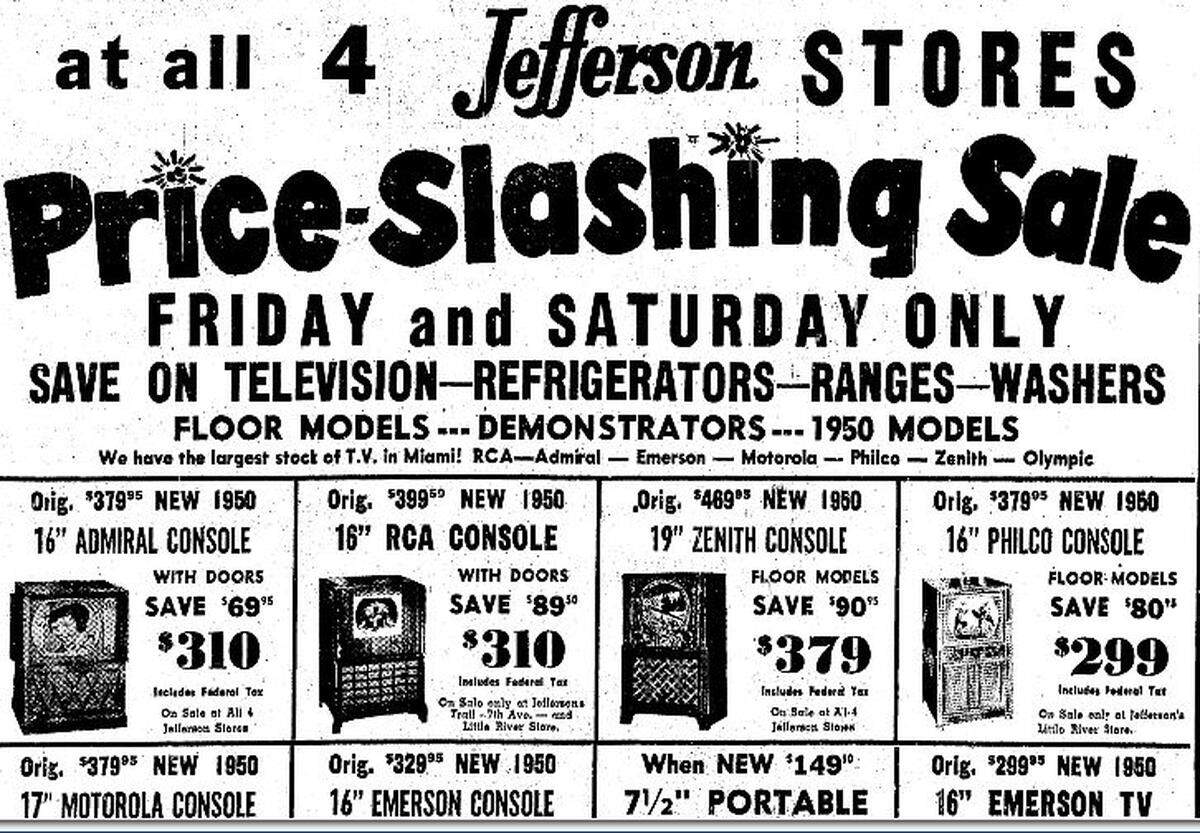
JEFFERSON
Published Aug. 11, 1985
Just after World War II, Jules Mufson, an Army veteran and CPA from New York, came to Miami with $50,000 to start a tire store on the Tamiami Trail.
Mufson wanted to name the store after Andrew Jackson, but Miami already had a store called Jackson Byrons — now JByrons. So he settled on the Jefferson Co., borrowing the name of the nation’s third president to appeal to his southern clientele.
As South Florida grew, so did Jefferson. From a tiny dealership peddling scarce postwar tires, Jefferson by 1973 had become a 10-store discounter of appliances and apparel from Miami to West Palm Beach, with more than $60 million a year in business. Jefferson’s formula for success was simple: Knowing its customers, knowing its niche in the marketplace — and, as when Mufson named his store — knowing when not to compete head on with entrenched rivals.
Enter Montgomery Ward, Chicago-based retailing giant, which in 1973 bought Jefferson and set the stage for the collapse of the empire Mufson built.
“Montgomery Ward undermined the success of Jefferson’s, and you can quote me on that,” said David Kenny, president and chief executive officer of Jefferson from 1977 to 1981. “They weren’t making money in Chicago, but they insisted Jefferson’s carry their merchandise, which was inferior in quality and price. It was not suitable for South Florida. This was a Harvard Business School case of what not to do.”
Kenny’s view of what happened was echoed by former Jefferson executives and analysts interviewed last week. Jefferson Ward Last May, Ward put Jefferson up for sale. The company laid off 200 of its 500 Miami headquarters employees in July and canceled merchandise orders and advertising after September.
A liquidating company came in last week to sell off the merchandise. In the absence of a buyer, the stores will be closed after the back-to-school season, at a cost of some 4,500 jobs.
“I get sentimental about it,” said Mufson, who retired from the company in 1978 and lives in Miami Beach.
“I’m sorry to see the turn of events. I was the original worker. My brothers, Sam and Harry, later joined me. We made a lot of money, and I felt good when things were going well. I guess nothing is forever.”
Officials at Montgomery Ward, now the nation’s sixth largest retailer, refused to be interviewed for this story “Every aspect of the company is under review and study,” said Ward’s spokesman Chuck Thorne. “We’re not granting interviews at this time. There is too much change in the company.”
Analysts and former Jefferson executives, however, cite as the main reasons for the demise of the Florida-based retail chain Jefferson moved away from offering discounted, brand-name appliances and apparel and into more expensive goods carrying the Montgomery Ward label.
This strategy blurred its image as a discounter and confused shoppers. Ward mismanagement filtered down to Jefferson. A constant stream of managerial and policy changes at Ward meant frequently changing gears at Jefferson, which Ward tried to run from Chicago. Ward, under pressure from its parent company, Mobil Corp., set Jefferson on a costly and unsuccessful expansion that in 18 months from 1979-81 added 38 stores along the East Coast to the 13-store chain.
The result: Jefferson lost more than $200 million between 1980 and 1984. The chain this year is expected to turn its first profit since 1979 because of Jefferson’s return to its old formula.
But it is too little, too late. In the 1960s and ‘70s, Jefferson had been a profitable discounter of a wide assortment of brand name appliances, housewares and apparel. It relied on high turnover and a heavy advertising program.
But when oil prices rose during the early 1970s, triggering inflation and industrywide recession, Jefferson lost money. The Mufsons — who held a majority of shares in the chain — decided to sell out. In 1973, Ward was looking to expand. With 360 stores, mainly in the Midwest and West Coast, the Chicago retailer saw Jefferson as an easy entry into the lucrative Florida market and bought the chain for $37 million in stock. Ward immediately set about replacing Jefferson’s discount brand-name goods with more expensive Montgomery Ward-label appliances and fashions.
Jefferson became a hybrid between the discounter it had been and a conventional department store, a la Montgomery Ward. It ended up being neither a discounter like K mart, nor a mass merchandiser like Sears or Penney’s.
“The Mufsons developed a formula in Florida that had worked since 1946,” Kenny said. “They had lower prices, heavy promotions and a wide assortment of merchandise.”
The Mufsons understood their market. They catered to retirees, to lower-income shoppers and to higher-income customers with special promotions.
“You could look out at the parking lot on any day and see everything from pick-up trucks to Mercedes,” Kenny said. “Then Montgomery Ward came in and tried only for Buicks and Oldsmobiles. It just didn’t work. The bulk of the sales were going to the people in the pick-up trucks, and they soon went over to Zayre and K mart.”
Said retail analyst John Landschulz of Mesirow & Co. in Chicago: “I question whether it is wise to join a discounter with a conventional store. The promotions, controls and markets are all different. The failure of this venture was in the wind. Jefferson’s should have been put into a holding company and managed on its own. Montgomery Ward ruined it.
“Retailers have to have their own character. When you disturb that, you get into trouble. Jefferson’s turned into a hybrid that bombed out.”
Ward’s style of management was also to blame, Landschulz said.
“Montgomery Ward ran on a traditional set-up similar to Sears, with a central office and various regions,” he said. “But Jefferson was a local store, and when it got hooked into the system, it got lost. Jefferson Ward was never critical to Montgomery Ward’s success, so it didn’t get much attention. And that hurt Jefferson’s. It is a business where you have to pay attention to every detail.”
When Mobil became impatient with Ward’s declining profits in the late 1970s, Jefferson became the focus of efforts to bail out Ward, an ambitious strategy that plunged Jefferson into the red.
More than a third of Ward’s 360 stores, many of them unprofitable, were to be converted to Jeffersons. Mobil also mandated a $300 million expansion program to spread the then- successful Jefferson chain up the East Coast, which brought the chain to a high of 51 stores in Florida, Tennessee, Delaware, New Jersey and Virginia by 1981. Many of the new stores were opened in locations where other retailers had failed.
Former executives and analysts agree that of all Ward’s sins, it was the hasty, expensive and ultimately unsuccessful expansion plan that did Jefferson in.
Jefferson converted eight Ward stores into Jeffersons, one each in Melbourne, Cocoa Beach, and Daytona Beach, two in Orlando and three in Jacksonville.
Outside of Florida, Jefferson took over the former locations of Almart/J.B. Hunter stores in Tennessee, Delaware and Pennsylvania; former J.M. Fields stores in Pennsylvania, New Jersey and Florida; Murphy stores in Richmond; Two Guys discount stores in greater Philadelphia. Jefferson also opened a single store in Bluefield, W.Va.
“Ever since the big expansion, Jefferson had a lot of problems,” said company founder Mufson. “They never should have moved out of Florida.”
Analyst Herb Leeds of Leeds Business Counseling in Miami agrees: “Jefferson’s over-expanded and moved into markets it shouldn’t have been in.”
Ward lost a total of $415 million in 1979-82; even when it became profitable in 1983 and 1984, its profit margins were below 1 percent. Jefferson lost at least $200 million between 1980 and 1984. Its profit had been 4 percent in both 1978 and 1979, pre-expansion years.
The expansion was halted in 1981 as a result of one of the frequent and drastic management changes that marked the early 1980s, both at Ward and Jefferson, and which further exacerbated the confusion over Jefferson’s direction.
“The Ward company was in turmoil and in rapid change,” Landschulz said.
Stephen L. Pistner, a former Dayton-Hudson president, swept through Ward’s executive suite in March 1981, replacing senior executives and reversing almost all of the expansion and merchandising programs set in motion by his predecessor, Edward Donnell.
Since 1976, Jefferson has had six changes in chief executive officer, three of them in the past year and a half.
“You can’t have so many CEOs without directional or managerial instability,” said one of those who held the post.
Finally, when Gerald Nathanson took over in early 1984 for a second term as CEO, brand names returned to Jefferson’s shelves and the chain’s losses began to turn around. Nathanson bailed out in May when the sale of Jefferson was announced.
Since then, Bradlees, a division of Stop & Shop, bought 18 Jefferson’s stores in Pennsylvania, New Jersey and Delaware. That left 23 stores in Florida, along with three in Virginia that are likely to close. Zayre, K mart and other discount chains are considering taking over the leases of some of the Jefferson stores.
Retail analysts and former Jefferson’s executives now say the sell-off of Jefferson’s amounts to the only smart alternative for Montgomery Ward, which further trimmed back earlier this month when it closed the book on its 113-year-old catalog operation.
“It was just a matter of time,” one former Jefferson’s executive said. “Montgomery Ward is doing the right thing. If you take a huge company that wants to do better, the first thing you cut is the thing outside of the main event. That’s Jefferson’s. It was doing great compared to Montgomery Ward. But it was like the tail was wagging the dog.”
.JPG "0102121497 (1).JPG")
AMES
Published Jun 9, 1990
Continuing the bloodbath in the retail industry, Ames Department Stores Inc. said Friday it will shut down its 82 Florida stores as part of a deep retrenchment.
The giant discount chain will close 221 stores — including 33 announced earlier this year -- and lay off nearly 18,000 employees in 16 states. In Florida, about 7,000 employees will lose their jobs.
Ames will conduct liquidation sales at the stores, including 27 in South Florida, over the next few months and close them in August or September. There are 12 Ames stores in Dade County, 11 in Broward, three in Palm Beach and one in Monroe.
“I feel so bad,” said one employee Friday, as she left the Ames store on U.S. 1 and Southwest 32nd Avenue. She said she can’t afford to be without work and recently started working a second job because she feared the store would close.
The closings, which represent nearly a third of Ames’ 679 stores, still must be approved by the U.S. Bankruptcy Court in New York, where Ames filed Chapter 11 bankruptcy protection from creditors on April 25. At the time of the filing, Ames listed $1.44 billion in liabilities and $1.66 billion in assets and employed about 55,000 people.
Ames is betting that by closing the 221 stores, which posted an operating loss of $47.5 million for the year ending Jan. 27, it can salvage the remainder of the company.
Ames, which lost $228 million last year, expects to realize approximately $180 million from selling off the merchandise.
“This is a critical first step toward our primary goal of leading Ames out of Chapter 11,” said Stephen L. Pistner, chief executive of Ames. “This downsizing will cut our expenses, reduce operating losses and allow us to focus our efforts on serving our customers.”
Earlier this year, Ames said it would close 33 stores. With Friday’s announcement, Ames will close another 188 for a total of 221.
Ames’ downfall, industry observers say, can be traced to its 1988 purchase of the 392-store Zayre chain for $778 million.
“Undoubtedly, it was the dumbest move in retailing since (Robert) Campeau bought Federated Department Stores and saddled himself with $7 billion in debt, “ said New York retail consultant Kurt Barnard.
At that time, retail chains were a hot commodity. But the retail industry has cooled, with sales softening nationwide as overspent consumers have reined in spending.
Since the start of the year, Campeau’s two U.S. retail divisions -- Federated and Allied Stores Corp., home to Miami- based Burdines and Tampa-based Maas Brothers/Jordan Marsh, among others -- have filed Chapter 11. Kaufman & Roberts has shut down its 20 stores, while Overseas Electronics has folded.
Ames had its own problems digesting Zayre. Zayre, founded in the ‘50s in Framingham, Mass., thrived for many years but had floundered in the 1980s with an overly ambitious expansion program that brought it to the South and Midwest but caused it to lose millions.
The merger more than doubled Ames’ size and transformed it from a small-town New England retailer into the nation’s fourth- largest discounter.
Ames converted the Zayre stores into Ames stores, a move that retail observers say proved deadly.
“The Zayre name meant something to the Zayre clientele,” said Carl Steidtmann, chief economist for Management Horizons, an Ohio retail-consulting firm.
To try to regroup, Ames, based in Rocky Hill, Conn., will operate a smaller base -- 458 stores -- in 17 states in the Northeast and New England.
It also is closing many of the Zayre stores — 184 of the original 392 acquired. All of the 82 Florida Ames stores, for instance, were former Zayre stores.
Mary Jenkins, 24, of Miami has worked at the Ames store at U.S. 1 and Southwest 32nd Avenue for six months, but she said expected the store to close.
She said many employees were suspicious because the store’s last major promotion was in April. Since then, prices have been slashed, and some employees were let go, including five last week.
“A few people looked surprised, but they’ve been told for quite a while that this might happen,” said Jenkins.

JBYRONS
Published Jan. 25, 1996
Byrons, the Miami-based retail chain that opened its doors nearly a century ago, will be gone by the end of the summer -- along with 900 jobs.
Byrons’ parent company, American Retail Group, will close 17 of the chain’s 54 stores, and convert the rest to Uptons, an Atlanta-based chain of mid-priced clothing, shoes and accessories stores also owned by American Retail.
Byrons’ headquarters in Miami also will close, and personnel at the company’s distribution center will be cut in half. The remaining chain will be run by Uptons’ headquarters in Atlanta.
With this move, Byrons will join the ghosts of South Florida’s retail past, but its parent hopes it can sidestep the tough environment that is squeezing retailers.
“In consolidating the two companies, we’re creating one company that is stronger,” said David Layne, chief executive officer of Uptons. “Yes, there are some jobs that will be eliminated, but the good news is 37 stores will be maintained, and we hope to build on those 37 stores.”
Callers to Oscar Gaetan, Byrons’ chief executive officer, were referred to the company’s public relations firm.
The consolidation will eliminate six unprofitable South Florida Byrons stores -- one in Dade, three in Broward and two in Palm Beach counties. The rest of the soon-to-close stores are located throughout the state.
In Dade, Byrons at the Skylake Mall in North Miami will be the only one to close. The other stores will convert to Uptons.
In Broward, American Retail will close Byrons at the Coral Ridge Mall, the Sunshine Plaza in Tamarac and Shopper’s Haven in Pompano Beach. And in Palm Beach County, it will close stores at The Shops at Palm Coast in West Palm Beach and the one in Delray Mall in Delray Beach.
The disappearance of Byrons doesn’t surprise industry observers. Byrons’ hold on the market had been weakening for years, lacking a focus with which to combat the increasingly fierce competition in clothing retail that has hurt even no- sleep giants like Wal-Mart, they said.
“The Byrons’ business has been vulnerable for some time,” said Herbert Leeds, president of Leeds Business Counseling, a retail consulting firm in Miami. “Byrons is in very tough competition with all of the mass-market discount retailers. There’s not much of a market for them to do business in.”
In recent years, Byrons eliminated home appliances and sold only clothing, shoes and accessories, characterizing itself as a discount department store. Positioned somewhere between more upscale Burdines and heavy-hitting discounter Wal-Mart, Byrons found itself in the most crowded sector of retail: moderate- priced clothing.
Still, it won its share of loyal customers who loved its bargains.
“I’m very disappointed that the stores are closing,” said Iris Barsimantov, who has been shopping Byrons since she came to Miami in 1961. “I like their prices. I’m going to miss those bargains.”
When the stores convert to Uptons, they will go slightly more upscale, said Uptons’ Layne. The Atlanta-based chain has similar prices to Byrons, but more brand-name merchandise throughout the store.
“In a market like Atlanta, they have done exceptionally well,” said Brenda Gilpatrick, a retail marketing consultant based in Atlanta. “They have good name brand merchandise, good prices and good customer service.
“I think they have a really good chance (in South Florida),” Gilpatrick said.
That remains to be seen, industry observers here said.
“I’m always happy to have a quality merchant in the shopping center,” said David Eisendstadt, director of leasing for Palm Springs Mile in Hialeah, where Byrons operates one of the stores that will convert to Uptons. “It’s a question of whether the community will respond to them.”
“They need to spend some time thinking what they’re about, who they will target, who their core market will be,” said Stephen Bittel, president of Terranova, a real estate management and brokerage firm in Miami. “That has been Byron’s problem. They haven’t addressed who they want to appeal to.”
Byrons’ roots go back to Byrons Red Cross Pharmacy on Flagler Street. The drug store opened in 1898, just two years after Miami was incorporated. In the 1940s, it merged with Jackson’s, an Allapattah department store. That produced the Jackson Byrons chain. It later became JByrons, and the J was dropped in 1992.
Eventually, it was purchased by the Eckerd drugstore chain and grew to more than 60 stores throughout Florida. In 1985, Eckerd, fighting a takeover bid, sold the chain to American Retail for $121 million.
Byrons’ sales at the time of its buyout were $220 million annually. American Retail will not disclose current figures.
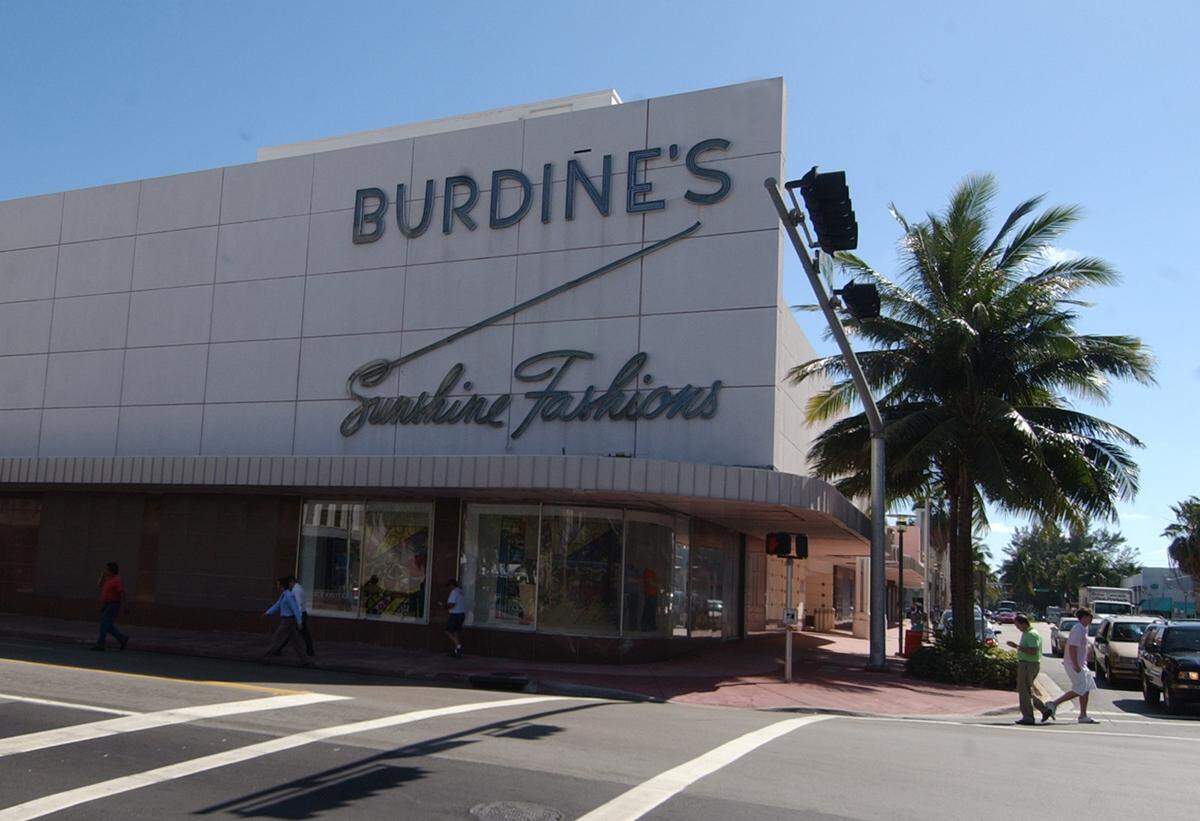
BURDINES
Published Sept. 28, 1998
“We will say that we expect, as in the past, to carry reliable up-to-date goods and sell them as low as any reputable dealer. We expect by honorable, upright dealing, to merit a share of your patronage, as well as your good will. Yours to please, W.M. Burdine & Son.”
First Burdines ad, Miami Metropolis, Sept. 2, 1898
When William Burdine opened W.M. Burdine & Son in downtown Miami in 1898, the frame shack at the southwest corner of Avenue D and 12th Street (today’s Flagler Street), was more like a frontier trading post than a department store.
The 1,250-square-foot dry goods and furnishings store held only a few shelves with goods such as work uniforms, notions, jars of rock candy, shoes, lace curtains, hosiery, umbrellas and table linens.
And the population of Miami was about 1,200.
It was a far cry from today’s vast department stores, filled with specialized departments for clothing, cosmetics, shoes, accessories and home furnishings. But the customers actually had a lot in common with today’s shoppers who hop in the car, hit the ATM, and travel down the highway to get to the large department stores.
In the 1890s, some of Burdines’ best customers were the Seminole and Miccosukee Indians. They came by canoe, sold their alligator and otter hides, then took the cash to Burdines, where they would buy bolts of cloth, vests, derby hats and ostrich plumes.
The stores’ focus on customer service hasn’t changed much over the century. Back then, Burdine’s stayed open until 10 p.m. weeknights and midnight on Saturdays and lured new customers with incentives such as free train fare.
These were just some of the ways that Burdine’s, as it was spelled in the early years, quickly distanced itself from its competition.
“There was no store close to them by the early- to mid-20s,” said Miami historian Paul George, who is writing a book about the history of the Burdine family. “They outstripped the competition. They were more astute as business people, merchandisers and advertisers.”
Much of the credit goes to the Merchant Prince of Miami -- as Roddey Burdine was known. Roddey Burdine took the helm in 1911 when his father, William, died. Although Miami was little more than a boondocks on the edge of the Everglades, the Merchant Prince envisioned a kingdom.
“He really felt there was a future in this business because of the people that would be coming to South Florida,” said Zada Burdine Phipps, Roddey’s oldest daughter who is now 81 and winters in Fort Lauderdale. “He felt Miami was an up-and-coming place.”
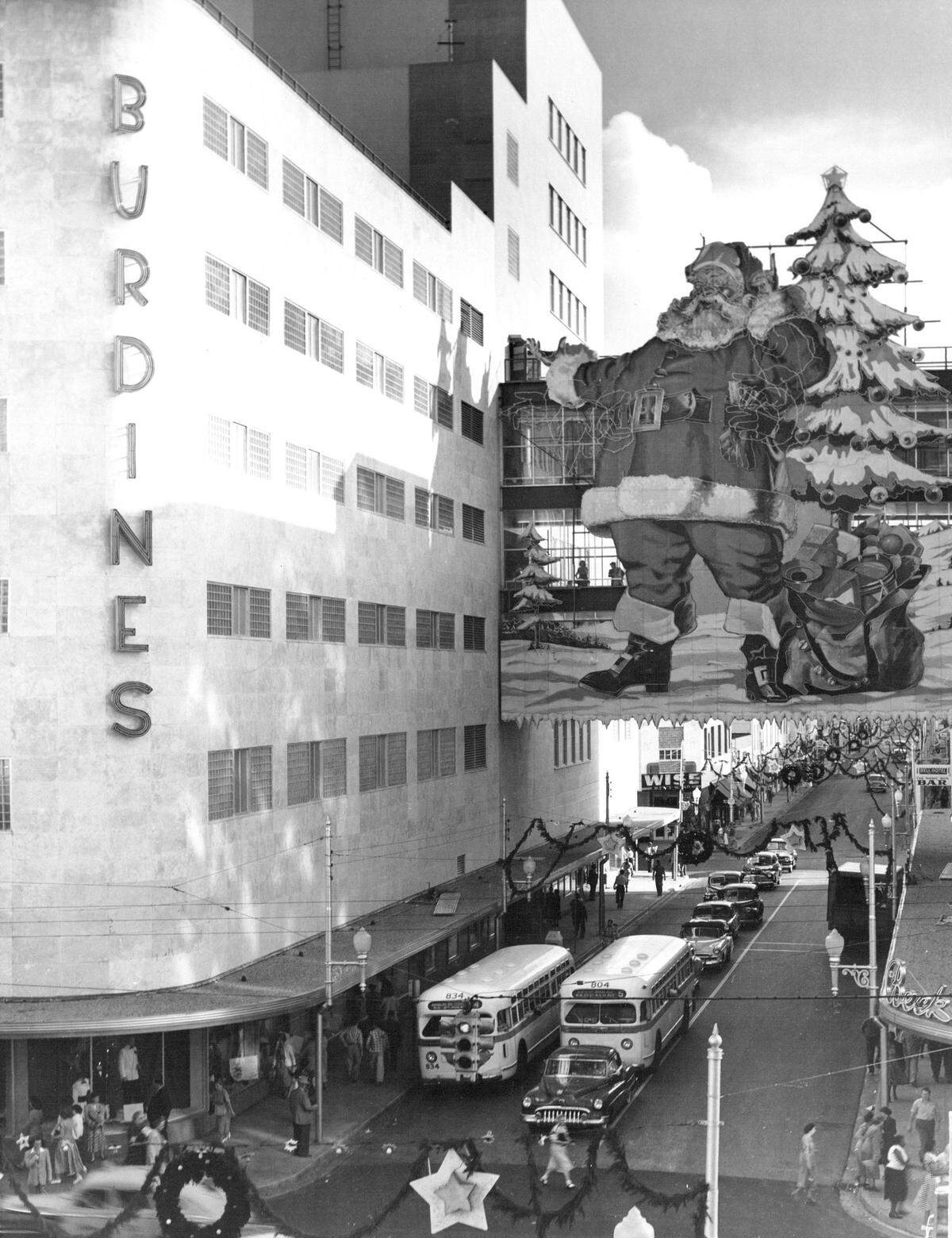
Trading on Florida’s resort reputation, Roddey Burdine coined the name, “Sunshine Fashions” to refer to clothes you couldn’t find anywhere else because of their design, color or fabric.
Burdine crafted the store’s image as a leader in the fashion industry. He held fashion shows and sent buyers to Europe. His advertisements in national magazines urged northern visitors to “bring your trunks empty” and fill them up with Sunshine Fashions to wear and take home.
Manufacturers used Burdines as a test market for the newest spring and summer merchandise to see how it would fare, a practice that continues today.
“It was fashionable to have bought things at Burdines,” said Herbert Leeds, president of Leeds Business Counseling, a Miami retail consulting firm. “Customers would buy something at Burdines that they couldn’t get at home.”
When Roddey Burdine died in 1936 at age 49, he had just begun to see the fruits of his labors. Sales for the 1936 fiscal year were $5.6 million and net profits were close to $500,000 after taxes. The downtown store was about to be expanded and a new store had just opened on Miami Beach.
As Miami continued to grow, so did Burdines. New stores opened during the 1940s and ‘50s to serve the growing populations in West Palm Beach, Fort Lauderdale and North Miami Beach.
But in the mid-1950s, some shadows fell over the sunshine store. Money started getting tight. Former employees say that usually by early November Burdines had used up its credit line at First National Bank in Miami, and buyers were told to put their order forms away until after they saw how business went during Christmas.
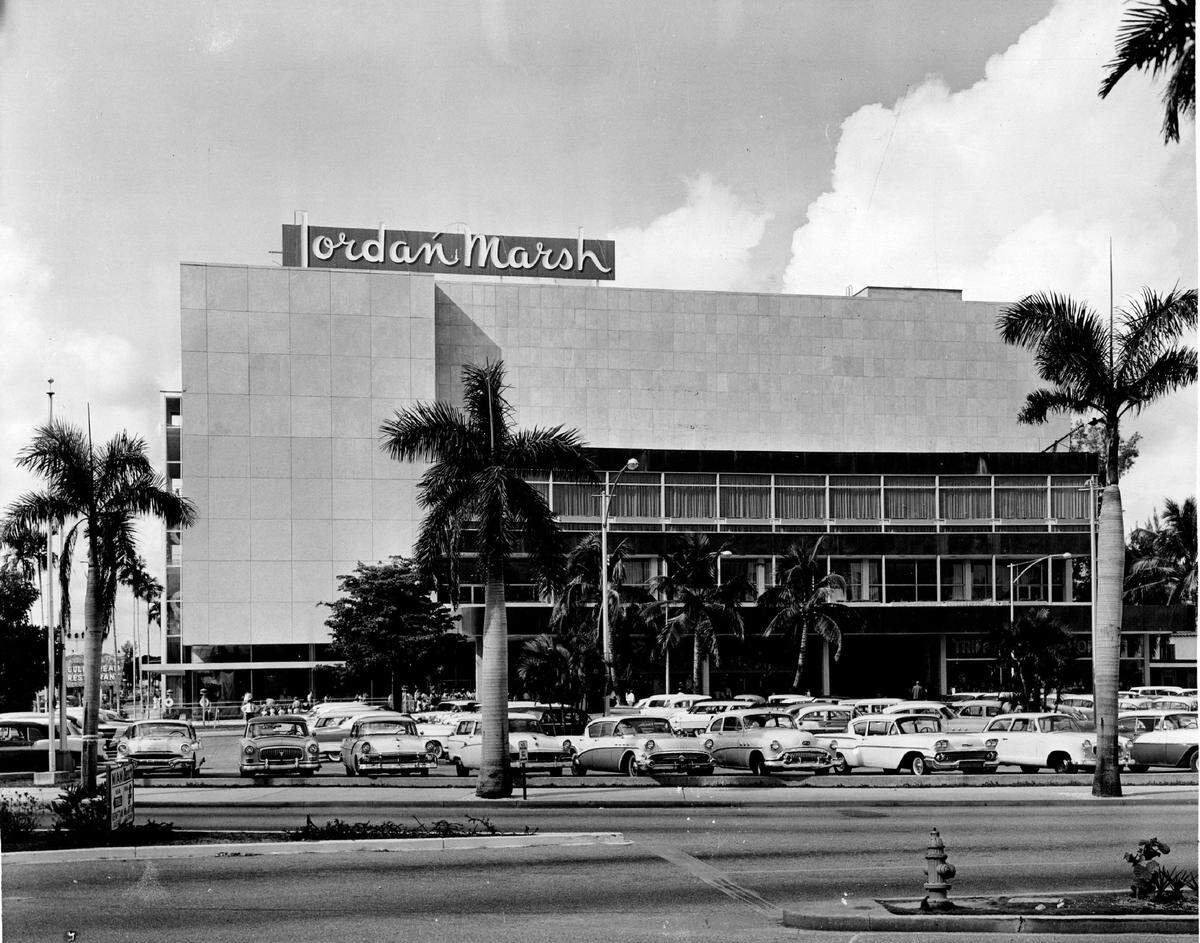
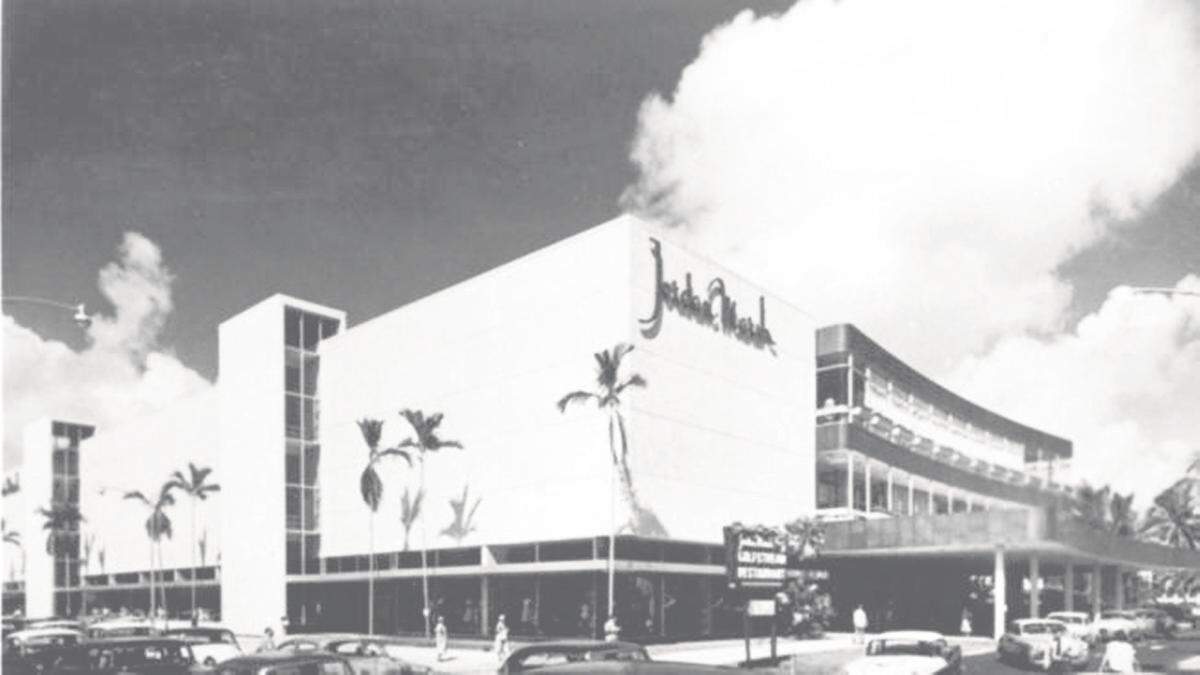
The problems got worse in 1956, when Jordan Marsh, a successful northeastern store controlled by Allied Department Stores, moved into Miami and cut into Burdines domination of the market. They had a fancy new store at what would later become the Omni Mall and more money to spend on buying merchandise.
After years of overtures from Federated Department stores, the Burdines family decided the time was right to sell. Burdines shareholders approved a merger with Federated in May 1956 and shareholders received six-tenths of a share of Federated stock for every share in Burdines.
The merger opened new doors for Burdines and marked a new era.
“The biggest change is there was sufficient capital to do a lot of things we couldn’t do as an independent store,” said George Corrigan, who worked at Burdines from 1950 to 1983, rising through the ranks from assistant buyer to vice president and general manager of Burdines’ Dadeland store. “It changed the whole complexion of our merchandise assortment and buying patterns.”
The new era marked the beginning of an adventurous expansion strategy. During the 1960s, Burdines surprised many when it opened stores at what would become Dadeland Mall and Westland Mall in Hialeah -- stores standing, then, in the middle of nowhere.
Critics said the stores were doomed to fail, but in hindsight the strategy was an astute business move.
The malls came after the stores because Burdines would typically buy between 100 and 200 acres of land, then sell the majority to a developer to build a mall. Burdines had the demographic information to determine where stores would succeed and wanted to make sure it stayed ahead of the growth curve.
“You had to get your sites pinned down or they wouldn’t be available when it was time to open,” said Richard McEwen, who joined Burdines in 1966 as senior vice president of finance and went on to become president and chairman during his 18-year tenure. “The future has always only been five years away. If you didn’t move fast you lost.”
During McEwen’s tenure as chairman from 1977 to 1984, he led the company through its most aggressive expansion efforts and branched outside of Southeast Florida for the first time.
By the time he retired in 1984, Burdines was truly a “Florida store” with 27 locations around the state including Hollywood, Orlando, Clearwater, Tampa, Sarasota, Boca Raton, Fort Myers, St. Petersburg, Cutler Ridge, Gainesville and Melbourne.
But the growth train screeched to a halt during the late 1980s, as Burdines struggled through some of the most difficult years in the company’s history.
Federated was taken over in 1988 by Canadian-based Campeau Corp., which had already acquired Allied Stores, parent company of Jordan Marsh and Maas Brothers.
The extensive debt accumulated during the takeover forced Federated and Allied both into Chapter 11 bankruptcy two years later. The reorganization led to store closings, layoffs and mergers with Jordan Marsh and Maas Brothers. Yet it wasn’t all bad.
“It was a healthy experience for Burdines,” said Jim Gray, Burdines president from 1988 to 1994 and now president of Macy’s East. “It forced us to take a real pragmatic view of some of our assets. We became a leaner organization and in effect a healthier organization. It was a matter of survival.”
Burdines has done more than survive. After Federated emerged from bankruptcy protection, Burdines’ sales broke the $1 billion mark for the first time in 1992 and the company became one of Federated’s most profitable divisions. Profit margins have reportedly grown from about 8 percent in 1986 to around 12 percent -- according to industry estimates, since Federated doesn’t release profit figures for divisions.
As Burdines celebrates its centennial, industry experts hail the company as one of the strongest retailers in the country.
“To be around in one of the world’s toughest businesses, 100 years later, puts them up there with national retailers like JC Penney and Sears,” said Erik Gordon, director of the Center for Retailing Education and Research at the University of Florida in Gainesville. “If there is a hall of fame for retailers, Burdines gets inducted this year.”
MERVYN’S
Published Jan. 18, 1997
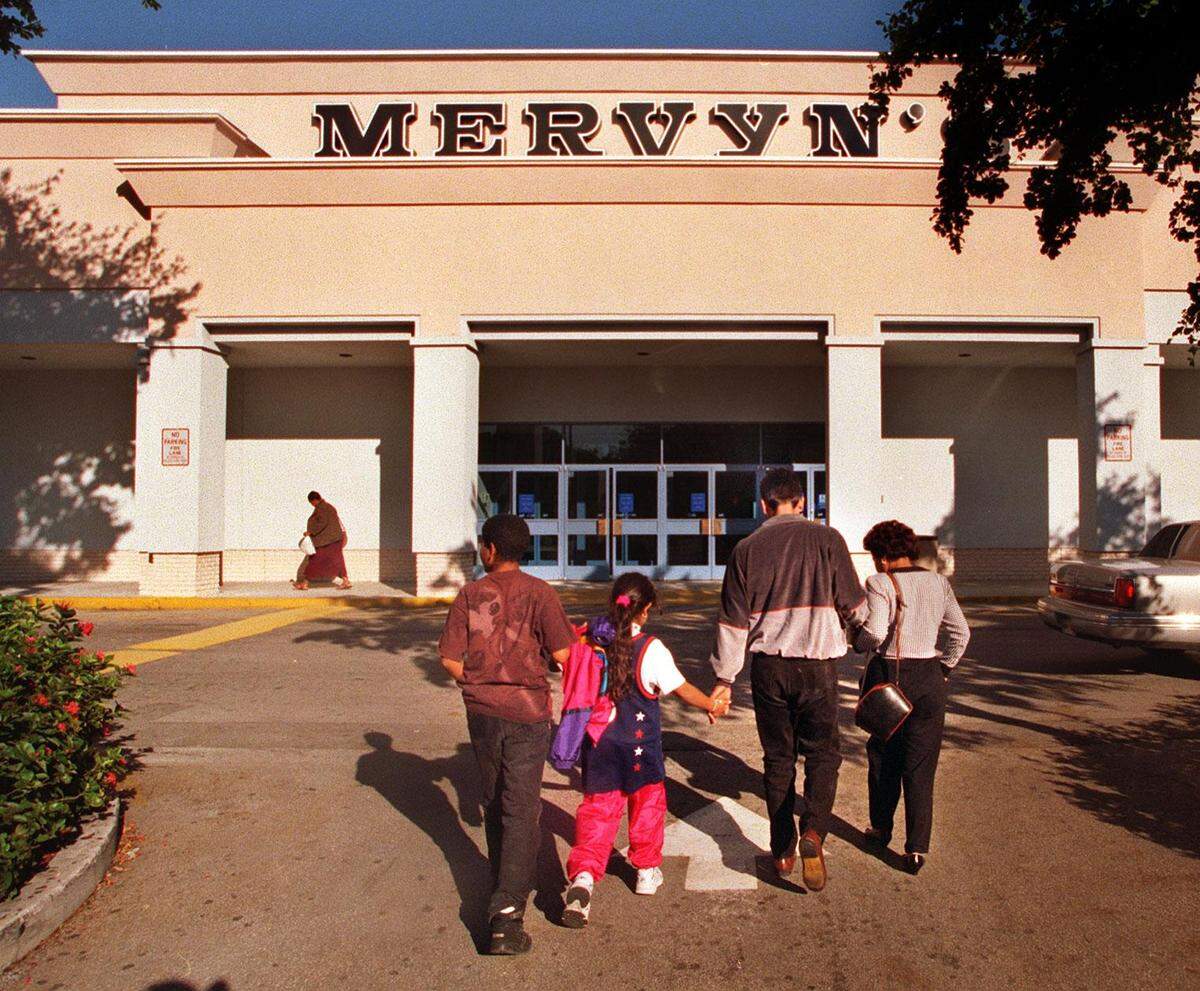
Just six years after its splashy entrance into South Florida, Mervyn’s said Friday it will pull out of the market and sell 10 of its 18 locations to Dillard Department Stores, an Arkansas chain that for years has wanted to move into Dade County.
The deal will make Dillard’s an anchor at two Dade malls and at four malls in Broward, where the company now has its only two South Florida stores.
It also will give Dade shoppers their first new department store alternative in years, with Dillard’s competing at the upper-moderate price range that Burdines has had to itself since the Jordan Marsh chain disappeared six years ago.
“This is the first, real significant competitive threat that Burdines has had in a long time,” said Cynthia Cohen Turk, a retail consultant in Miami. “Dillard’s has not been a player in this market, and this move will give them some critical mass and increase their brand identity.”
Mervyn’s move had been speculated for months, as Dayton Hudson, parent company of Mervyn’s, Target and other stores, pondered strategies to strengthen the California-based Mervyn’s chain, which for years has suffered from weak sales, particularly in Florida and Georgia.
“The truth is, we simply don’t have enough of a presence in this market, and as a result, we had very high fixed costs,” said Sandra Salyers, Mervyn’s spokeswoman. “So it was a question to make a significant investment to build out the market with more stores or pull out of this market and focus on those markets where we have a stronger number of stores.”
The store closings will affect 352 Mervyn’s employees in Broward and 382 in Dade, who will be invited to apply for jobs at Target Stores, still expanding in Florida and one of Dayton Hudson’s strongest divisions. Salyers said the company expects Target to offer jobs to all former Mervyn’s employees.
While Target has made a successful entry into South Florida, Mervyn’s never had the same impact. The chain opened in South Florida in 1991, when it took over five Lord & Taylor locations at major malls, including Miami International. It later grabbed some former Jordan Marsh locations and some free-standing sites in urban shopping centers.
Mervyn’s never clicked with the local market, which has seen tremendous competition at the moderate price level. Competitors include the strengthened Sears and JCPenney stores, home furnishings stores such as Linens N’ Things, and the recently opened Upton chain.
“I don’t think they ever got their merchandising or their marketing correct,” Cohen Turk said. “I’ll never forget when they opened here, they used recycled ads from California that really didn’t speak to this market.”
Dillard’s certainly will be a strong addition to the Dade market, experts said, as it brings an operation known for excellent inventory control, which results in consistent availability of the right sizes and colors. Dillard also holds its own in visual displays, fashion freshness and competitive pricing.
“Dillard’s runs a meticulous operation appealing to the middle market,” said Herbert Leeds, a Miami retail consultant. “They consider themselves a value store and a quality store. They’re not a business that is always running sales, but their everyday prices may be better than somebody else’s sales.”
And for the first time in years, Burdines will have a competitor operating at its same level of market appeal in Dade County, with stores that are of comparable caliber, even if without Burdines’ historic, homegrown bond. Unlike Macy’s, which is also owned by Federated Department Stores, Burdines’ parent company, Dillard’s is an outside player operating independently.
Burdines spokesman Carey Watson didn’t return two calls seeking comment on Friday.
Dillard’s Chief Financial Officer James Freeman said the two Dade stores -- at International Mall and Cutler Ridge Mall -- are just the first step, and Dillard’s is geared to add more.
“We’ve been very anxious to get there,” Freeman said. “Certainly we hope to use this as a springboard to greatly expand our presence in that market. Florida has been the best growth state for us since we entered in 1990.”
Freeman said Dillard’s will close the transaction in April, and remodel and open the new stores before September.
Though Dillard’s finally has broken into the Dade market, analysts said the deal falls short of putting the Arkansas chain in the area’s most coveted malls.
“It will fill a hole we’ve had in the market for a long time,” said Arthur Weiner, a retail consultant in Aventura. “But still they’re not getting the cream of the malls.”
Negotiations for new tenants are ongoing for Mervyn’s locations in Hialeah, Coconut Grove, the Mall at 163rd Street, Kendall Town & Country, Boca Town Centre and Palm Beach Mall. Some mall owners said they welcome the prospect of a new tenant.
JORDAN MARSH
Published Oct. 18, 1991
In the final stroke of a two-year restructuring, Burdines on Sunday will begin changing the name of all remaining Maas Brothers and Jordan Marsh department stores to Burdines, the company said Thursday.
Burdines will have 45 stores throughout Florida, with annual sales of more than $1.1 billion.
Four Jordan Marsh stores in South Florida will change their names to Burdines, even though the stores remain up for sale. Burdines said if the stores are not sold, it is likely that they will be closed. Burdines has declined to say how long it will wait before closing the stores.
The stores are at Coral Square Mall, Miami International Mall, Cutler Ridge Mall and the Omni International Mall. Oddly, the move will give Burdines two separate stores at Coral Square in Coral Springs, Miami International and Cutler Ridge malls.
Burdines spokesman Carey Watson also said the Jordan Marsh store in the Galleria mall has been sold. He said he did not know the buyer.
The 17 Maas Brothers stores are mostly in Central Florida, where the chain was founded more than 100 years ago. Burdines Chairman Howard Socol said the decision to change the name was a sad but wise one.
“The Maas Brothers/Jordan Marsh names have a long and distinguished history in each of their markets, so we thought very carefully and thoroughly before making this change,” he said.
But Socol said the move allows Burdines to cut advertising costs, and operate with a single marketing strategy throughout the state.
“The biggest thing is the indirect impact,” said Cynthia Cohen-Turk, a retail analyst at Marketplace 2000 in Miami. “They have the benefit of operating one chain across the state. They can build a powerhouse name.”
The move completes the merger of Burdines and Maas Brothers/Jordan Marsh, three department store chains that became siblings when Canadian developer Robert Campeau acquired their parent companies in the late 1980s.
Campeau’s debt-laden company failed quickly and the department store chains, Federated Department Stores and Allied Stores Corp., have been tied up in bankruptcy court since then. The companies are restructuring their operations and expect to emerge from bankruptcy court next year as one entity, Federated Stores Corp.
Part of that restructuring was Federated’s “Florida plan.” The company sold unprofitable Jordan Marsh, Maas Brothers and Burdines stores, then merged the three chains into Burdines.
Cohen-Turk said Central Florida shoppers may miss Maas Brothers, but they probably are familiar with the Burdines name.
“It’s an easier job to implement this after going through the well-publicized bankruptcy,” she said. “Prior to the bankruptcy, I’m not sure the average consumer knew Burdines and Maas Brothers were owned by the same parent. Today, the average consumer knows more about Burdines.”
Shoppers can use their Maas Brothers credit cards at any Burdines stores. Burdines’ Watson said all of the stores will be changed to Burdines by Nov. 1.
This story was originally published March 20, 2019 at 12:23 PM.