
Miami’s Super Bowl is worth $500M. It could be a game-changer for minority business owners
South Florida entrepreneur Craig Wilson has a secret ingredient: soursop.
The sweet, distinctive-tasting fruit, also known as guanabana, is found throughout the Americas and the Caribbean.
Wilson, whose background is in fitness training and promotion, opened 1-2-3 Smoothie in Miramar last June. He believed a soursop smoothie would be a hit in South Florida. He says the shop now serves about 100 customers a week — setting the stage for a positive future, he said.
But another opportunity on the horizon could provide an instant business boost: Next year’s Super Bowl, which will be played in Hard Rock Stadium.
“We’re looking to get ourselves out there to promote healthier eating habits, whether individually or with a larger business,” he said.
Football fans are focused on this week’s match-up between the New England Patriots and the Los Angeles Rams. But hundreds of minority and women business owners are looking ahead to Super Bowl LIV, set for Feb. 2, 2020 at Hard Rock Stadium.
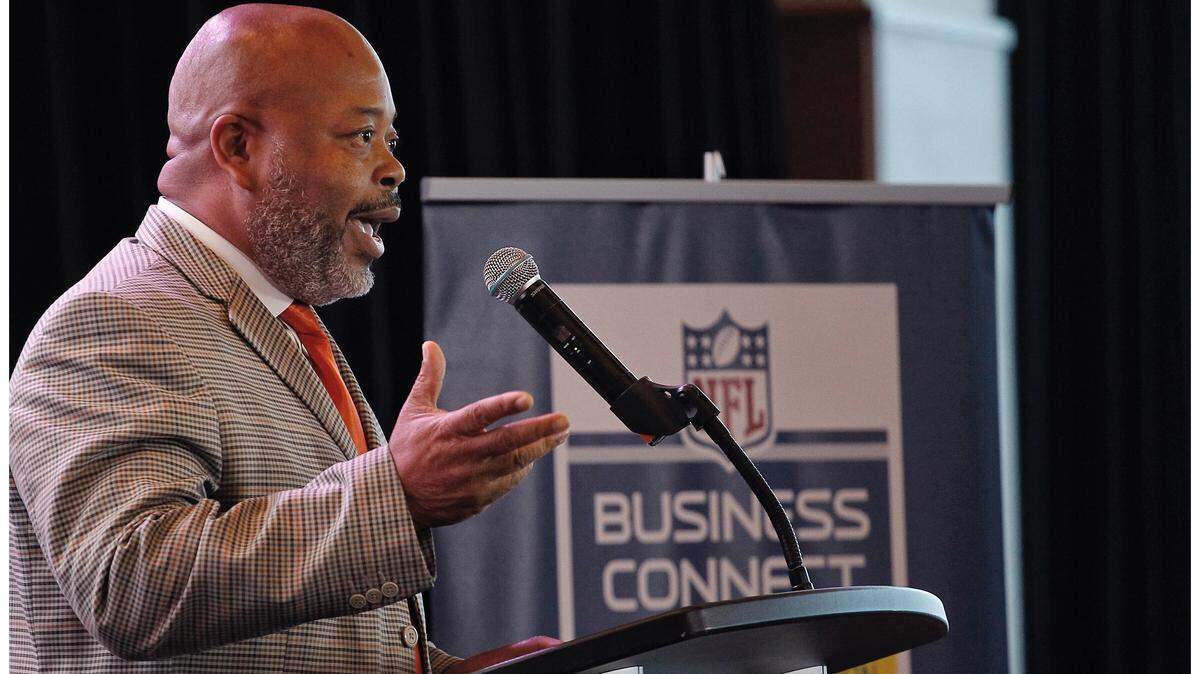
Last fall, they came out for the Business Connect Initiative, set up to position South Florida women- and minority-owned businesses for a slice of Super Bowl 2020’s revenues. The program has been in place at Super Bowls since the early 1990s. This year, the estimated size of the pie for local businesses, according to Miami’s Super Bowl 2020 host committee: $500 million.
“It’s a historic opportunity because of the impact that will bring to the community,” said Rashad Thomas, the head of the Business Connect program and a vice president of Miami’s Super Bowl Host Committee.
Miami-Dade and Broward counties punch above their weight relative to the rest of the U.S. when it comes to black-owned businesses, which comprise about 14 percent of all firms here. Nationally, black businesses make up just 9 percent of firms.
But a disconnect between opportunities and minority businesses persists. A recent study on procurement from Miami-Dade County Public Schools showed minority-owned businesses receive fewer than 2 percent of procurement opportunities.
Eric Knowles, president and CEO of the Miami-Dade Chamber of Commerce, said the school board has at least taken the step of acknowledging there is a problem, and has pledged to put new procedures in place to boost minority procurement.
“The future looks brighter,” he said. “But on the other side of that is creating those procedures and policies, and to ensure that it will in fact be brighter.”
Not every company that participates in the Business Connect program makes it. In the run-up to the 2007 Super Bowl at then-Dolphin Stadium, a reporter noted Above All Baskets, a gift basket company, won a contract to make gift baskets for visiting NFL team owners. But SunBiz records show the company ceased operations before the game was even played.
Still, there have been successes such as Darryl Holsendolph. Thirty years ago, he says, he was a Miami kid trying to make a business selling t-shirts. While working the annual Florida Classic football game between Florida A&M University and Bethune-Cookman, Holsendolph says a vendor from South Florida recognized his professionalism, and asked whether he wanted to help sell shirts for the inaugural season of the Miami Heat.
That opportunity set Holsendolph up for his biggest stage: the 1995 Super Bowl, hosted in Joe Robbie stadium.
Today, Holsendolph is president of Holsen Inc., a special events services provider with clients throughout the southern U.S. He’s had operations at every Miami Super Bowl in the past three decades and has also served as vendor for a handful outside Miami.
“You’re not going to get rich,” he said of the opportunity. “But it allows you to put a feather in your cap, to show that you can deliver quality products and service at that level.”
Rodney Baretto, chairman of the Super Bowl 2020 host committee, said Holsendolph has gained a reputation around the league for his “can-do” attitude.
“He rolls up his sleeves, and he provides a whole array of services,” Baretto said.
Tico Casamayor, owner of AC Graphics, a company that does commercial package printing, said the business he gets from the Super Bowl is sporadic; he likens the event to a comet that comes across every few years.
The best value a business can derive from the event, he said, is connecting with others in the program.
“There’s only a certain amount of work that the Super Bowl has to give out, because the NFL has a lot of it,” he said. For a local firm like his, “The biggest benefit are the connections you make with all the other vendors.”
New Business Connect aspirants like Karina Moises hope to join that network. As business partner at Crave Clean Bakery, she cooks up protein-enriched baked goods. The company was created five years ago, and now has two locations in Miami-Dade. Like Wilson’s 1-2-3 Smoothie, Crave Clean is also hoping to link up with a large caterer to earn business during the event, and beyond. She said the bakery handles 5,000 tickets a month; she declined to state the company’s current revenues.
“We would like to be the preferred dessert vendor of choice, where we’re working with caterers at and around the event,” she said.
Local diverse business owners can visit the Miami Super Bowl Host Committee website at https://www.miamisb2020.com/business-connect/ to apply for the Business Connect program. Scroll to the bottom of the page and click on the contact form. There, business owners will enter their name, contact information, website, and the goods and services they provide.
The deadline to apply to the Business Connect program is Friday, March 29.
This story was originally published January 29, 2019 at 7:00 AM.