
Notes on: ‘Salo’
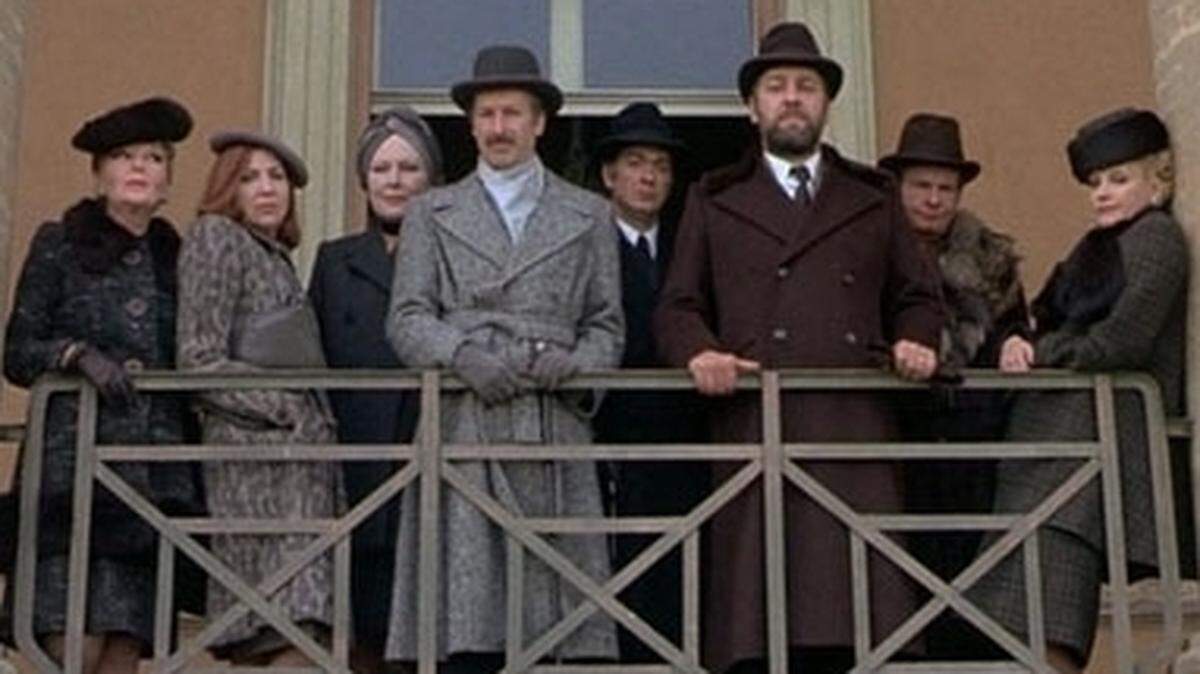
Shock value doesn’t age well. Movies designed to be nothing more than outrageous provocations are quickly forgotten, trampled in the cultural rush to get to the next big thing. What is wild today often seems mild tomorrow. You can’t make an impactful work of art by merely raising the bar of what is acceptable. That’s a stunt, and it doesn’t last.
So why, then, does Pier Paolo Pasolini’s Salo, or the 120 Days of Sodom still manage to fascinate and compel us? Certainly not because of its political subtexts. The movie appropriates the Marquis de Sade novel and turns it into an allegory for the dangers of fascism – then beats you over the head with it. Pasolini made the film in 1975 as an angry response to the consumerist culture that was starting to spread through Europe. But the extreme nature of Salo drowned out whatever message the filmmaker was trying to convey. It even got him killed: Pasolini was murdered shortly after completing the movie – he never got to witness the furor that would greet Salo – and his death remains a source of controversy.
Today, the film is thought of primarily as the mother of all cinematic endurance tests. My latest attempt to watch the film without ever averting my eyes – my fourth visit to Salo – once again failed. The recent Criterion Collection Blu-ray release of the movie sports such a glorious, meticulous transfer that I saw things in the film I had never noticed before: The weird little dance one of the prostitutes performs before launching into her pornographic story of sexual abuse; the way one of the young actors flinches during the wedding scene and then glances repeatedly at the camera, obviously nervous and upset; two jarringly out-of-focus shots during one of the film’s first big gross-outs, as if Pasolini hadn’t been able to convince the actress to do another take and had to settle for what he had.
The Criterion Blu-ray also showcases Salo‘s elegant style far better than any previous home video release. The characters are often placed at the bottom center of the frame, dwarfed by the opulent mansion around them. Vulgar wealth has rarely seemed this obscene. Pasolini relied primarily on wide and medium shots, and the physical distance prevents you from forming an emotional connection with the movie (the close-ups are often so horrible that you can’t wait for the camera to pull back again.) The intent was to make a purposely cold and clinical film, but Salo‘s relentless focus gives the movie a strange kind of passion and heat. Even when stripped of its underlying message, the picture wields a brutal, primal power.
What is it in Salo that always forces me to look away? Two scenes in particular: The dinner sequence, which is so revolting even one of the actors threw up on the set, and the climactic orgy of torture, rape and murder, which we watch through the eyes (and binoculars!) of the four rich libertines taking turns perpetuating violence on their young captives. Forget shallow imitations such as Hostel or The Human Centipede: Here are the darkest, most upsetting seven minutes ever captured on film.
But even that closing sequence contains a sudden moment of heartbreaking grace – the piano player’s suicide – that underscores the enormity of the evil Pasolini was trying to convey. Even at its most punishing, Salo radiates a profoundly humanist vibe. And then comes the film’s brief final scene, a strangely touching exchange that I assume Pasolini intended to be a horrifying illustration of the complacency and nonchalance that allows fascism to take root in plain view.
Instead, though, the surreal finale reminds us of the director’s presence – of the supreme care and intelligence he put into his work. You can’t watch Salo without thinking of the price Pasolini paid for making it, which lends the picture an added dimension of tragedy. This is, in a way, a bonafide snuff film – one that is destined to live forever.
This story was originally published November 4, 2011 at 9:11 PM.