
Pablo Milanés
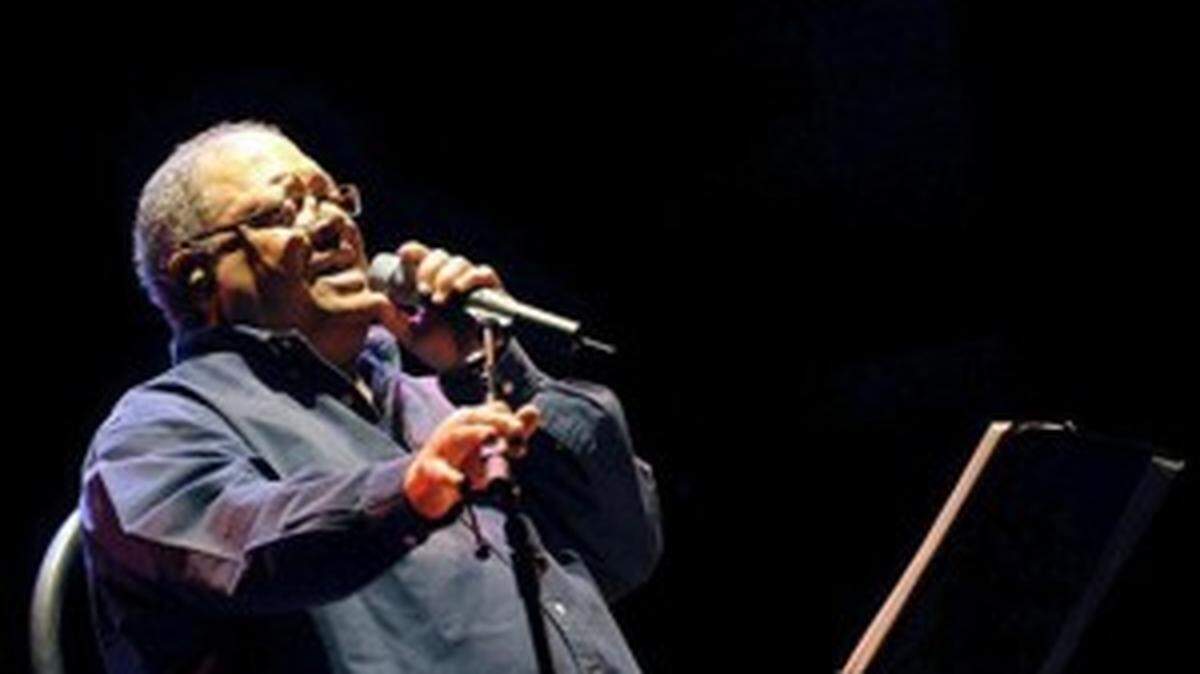
For anyone who has followed the tumultuous politics of Cuban music in Miami over the past 15 years, Cuban singer Pablo Milanés’ concert Saturday night at AmericanAirlines Arena brings on a powerful sense of déjà vu.
A coalition of exile groups is planning protests and calling on politicians to stop the event, which they denounce as a propaganda vehicle for the Castro government and an affront to the Cuban-American community.
Other Cuban-American leaders are calling for tolerance, citing the democratic values of free speech and expression and emphasizing the value of cultural exchange and the desire of many exiles and others to hear music from the island.
Similar debates shadowed the concert by Colombian rock star Juanes in Havana in 2009, the presentation of the Latin Grammys at the AA Arena in 2001 and the Miami concert by Cuban group Los Van Van in 1999.
Controversy over Cuban groups performing in Miami had abated considerably in the past two years, with numerous acts performing at venues ranging from the Adrienne Arsht Center to Little Havana clubs.
Now the show by Milanés, a singer-songwriter closely associated with the Cuban government and one of the island’s most famous artists, seems to have swung the needle back towards hysteria.
“Even in a democracy, nobody has the right to offend anybody,” says Emilio Izquierdo, an organizer of the anti-Milanés campaign who also helped lead the Latin Grammys protest. “We have the power of the majority. No entity has the right or authority to offend the Cuban exiles or any ethnic group in the U.S.A.”
Many of those who plan to attend the show were “brainwashed” by growing up in Cuba, Izquierdo claims, comparing Milanés to those responsible for 9/11.
“It is the same — Pablo Milanés works for a terrorist state,” he said. “We have to protect South Florida from the terrorists. … We don’t want the concert because the promoter and the act work for a state that support terrorism.” (Cuba, along with Iran, Sudan, and Syria, has long been on a U.S. government list of countries that support terrorism.)
Such statements prompt more moderate exile leaders to throw up their hands.
“Enough is enough,” says Carlos Saladrigas, a retired businessman who co-chairs the Cuba Study Group, which supports increased contact with the island as a way to foster democratic change. “This is ridiculous. Let’s seize the high ground and move on.
“This city should build on our inherent capital, which is to be the major hub of contact with Latin America. This is the United States, for goodness sake, not Castro’s Cuba. Let it happen, let people choose and choose with their wallets. What we welcome here is what we hope to see happen in Cuba, which is that anyone can express their feelings without fear.”
And yet as familiar as the fight seems, much has, in fact, changed.
Unlike the dance band Los Van Van, which played the James L. Knight Center in January 2010, or the folkloric group Muñequitos de Matanzas, which appeared at the Arsht Center in March, Milanés, 68, has been closely associated with Cuba’s socialist government and ideals. Together with Silvio Rodriguez, he founded Nueva Trova, which blends traditional Cuban music with leftist themes. Milanés is a pillar of official Cuban culture, has served in parliament and used to perform before Fidel Castro’s speeches.
He is also revered as an artist throughout Latin America, is known for crafting poetic lyrics and lovely melodies, and has two Grammys and more than 40 albums to his credit. His Miami appearance is part of a short U.S. tour that includes Washington, D.C., Oakland, Calif., and Los Angeles.
“This is pushing the envelope,” says Manning Salazar, who presented Cuban acts in Miami in the 1990s and is now on the board of the Miami-Dade chapter of the American Civil Liberties Union. “This is a singer who’s been very associated with the politics of revolutionary Cuba. It’s more complicated.”
Complicated indeed. The popular exile singer Willy Chirino and columnist Carlos Alberto Montaner, both longtime Castro opponents, have spoken in support of Milanés’ appearance.
In an interview on the website Cuba Blogspot, Chirino called Milanés an “extraordinary artist” and said the fact that he “would come to sing here is something that democracy demands, just as it also demands a space for … protests.” On the same website, Montaner, who is also writes for The Miami Herald and El Nuevo Herald, applauded the concert as “an exercise of freedom of expression nonexistent in Cuba.”
Their support can be traced partly to Milanés’ complicated history. In the 1960s, he was sent to one of the notorious Cuban UMAP work camps for “rehabilitating” gays, Catholics and “free thinkers like me,” as Milanés put it.
In the past decade he has been increasingly and openly critical of the Cuban government, refusing to join other high-profile musicians in endorsing the imprisonment of 75 opposition leaders and journalists in 2003 and condemning the government’s role in the hunger-strike death of opposition leader Orlando Zapata Tamayo in February.
And while he calls himself a leftist who supports revolutionary goals, Milanés says he believes socialism in Cuba has largely been a failure.
“If socialism is conceived as a system to re-vindicate the human being from every point of view, economic, emotional, spiritual, peaceful, you can say that of all the socialist systems that have been produced in the world up to now, none have reached these goals,” the singer said in an interview with El Nuevo Herald. “I believe in the [socialist] system, but not in the men who practice it.”
Such statements have done little to sway Cuban-American politicians. U.S. Rep. David Rivera added his voice to those calling for cancellation. Miami-Dade Mayor Carlos Gimenez proclaimed himself sympathetic to concert opponents, but says he does not have the authority to cancel the privately produced event at the county-owned Arena — a contrast to 1999, when political pressure forced Los Van Van out of the Miami-owned James L. Knight Center.
Promoter Hugo Cancio, a pioneering presenter of Cuban music in Miami who seems to thrive on controversy, acknowledged both familiar obstacles and new progress in putting on his most ambitious concert yet. His Milanés commercials were refused by one Spanish-language radio station, he said, but accepted on television. And while the controversy has hurt ticket sales (he says he’s filled more than half the 5,900 seats so far), politics have not forced cancellation as they did a Cuban music festival he was promoting at the Homestead Speedway in April.
“Even the negative is a positive,” Cancio says. “The controversy generates an internal dialogue among members of this community. It’s good to argue in looking for answers. Why leave it at the status quo?
“The community is changing, and the only way to see that the community is changing is to do these kind of events.”
For his part, Milanés said he was coming with an open mind and the hope of being heard.
“The Miami audience should know that I am looking for peace and love, and that I am going to offer a hand to whomever offers me their hand,” he told El Nuevo Herald.
“I am not going to criticize anyone, nor do I want anyone to criticize me. I simply hope that they will listen to a man who is going to sing his songs that are pure emotion, pure spirituality, and that reflect what Cubans say and feel in everyday life.”
This story was originally published August 23, 2011 at 9:08 PM.