
‘Nickel and dimed’: Why Miami diners are seeing more credit card fees on checks
Restaurant bills don’t look the way they used to.
Not so long ago, you’d glance at the bill and see the cost of your meal and a blank line to leave a tip. Restaurants in some touristy neighborhoods like Miami Beach might slap on a tip of their own for large parties or try and sneak an automatic tip past you, but in general, there weren’t too many deviations.
Now, tips are often factored in before you can decide what to pay. Mysterious service charges appear that are never adequately explained. And as the use of cash dwindles, restaurants are more often charging diners a fee for paying with a credit card.
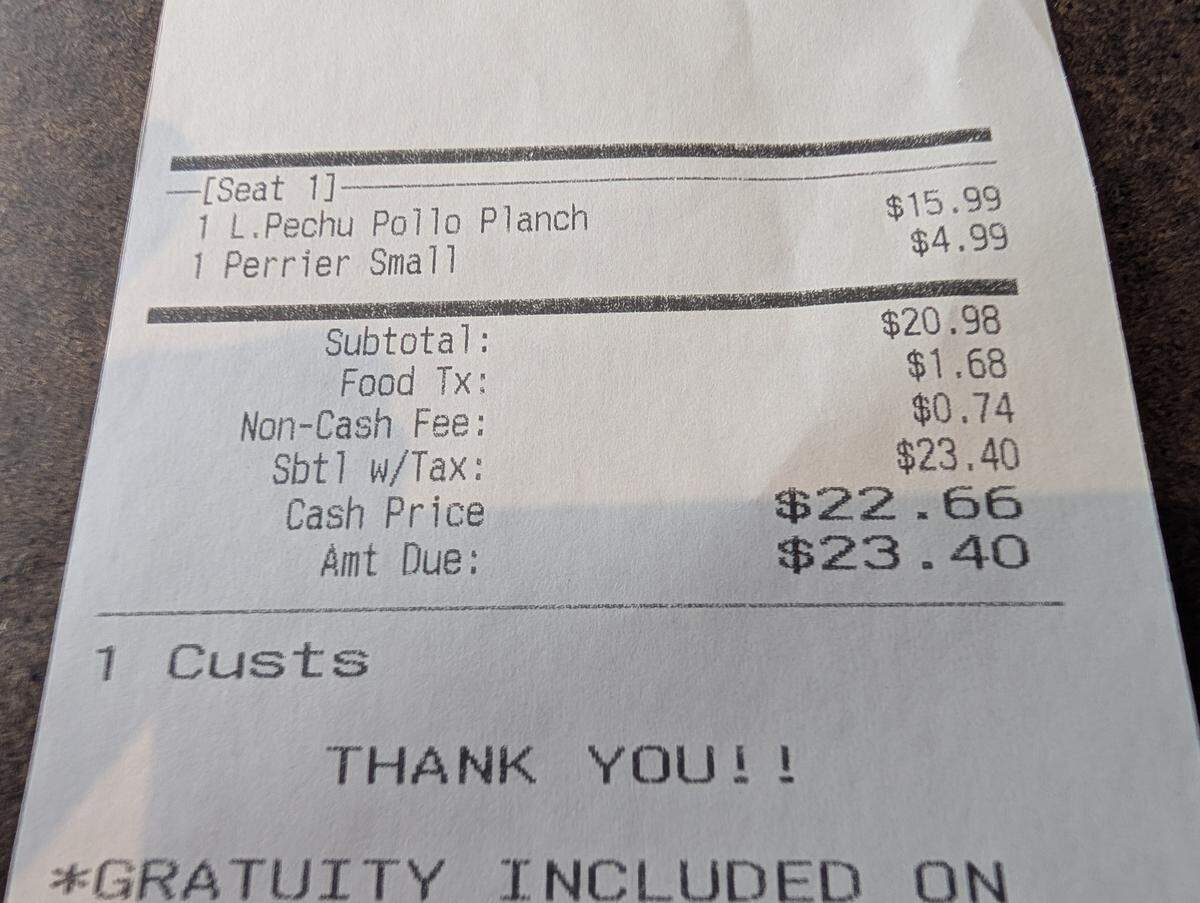
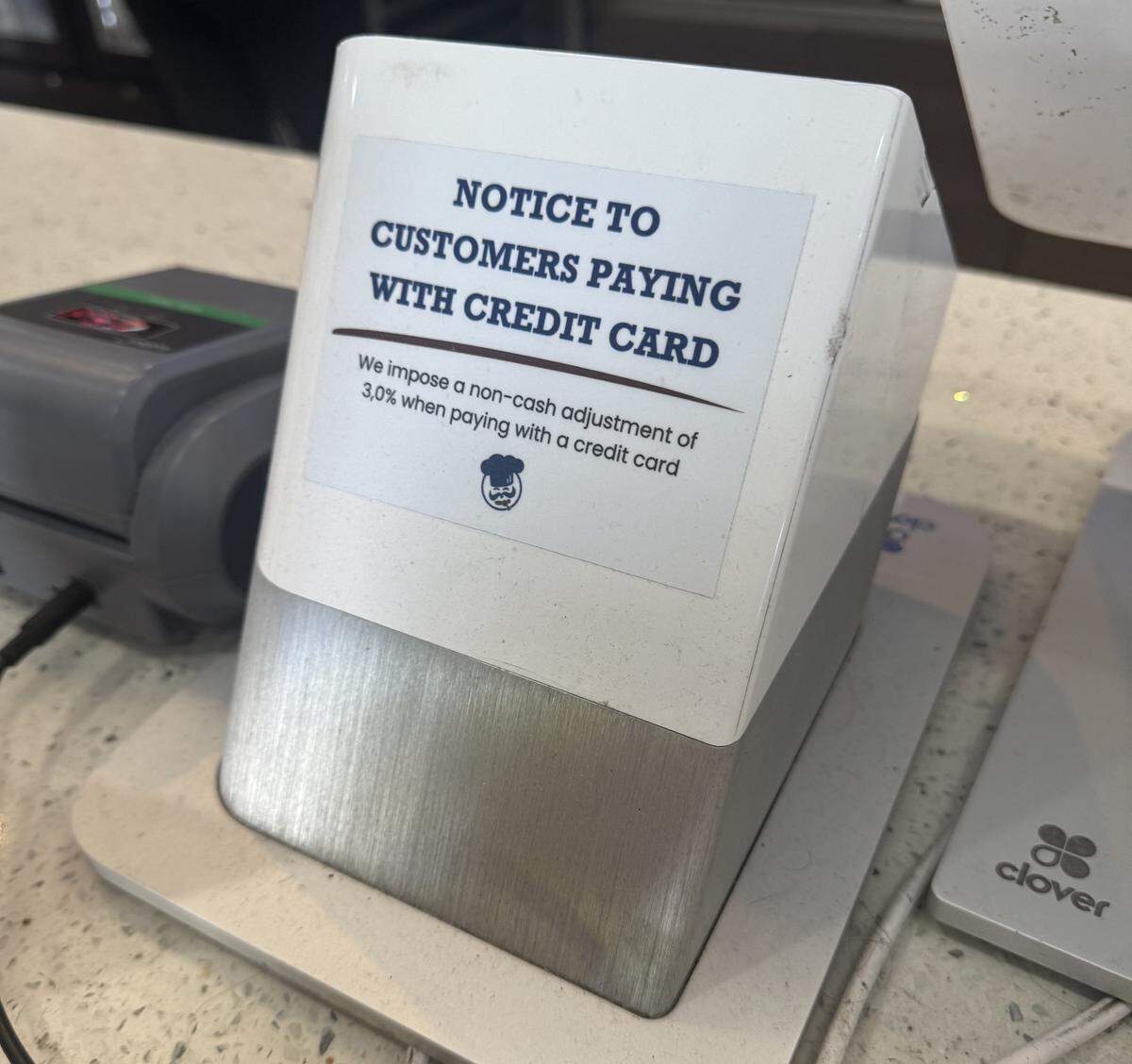
Often the credit card fee is so small it’s barely noticeable — around 3 percent is the usual charge. For a $22.66 bill, we recently paid a whopping 74 cents. But even though the restaurant is not passing on the full cost of the credit card service charges, customers are noticing.
And some are getting frustrated.
“I’ve been hit with those add-on credit card fees for a while,” says Patrick Whiteside of West Miami, who noticed a charge recently at Semilla Eatery and Bar in Miami Beach, a favorite spot of his. “I’m seeing it more and more. It went from being an occasional charge to seeing it all the time. It’s unfortunate, but it’s the new normal. I feel like I’m getting nickel and dimed.”
Marta Mejia of Brickell admits she finds herself irate when she spots a credit card fee on her bill.
“I react if they are charging me without telling me,” she says. “I want to know: What is this charge? What are they doing? I don’t like to be forced to pay without the knowledge.”
West Kendall resident Vinicio Ruiz-Gomes says he has noticed the trend spreading to other businesses.
“It doesn’t make a lot of sense when we have become a cashless society,” he says. “It’s a plague right now. My mechanic won’t take credit cards without a surcharge. My barber, the same thing. What I’m going to start doing is carrying checks around with me and see whether they’ll accept them or not.”
The mechanic and the barber might take checks; most restaurants won’t. Customers can always use a debit card to avoid the fee if they don’t carry cash, but many of us are so used to earning points or air miles via credit card use, we’re reluctant to do so.
The problem for restaurants
What’s often lost on diners is that credit card fees have risen for restaurant owners, too, at a time when the costs of food, labor, rent and insurance have skyrocketed. Having customers pay part of the cost, small as it may seem, can help keep a mom-and-pop spot afloat.
The National Restaurant Association reports that a typical restaurant operates on a 3 to 5 percent profit margin, and after food and labor, credit card transactions are the third-largest operating expense. And though in 2025, restaurants were the country’s second-largest private employer, nine out of 10 are small businesses with fewer than 50 employees.
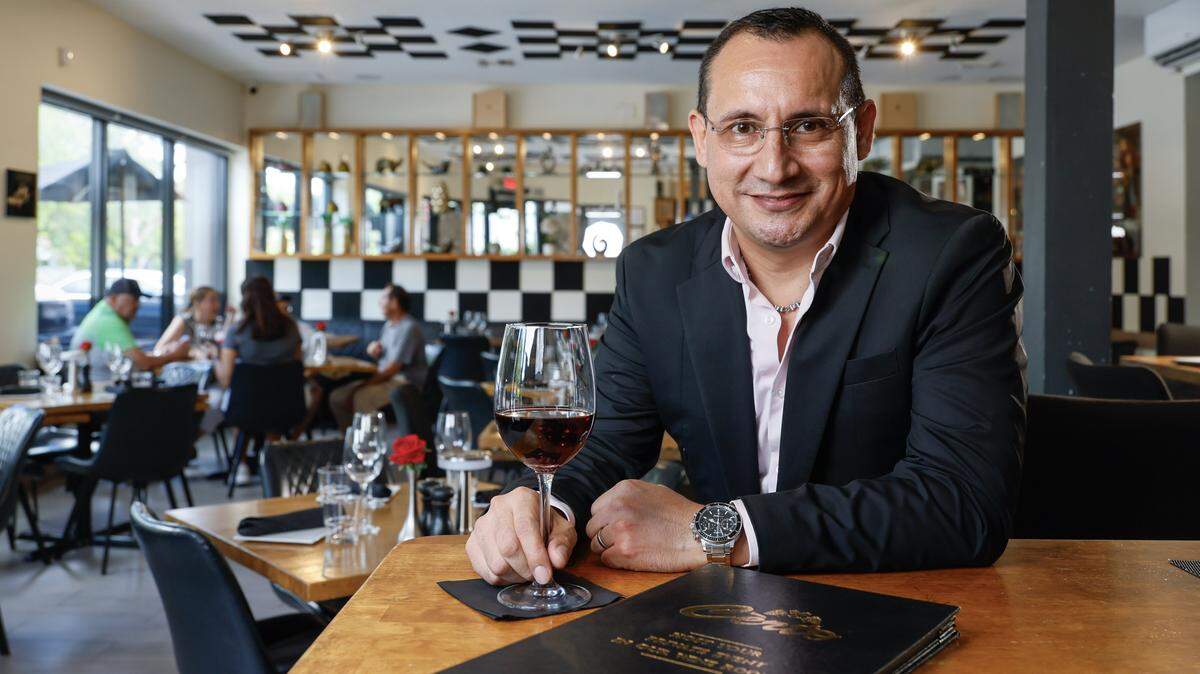
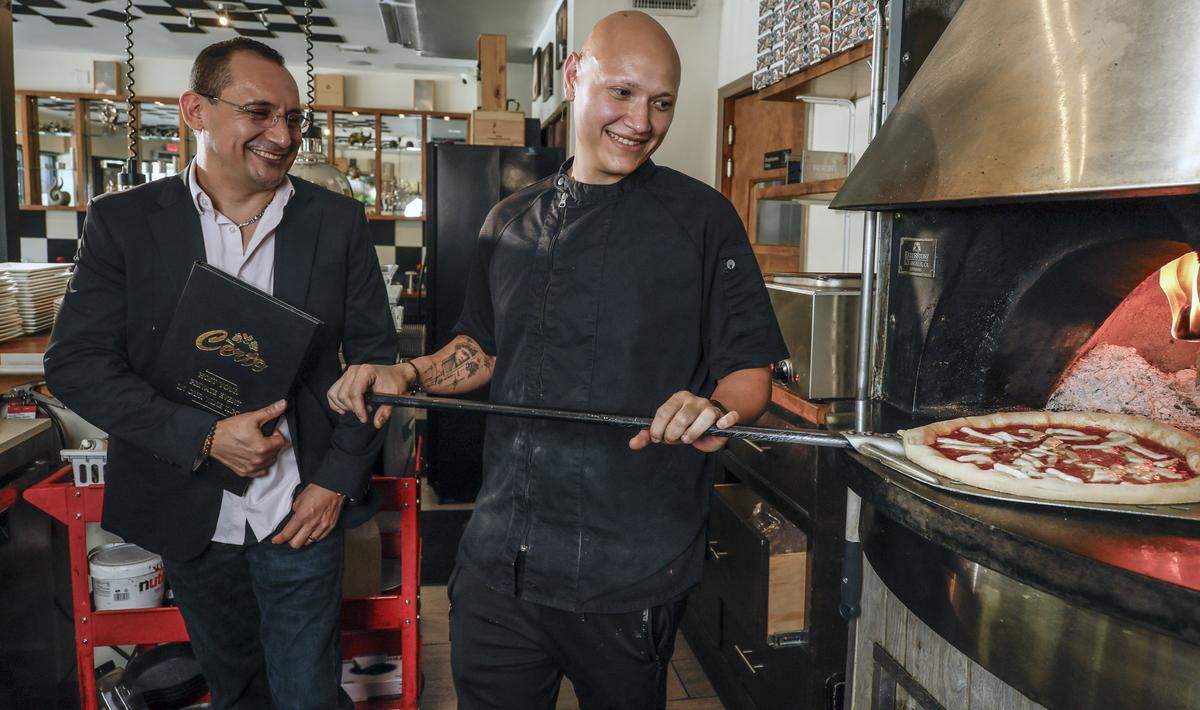
Giovanni Astudillo, owner of Certo Italian Restaurant in West Miami, is such an owner. He has spent more than 30 years in the restaurant industry and opened Certo in 2022.
Certo, which specializes in pizza, pastas and classic entrees like osso buco, has dedicated fans, diners who might stop by for lunch or dinner more than once a week. It has a popular wine list, even offering half-bottles, something you don’t find on many Miami menus. It has an event room available for milestones or business meetings.
And yet, despite the support from the neighborhood and beyond, despite positive online reviews, Certo has struggled on occasion, and rising credit card transaction fees haven’t helped the bottom line.
“Restaurant margins are extremely low,” Astudillo explains. “When it comes to the end of the month, it’s hard. We deal with prices going up, equipment breaking down. We’re very popular, but at one point we were about to close. You might look at our reviews and think, ‘The owner must have a Lamborghini or be traveling through Italy!’ But no — I’m working trying to make the numbers stabilize. This is the situation we find ourselves in.”
He knows some restaurants in Miami don’t share the credit card fees with customers and believes there’s a reason for that.
“The places that aren’t doing it, they raise the prices,” he says. “The economy is so unreliable now. Prices go up and down. I can’t raise the price of lasagna one week because the ingredients went up, because they could go down.”
Some diners, though, have empathy with restaurateurs despite their frustrations. Christian Hofmann, CEO and president of H.Y.H. International Cargo Services in Medley, found himself caught in the credit card fee maelstrom when a client asked if he could use a credit card to pay Hofmann’s import/export business. Hofmann said yes — and suddenly found himself responsible for thousands of dollars in credit card fees.
He and the client worked it out, but the experience was eye-opening.
“A few years ago, nobody was charging the fees,” says Hofmann, whose father founded the business 44 years ago. “The first time I saw it was in New York. Now all of a sudden, I see it in every restaurant. I totally understand it, because it’s killing their bottom line. Credit card companies are making millions on processing, and mom and pop restaurants are paying the price. I understand where they’re coming from.”
‘We’re experiencing tip fatigue’
While the credit card charges can add up with a big bill, Lisa Cain, associate professor at FIU’s Chaplin School of Hospitality & Tourism Management, says customers are just tired of seeing any added fees when they get a check, like being prompted to tip for things they didn’t tip for before the pandemic.
“I think a big part of the frustration here is that as consumers, we’re experiencing tip fatigue,” she said. “It’s a byproduct of the pandemic and the move toward cashless society and prompted payment systems. Stores and other places that didn’t traditionally charge gratuity, once they got electronic systems, could prompt for that moral obligation to tip during the pandemic for the frontline workers. You might leave coins in the tip jar, but now you’re getting prompted for a 15 or 20 percent gratuity. We’re tipping on everything from modes of transportation to dry cleaners to delis.”
Restaurants can raise prices to offset costs, but that comes with its own issues. The answer, Cain says, lies in transparency — and in communicating clear rules to customers.
“As a restaurant, you have to provide for the customers, and you have to remain profitable. Restaurants do run on very thin margins. You can raise prices, but you can’t outprice yourself from the market. I think it helps to have rules and regulations in place. Otherwise everybody’s not doing the same thing, and that’s where the irritation comes in on the consumer’s part. In one place they charge credit card fees, in another they don’t. If rules are transparent, customers know this is the new normal, and rules are easier to digest.”
The way restaurants alert diners to additional fees is about to change in Florida, however, because of a new state law that goes into effect July 1.
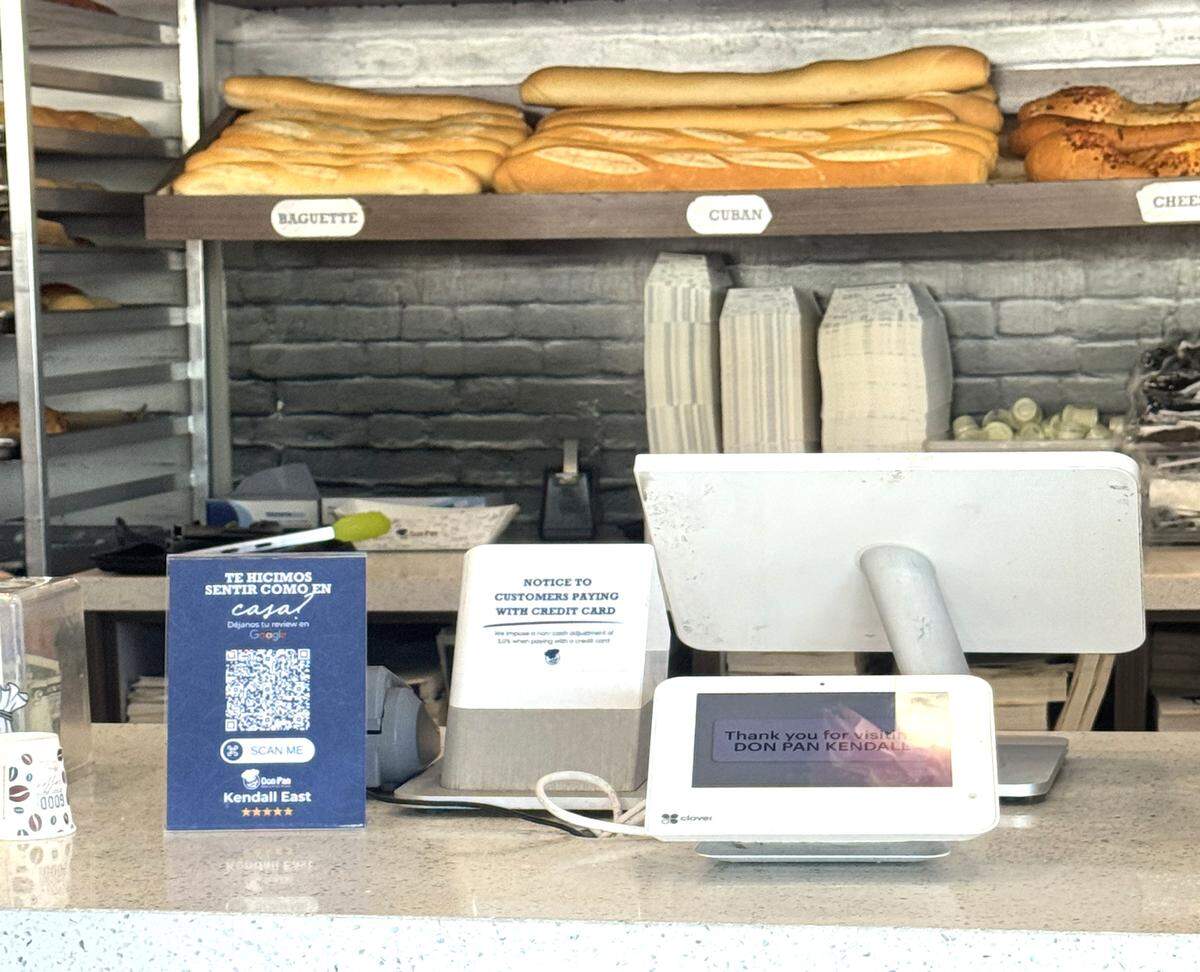
While the previous statute only required restaurants to disclose an automatic gratuity, the new law says any “operations charge” must be disclosed, including credit card processing fees as well as delivery fees and other service charges.
The new statute also requires that the operations charge notice appear in “an obvious and clearly readable manner” on a sign by the register or on the menu printed in a font size similar to the rest of the menu. Small print won’t cut it: The notice has to be, well, noticeable.
It also has to clearly state the percentage or amount of the charge. This means before customers order anything, they know what they’re getting into and for how much, said Samantha Padgett, vice president of government relations and general counsel of the Florida Restaurant and Lodging Association, an industry group representing 10,000 members in Florida. Enforcement will be dictated through restaurant inspections and customer complaints.
“The focus of the legislation is to make sure the customer is fully aware, and they are not surprised that they are paying a fee,” Padgett said.
Creating competition
Sean Kennedy, vice president of public affairs at the National Restaurant Association, says his group is pushing for a solution that could change the way credit card companies charge fees: the Credit Card Competition Act.
The association reports that U.S. swipe fees have more than doubled over the past decade, making them among the highest in the world. Two companies — Visa and MasterCard — control 80 percent of the credit card processing market, thus setting prices.
And those prices make a big difference to restaurants.
“What’s irrefutable is that swipe fees increased 70 percent since 2020, while the profit of the average restaurant last year was 3.8. And that’s the average — 42 percent of restaurants reported they were not profitable,” Kennedy said.
One solution, he says, could lie in the passage of Credit Card Competition Act, bipartisan legislation aiming to drive down the high swipe fees by creating competition. The act, which was reintroduced to Congress earlier this year, would prohibit banks with more than $100 billion in assets from restricting the number of processing networks on which a credit card transaction can be processed.
There’s no telling if the act will pass in its current form, though, so diners bothered by the fees may need to rely on their debit cards or grabbing cash from an ATM on the way to a dinner date — or shrugging and paying the extra cost, if they’re fans of the restaurant.
“I like Semilla, so I’ll go back,” says Patrick Whiteside. “Split between four people, it’s not that much. I have no confidence the fee will go away, so I’m going to suck it up and pay it and quietly complain to myself.”
This story was originally published May 27, 2026 at 4:30 AM.