
Miami thought this guayabera shop was another victim of the pandemic, but it’s back
There are businesses that are such a part of Calle Ocho’s landscape that if something threatens them, Miamians feel like the ground is moving. In July of last year, La Casa de las Guayaberas — the store that Ramón Puig turned into an emporium of that very Cuban garment — announced it was closing due to the pandemic and many feared the loss of a business that serves as testament to the enterprising spirit of that first generation of Cubans to arrive in the 1960s.
But his son Louis Puig was not going to waste a lifetime of effort by the King of Guayaberas, who triumphed twice — first in Cuba and then in the United States.
“I am very aware of the hard work we faced in the United States to get where we are,” says Louis, who inherited the business when his father died in 2011 and closed it last year to protect his employees.
In July, Louis decided to reopen the store, without much fanfare, in a smaller location in the same shopping center on Calle Ocho and 58th Avenue where customers from all over the world come looking for the quality and finish of Puig’s guayaberas.
“I spent my childhood there. I swept the store after leaving school,” recalls Puig, noting that his father’s first store in Miami, which opened three years after the family’s arrival on the Freedom Flights in 1968, was next to the restaurant Versailles.
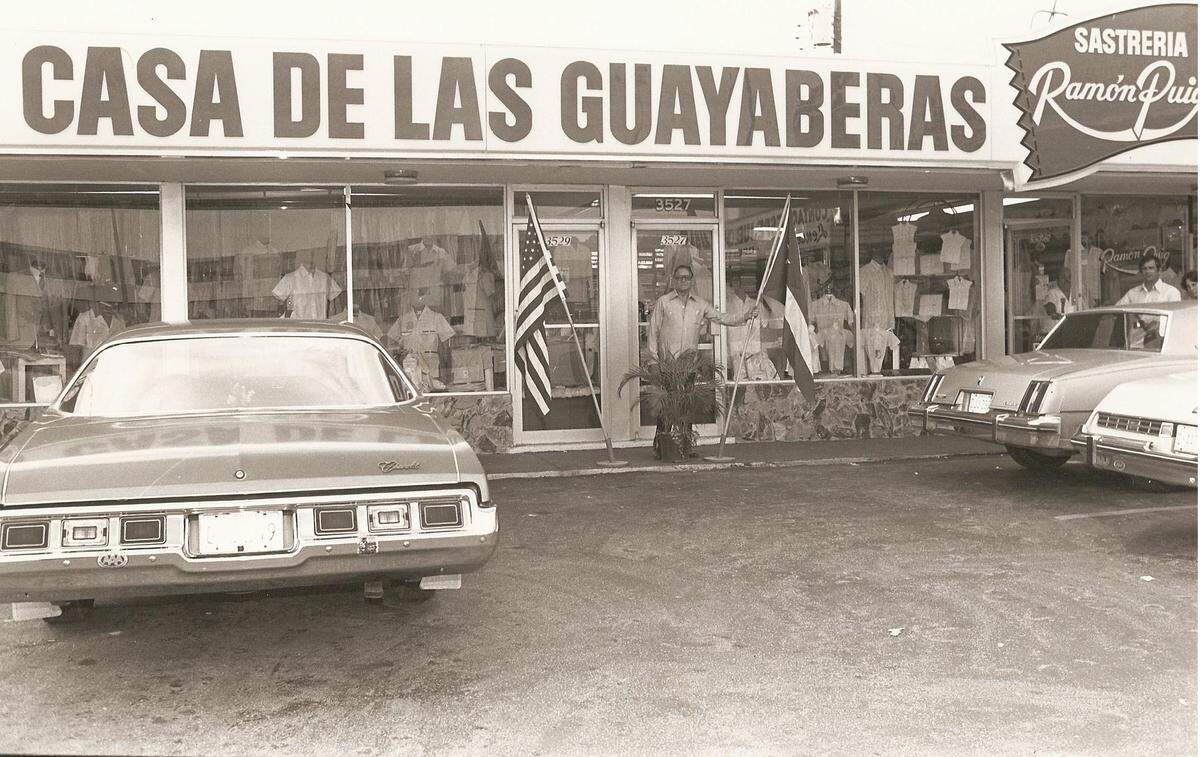
When the lease ran out, Ramón Puig decided to move to the shopping center that they occupy today in West Miami, which was then within the city’s boundaries. Although they were worried, Ramón was confident that his clients would follow him, and they did. There he gave them personalized attention, toasted them with his favorite drink, whiskey and coconut water, while the seamstress took their measurements.
“Many clients became friends with him, for them it was an experience to come,” said Louis, indicating that his father received offers from large and well-known stores to do business with them, but he refused.
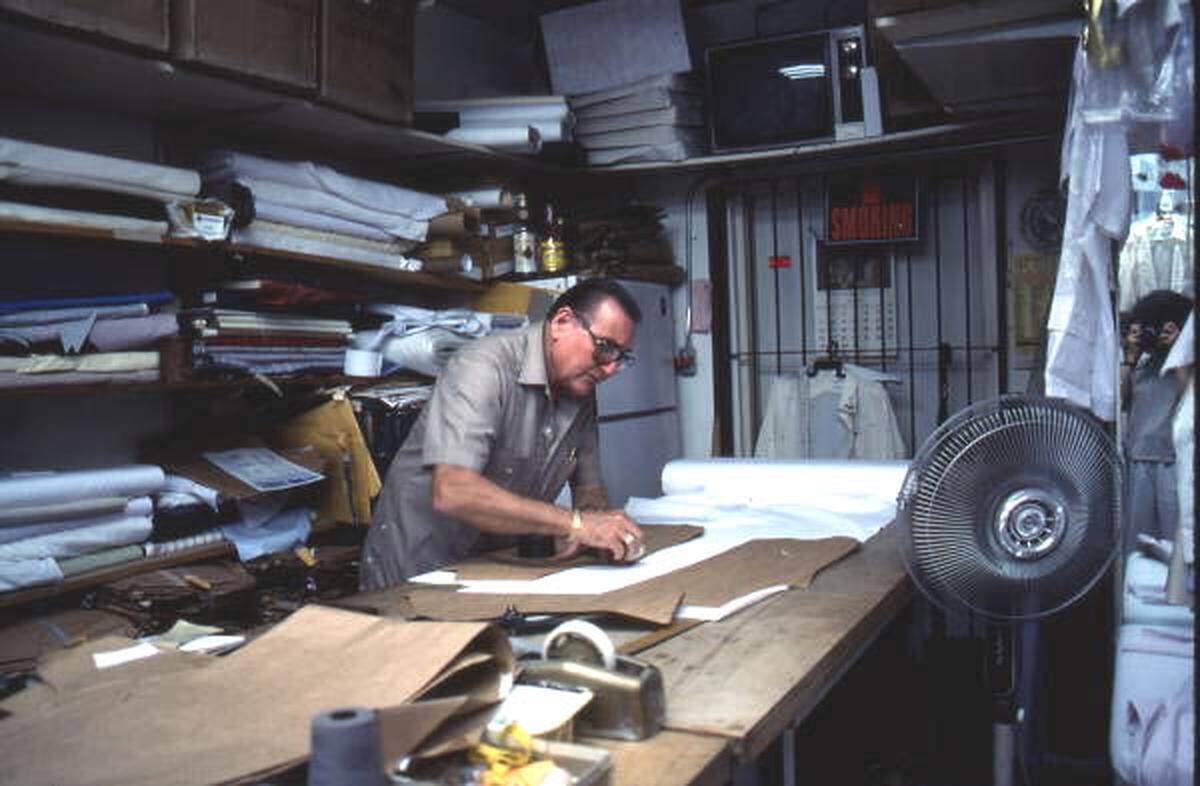
“He had to see the guayabera put on the client,” says Louis, who walks the corridors showing the walls covered in drawings with the patterns of the guayaberas that Ramón Puig made for Robert De Niro, Robert Duvall, Emilio Estefan, Bono from U2, Ice Cube, Alonzo Mourning and Alex Rodríguez.
Although he dressed numerous artists and presidents, starting with Ronald Reagan, who appears in a photo with him, Ramón Puig was not one to be up on the latest news in entertainment. Every so often he would tell his son, for example, that a “tall and blond” actor had visited his establishment. Louis later discovered the pattern of the guayabera his dad had made for Nick Nolte.
As Louis shows the patterns on display on the wall in the business, it is easy to understand that everything happens for a reason. If Fidel Castro had not confiscated the store that Puig opened in the 1940s in Sancti Spíritus, in the central region of Cuba, the art of this tailor would not have conquered the world.
“They came and took even our cutlery from us, also my father’s car, a 1957 Pontiac,” says Louis, who recalls that his father was sent to work in the fields.
“His hands were so callused that he scratched me and it scared me. I only saw him twice in a year,” says Louis, who accompanied his father on some car trips around the island.
“He knew it from end to end,” he says, indicating that his father used to have lawyers, doctors and politicians as clients, and that he would first take the orders and the measurements and then on another trip he would deliver the guayaberas.
The guayabera, an eternal garment
Ramón Puig was born in Zaza del Medio, where the guayabera — a garment originally worn by farmers — was born as well. There are several origin stories for the four-pocket shirt with pleats, which some say arose in the 18th century when a man asked his wife to sew him a comfortable garment in which he could store many things, among them cigars. Others say that it was invented for guava growers, so that they could carry the fruits they collected.
Others point out that the shirts began to be used in the 1920s and that by 1940 it was already an elegant garment worn by many Cubans from different professional backgrounds. It is said that Julio Lobo, the sugar magnate, always had three spares in his office on O’Reilly Street, in Old Havana, to change between meetings and appointments.
Lobo, like many, used to wear it with a bow tie, a more elegant version and for evenings. Photographer Alexis Rodríguez Duarte and stylist Tico Torres wore guayaberas made by Puig’s seamstresses for their 2011 wedding.
“The guayabera has always remained in fashion, whether with hipsters, gays or rappers,” says Louis, noting that Gente de Zona has been in the store, Pitbull is known for wearing guayaberas, and Jencarlos Canela wore a black threaded one and a white threaded one from Puig when he was hosting an event in support of Cuban freedom at the Freedom Tower on July 20.
Cuba’s return to the fore has also given a boost to business, which in the last three weeks has seen a rebound in sales, says Louis, inviting people to visit the store. There you will see the photo of his father when he was young and handsome like an actor from the golden age of Mexican cinema. There is also the caricature that Silvio Fontanilla made of him with huge scissors, and which eventually became the logo on the labels.
“Quality is imposed, it is not improvised; It is the product of a laborious experience,” was Ramón Puig’s phrase that always welcomed clients; a philosophy that proves why the business has survived so long.
“The most important thing is to keep the roots, that history and that heritage is not lost,” concludes Louis, noting that his father’s guayaberas last “forever,” and that some people even have the ones they bought in Cuba.
La Casa de las Guayaberas
Where: 5840 SW 8 St Miami FL 33144
Hours: 10 a.m.-6 p.m. Wednesday-Monday; 10 a.m.-4 p.m. Sunday
Info: 305-266-9683
This story was originally published August 26, 2021 at 6:00 AM.
