
North Miami teen faces losing her sight, but she hangs onto her dream
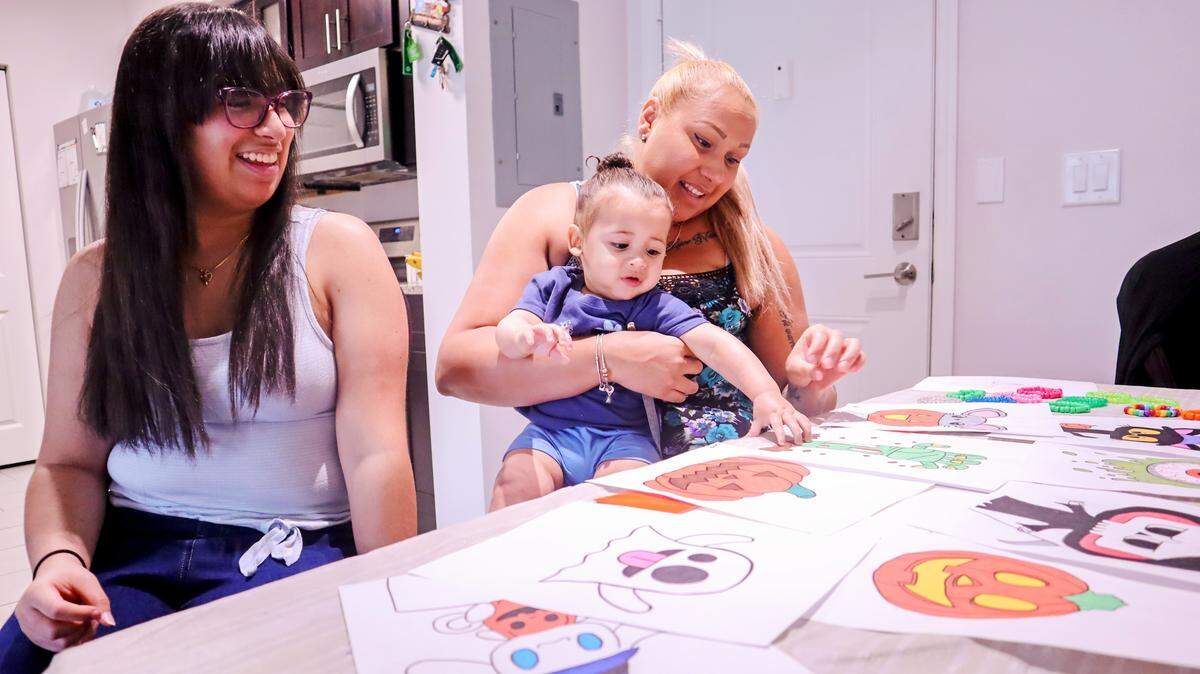
Wilangelys Porrata has always dreamed of becoming an artist. As a child, she drew strikingly colorful cartoons, anime, ghosts and pumpkins. But three years ago, when she was 12, the pretty, shy, bespectacled girl from North Miami abruptly stopped.
“I really couldn’t see the outlines, and I kept messing up my drawings,” said Wilangelys. “It made me sad. I felt so alone.”
She was born with Bardet-Biedl syndrome, a rare genetic disorder that affects an estimated 1 in 140,000 to 160,000 newborns in North America and Europe each year. The condition has caused her vision to deteriorate steadily and will eventually leave her completely blind. There is no cure.
Her mother, Angelica Rodriguez, saw her daughter slipping into depression and felt helpless. “I wished I could take out my eyes and give them to her,” said Rodriguez. ”She’s nervous and shy.”
Wilangelys skipped her middle school prom because it was held in a dark room. She chose not to attend a public high school because she couldn’t navigate crowded hallways. Today, she has tunnel vision and can only see in bright light. She often bumps into walls and corners. She has nearly fallen down her apartment stairs several times.
And she knows she’ll never be able to get her driver’s license.
“It does scare me, because I was born with sight and now it’s going down,” said Wilangelys.
Pre-natal tests showed a genetic problem
Back in 2009, Rodriguez fainted while working at a JCPenney store. Her manager suggested she might be pregnant. The next day, she took a test in the store bathroom. It was positive.
Soon, an amniocentesis showed a genetic problem. When Wilangelys was born, she had an extra finger on each hand, a common sign of Bardet-Biedl syndrome. Doctors removed both with a simple surgery. For a while, it was easy for Rodriguez to believe Wilangelys was just like other kids who needed glasses.
“Around 4 or 5, she was getting worse,” said Rodriguez. “That’s when I asked for a specialist. And they said she cannot see the sides, only the front.”
Then a doctor recommended the Miami Lighthouse for the Blind and Visually Impaired, which teaches life skills, independence and connecting with others.
“I didn’t want to go at first,” said Wilangelys. “I didn’t really want to meet new people.”
But over time, she began to change.
“Her mom did express to me that she was kind of shy,” said Jesus Lopez, a staff member. “I told her, ‘Give her a couple of weeks, and you’ll see.’”
Slowly, Wilangelys smiled more. She made friends. And, she eventually began drawing again. Lopez was so moved by her progress that he nominated her for the Miami Herald/el Nuevo Herald Wish Book.
“It was a way to show her that even though she’s going through a hard time because of her vision loss, it’s not all bad,” Lopez said. “There’s still good in the world.”
Lopez didn’t know then that the family was stretched thin.
Rodriguez worked long hours as a customer service team leader at Publix. There was no money for childcare, so Wilangelys spent long stretches in the store break room.
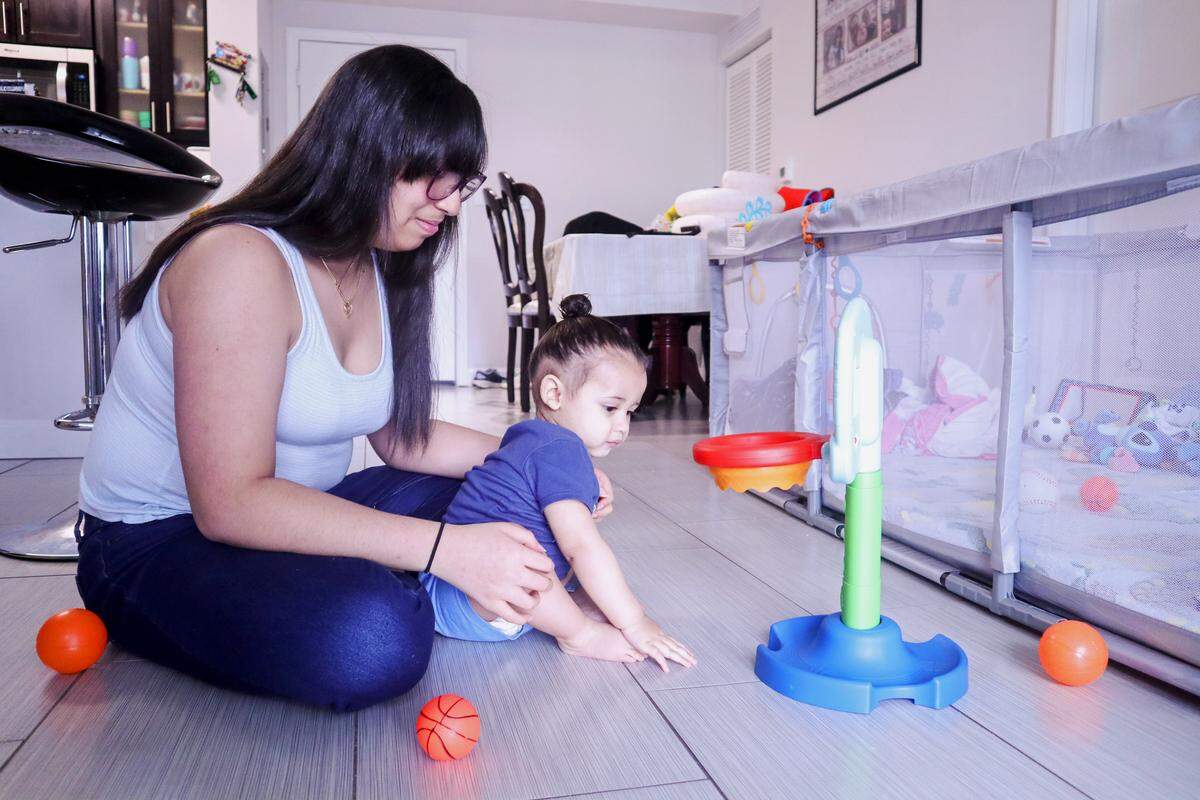
Last Christmas Eve, the family welcomed a baby boy, Jamaal, or JJ. Rodriguez still struggles to keep up with rising prices, the expenses of a newborn and Wilangelys’ ongoing medical needs. Her car was stolen last year, and her new car payments are high.
Christmas has always been modest for the family. Some years, Rodriguez can afford a gift. Other years, coworkers stepped in to make sure Wilangelys had something to unwrap.
This year, Wilangelys’ wish is simple — art supplies.
She hopes oil pastels and Prismacolor pencils will help her experiment with new techniques.
“I want to show my art to inspire other people,” she said.
She also hopes for learning toys for JJ.
She’s applied to the Florida School for the Deaf and Blind in St. Augustine. For now, she must wait.
“I want to meet new people and start doing stuff for myself,” Wilangelys said.
HOW TO HELP
To help this Wish Book nominee and more than 150 others who are in need this year:
▪ To donate, use the coupon found in the newspaper or pay securely online through www.MiamiHerald.com/wishbook
▪ For more information, call 305-376-2906 or email Wishbook@MiamiHerald.com
▪ The most requested items are often laptops and tablets for school, furniture, and accessible vans
▪ Read all Wish Book stories on www.MiamiHerald.com/wishbook
This story is the product of a partnership between the Miami Herald and the Lee Caplin School of Journalism & Media at Florida International University.